Published
Part 1
Name: Blue Lake
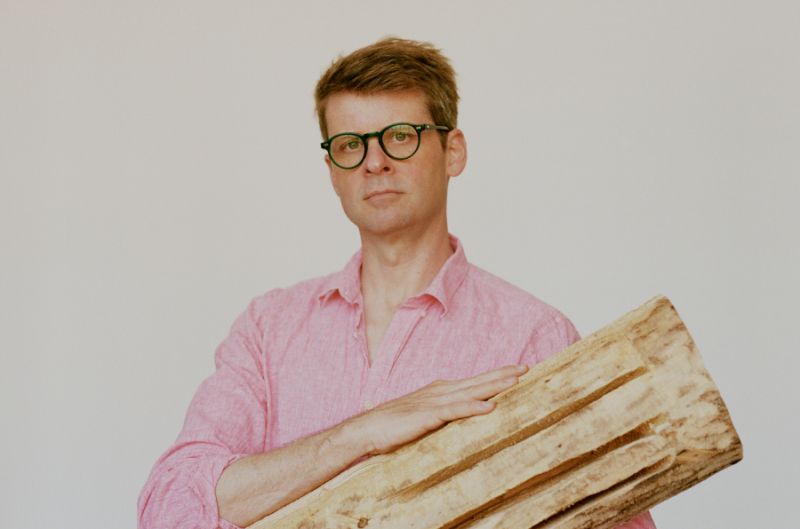
Band members on the new album: Jason Dungan (steel and nylon-string guitars, zither, pump organ, small percussion, drum machine, melodica, piano, electric bass, voice), Carolyn Goodwin (bass clarinet, voice), Pauline Hogstrand (viola, voice), Nicole Hogstrand (cello), Tomo Jacobson (double bass, voice), Oliver Laumann (drums, voice)
Interviewee: Jason Dungan
Nationality: American, Copenhagen-based
Occupation: Multi-instrumentalist, composer
Current Release: The new Blue Lake album The Animal is out October 3rd 2025 via Tonal Union.
Recommendation for Copenhagen, Denmark: I live right next to a semi-wild green space in Copenhagen called Amager Fælled, which is an old industrial dump that’s been left alone since the 70s, and has since turned into a nature space that has owls, deer, salamanders, and all kinds of wild plants and flowers. It’s a beautiful, semi-ungoverned space that feels very free. It’s very close to the center of the city but has a totally different atmosphere.
Topic that I am passionate about but rarely get to talk about: I have a strong interest in horror films, particularly 70s/80s horror movies, like John Carpenter films, or things like The Texas Chainsaw Massacre and From Beyond. These films were fascinating to me since childhood, and I’m not sure if I can adequately explain why. But the ones that I like possess a strangeness and beauty that kind of open up a new lens towards seeing the world.
In the 2000s there were a lot of sadistic, nasty horror films that didn’t interest me so much.. But Carpenter’s films offer a new way of seeing. I particularly love Carpenter’s The Thing, which unites these mind-bending visuals with incredible sound design and music. I can watch that film over and over again, and it takes me somewhere every time.
I think that horror films offer a possibility of seeing the world outside of the logical, reality-based / capitalist status quo that we find ourselves in. They are a temporary portal into a semi-magical space where the usual rules of our bodies and the world around us don’t apply.
[Read our Pauline Hogstrand interview]
If you enjoyed this Blue Lake interview and would like to know more about his music and upcoming live dates, visit his official homepage. He is also on Instagram, and substack.
Why do you like playing in a band rather than making music on your own?
The first few Blue Lake records were made solo. I had played for many years in a band that I really loved called Squares and Triangles, which was a lot about improvising and playing live.
With the Blue Lake music I wanted to explore my own ideas, and working solo really forced me to work within my own limitations, and to develop a working method where I could only rely on myself. It was really challenging to work solo but I learned a huge amount about what I wanted to make and what I wanted to hear.
After these first few records, I was making music that was more and more “band”-like in its sound, using a range of instruments and percussion.
There’s a track on Sun Arcs called “Bloom” that was one of these “band” type tracks, that I made solo – I love that track, but it was also a kind of message to myself that I was getting more and more interested in an ensemble approach.
At this point, I could feel that the music was taking me into the sound of a band, and I was also longing for the connection of playing with other people.
I invited different musicians from the Copenhagen scene to start playing live, and this really blew my mind. Hearing the music suddenly as a living, dynamic, loud thing in a room gave me loads of inspiration for where to take the project, and it also just introduced a whole range of ideas and sonic possibilities. The feeling of connection between us brought in a whole new sense of feeling to the music.
For The Animal, a song like “Strand” is the kind of track that is only possible through this band approach. I made an early demo of the track solo, and it was really exciting to see the kind of dynamics and power we could bring to it as a band.
What, to you, are some of the greatest bands, and what makes them great?
Yo La Tengo – They’ve made a pile of great albums, and have been a band I’ve seen play maybe 20 times. They are able to explore so many dimensions of their sound, and are really thoughtful and creative when it comes to making records.
Selvhenter – my favorite Copenhagen band. They’ve been playing for 10+ years and are an incredible force live: 2 drummers, plus amplified saxophone and trombone.
It’s capable of being strongly melodic, can sometimes approach dance music, and is always a powerful experience. Their last album, Mesmerizer, was great.
Fugazi – I saw them play during their last shows in London. Just awe-inspiring music, and the telepathy between the 4 musicians was incredible.
I think their commitment to the music itself is part of what made them great. Their records always pushed forward, and there was really nothing like them live. They really inspired me to make my own music.
Don Cherry’s trio with Okay Temiz and Johnny Dyani – This trio made an album called Blue Lake in the 70s, which is what I named the project after.
This record was a big inspiration / turning point for me – I had a kind of epiphany watching video of this concert online. I suddenly understood how I could bring together all the different things I was interested in, and how they could co-exist together.
This group was a very pure form of Cherry’s music, I think – very personal, and combining all his interests and impulses.
How did the Blue Lake band come together?
I had been organizing concerts and projects in Copenhagen for a few years, so I knew a lot of musicians. I brought together this band so that Blue Lake could start playing concerts. I didn’t know the musicians beforehand, I just invited them to play as I thought they were the best people here I could think of.
There was an initial concert, and then we got invited to play a festival here called Festival of Endless Gratitude. We worked with a slightly different lineup and played a more improv-type show. It got a great reaction in the room and really solidified for me the desire to make Blue Lake into a live band.
After an earlier lineup that was more fluid, we settled into this quintet formation, and toured quite a bit in 2023-24.
What were some of the reasons, do you think, that you wanted to play in this constellation?
On my solo recordings, I had been playing: guitar, zither, clarinet, cello, and percussion. So I both wanted to somewhat recreate this instrumental lineup, but also made changes in the overall sound. I had been using the cello as both a bass instrument and as a string instrument.
For the current band, it seemed exciting to have Tomo Jacobson on double bass and Pauline Hogstrand on viola, which kind of spread the strings out a bit sonically, and the viola could become a kind of co-lead with the guitar and zither. And I asked Carolyn Goodwin to play clarinet because she also plays bass clarinet, and adding the bass clar to the sound really opened up some huge possibilities. And I thought that Oliver Laumann had a strong feel for the music as a drummer and just fit very well.
How do your different characters add up to the band's sound and in which way is the end result – including live performances – different from the sum of its pieces?
We all have different backgrounds (I’m American, and the band members all grew up in different places: Ireland, Poland, Denmark, Sweden).
We don’t talk very much about other music when we’re working – I tend to bring sketches, demos, textural ideas that we then work on together. For recording, on the new record there are some tracks that we mostly recorded live, and some where I built up some elements solo, and then the others added their parts.
I tend to lead the approach to how the different parts fit together, but part of our band process is that everyone is quite free in developing their own contributions. I love how everyone’s personality comes into the group sound, and that it’s a blend of our different approaches.
I’m aware that I have certain albums or bands that are really important to me, that maybe the others in the band haven’t ever really listened to. I quite like this, as it means to me that we’re exploring something together, not working from some kind of reference.
Is there a group consciousness, do you feel? How do you experience it?
The people in the band are all trained musicians. I don’t really have any musical training. Playing live, they can take things and just run with it.
So, once we’ve learned the basic elements of the tracks, there’s a really fun dimension to playing live, where the basic structures are consistent, but each time we play, there’s a different feel and some tracks stretch out. It sort of happens naturally, and the best nights are where we can chase after something together.
Tell me about the process behind The Animal, please.
I knew that for The Animal, that I wanted to write material specifically for the band, and to record the album at a place in Copenhagen called The Village, which is kind of a legendary place to record jazz and large ensemble music, run by a musician called Thomas Vang.
I wrote material during spring 2024, and in the summer I sat out in the garden in a house in the countryside in Sweden, and recorded demos in an afternoon. They were quite raw, but laid out the ideas and general structures of the music. We then rehearsed the tracks. I could see that some of the tracks would benefit from a more live approach, and that some needed to be built up in layers, allowing a different kind of exploration and control over the arrangements.
We had in the end 7 or 8 days in the studio, but spread out from late October to March. So in between the sessions, I would work on edits and dubbing extra parts in my home studio, which meant that when we came back to The Village, I pretty much knew exactly what I wanted to do to finish certain tracks.
This meant that in the studio, we often only did 2-3 takes, both because of time pressure, but also because I wanted a freshness and warm, hands-on sound to the playing. I wanted to have that big, full-spectrum recording, but didn’t want it to be too clean or worked-over. The timeframe meant we really got to know the music, and this allowed us to add little details to the arrangements that I feel really lifted a lot of the tracks.
How does the creative process typically get started and what is your sense of ownership like as part of the songwriting process?
I’m basically writing and thinking about new music all the time. I play the guitar and zither almost every day, particularly the guitar. My big rule is that when I’m writing new things on the guitar, that I don’t record anything for a while. I feel like the idea has to be strong enough that I can remember it when I sit down again.
By the time I’ve finished mastering a record, I’m usually warming up some ideas for the next record in the background. It takes me generally about a year to go from initial ideas to finished record, so I like to keep things moving, and to keep new ideas brewing for the next record. Usually, after I complete a record, there’s a feeling that the previous record opened up some ideas that I’m not totally finished with, and that I want to continue them into the next record. And then there’s often some totally new ideas / collaborators / instruments coming in, which brings in something new.
As far as ownership, I feel like I’m working on this idea of the “bandleader”, where I’m steering the ship and pointing us in a direction, but that I love it when the people in the band come with strong ideas and their own personality. They’re definitely not there to play a pre-written part, they are there to come with their own sound, and in that way I feel that we share a lot of the ownership for the music.
My main focus at the end of the day is that each track finds its ideal form – whatever path that takes, and whatever contributions make that happen, my main focus is working on each piece of music until it can’t be taken any further.