Published
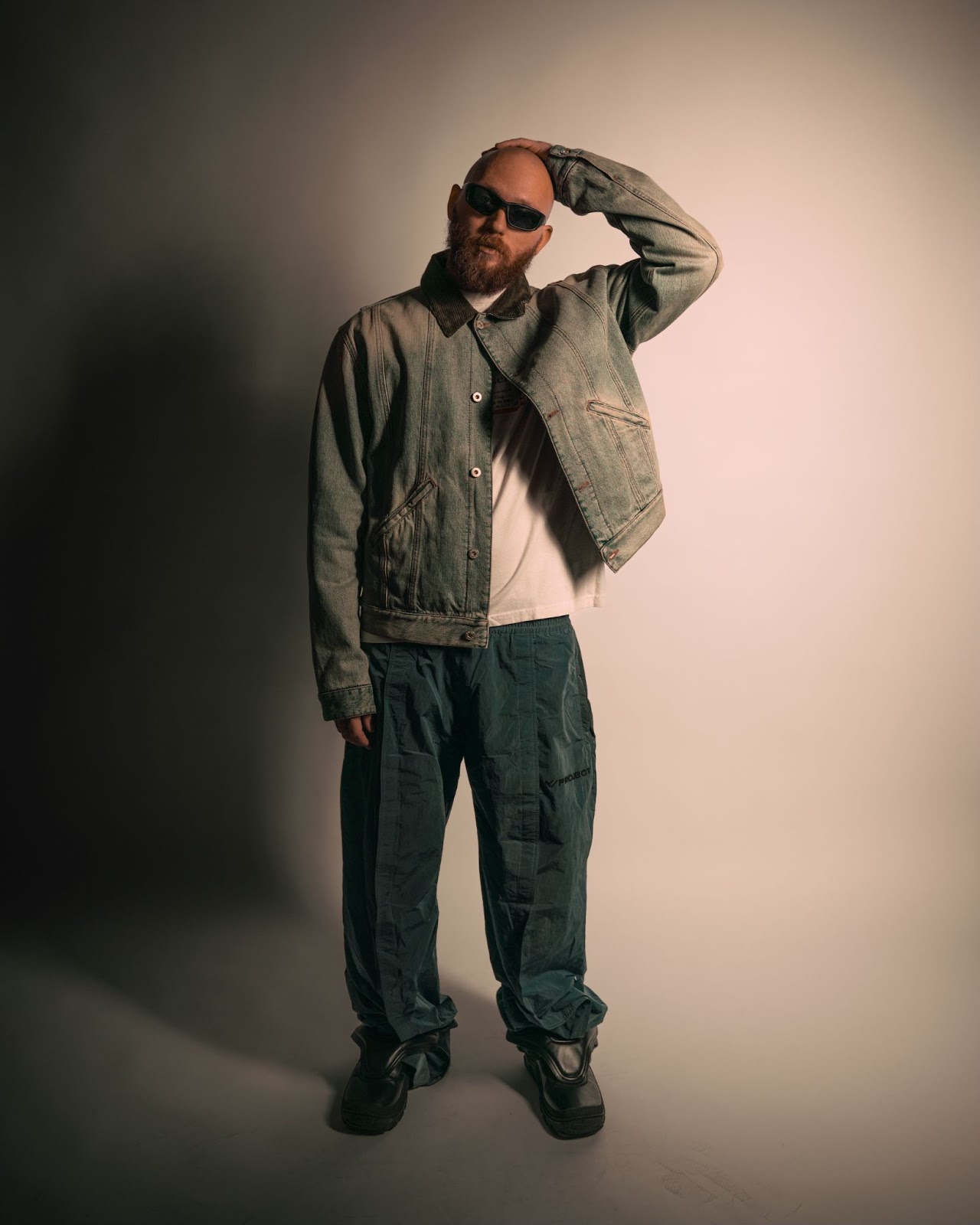
Name: Bluey Thomas
Nationality: American
Occupation: Singer, songwriter
Recent release: Bluey Thomas's new single "Good on Me" is out via R&R.
If you enjoyed this Bluey Thomas interview and would like to stay up to date with his music, visit him on Instagram, and Soundcloud.
Do you think that some of your earliest musical experiences planted a seed for your interest in your voice and singing? How and when did you start singing?
I was always drawn to music. My mom would blast music really loud in the car and sing, she bought me a guitar when I was in first grade. My brother played drums, and we had a few metal/ hardcore bands.
I didn't start singing until till later in life though. Around 16 or 17 I got Garage Band and started learning how to record myself. I would make songs and shoot DIY music videos, I even put out a few mixtapes on DatPiff. It was more melodic rapping not full on singing yet.
I got obsessed with the production and songwriting and started watching every documentary, interview or podcast I could. I learned about Max Martin, Benny Blanco, Dr. Luke and all the others and for a year did a huge deep dive on every ‘hitmaker’ I could find. That’s what really got me to start singing, I would break down these huge hit songs and try to recreate them just as an exercise.
I wasn't a naturally gifted singer it took pretty long for me to find my voice and be confident in my singing. A lot of YouTube singing tutorials haha.
If you're also playing other instruments, how does the expressive potential of these compare to your own voice?
Nothing expresses more emotion than the voice.
I look at all the other instruments as support for the voice. It’s like the guitar creates the setting and my voice is the character in that setting.
Singing is an integral part of all cultures, and traditions. Which of these do you draw from – and why?
I draw from a lot of different inspirations. The other day I watched a documentary about Stax Records and went on an Isaac Hayes deep dive, so really just depends on what I’ve been into.
I just rabbithole on YouTube and discover music and get inspired.
What were some of the main challenges in your development as a singer/vocalist? Which practices, exercises, or experiences were most helpful in reaching your goals – were there also “harmful” ones?
Singing is embarrassing. It’s hard to get over that shyness and just sing in front of people.
The most useful exercise in my experience is just writing and recording as many songs as I could. In the early years I would write and record like 10-20 songs a week, even if they were bad which most were I still write and record almost every day,
I’m a firm believer that if you want to be great at something you need to do it all the time. I was never naturally gifted so I knew I had to outwork the talented singers by pure manhours. I just look at it as if it was working out, and just make sure to get my reps in.
How do you see the relationship between harmony, rhythm and melody? Do you feel that honing your sense of rhythm and groove has an effect on your singing skills?
Rhythm is one of the factors of making a great song, I’m big on nerding out over how many syllables a melody should have and melodic math. Even just nudging certain words a millisecond to get that perfect pocket.
Like I said before, I enjoy digging in finding every way to make each section feel gratifying. So, rhythm has a huge effect on that.
What are the things you hear in a voice when listening to a vocalist? What moves you in the voices of other singers?
I’m moved by the emotion and performance of a voice more than technical ability.
For example, Lewis Capaldi, Sam Tompkins, Ruston Kelly to name a few.
[Read our Lewis Capaldi interview]
How would you describe the physical sensation of singing? [Where do you feel the voice, do you have a visual sensation/representation, is there a sense of release or tension etc …]
I try to feel the emotion of the lyrics. If it’s a sad song I just give into that emotion.
There's a sense of release especially if it’s a song that I’ve had enough time to really sit with and memorize all the parts, so I don't have to read the lyrics while recording. It’s common to over think and that comes across in the recording, so the more I can let go and not think, just let the emotion carry the performance the better.
What kind of musical settings and situations do you think are ideal for your own voice?
I love the studio, I’m addicted to it for sure. I'm also such a producer nerd, I love big fancy studios and gear. I know a lot of people say they hate the big studio vibe but I’m a total sucker for it.
It’s just always been a dream to be able to work in these legendary rooms and studios, and I don't take it for granted, years of watching these documentaries and interviews, it was always a dream like one day I’m gonna be in one of those rooms.
So, whenever I get the chance it just fires me up like crazy.
We have a speaking voice and a singing voice. Do these feel like they are natural extensions of each other, ends on a spectrum or different in kind?
I love the effortless type of singing, where your speaking voice is the same as your singing voice. That's always what I try to accomplish and not put on some weird voice.
When I first started singing I would always do this weird Travis Scott super-low thing and mask my voice, which come from just not being comfortable with your natural voice.
From whispers to screams, from different colours to dynamics, what are the potentials and limits of your voice? How much of your vocal performance can and do you want to control?
I like my voice when it’s reaching a bit, singing really low in my range is harder for me.
I used to do a lot more shouty stuff and I would always throw out my voice, but I found a good balance now.
When you're writing song lyrics, do you sense or see a connection between your voice and the text? Does it need to feel and sound “good” or “right” to sing certain words? What's your perspective in this regard of singing someone else's songs versus your own?
Yeah, the way the words sound is really important to me. Sometimes you have a really cool lyric but if it doesn't sing right, I’ll swap it for the more basic lyric that sings better.
When I’m covering songs, sometimes I notice little details like that, that I would have changed.
Strain is a particularly serious issue for many vocalists. How do you take care of your voice? Are the recipes or techniques to get a damaged voice back in shape?
I used to always strain my voice. For a while I never would try changing the key to a song, now I will move around the key of a song up or down to find the perfect key for my range.
The other night I had to rerecord an entire song, completely started over because the song was in too high of a key. Just being aware of when you start to feel that strain, maybe that part is too high and it’s not going to work so don't do 20 takes in a row trying to nail it.
How has technology, such as autotune or effect processing, impacted singing? Has it been a concrete influence on your own approach?
Auto tune makes singing available to everyone. Like myself I couldn't sing at first but autotune made it fun and allowed me to jump right in and start recording. It used to be part of my method, I would freestyle melodies into the mic with autotune to write.
But after years of that I wanted to push myself and started writing on guitar in the room, trying to think of song concepts and taking more of a Nashville approach. It’s easy to lean on autotune and at a point I noticed I wasn't becoming a better singer; I started practicing singing without autotune and it was a major reality check haha.
I still a use a little bit of it on my vocals now but it isn't a part of the writing process anymore.
For recording engineers, the human voice remains a tricky element to capture. What, from your perspective, makes voices sound great on record and in a live setting?
I love simplicity when the vocal is clean and dry and there’s only a single layer.
Obviously, I use background vocals and effects but being tasteful with it is the key. I find a lot of people over process vocals.
Motherese may have been the origin of music, and singing is possibly the earliest form of musical expression, and culture in general. How connected is the human voice to your own sense of wellbeing, your creativity, and society as a whole?
It's everything to me. I was never good in school, and I realized the one skill I have that I'm confident in is music, and if I had to choose one skill to defend my life it would be music, so I just go all in.
Days when I don’t write or produce, I get cranky and feel like I'm missing out or like I just get really hard on myself and feel like I was lazy.
I've been fascinated by pure vocal recordings for a long time. Do you have some recommendations in this direction?
In my opinion, the purest vocal recording is to record an artist singing live, so either with a band or while playing guitar.
And for vocals like I said I find most people over process, so keep it simple and clean.