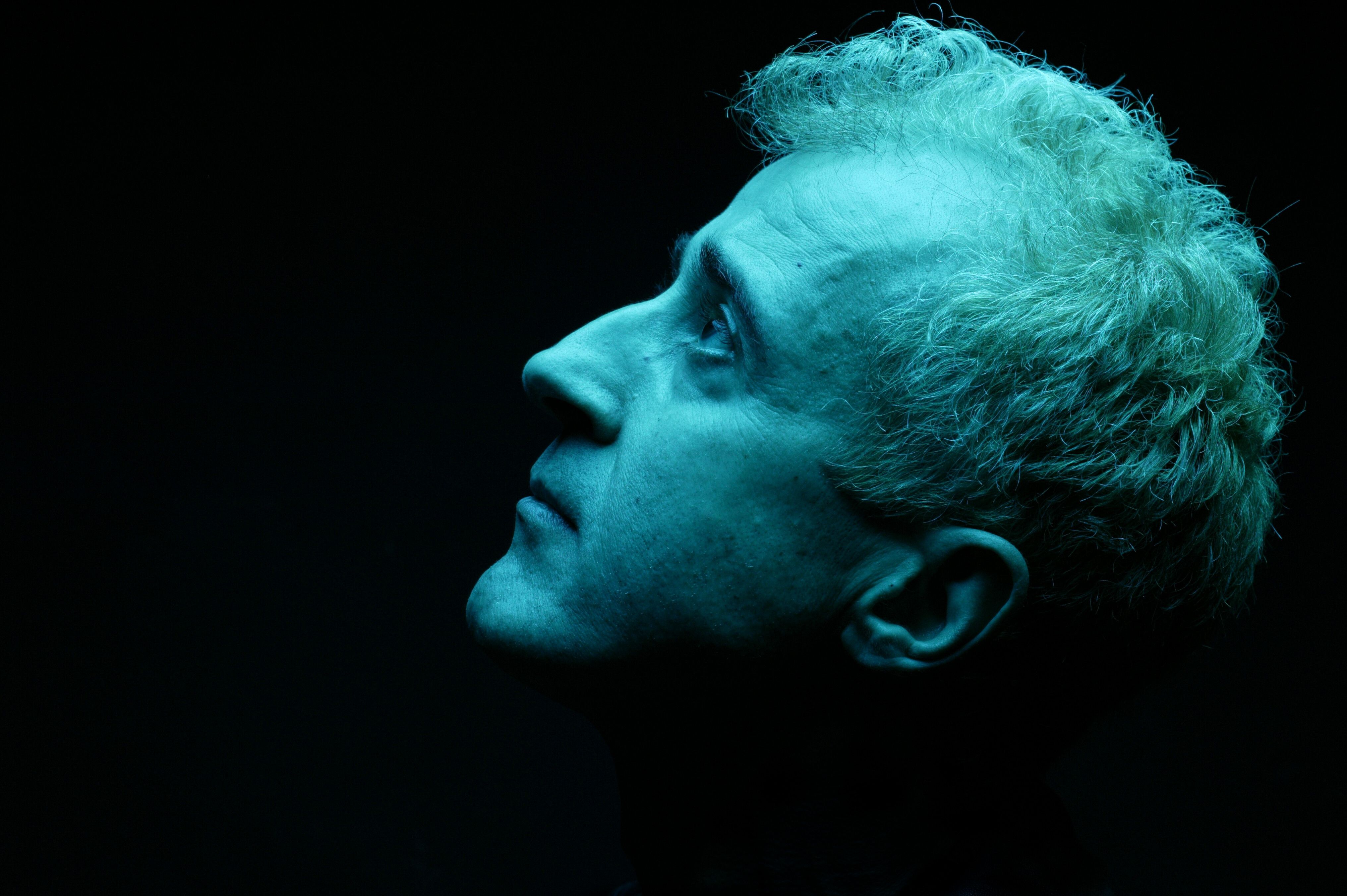
Published
Name: Bobby Previte
Nationality: American
Occupation: Composer, drummer, improviser
Current Release: Bobby Previte's new album Second Arrow, featuring Angelica Sanchez (piano, Fender Rhodes), Wendy Eisenberg (electric and acoustic guitars), Matt Bauder (tenor saxophone, flute, bass clarinet) and Jerome Harris (5 string electric bass guitar) is out via unit.
Recommendation for Hudson, New York, USA: Little Deb’s Oasis - my favorite restaurant.
Things I am passionate about but rarely get to talk about: Understanding the importance of passing on to younger people whatever little knowledge you have struggled to gain in this life.
[Read our Wendy Eisenberg interview]
If you enjoyed this Bobby Previte interview and would like to know more about his music and upcoming live dates, visit his official homepage. He is also on bandcamp.
What were some of the musical experiences which planted a seed for your interest in jazz?
I had a friend who played me the record Karma by Pharaoh Sanders.
After that, I was hooked.
What does the term jazz mean today, would you say?
You might not get paid.
As of today, what kind of materials, ideas, and technologies are particularly stimulating for you?
The natural world, the many artists of all types surrounding me, my studio, and the idea that music will happen if you just get out of its way.
Where do most of your inspirations to create come from – rather from internal impulses or external ones? Which current social / political / ecological or other developments make you feel like you need to respond as an artist?
The power of external stimuli to spark creation is undervalued. It’s a misconception to believe that every idea needs to come from inside our own heads. The collective unconscious is real and working all the time.
As to your second question, I don’t ever “respond” directly to political/social/ecological situations because those things are already in everything that I and everyone else creates. How can it not be? To try and address them directly in art seems to me to always fail.
How much more “political”can you be than Sun Ra, or the Art Ensemble of Chicago?
Art can’t solve these problems directly, and furthermore art derives it’s power and majesty precisely because, as Oscar Wilde said, “All art is meaningless.” Or as Toni Morrison said it better than anyone ever could - “Language can never ‘pin down’ slavery, genocide, war. Nor should it yearn for the arrogance to be able to do so. Its force, its felicity is in its reach toward the ineffable.”
In other words, the power of music is in its mystery and unknowableness, and maybe that leads us eventually to rethinking our situation and then to solutions.
If you want to solve these problems more directly, quit making art and find ways to help stop the planet from burning. But don’t have the arrogance to think that your next record is going to slow climate change, or prevent genocide.
Tell me a bit about the sounds & creative directions, artists & communities, as well as the colleagues & creative hotspots of your current hometown, please. How do they influence your music?
I moved out of New York City and I now live in a rural area. I get a tremendous amount of pleasure from the flights of birds and the sounds of the animals surrounding our house. The other animals are the fantastic artists here of all kinds, and I get constant inspiration from them.
I’m in the middle of making what might be a 10 record LP (!) with the amazing saxophonist/sound artist Lea Bertucci. And I have an electric quintet with the bassist Noah Jarrett, the Moog player (and deep thinker!) Ben Vida, the crushing saxophonist Keith Pray, and the guitarist/sound designer Knox Chandler.
Knox and I released a record recently, “Previte-Chandler.” That’s an interesting duo. And, he lives in Maine now.
But whenever I get the chance I play “Doom Jazz” with Jamie Saft, one of the deepest musicians I know.
[Read our Lea Bertucci interview]
[Read our Ben Vida interview]
[Read our Jamie Saft interview]
What role do electronic tools and instruments play for your creative process?
A few years back I released an electronic solo record, “Dark Current”, inspired by the new telescope that is bringing back amazing images of our universe.
But it all began because I was cleaning up my studio and I happened to turn on an old sampler and out came this amazing loop (you can hear this on the last track, “NGST”) and I off I went on the entire record from that one idea.
Was it my idea, or the machine’s? Like any other tool - machines (and the drum set is also a machine by the way) are useful in the right circumstances. Every instance needs to be looked at on it’s own, there are no general rules. Sometimes the machine/tool can dictate a compelling and fruitful direction. Sometimes we can give the tool too much agency.
Sometimes what you conceive of as “you”, separate from the tool, has too much agency and the “you” is not allowing the music to come forth. That happens a great deal of the time.
Thanks to technological advances, collaboration has become a lot easier. What have been some of the most fruitful collaborations for you recently and what approaches to and modes of collaboration currently seem best to you?
I did a record with Jane Ira Bloom and Mark Helias called 2-3-23 where I recorded my drums separately on improvisational tracks they recorded together. That was something you couldn’t do years ago.
I have a studio in my home and I do endless recording projects with some of the great musicians that are here in the Hudson Valley. This can be fun and also can help us find paths through this confusing world.
Jazz has always had an interesting relationship between honouring its roots and exploring the unknown. What does the balance between these two poles look like in your music?
I don’t think about that. I just do what I do and some kind of “balance” happens organically.
What that balance is, I haven’t the foggiest idea.
How much potential for something “new” is there still in jazz? What could this “new” look like?
Of course there is this potential in every human endeavor.
All I can say is it’s not what your favorite music or band is doing at this precise moment. It’s something you don’t know about, that’s maybe already in the air, or maybe some kids are doing it in their garage somewhere in the world.
But you can be sure that the “new” will arrive when it wants to - you can’t force it to appear.
For many artists, life-changing musical experiences take place live. How do you see that yourself?
Sometimes, if you are lucky, there is a clarity that makes itself known in live performance.
How, would you say are your live performances and your recording projects connected at the moment? How do they mutually influence and feed off each other?
For the first time I think my music is coming through the drums rather than around them.
These days, every time I play the drums I seem to learn something. That was not always the case. It’s very curious but I am happy about it.
For years I have wanted to make a solo drum record, and last year I did, Pathways for Drum Set, that speaks to my growing understanding (finally) of what the drums might be capable of.
I could not have codified what I have learned in my live performances without my studio to record it.
Improvisation is obviously an essential element of jazz, but I would assume that just like composition, it is transforming. How do you feel has the role of improvisation changed in jazz?
It has changed as regards form. Improvisation in Jazz has been going through a constant evolution and I think it is at the point of not only directing content within form, but of actually making form itself.
I tried to incorporate this in “Second Arrow,” my new Quintet, by giving up total control and allowing the musician to create a form. The first track, “Roam,” has no form at all on the page, which is absolutely rare for me, to not consider the form.
It’s only a 16 bar tune, repeated, and the form is up for grabs, there’s no other information - no other sections, order of solos, etc etc. To see that come alive with the musicians was breathtaking.
What, would you say, are the key ideas behind your approach to improvisation?
Listen with enough respect to the sounds that occur so that you don’t feel the constant need to “add” to them, or to find what’s next, next, next, etc etc. To simply let the sounds tell you where they want to go.
In other words, I don’t care about what you (or I for that matter) want, I only care about what the music wants.
Are there approaches, artists, festivals, labels, spaces or anyone/-thing else out there who you feel deserve a shout out for taking jazz into the future?
To single out would also be to exclude.
There are people doing good work everywhere. Finding them is a joy.
The Montreux Festival intends to preserve its archive of recordings for future generations. Do you personally feels it's important that everything should remain available forever - or is there something to be said for letting beautiful moments pass and linger in the memories of those that experienced them?
Depends on the moments. Some are better in memory.
Of course preservation is important, we need the past. But we need to see it as vital information for forward movement and not as some kind of nostalgic dream that we need to go back to.
Forward, always forward.