Published
Name: Bodhi
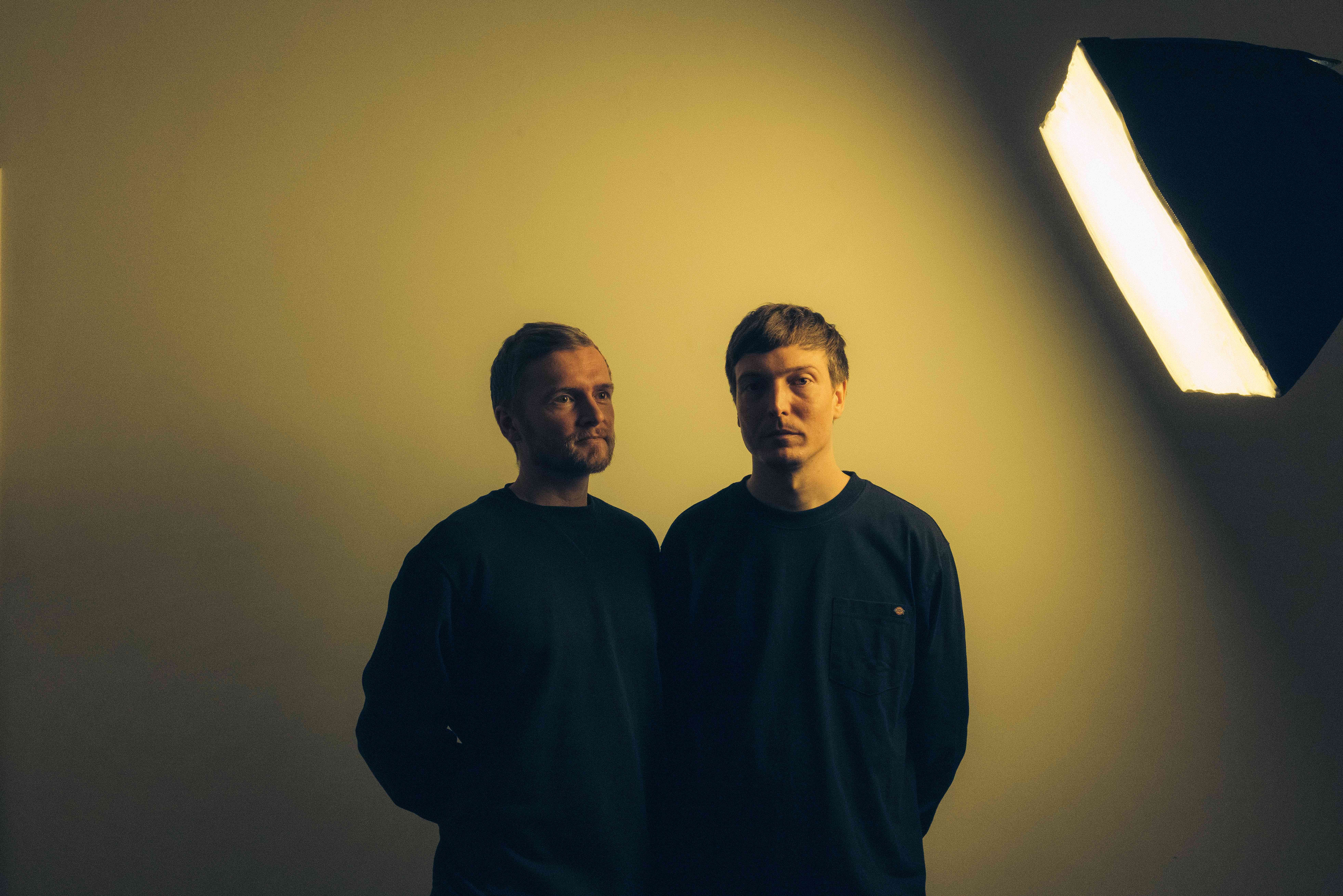
Members: Olly Howells, Luke Welsby
Nationality: Welsh
Current release: Bodhi's Laurus Ascending EP is out via Hotflush July 5th 2024.
Recommendations: Snowskullart.com; Musicophilia - Oliver Sacks
If you enjoyed this Bodhi interview and would like to keep up to date with their music, visit the duo on Instagram, Facebook, and Soundcloud.
Do you think that some of your earliest musical experiences planted a seed for your interest in production and technology?
Olly: I was always in contact with music from a young age, around the house my Dad playing guitar, on car journeys parents would have their music on the car stereo. Plus there was a stand up piano in the house I’d bash around a bit when I was young.
In terms of experiences more directly relating to technology I used to love my Sony Walkman and would make my own tapes by recording music off the radio via a larger radio/tape player.
Luke: I was fortunate to be in a house surrounded by music 24/7. My parents were keen music lovers and had some pretty decent vintage hi-fi set ups over the years. That, coupled with instruments laying around the place and them not being particular bothered about me making all sorts of noises, would be key to directing my nose straight down the musical rabbit hole.
What were your very first active steps with music technology and how would you rate the gains made through experience?
Olly: Active steps would have developed during my school years. It would still be years before I even touched a serious DAW but I guess the practice of sitting down at a computer and programming in music came around this time through the use of programmes like Sibelius and Guitar Pro.
I used to spend quite a lot of time in these either composing songs for whatever band I was in at the time or just spend evenings recreating tracks I was into at the time with the awful basic midi sounds available.
Luke - For me it was playing in touring bands from quite a young age and getting geeky with guitar rack setups and drum triggering. It wasn’t until I was around 17/18 that I first started dabbling in a studio and using software (Fruity Loops/Logic/Sibelius/) during my college years. These experiences and first introductions certainly lead me down the path to where I am now.
Were/are you interested in the history of production and recording? If so, which events, albums, artists, or insights stand out for you?
It's always great discovering why a certain record sounds a certain way by discovering the gear used or the limitations that were present to define that sound.
A recent excursion would be from dipping in to the Memphis rap revival and seeing how a huge part of the original 90s sound was defined by the limitation of the Roland DR-660. The lo-fi aesthetic produced through tapes and affordable gear really gives the genre its unique qualities.
Making music, in the beginning, is often playful and about discovery. How do you retain a sense of playfulness and how do you still draw surprises from tools, approaches, and musical forms you may be very familiar with?
We possibly lost a bit as a duo when we wrapped up chapter one of Bodhi back in 2017. When we decided to get back writing together during lockdown, we knew that we couldn’t go back to the same old process and sound if we were to keep ourselves interested.
To confront this we pushed our tempo, expanded our sonic palette and shifted our influences. These adjustments gave us a completely fresh outlook for our time in the studio. Within our world of sounds it feels a lot more ground can be explored rhythmically and sonically which helps keep familiar tools feeling fresh each time.
The challenge of recycling the same tools and sounds while interpreting them differently each time is both inspiring and fun.
For example, on our Edge of Blue EP on Hotflush instead of firing up a synth to write something brand new each time we recycled the same stem from a previous jam session with the Pittsburgh SV-1 over and over but each time created a completely new story.
Embracing rabbit holes helps with this to really fully explore what a sound can give you.
We will often ‘save as’ and continue down a separate path for a bit, possibly destroying the original idea, in the hope of discovering something better or at least left with the building blocks of a new idea to attack another day.
For your own creativity, what is the balance and relative importance between what you learned from teachers, tutorials and other producers on the one hand – and what you discovered, understood, and achieved yourself? What are examples for both of these?
You can only output what you input. It’s difficult to distinguish between personal discoveries and knowledge gained from others as they are so interlinked. Every personal understanding is influenced by external sources, whether through direct tuition or just absorbing of other works and sounds.
Our job is to connect all the dots. The output is the input.
How and for what reasons has your music set-up evolved over the years and what are currently some of the most important pieces of gear and software for you?
We began the Bodhi journey completely in the box just with just a copy of logic pro but have gathered a humble little studio set up over the years.
We don’t have excessive amounts of gear but enjoy the process of playing with hardware. Viewing the hardware set up kind of like a band where you just have the drums, bass, chords, lead and maybe something extra on top like a small modular rack sort of limits the need to compile a room stacked with hardware upon hardware.
Out of the current set up the TR8-S drum machine is used a lot of the time for just starting ideas if there’s nothing else going on with a sample or pre idea. It helps get the club focus and groove in right from the start even if the sounds may be replaced later on. The Pittsburgh Modular SV-1 has gotten some heavy use recently too.
All the kit usually gets run through an old Mackie mixer too which is hooked up to a selection of guitar pedals. The TR8S doesn’t sounds the same without the extra part of the chain. It can really transform your sound into something much more interesting. I’m sure there are combinations of plugins that could produce a similar aesthetic but the immediate results and hands on approach is much more satisfying.
Having a more hands on physical setup also just encourages you to have those sessions where you’re just making sounds for the sake of making sounds and not thinking about tracks. Having these tracked jam sessions in the locker so you can reach for your own studio sounds and samples in the future is really useful.
Have there been technologies which have profoundly influenced, changed or questioned the way you make music?
Having used DAWs for over 17+ years it’s been great to see the advancement and stream-lining in tech over time.
This, paired with exponential growth in CPU and computing power, has allowed almost anyone to be able to set up a portable and high powered studio without the need to spend crazy money on synths/outboard gear and expensive components.
Already as a little kid, I was drawn to all aspects of electronic/electric music but I've never quite been able to put a finger on why this is. What's your own relationship to electronic sounds, rhythms, productions like – what, if any, are fundamental differences with “acoustic“ music and tools?
Thinking back its was likely that computer game music was a gateway into electronic sounds and rhythms as a kid. My (Olly) first encounter with creating electronic music would have been through the DJ game on the Gameboy Camera. You would have 3 tracks, 2 of saw or square wave and the third of white, brown noise etc. for drums, essentially a tiny chip tune studio.
Before diving into electronic music properly, both of us played in various bands. The transition from band to electronic music was appealing due to the immediacy of electronic production. Unlike in a band, where you wait for others to show up to create or perform, with electronic music, you can just fire up your system and go.
Late producer SOPHIE said: “You have the possibility with electronic music to generate any texture, and any sound. So why would any musician want to limit themselves?” What's your take on that and the relevance of limitations in your set-up and process?
Some form of boundary is necessary otherwise how can you even begin to reach the finish line with a track.
We find that boundaries naturally form, and the rules tighten up as the track progresses. It begins with limitless possibilities, but as you realise what the track is supposed to convey, you'll gradually close doors. The opportunities for direction become less but there can still be pockets of limitless exploration within what you’ve established in the track, almost fractal in a way.
One of strongest skills to possess in production is knowing when to wrap up the idea and move on.
From the earliest sketches to the finished piece, what does your current production workflow/process look like?
It varies from project to project but a minute sketch with a strong idea from either of us needs to be given the green light then it will get passed back and forth until around 80% ready. We’ll then get together to wrap it up.
Sometimes these sketches can sit on the sideline for a long time until we are ready to attack them as there are usually quite a few flying around any given time.
Rhythm, sound design, melody/harmony, something else – when do the different elements of a piece come into play for you?
Difficult question, either can present themselves in any order and any time. There is no preference, it can entirely depend on the mood/time of the day. I would say rhythm is the common denominator if there is no clear direction of where to go. It lays the foundation for body music.
If we decide to work late at night and maybe in headphones, then it’s much more likely that sound design or melody/harmony will be the focus.
Working on sound design late at night and leaving a mess of textural sounds to listen back to in the morning always leaves varied interesting results!
In relation to sound, one often reads words like “material”, “sculpting”, and “design”. How does your own way of working with sound look like? Do you find using presets lazy?
Not really, we don’t think anything is lazy if it achieves the desired results. If that happens to be a straight out of the box preset then so be it.
The famous one from the LFO – "LFO (Leeds Ware House Mix)" pad on the Kawaii K1 instantly springs to mind.
It’s perfect so use it. It’s not about what you use, it’s how you use it and the context that is built or designed around that sound that is important. The end result is the key factor in all this.
Personally, we love moving on from sounds very quickly at the start of making tracks so we can build an overall idea quickly. A lot of basic presets can get used here. It’s the following session then where I guess sculpting will happen. Those presets will get morphed or replaced into sounds more in line with what the track actually needs.
We’ve also been dipping into the world of sound and film under the guise Owls Audio intermittently over the past few years. When writing to picture like a short documentary the words sculpting and design become even more prevalent. You don’t have the backdrop of a constant rhythm to bounce off and your work ceases to be the main character as you’re trying to evoke emotion while remaining a part of the supporting cast.
What, to you, are the respective benefits of solo work and collaborations and do you often feel lonely in the studio? Can machines act as collaborators to you?
We both give each other a lot of own space to work as a collaborative effort. It does vary but we are usually only together in the studio at the start or end of tracks. Although we’ll constantly be in contact giving feedback and updates. We usually find the music benefits more from us working solo for large periods of time.
Machines certainly can act as a collaborator. You have a different relationship with each bit of kit and know what they will bring to the table if you reach out to them, similar in a way to when collaborating with people.
To some, the advent of AI and 'intelligent' composing tools offers potential for machines to contribute to the creative process. What are your hopes, fears, expectations and possible concrete plans in this regard?
It’s certainly too early to tell how much of an impact this will make overall but it does have some interesting components to be used as creative tools. We’ve been enjoying using stem splitters. They are fantastic for sample digging or just tearing tracks apart from an educational viewpoint.
We don’t think there should be mass fear amongst musicians when it comes to using AI. There was a fear that MIDI was going to replace musicians or drum machines were going to replace drummers. I think for the most part we need to embrace AI for what it is, a new and interesting creative tool.
The concern isn’t really how musicians are going to be affected, we will adapt to AI tools and find creative ways in which it will benefit our craft. The concern comes in when 'non- musician’ industry folk try to use it to find the easiest way to print money, which will likely be to the detriment of the musician.
If you could make a wish for the future directly to a product developer at a Hard- or Software company – what are developments in tools/instruments you would like to see and hear?
Random airhorn placement generator when exporting.