Published
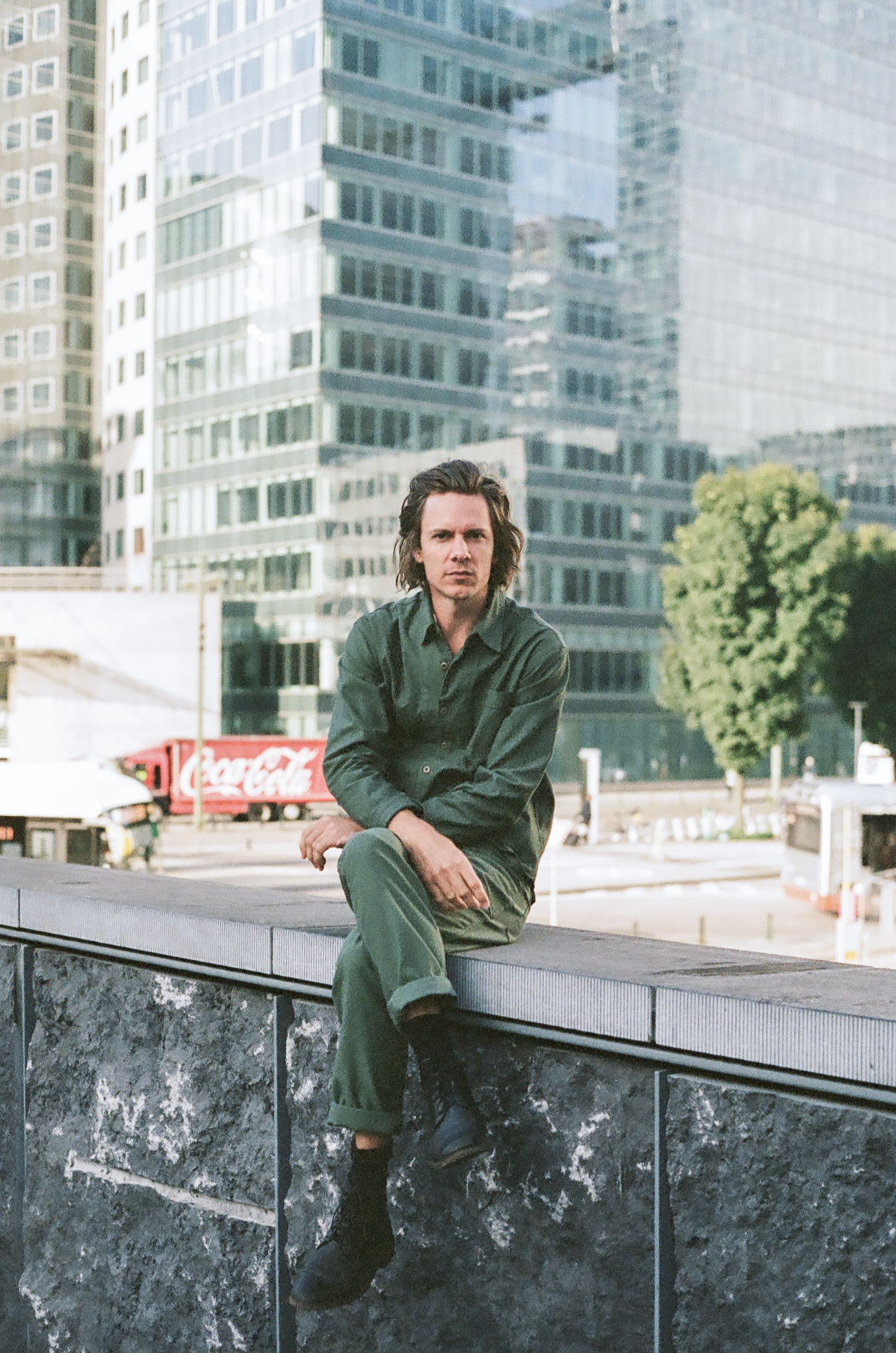
Name: The Bony King of Nowhere
Nationality: Belgian
Occupation: Singer, songwriter
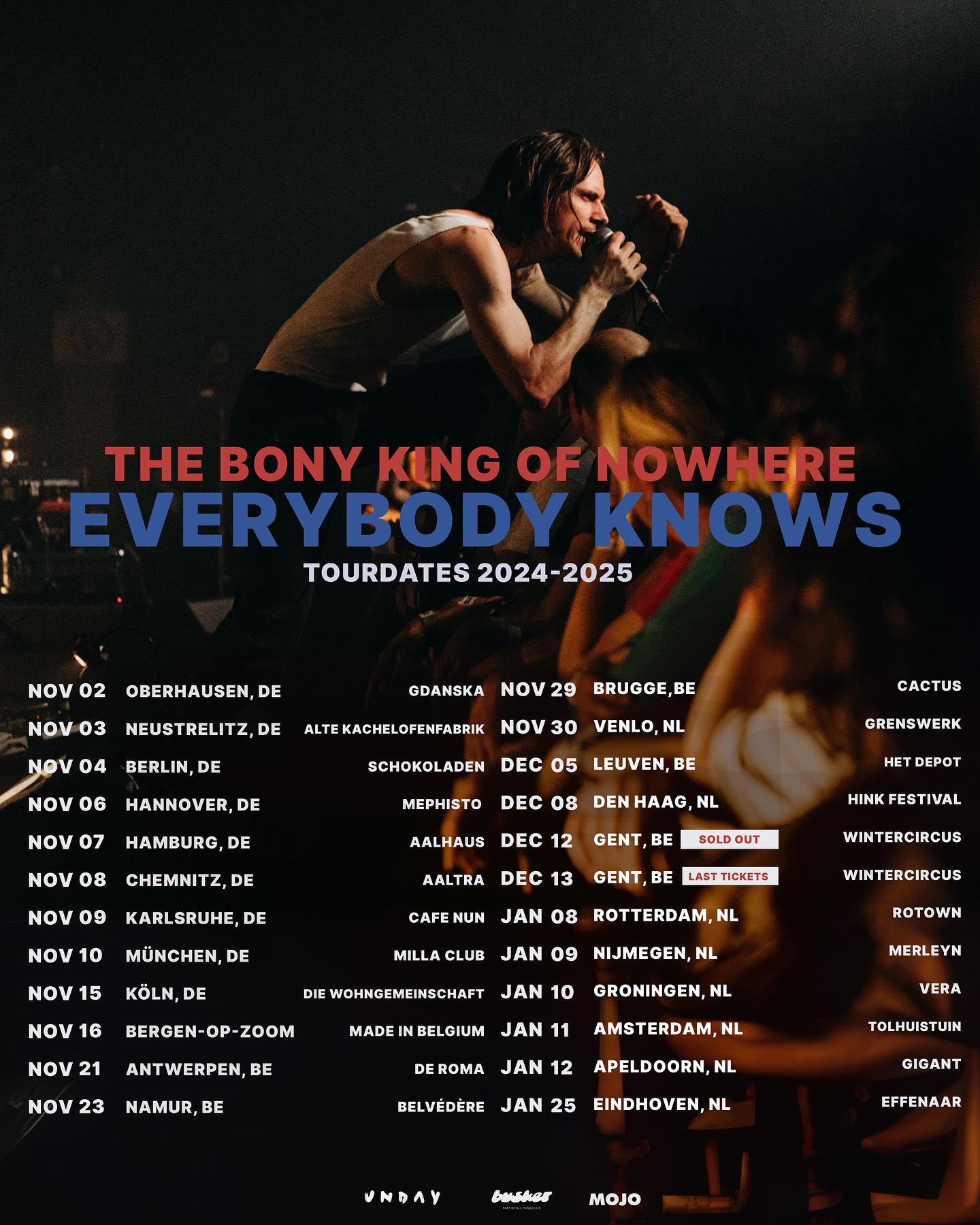
Current release: The Bony King of Nowhere's latest full-length album Everybody Knows is out via Unday. Catch him play live on his current tour: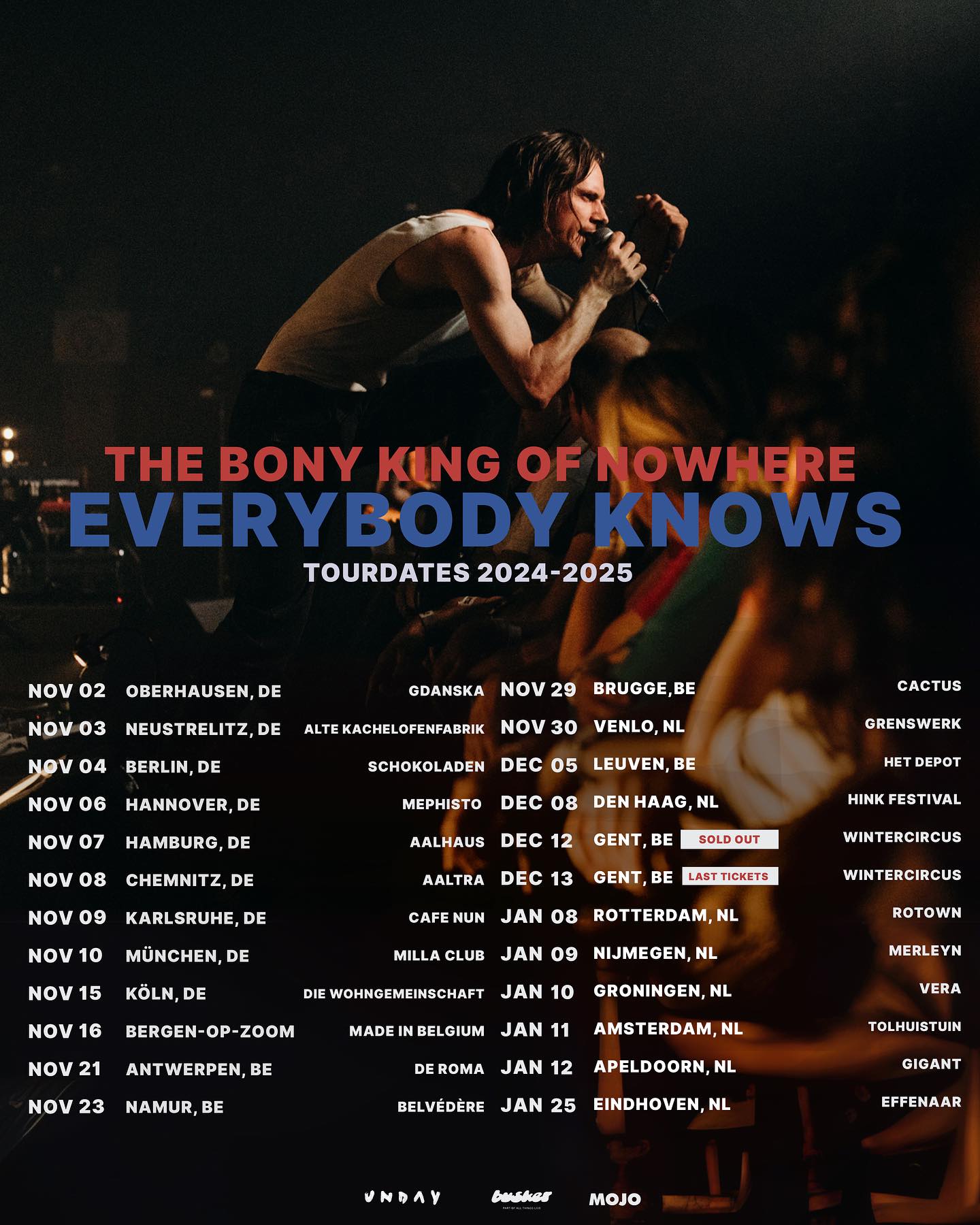
Vocal Music Recommendations: I’ve always been a big fan of the Anthology of American Folk Music released in the fifties on Folkways Records. There is this traditional song called “Rocky Road” performed by the Alabama Sacred Harp Singers that I’ve always found very very beautiful. It touches me in a way I can’t put into words … Probably because it’s so pure as it was never intended to be released as a commercial recording.
If you enjoyed this Bony King of Nowhere interview and would like to stay up to date with his music, visit his official homepage. He is also on Instagram, and Facebook.
Do you think that some of your earliest musical experiences planted a seed for your interest in your voice and singing? How and when did you start singing?
Oh yes, definitely! Thom York was the one that got me into singing. I was 14 when Kid A was released and I was completely mesmerized by that album. It still is one of my all time favourite albums, it’s just perfect in every way.
The way Thom York uses his voice and the way he articulates inspired me to start exploring my own voice, even way before I started playing an instrument. In a way I could say my voice was the very first instrument I started using, exploring … and I loved it.
It was only years later, at the age of 17 or 18, that I started playing guitar and started writing songs.
If you're also playing other instruments, how does the expressive potential of these compare to your own voice?
I would say my voice (and my songwriting) is my primary instrument and it’s the only instrument I’m really confident with.
I love to sing and I know my voice so well. I really know how to use it to express certain emotions, how to emphasize a particular lyric, etc … even though I feel like I still haven’t got to my full potential as a singer and I’m still exploring my possibilities.
I don’t have that feeling when playing guitar or playing piano. As an instrumentalist I have my limits and sometimes it frustrates me … I would love to be a great player, but it’s just not where my strength lays and maybe that’s just fine.
Besides that, to be a songwriter has always been my one and only ambition, musically that is to say, so I’m good where I am.
What were some of the main challenges in your development as a singer/vocalist? Which practices, exercises, or experiences were most helpful in reaching your goals – were there also “harmful” ones?
Up until the Silent Days album (it’s the album that precedes the new album) I didn’t encounter so many challenges as a singer. Or maybe it is better to say I might have been avoiding any challenges.
One of my weak spots, I thought, as a singer was my timing. I’ve always been a huge Bob Dylan fan and one of the many thousand things I love about him is his timing, his phrasing … Listen to “Subterranean Homesick Blues,” the way he’s timing all these beautiful words, it’s just so unbelievable.
Or “It’s Alright Ma”… mindblowing!
I think that is one of Dylan's most underrated strengths. To me, rhythmically he is by far the greatest singer of all time. He’s the one that made me become a better singer in so many ways.
So with the Silent Days album I started writing lyrics and melodies that were rhythmically more challenging (to me, that is to say) and I started emphasizing certain words or even consonants to make a sentence rhythmically more exciting. That’s what I learned from Dylan, the importance of articulation, phrasing and rhythm.
How do you see the relationship between harmony, rhythm and melody? Do you feel that honing your sense of rhythm and groove has an effect on your singing skills?
Wow, that’s really funny, to read this question after telling you about Bob Dylan! So I think I already answered that question.
Like I said, I think your sense of rhythm and groove have a HUGE effect on how you can express yourself as a singer, even (and maybe especially) when you’re singing a slow ballad type song. To me it’s all about the lyrics and how you put the words to the groove.
A singer is a messenger, you see. You have a message, something you want to share with the world, a thought, an idea, an experience, an emotion … And your one and only goal as a singer is to make sure the message gets through, right?
Another of my all time favourite Dylan songs is the acoustic NY sessions version of “Idiot Wind.” To me it’s one of the most personal and emotional songs he’s ever written.
Notice his sense of rhythm, the way he puts his words to the groove of his guitar. It just makes you listen to the words, he pulls you in, he takes you on a journey like no one else can do. Not even Leonard Cohen!
What are the things you hear in a voice when listening to a vocalist? What moves you in the voices of other singers?
That’s a question I wish I could answer … Sometimes a singer moves you, gets right to your heart, expresses exactly that specific feeling you’re having … But can you explain why? I think all great art is unexplainable.
The last time I was deeply moved by a singer was when I heard Adrianne Lenker sing. I saw her playing solo and a couple of months later I saw her again with her band Big Thief. She’s just unbelievable and don’t ask me to try and explain it. It’s just when she sings, I’m practically always moved to tears.
I think what all great singers have in common is that they make you feel really, really close to who you really are. At least that’s how I feel, I feel deeply connected with my inner self and there is a strong sense of the here and now, the beauty and cruelty of this world, humankind, etc …
I have that with Leonard Cohen, Dylan, Neil Young, Thom York, Adrianne Lenker, Townes Van Zandt, Emmylou Harris … They all make me feel so grateful to be alive, even at times when I feel awful.
When you're writing song lyrics, do you sense or see a connection between your voice and the text? Does it need to feel and sound “good” or “right” to sing certain words? What's your perspective in this regard of singing someone else's songs versus your own?
I definitely need lyrics to feel right and to sound right. Whatever ‘right’ might be of course - it’s more of a feeling I guess.
Sometimes a lyric can read beautifully on paper, but when you sing it it just sounds dull or weird or worse: meaningless. The opposite is also true, sometimes a lyric doesn’t make any sense on paper, but when you sing it it makes perfect sense. That’s the beauty of the mysterious world of songwriting, there are no rules, no certainties, no recipe … It’s a puzzle and when all the pieces fall into place, it’s an unexplainable magical thing.
So as a songwriter you are always in search of those specific words to fit your melody or vice versa. Like I said before, as a singer and songwriter you have to get your message through and to make sure you do so, it’s essential to find that magical combination where melody and words make a perfect match.
So when you’re singing someone else’s song, you’ll find out very quickly when a songwriter put a lot of effort and care into crafting that perfect combination. A great song is so much easier to sing than a not so great song.
Strain is a particularly serious issue for many vocalists. How do you take care of your voice? Are the recipes or techniques to get a damaged voice back in shape?
I do warm ups for every show now. I’ve never done it up until this new record. A lot of the songs are sung in the higher register of my voice and I couldn’t make it through an entire concert without warming up.
I always do the same exercises with the same video playing in the background, it’s become sort of a routine. It’s an early YouTube video by Eric Arceneaux titled “professional vocal warm up”.
I love the way Eric talks and explains every step of the warm up, it really motivates me to be serious about my vocal warm up. I’m usually not very into YouTube tutorials, but Eric is different and a really great vocal coach.
How has technology, such as autotune or effect processing, impacted singing? Has it been a concrete influence on your own approach?
I must say I’m kind of old school when it comes to processing tools such as autotune or even extensive vocal editing and comping. I love treating backing vocals with all kinds of weird effects, especially on the latest record, but when it comes to lead vocals I love to keep it real honest.
In the studio I always sing live with the band and when we capture a great take, then that vocal take is what we go for, no editing, no comping or whatsoever.
I don’t feel very much for effects like autotune, it takes away so much personality and it adds something that makes you sound uniform and I don’t see why you would want to sound like everybody else. What a waste of your own unique personality.
For recording engineers, the human voice remains a tricky element to capture. What, from your perspective, makes voices sound great on record and in a live setting?
In my experience my vocal sounds best, like I said, when recorded live in one single take together with the band.
I’ve tried overdubbing lead vocal, but for me it just doesn’t work. There is something magical when you perform a song together and when your vocal performance was the best out of 10 takes, 99% of the time you’ll see the band performance was the best too. It all kind of goes together.
Again, it’s all about communicating your message and when you do so as a singer, I’m sure the band feels it and plays in a way they could never play to a dull, always-the-same pilot vocal.