Published
Name: Bart Vanvoorden
Nationality: Belgian
Occupation: Artistic Director of the BRAND! Jazz Festival
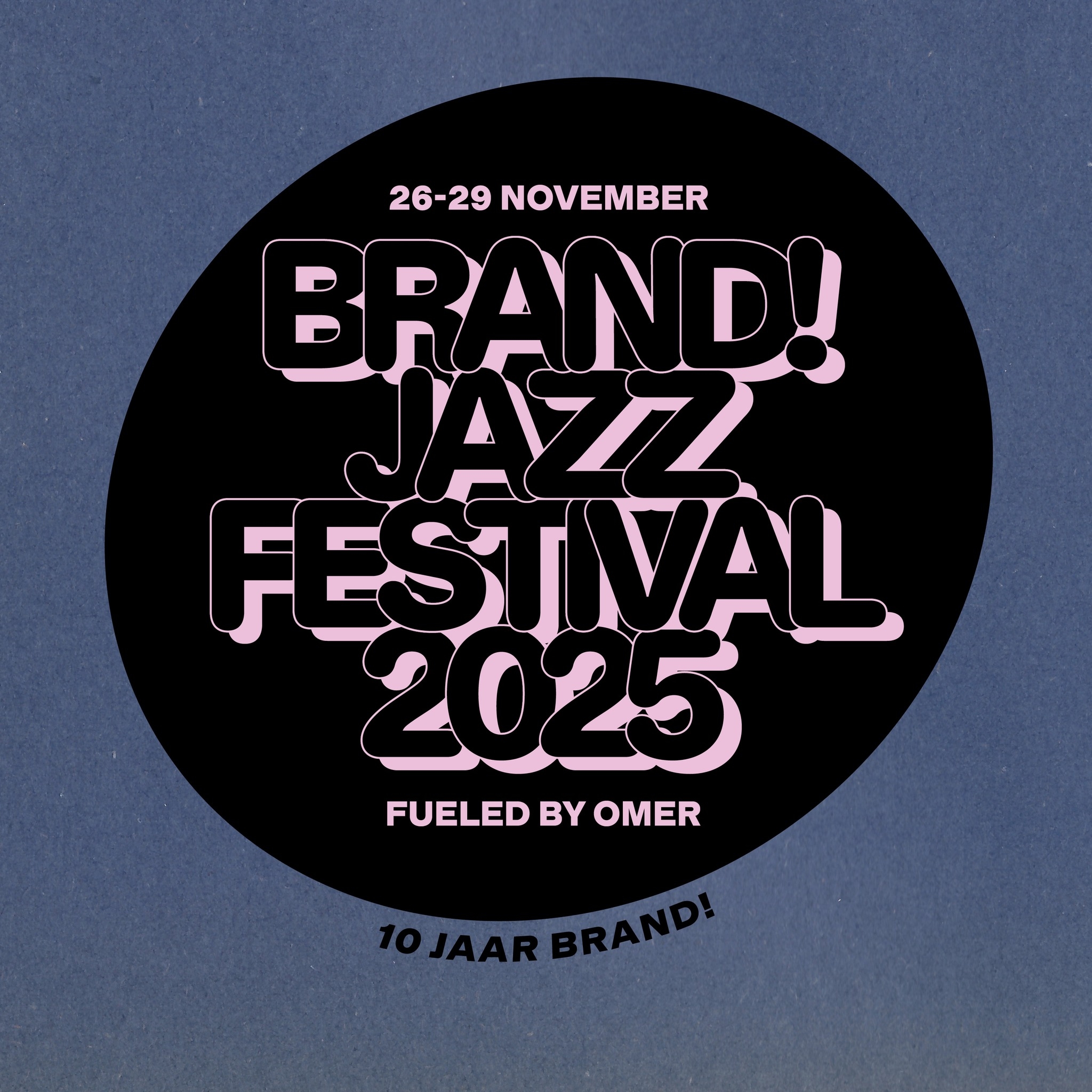
Current event: This year's BRAND! Jazz Festival, its 10th anniversay edition, will take place from November 26th to 29th 2025 at the nona arts center in Mechelen. For more information and tickets, go here.
For a deeper dive on two artists on this year's line-up, read our Mattias De Craene interview and our Jan Bang interview.
There's this really interesting quote won your website, which says that your programming is about stories. What does that mean?
It can mean, for example, that when we invite audiences to the club, we're giving them more than just a concert. Rather, we invite them, and from the moment they enter the venue, there's a script that we follow. There's a dramaturgy to the evening. We want to have a real experience.
It goes beyond the notion of a story as it might apply to theatre. It's more like, how can we perceive the whole art center as a way of telling stories to the audience?
You specifically said, “We don't want the facts.”
(laughs) Yes, because facts are everywhere - or not. But facts are journalism. What the arts can give us is something beyond the facts.
I mean, of course it can be fact based. When Jonathan Blake was here a couple of weeks ago, it starts from a specific situation of discrimination and racial injustice throughout many, many years, specifically in the United States. But he's not telling these facts on stage. He's making his interpretation throughout his music, and that's really beautiful, because you feel this energy.
We're not quite there yet. But I really like the approach, because it's a different way of working within an institution and figuring things out throughout the journey. It's not like we defined everything from the start.
Part of the story is that you focus on the underground.
We did start off quite humble, if I may say so. We do try to grow throughout the years, but it's not an easy thing to do, because we have a limited amount of seats in our own venues.
We're aware that we don't have the big names. But it's also a choice. And as part of that choice we can do things that others may not be able to. Every two years, for example, we'll give select Belgian artists the opportunity to show their different projects, and we'll also offer them what we call a “dream project.” So we'll ask them: What is your musical dream? And how can we help, as a festival, to achieve this dream? This is a journey we'll start off more than a year before the festival. So you feel like you're building the program with them. So it becomes their story as well.
This, too, is, for me, a way of interpreting the idea of of storytelling, but within the context of a festival. As an audience, you can discover new Belgian musicians in different ways.
It seems as though the festival and Nona as a space are inseparably connected. And yet, NONA was, at first, mostly focused on theatre. How and when did the festival enter the stage, as it were?
As an art center, at NONA, we have always featured multiple art forms, mainly theatre and dance as well as a bit of visual arts. Over the past ten years, however, jazz has become a bigger focus within the organization.
Prior to that, we would organize concerts in our hall, not many actually, but it worked. And then, at a certain point, things simply started to happen - something within the jazz scene, also with younger artists with a very open approach to the notion of jazz. And one way to support this scene was by organizing a festival with multiple stages - and then by programming regular gigs at the venue.
Our collaboration with JazzLab is key to this. It's a platform for jazz which Nona was collaborating with. But at a certain point, we saw some similarities in the way we were supporting artists and we started to talk about possible synergies.
And that's how we came to closely collaborate. And instead of organizing concerts in our venue, we actually designed a new club called Nova express with a specific approach and a specific ambience - similar to a great club in the States, where you can get a fancy dinner and everyone dresses up for the venue, so people don't just come to see a particular band or a particular musician.
What, exactly, were the changes in the jazz scene you were observing?
I felt like there was something new happening, a new generation of musicians trying to open up the notion of jazz. A new wave of jazz as it were. They were approaching jazz more as an attitude, not as a defined genre, which I found very interesting, and it was specifically Belgian musicians.
Of course, there are bands in Belgium as well that tend to go more for the traditional definition of jazz. And that's perfectly fine, it's just not what we're looking for, which is a more artistic approach to music.
It must be very fulfilling to see bands in your immediate environment and partly with your help, pushing the boundaries without caring for creating a “product.”
Of course, it's a pleasure to work with new generations and other kinds of defining jazz. That's a privilege.
Every year again, we see different musicians or musicians we already knew that are doing completely different things than they did before. And it's not only happening in music, by the way. It's also taking place in other forms of arts, with artists seemingly not caring about what the product will be or how the audience will react, only doing what they want to do, or what they think is important.
And I thought, what if we try to give them a stage, combined with the more general idea that I want to make jazz more alive within the city of Mechelen. And right at that very moment, there was another art center in in Ostend that had just started off with a new jazz festival called Storm!
So I spoke with them, and I said, What if we organize BRAND! - which means fire and refers to a city myth of Mechelen.
Another story to tell!
Right! There's this myth about the city that once, the people of Mechelen thought that the big cathedral was on fire. But it was actually a combination of fog and moonlight which made it seem that way. So everyone started to get water and tried to extinguish the burning cathedral – but it was never truly on fire.
But on the other hand, of course, it is also a reference to our passion for music, and a passion for jazz in particular.
We worked together with Storm! for two years, and then the other festival ceased to exist. So that's how the first edition started.
So you see jazz as a way of doing things, rather than a description of the results of this process?
I always call it an attitude, but the way you describe it is actually very interesting and correct as well for me.
What I mean by this is that you always have the combination of craftsmanship and freedom. And when these two are combined, then for me, music becomes very, very interesting.
If you then go one step further, you can combine that attitude with a new generation that also is influenced by, for example, hip hop or soul or rock. Which makes it even more interesting because then something happens that we don't know yet.
I am not sure if I could have defined this way at the time. But I think that's what went through my head, looking back.
With this in mind, how are your approaching the programming of the stories for the 2025 edition of BRAND?
One thing that I don't want to achieve is having the same audience every day.
I mean, everyone is, of course, welcome every day. But I try to work in, as we call it, different colors. Every day has a different color and there are different stories on a given day. It's not just about combining this band with another band because of their availability. I really want to establish connections and make sure that it makes sense why the bands are programmed on the same day.
And it's my belief that if you do that, you can manage to get different audiences, and also to broaden your audience. I truly hope, that this genuine approach is felt and appreciated by the audience. And maybe they'll come back to the festival, or try another day of the festival, because they were really surprised by day one, for example.
Just like with the artists, it's a story that ideally continues beyond each edition.
It may not have been the intention from the start. But it's really the result of what I call a very sustainable approach of organizing a jazz program throughout different forms:
You get to know the artists, and they get to know your venue. They get to know the festival and understand that their music can resonate with our audience. And you find that you get some opportunities by building relationships long term that we could never achieve this way as an art center.
We're not a big festival, we can't compete with the big festivals in, for example, Antwerp and Brussels. So we have to do it in another way.