Published
Name: Bremer/McCoy
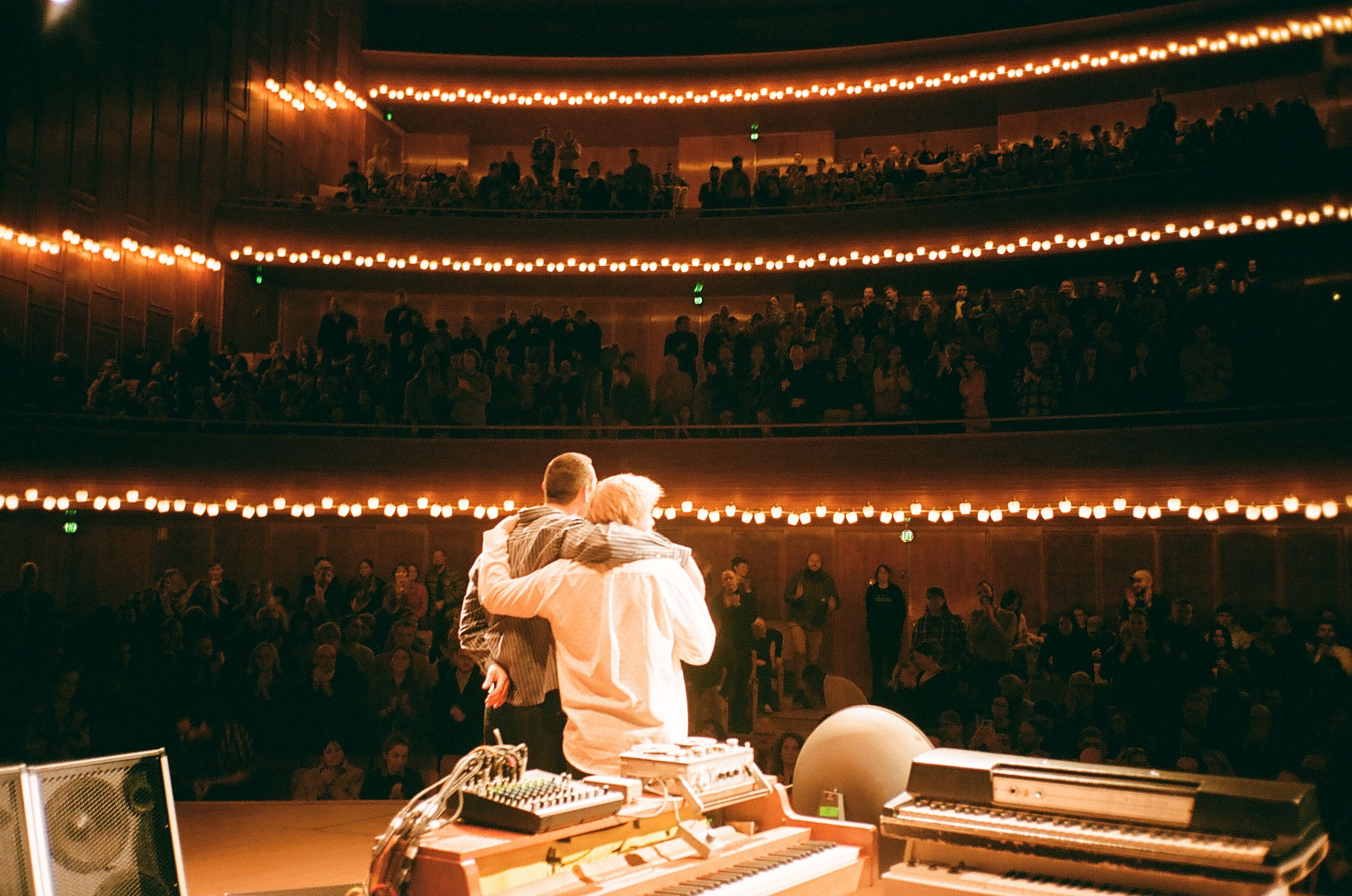
Members: Morten McCoy (piano), Jonathan Bremer (bass)
Nationality: Danish
Recent release: Bremer/McCoy's latest album Kosmos is out via Luaka Bop.
Current event: Bremer/McCoy are currently on an extended European tour. Catch them live at one of their upcoming dates.
If you enjoyed this Bremer/McCoy interview and would like to stay up to date with the band and their music, visit their official homepage. The duo are also on Instagram, Soundcloud, and Facebook.
For a deeper dive, read our earlier Bremer/McCoy interview.
When it comes to experiencing strong emotions as as a listener, which albums, performances, and artists come to mind?
It can be any kind of artist. The important thing is not really what they do, but more the intention behind it.
Music can be great in all genres when the emotion and intent of the artist really shines through.
There can be many different kinds of emotions in art – soft, harsh, healing, aggressive, uplifting and many more. Which do you tend to feel drawn to most?
Our music is mostly described as meditative and melancholic. But when listening to music, I can be drawn to all kinds of emotion.
I think all kinds of emotion can be interesting in music.
I have had a hard time explaining that listening to death metal calms me down. When you listen to a song or composition, does it tend to fill you with the same emotions – or are there “paradoxical” effects?
I don’t really have those kind of paradoxical experiences with music. But it sounds cool :-)
In as far as it plays a role for the music you like listening to or making, what role do words and the voice of a vocalist play for the transmission of emotions?
Our music is instrumental, but when I listen to music with vocals, the words and timbre of the voice both matter a lot.
One of the upsides of instrumental music is that it transcends languages and is more global. But one of the upsides of having vocals is that many people relate more directly to a vocalist than an instrumentalist.
When it comes to experiencing emotions as as a creator, how would you describe the physical sensation of experiencing them? [Where do you feel them, do you have a visual sensation/representation, is there a sense of release or a build-up of tension etc …]
For me it’s not a very physical feeling, it’s more of a spiritual and mental thing.
When it comes to composing / songwriting, are you finding that spontaneity and just a few takes tend to capture emotions best? Or does honing a piece bring you closer to that goal?
Yes! The early takes generally feel best. Some of the magic is lost when you play a song too many times.
Sometimes we’ve ended up using an early demo recording because we couldn’t recreate the spontaneity and magic of the first take. This is the case for the song “Alpha & Omega” on the Ordet album.
How much of the emotions of your own music, would you say, are already part of the composition, how much is the result of the recording process?
It’s all in the composition and the improvisation. The recording process is more about getting it across to the listener as well as possible.
For your current release, Kosmos, what kind of emotions were you looking to get across? How do you capture the emotions you want to get across in the studio?
The emotion is in the music, so we just try to play it as well as we can, and be in the moment.
Spontaneity can sometimes be harder when you know you’re being recorded, so the trick is to forget that you’re being recorded and just be in the moment
What role do factors like volume, effects like distortion, amplification, and production in general for in terms of creating the emotions, energies or impressions you want?
It definitely matters.
We are big on getting the sound right, which is why we travel with a whole lot of gear. On the other hand, if the spirit of the music is strong, it will probably shine through a bad PA, bad acoustics or even bad instruments.
But we definitely do what we can to make the conditions as good as possible.
In terms of emotions, what changes when you're performing live on stage, with an audience present, compared to the recording stage?
We try to make it the same.
Playing in the studio can sometimes feel more sterile, but we do what we can to make it very real. We use our live setup in the studio and do very few overdubs, if any.
So you can say that we try to make the studio as “live” as possible.
How does the presence of the audience and your interaction with it change the emotional impact of the music and how would you describe the creative interaction with listeners during a gig?
There’s always a vibe in a room, and we can very clearly tell if people are listening intently or not. Luckily, nowadays people always listen very intently at our concerts, but when we first started playing as a duo and were unknown, that wasn’t always the case.
The audience is a part of the performance and somehow shape the way we play, even though it’s hard to say exactly how.
What kind of feedback have you received from listeners or concert audiences in terms of the experience that your music and/or performances have had on them?
Many different kinds of feedback. It’s always nice to hear what people experience from the audience's side.
A lot of people tell us of meditative states during our concerts. There are also some people that are interested in the technical side of things and ask us about all the old analog gear we bring. So the feedback is a wide spectrum.
Would you say that you prefer to stay in control to be able to shape the emotions or do you surrender to them and allow the music to take over? Who, ultimately has control during a live performance?
I try to not have too much of an agenda when playing. Ideally, I just listen and the playing will do itself.
Wanting to be in control can stand in contrast to being spontaneous, which is what improvisation is all about. And even when not improvising, I still think the magic happens when you let go and just follow the music.
The emotions that music is able to generate can be extremely powerful. How, do you think, can artists make use of this power to bring about change in the world?
Good question. It’s hard to predict how people will react to your music and what kind of change it will bring about. Therefore I think, as a musician, it’s best to just focus on the music itself and making it as good you can.
You can of course hope for people to react to it in certain ways, but once the music is released it’s really out of you hands.