Published
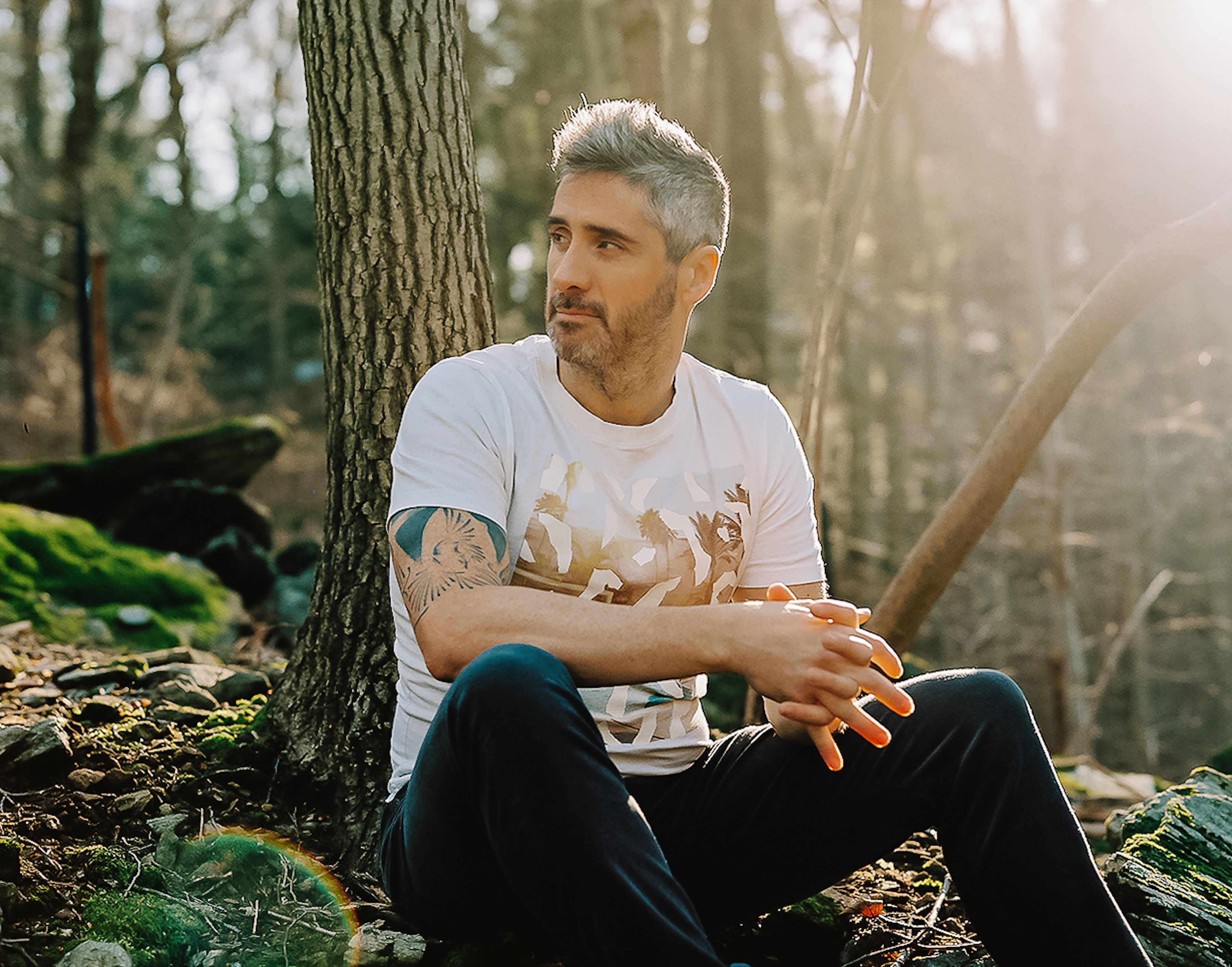
Name: Bryan Perri
Nationality: American
Occupation: Composer, conductor, music supervisor, orchestrator, arranger, music director
Current release: Bryan Perri's new album Few Words is out October 18th 2024.
Recommendations: Recordings from the Åland Islands- Jeremiah Chu and Marta Sofia Honer: A good friend of mine who I respect tremendously when it comes to music- recently recommended a song from this album to me and I was immediately swept away in a series of brilliantly unique sonic universes. The combination of synths and found sounds and the sounds of the stories of the people from these islands are transformative in a way that has continued to inspire my work.
Phillip Glass Piano Etudes- I recently purchased the sheet music to the complete set of these and each one is not only playable by most folks but also incredibly harmonically interesting. They are also extraordinarily meditative to play and to listen to. I find a lot of peace in the repetition of patterns and themes and find inspiration in the way they evolve through each movement.
[Read our Jeremiah Chiu & Marta Sofia Honer interview]
If you enjoyed this Bryan Perri interview and would like to know more, visit his official homepage. He is also on Instagram, and twitter.
Where does the impulse to create something come from for you? What role do often-quoted sources of inspiration like dreams, other forms of art, personal relationships, politics etc play?
It happens for me during moments of unintentional contemplation. When my mind is simple and “clean”. Something materializes in a strangely concrete way. Sometimes it is a very clear idea, sometimes it is a fragment of a direction to go. Either way- I begin to explore it. I would call it a waking dream.
I take in as much art as possible from as many mediums as possible. I have to be careful. If in any way I become aware that I am “receiving” the art in order to make my own, any ideas that come from that tended to be somehow tainted. I do my best to get out of my own way to become generally inspired by what others have created.
Personal relationships and past traumas play a massive part in my writing. Every piece I write tells a story. I feel a piece is most successful when others are able to see their own “story” in whatever emotional journey I try to convey.
My music is emotional. And often filled with twists and turns. This is how my ADD brain works and it is my hope that it inspires others. As a matter of fact, the working title of this record was Few Words: Music of Neurodivergence and Healing.
For you to get started, do there need to be concrete ideas – or what some have called a 'visualisation' of the finished work? What does the balance between planning and chance look like for you?
I only need a jumping off point. I see a piece of music as an out of focus camera shot slowly coming into focus pixel by pixel, note by note. Sometimes the jumping off point is a palette of instruments- such as the sextet of low strings and a Wurlitzer in Ambient Words.
Sometimes I’m inspired by a composer- such as Bartok - as in Exploration for Strings and Guitars.
Sometimes I am inspired by philosophy or my own relationship to the world- as in Ephemerality.
Each piece deepens my relationship to myself as I peel back the layers of self-consciousness and fear. To create is to live.
Is there a preparation phase for your process? Do you require your tools to be laid out in a particular way, for example, do you need to do 'research' or create 'early versions'?
I have no set method of preparation. Sometimes I need to write down in words what I am setting out to do, sometimes I go straight to the page, and other times I turn the lights off, have a bourbon or smoke some weed and sit in the dark and just put my hands on the piano.
I throw away far more versions of anything that I keep but I write down or record every idea. Each iteration of any given piece is a valuable step on the way.
Do you have certain rituals to get you into the right mindset for creating? What role do certain foods or stimulants like coffee, lighting, scents, exercise or reading poetry play?
My ritual is to maintain my mental health. It involves eating well, lifting, biking and yes … a pretty solid amount of coffee.
I prefer the dim lighting of the early morning and dusk. Something magical happens for me in those “in between times” of day. I feel a peace there that opens me up to work.
What do you start with? And, to quote a question by the great Bruce Duffie: When you come up with a musical idea, have you created the idea or have you discovered the idea?
Well- I also raise chickens and I still don’t know the answer to whether or not the chicken or the egg comes first.
All I know is I say “yes”.
When do the lyrics enter the picture? Where do they come from? Do lyrics need to grow together with the music or can they emerge from a place of their own?
I find lyrics have the potential to be confining given my long history participating in theater.
So far in my process, the lyrics have been discovered AFTER the music. In the case of Ephemerality, the “lyrics” are all jumbled up quotes in Latin, French and English from Stoic, existential philosophers. The piece ends with the particularly inspiring thought from Socrates-“I know I know nothing”.
The section is somewhat of a postlude that peacefully sums up the episodic journey that was previous heard. This occurred to me after writing the piece as the idea that tied the whole thing together. I had no idea when I started that the piece would end this way.
What makes lyrics good in your opinion? What are your own ambitions and challenges in this regard?
I will never claim to be a lyricist. Good lyrics are harder than anything to write. A good lyric embraces the limitations form puts on it, but flourishes to deeper human understanding as a result. Poetry.
I hope I can only enhance other’s lyrics with the music I write.
Many writers have claimed that as soon as they enter into the process, certain aspects of the narrative are out of their hands. Do you like to keep strict control or is there a sense of following things where they lead you?
I say yes, and I follow.
Often, while writing, new ideas and alternative roads will open themselves up, pulling and pushing the creator in a different direction. Does this happen to you, too, and how do you deal with it? What do you do with these ideas?
It happens all the time. I use the “insert bars” feature more often than anything else when composing.
I try not to limit myself to knowing what the piece will be when I start writing. I start with broad strokes, then let things develop as they do and as they evolve.
There are many descriptions of the creative state. How would you describe it for you personally? Is there an element of spirituality to what you do?
The creative state exists for me when I am focused, inspired and acting as a sort of conduit between the unconscious and the living. When my “monkey mind” is quiet- this is successful. When it is not- and that is often- creating is much less about inspiration and more about the technical.
There are places for both in the creative process.
When you're in the studio to record a piece, how important is the actual performance and the moment of performing the song still in an age where so much can be “done and fixed in post?“
The performance is everything to me. If something I write is meant to be performed live, then it must be performed live. If it is meant to live in the recording sphere, then I find a different kind of art in all that technology can accomplish.
Once a piece is finished, how important is it for you to let it lie and evaluate it later on? How much improvement and refinement do you personally allow until you're satisfied with a piece? What does this process look like in practise?
So far- every piece I write is a living entity that evolves and changes after completion.
Each version continues to exist, but the pieces continue to grow and grow.
Even recording a solo song is usually a collaborative process. Tell me about the importance of trust between the participants, personal relationships between musicians and engineers and the freedom to perform and try things – rather than gear, technique or “chops” - for creating a great song.
Scott Reisette who was the engineer and one of the producers of Few Words is someone I have collaborated with significantly over the last decade. I trust him. I trust his art and I trust his ear. I don’t think art can be created in a vacuum. I value collaboration above all else.
I am also very supported and inspired by my loving husband Daniel C Levine. I will always be grateful for the safe space he created in my life that without which- I would never have been able to write Few Words.
What's your take on the role and importance of production, including mixing and mastering for you personally? In terms of what they contribute to a song, what is the balance between the composition and the arrangement (performance)?
I take the time people give to listen to my music very seriously. It is a gift. With that in mind I want them to have the best sonic experience possible. I want them to be in the concert hall with me. To that end- production, a skilled mixer and mastering engineer are essential to the process.
The magic that can be created by folks who are skilled at their craft - the way they can extract the vicerality (there I go making up words again) of a performance can be breathtaking.
After finishing a piece or album and releasing something into the world, there can be a sense of emptiness. Can you relate to this – and how do you return to the state of creativity after experiencing it?
I wouldn’t say emptiness. I would say intense vulnerability. Sometimes I listen back to my pieces and imagine I am a specific person (Who I respect) and listen to it through their lens.
The I go down the rabbit hole of critiquing myself which helps me grow- but I also find satisfaction in moments that I think people will like. It is all about the listener.
Music is a language, but like any language, it can lead to misunderstandings. In which way has your own work – or perhaps the work of artists you like or admire - been misunderstood? How do you deal with this?
I think my ADD nature can make my music feel like it is “doing too many things” or chaotic. This is how my brain works. This is my truth. It’s crazy up in here!
I have the ability to calm it down, but for Few Words-I chose not to. I chose to write my truth. I take pride in that. I hope over time, folks might understand it more and more.
Creativity can reach many different corners of our lives. Do you personally feel as though writing a piece of music is inherently different from something like making a great cup of coffee? What do you express through music that you couldn't or wouldn't in more 'mundane' tasks?
Well- as someone who is coffee obsessed- the ritual of my morning coffee is essential to me. To me that is a ritual. I make it the same everyday and it provides an anchor.
Creativity is more like those videos you see of boats trying to make it through a storm in the north sea. You navigate the vicissitudes of the ebb and flow of the creative generative process and are always looking for the calm where everything comes together where the “anchor” can finally drop.
The mundane provides profound grounding for the creative.