Published
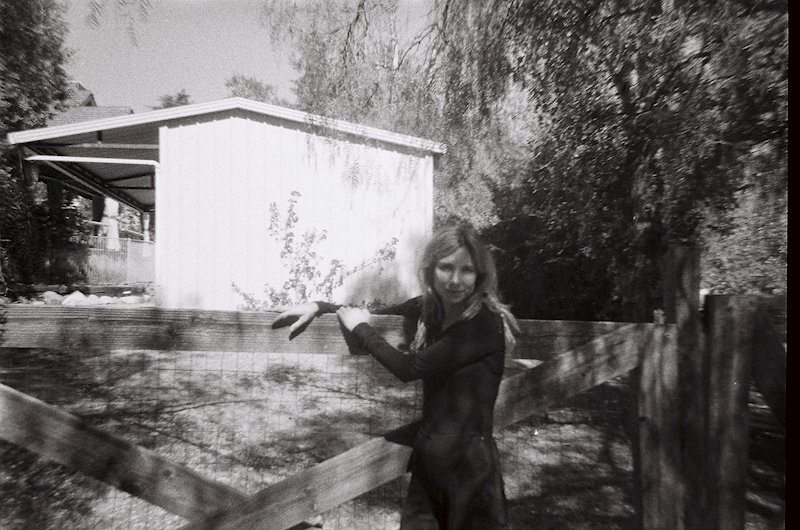
Name: Cate Kennan
Nationality: American
Occupation: Composer, producer, multi-instrumentalist
Current release: Cate Kennan's new album Shadows is out via kranky.
If you enjoyed this Cate Kennan interview and would like to know more about her music, visit her on Instagram, bandcamp and Soundcloud.
For Shadows, what kind of emotions were you looking to get across?
The emotions in my music aren’t intentional, they’re beyond my control in almost every way. When I sing a melody, or play chords, the music reflects in some way how I’m feeling emotionally, but that is something that unfolds in real time as I’m creating it rather than something I decide beforehand.
At some point while making Shadows, I realized that these ten recordings all belonged together, while others I was working on didn’t fit. Any emotional coherence the album has emerged intuitively as I grouped songs together that felt connected. That’s when I started to recognize the themes they shared too.
Listening to it now and looking back, I think a sense of longing, loneliness, nostalgia, devotion, and a groundless faith in the unknown mysteries of life are all things I felt while I was making it.
I have had a hard time explaining that listening to death metal calms me down. When you listen to a song or composition, does it tend to fill you with the same emotions – or are there “paradoxical” effects?
I think I tend to synchronize with whatever song I’m listening to. It can really affect my mood in an instant.
I was joking recently that there are certain bands or genres, nu metal, some synth pop, some boogie, that I’m not allowed to play while driving on the freeway. A sad song when you’re sad kind of invites you to feel things you’ve had to keep bottled up, and maybe makes you feel less alone.
For me the connection really is that simple, direct, and visceral.
In as far as it plays a role for the music you like listening to or making, what role do words and the voice of a vocalist play for the transmission of emotions?
This is such a special question because it gets at one reason why music really feels like magic to me.
As a listener I think that most of the emotion I take from music comes from a song’s melodies, harmonies, and chord structure. Depending on those elements I often find instrumental music even more emotionally stirring than vocal music. For an art form that is so nebulous and immaterial, essentially just waves moving through the air, it's amazing to me how people will hear a melody and pretty much agree on its emotional character, without lyrics for context.
As for my own music, even when I’m making instrumental recordings, my voice is a part of the writing process from the beginning. When I’m writing on the keyboard or guitar, I’ll start playing and instinctively sing the notes I want to hear next as I search for the melodies and chords. Even if a song contains no vocals at all, the musical ideas are all shaped by my singing.
I think that two of my vocal songs - “Shadows” and “Reverie” - are more emotionally pure and hit harder as instrumental versions. But I wrote these songs less from an intentional or cerebral place and more from an emotional place, almost the way you would just kind of freewrite in your journal and have some realizations about life.
As a whole all of the songs on this album felt less like compositions I was constructing and more like feelings I was uncovering.
When it comes to composing / songwriting, are you finding that spontaneity and just a few takes tend to capture emotions best? Or does honing a piece bring you closer to that goal?
After writing and recording these songs, I spent time trying to gain new perspective on them. I experimented with different arrangements and instrumentation, re-recorded some parts and and replaced temporary synthesizers with guitar.
But by the end, most of the finished recordings weren’t very far from their original demos. At some point I realized that this record was better served by staying spontaneous and resisting the temptation to overwork things. None of the “version twos” I made ended up on the album. If anything, they convinced me that the initial gestalt I had going for each song was essentially its strongest version.
“Reverie,” for example, is the original vocal demo, lyrics and everything. I was holding an electro-voice in my hand (you can even hear the lines I punched in) and my guitar is mic’d through an amp. Every attempt to remake it only made it seem further away from what it wanted to say.
Two years later my friend Nico doubled the synth solo at the end on guitar, and that was the final touch.
The first two songs on the album, “The Lone West” and “Shadows,” are essentially demos. I recorded them in a span of a couple of afternoons. They have been finished and unedited since late 2020, and kind of served as my framework for the album’s production, which I’d say is kind of murky, haunted, distant in the way thoughts or memories are.
Even songs I spent more time engineering like “So Far Away” and “Calling,” evolved intuitively, one decision simply led to another until they were finished.
I wrote the lyrics for these songs pretty quickly, and straight from my heart. I didn’t edit them too much. It embarrasses me now to listen to “So Far Away” and “Calling,” in particular. In my everyday life I am a lot more comfortable playing it cool, so to speak.
Although it doesn’t take much reflection for me to know how indebted I am personally to artists who are vulnerable and honest about what they’re going through. No one else’s love songs have ever seemed trite or banal to me. There are themes like loneliness and heartache that haunt humanity through every era.
In terms of emotions, what changes when you're performing live on stage, with an audience present, compared to the recording stage?
I try and shut the world out when I’m performing as much as I do when I’m recording. I have always admired people who are natural performers and play off of the audience’s energy.
Performances like that always move me, but I never notice the audience if I can help it. I hope the stage lights are bright enough so that I can’t even see who is there. When I perform I try to return emotionally to the place where the song came from. That’s what helps me play, honestly.
One thing I have noticed is that I perform better when the stakes are higher, a bigger venue, more people in attendance. I wonder if I have to feel like the risk of disappointing people is real before there’s no room left for my own self-consciousness. That’s something I never think about when I’m recording. I never think: someone will hear this one day, will they like it? In my studio I feel completely free.
It’s hard to find that freedom on stage. No matter how insular I make myself I can never fully ignore the reality that people have chosen to spend their evening hearing me play. I’m still learning how to navigate the self-consciousness I feel in that.
What role do factors like volume, effects like distortion, amplification, and production in general for in terms of creating the emotions, energies or impressions you want?
Writing, engineering, and recording have been intertwined for me from the beginning. The first music I ever recorded when I was in high school was on the electric guitar through some pedals. I recorded my voice through the guitar pedals too.
I didn’t have a synth yet, but I loved electronic music and synth music and I would write instrumental pieces where I would try and make the guitar melody sound like a synth. I was not good at playing guitar, and recording helped me to actually make songs I had in my head without necessarily even being able to play them all the way through.
I’ve expanded my studio significantly since then, and I’ve become a better musician, but my creative approach really hasn’t changed much. I have my studio routed through a patch bay now, so it is easy to record a dry signal and send it through hardware effects at the end. I do this when I feel I have to, but it’s less inspiring for me to work this way because I like to play off of the mood and the atmosphere the effects create.
I make music for a lot of reasons, and now that I’ve started releasing records, some of those reasons seem a bit abstract and existential, but on any given day the reason I sit down in my studio to record music is because it is so fun. I lose myself and I lose track of time and space. It’s easier for me to get into this kind of flow when I create a sound that I love with an effects chain from the very beginning rather than imagining what it might become later.
When it comes to experiencing emotions as as a creator, how would you describe the physical sensation of experiencing them? [Where do you feel them, do you have a visual sensation/representation, is there a sense of release or a build-up of tension etc …]
I associate recording with a release of tension -- that really resonates with me.
When I was a kid I would spend a lot of time writing stories and drawing. Looking back, I think I did these things to process my emotions and experiences in life. I have memories of coming home from school, not wanting to hang out with my friends, and feeling this compulsive need to disappear into what I was making.
It’s like a restless unsettled energy that has always built inside of me. Once I feel that it’s hard to stay present where I am. The only way I feel any relief is by focusing on one of my creative outlets. Music became that way for me when I started recording and not just playing. I think there’s something about constructing a world of my own that sweeps me away and helps me process what is happening in my life.
I notice the busier I am, the more I need to relieve the tension by going inward for a time. It’s become a cycle I really enjoy. I’ll have one phase of time where I am busy with my friends, going to shows, working at my day job, always moving, and then that gives way to the next phase, where I withdraw into my own world to record and process my emotions.
During a phase like this I don’t really want to see anyone except for my boyfriend, I don’t want to go anywhere except to take a walk through the hills. I just want to be in my own world and make music. I need a lot of time and space around my work, in this way, but the time away from it to build up the tension is really important too.
The emotions that music is able to generate can be extremely powerful. How, do you think, can artists make use of this power to bring about change in the world?
I think music has the power to change people’s moods and add beauty or meaning to life in endless small ways throughout daily life, rather than making sweeping changes in the world.
On a personal level, making and listening to music has always been an escape, like a drug, that lifts me out of myself and helps me transcend life’s pain, it’s banality, it’s abjection. It has made things like beauty feel possible when I couldn’t find it anywhere else. It has reminded me that love is real. It makes me feel less alone in my thoughts and experiences.