Published
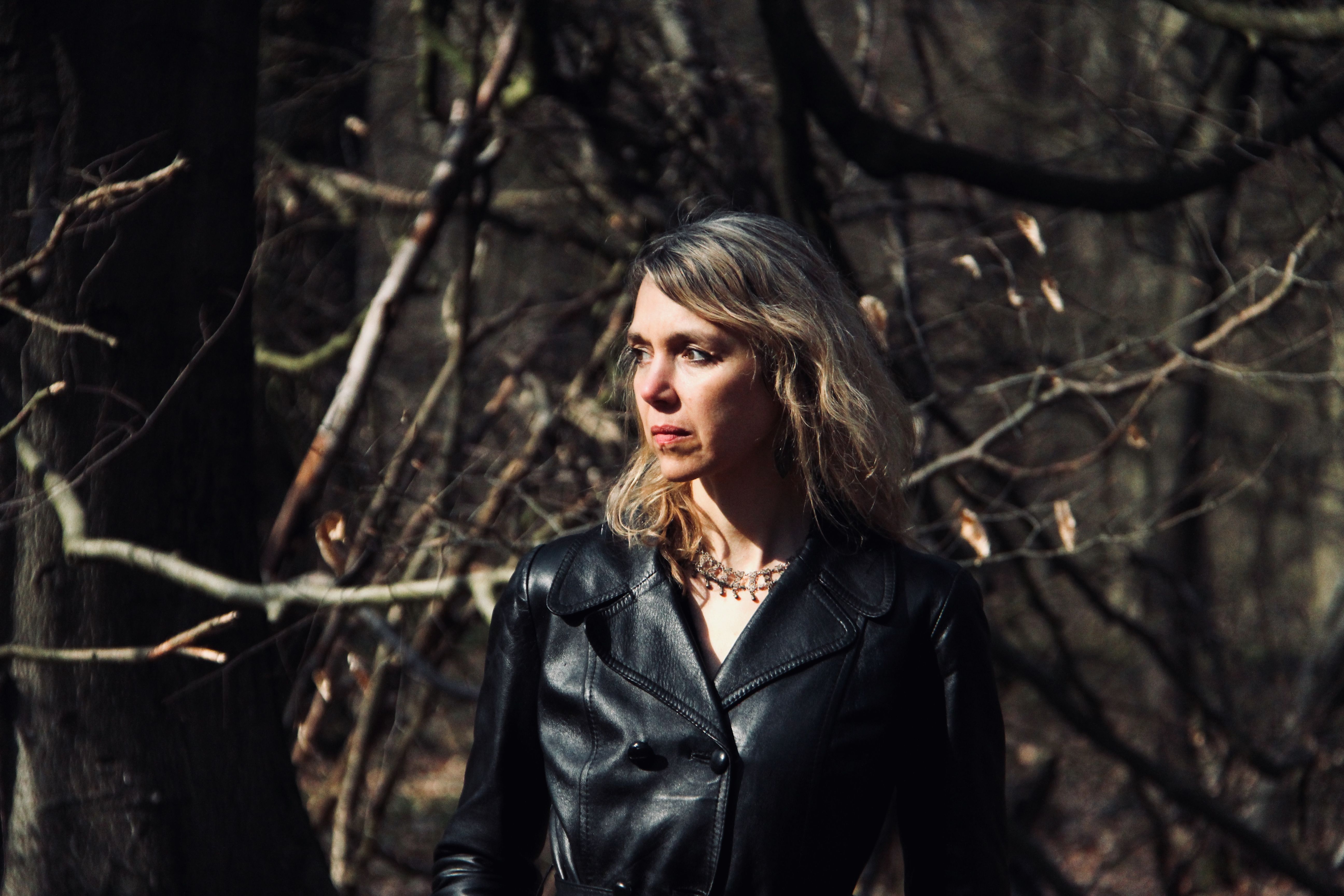
Name: Catherine Graindorge
Occupation: Violinist, violist, composer, actress
Nationality: Belgian
Current Release: Catherine Graindorge's Songs for the Dead, featuring collaborations with Simon Huw Jones (And Also the Trees) as well as Pascal Humbert (16 Horsepower, Lilium, Détroit), is out via Glitterbeat/tak:til.
Recommendations:
A book: Richard Ford, Between them (2017)
A painting: Nicolas de Stael, “Le Concert ‘’ (1955)
[Read our Simon Huw Jones of and also the trees interview]
If you enjoyed this interview with Catherine Graindorge and would like to find out more about her, visit her official homepage. She is also on Instagram, and Facebook.
For a deeper dive, we recommend our earlier Catherine Graindorge interview.
Where does the impulse to create something come from for you? What role do often-quoted sources of inspiration like dreams, other forms of art, personal relationships, politics etc play?
Anything can be a source of inspiration, a book, a film, a meeting, a walk in the woods, sometimes simply an inner state that you can't always clearly identify ... I don't have any rules, I follow my instincts.
For my 2nd solo album Eldorado, I was inspired by people I met and current events.
But I conceived Songs for the Dead more as a narrative with a certain dramaturgy, using Ginsberg's text as a source of inspiration.
For you to get started, do there need to be concrete ideas – or what some have called a 'visualisation' of the finished work? What does the balance between planning and chance look like for you?
In general, when I think too much I'm not productive. Music is where my mind goes to rest.
So I don't plan much, I like the unknown and always start improvising.
Is there a preparation phase for your process? Do you require your tools to be laid out in a particular way, for example, do you need to do 'research' or create 'early versions'?
As I almost always start a project by improvising, I record myself, then listen again and start to structure. So I do quite a few drafts before arriving at the final phase.
What do you start with? And, to quote a question by the great Bruce Duffie: When you come up with a musical idea, have you created the idea or have you discovered the idea?
I'd rather say I've discovered the idea.
When do the lyrics enter the picture? Where do they come from? Do lyrics need to grow together with the music or can they emerge from a place of their own?
There aren't many lyrics in my music, but when there are they almost always come after the music.
When I work with singers I invite on my music, like it happened with Iggy Pop, Hugo Race or Simon Huw Jones, I sent them musical ideas and they write lyrics based on my proposals.
What makes lyrics good in your opinion? What are your own ambitions and challenges in this regard?
It's important for the lyrics to become one with the music in an organic way, at least in my music. I don't create songs with lyrics but pieces where the voice becomes an instrument in the same way as my violin or anything else. I don't see it as a lead but as part of the story.
Obviously, words give meaning and guide the listener's imagination, but I like to throw things out there and let everyone imagine what they want. Having also created shows as an actress, I've always attached importance to the economy of words.
Many writers have claimed that as soon as they enter into the process, certain aspects of the narrative are out of their hands. Do you like to keep strict control or is there a sense of following things where they lead you?
Oh no, I love getting lost. I love the unexpected and going where I didn't know I'd end up! Control only comes at the end when I feel I've found the way and decide to fix things.
But in concert, for example, even if the structure of the tracks is fixed, I always continue to improvise, I don't like each note to be fixed.
Often, while writing, new ideas and alternative roads will open themselves up, pulling and pushing the creator in a different direction. Does this happen to you, too, and how do you deal with it? What do you do with these ideas?
I'd say that's precisely the basis of the way I work: start with almost nothing and let yourself be carried away. As some writers say, there's a moment when the characters take over, it's the same with music, at some point it shows us the direction.
Sometimes I wonder how I got here, I'm unable to retrace my steps.
There are many descriptions of the creative state. How would you describe it for you personally? Is there an element of spirituality to what you do?
The feeling of not knowing anything about existence, the universe, our own disappearance; loss, death, eternity are all elements that drive me to create.
Playing music allows me to purge my anxieties, to get to the heart of my emotions and to give substance to this existential void.
When you're in the studio to record a piece, how important is the actual performance and the moment of performing the song still in an age where so much can be “done and fixed in post?“
It's that precise moment when you're recording that appeals to me.
Of course, you can correct or change it afterwards and think you could have done it better or differently, but we're human beings, not machines, and I feel very attached to our strengths and weaknesses.
Once a piece is finished, how important is it for you to let it lie and evaluate it later on? How much improvement and refinement do you personally allow until you're satisfied with a piece? What does this process look like in practise?
It's always a good idea to let some time go by before listening to a piece again, but I give myself deadlines before questioning everything.
I can have a lot of doubts, which is good for stimulating creativity, but wanting to improve and perfect too much doesn’t mean the music will be better. That's why I try to rely as much as possible on my intuition.
Even recording a solo song is usually a collaborative process. Tell me about the importance of trust between the participants, personal relationships between musicians and engineers and the freedom to perform and try things – rather than gear, technique or “chops” - for creating a great song.
The human aspect is very important, I need to work with 'beautiful people' who are human, sensitive and have a sense of humour.
Musically, I choose person who fit to my world, but bring a world of their own in it; I’m always attracted to musicians with a certain style or sound, something that goes beyond virtuosity or technique.
After finishing a piece or album and releasing something into the world, there can be a sense of emptiness. Can you relate to this – and how do you return to the state of creativity after experiencing it?
Yes, every time I finish a project, I'm overcome by a feeling of emptiness, except when it's time to get up on stage and play. That's when you breathe new life into the project or the album.
I love performing, it's what makes me tick.
Music is a language, but like any language, it can lead to misunderstandings. In which way has your own work – or perhaps the work of artists you like or admire - been misunderstood? How do you deal with this?
I wouldn't call them misunderstandings, but rather affinities.
I can't please everyone, but that's part of the job.
Creativity can reach many different corners of our lives. Do you personally feel as though writing a piece of music is inherently different from something like making a great cup of coffee? What do you express through music that you couldn't or wouldn't in more 'mundane' tasks?
I think that creativity and the way we go about our daily lives form a whole. Every act, whatever it may be, has an influence on everything we do.
That said, playing music or creating requires a different state of mind, as if you had to abstract yourself from the world and forget about yourself.