Published
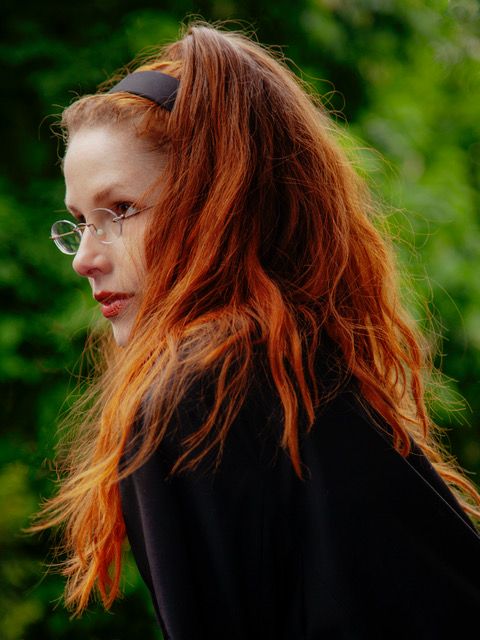
Name: Mélissa Gagné aka CECILIA
Nationality: Canadian
Occupation: Composer, vocalist, multi-disciplinary artist
Current release: CECILIA's CHOEUR LP is out via Haunter.
Do you think that some of your earliest musical experiences planted a seed for your interest in your voice and singing?
Yes definitely. However, I don’t think I have access to the memory of the seed experiences that originated my desire to sing and my drive to express and soothe myself using the voice. I believe these experiences are prenatal, from the womb or at least from before the earliest conscious memories since in those first memories, I am already singing.
I could say that the lullabies sung by my mother or older sisters may have had an efect. Some of them evoked a particular sense of uncanniness, an ambiguous tension between an apparent innocence and a somber melancholic undertone. Through them I was also discovering the power of words to paint vivid imagery, engage my imagination and stir emotions.
I remember a rhyme I used to request as a lullaby every night. It was a song where each line ended with a syllable that was identical to the first syllable of the following line, creating a chain of words and expressions based on sound, a phonetic suspense rather than a meaningful storytelling. In minor keys, the melody was repetitive, almost hypnotic. One line said 'fou de rage' (mad with rage), and since I did not know the word ‘rage’ yet I would hear 'fou d'orages' (mad of storms) and the image of a dark storm in my mind was frightening.
There was something pleasurable in these impressions, dealing with soft fear within the imagination and within the safety of the maternal presence.
How and when did you start singing?
I recall being around the age of 4 or 5, playing and improvising with my voice in this partly abandoned and dilapidated farm building next to our house.
I think this was the first time I experienced a lucid encounter with the acoustics, reverberation and refection of a space. It was filled with old barrels, rusted iron tools, piles of all sorts of retired objects from another time. I was alone with birds flying above, chirping and building nests in the high open wooden ceiling. In that moment, I sensed that my voice could serve beyond the mere utility of everyday communication. I caught a glimpse of something like a call to participate in the soundscape.
The conversation was engaging with other visible and invisible forces, presences, characters. This new awareness and attraction would extend all sounds in general, not just my voice.
I sang publicly for the first time at 7 or 8. I performed an acapella cover of “L'Aigle Noir” by Barbara on the gymnasium stage for the school’s year-end talent show. I had no idea who Barbara was at that time ; I only knew and heard a version of the song by the Québécois singer Marie Carmen.
I was also unaware of the darker meaning behind the lyrics; to me, it was simply the story of a girl by a river, witnessing the spectacle of a tall black eagle taking flight.
Then, there was the village church choir. It was a joy to dissolve into the ensemble of voices. To become one thick expanded voice. I remember being spellbound by a funeral ceremony once. In the end, enduring those tedious and dull rehearsals in the freezy presbytery was worth it for these few moments of intense emotion and solemnity.
I really wished I could have been the organ player instead though. How much I was obsessed with the organ, we were forbidden to even touch it and I dreamed of playing it.
How would you describe the physical sensation of singing?
It starts within the breath, the diaphragm pushing downward and grounding the intention in the belly. It is like being a fleshy, fluid-filled stringed trumpet—both a wind and string instrument.
I need to move my arms and open my chest. I accentuate, punctuate, accompany the delivery with my hands moving like making up a sign language. The whole body is called upon. I bend the knees, I anchor my feet on the floor. I can’t sing while wearing heels, I usually take of my shoes.
There’s a sensation of expansion, an extension of the body’s energetic reality unfolding outward—vibrations projected beyond the body.
When you’re writing song lyrics, do you sense or see a connection between your voice and the text? Does it need to feel and sound “good” or “right” to sing certain words?
Oh yea. Absolutely.
I don’t typically ‘write’ lyrics beforehand; recording is my writing. The words usually emerge as I improvise, sing, and explore the melody, phrasing, and articulation. I play with words as I shape the core of the song. Lyrics usually come up as I jam, weaving alongside the sounds I am crafting. They can also appear as I am walking in the street or in insomnia—then I might write them down to remember, or record them on my phone.
I find it very challenging to bring words into the music I make. Language often feels intrusive and disruptive—too harsh, too familiar, too ‘bright.’ It casts a distracting light on a sound environment that thrives on subtle emotional depth. I want to protect the music’s sensory, dreamlike obscurity, as I always feel language risks upstaging, distracting, or even destroying it, reducing a raw, archaic expression to mere communication.
So I intuitively tend to keep my lyrics very minimal. Many of my songs avoid recognizable language entirely, instead mimicking it with a pre-linguistic, childlike impulse. “Innocence” and “Opening Night” from Summer in Sexilia feature vocals without discernible words.
With CHOEUR, I am, for the first time, fully embracing lyrics and the joy of confronting the challenge of using words.
How has technology, such as autotune or efect processing, impacted singing? Has it been a concrete infuence on your own approach?
I’ve never used autotune, but vocal processing surely helped me reconnect with my voice and explore it more creatively, opening up to it without being too critical or judgmental.
When I began making electronic music, I could only engage with my voice if it was barely recognizable—drowned in reverb, delays, and distorted echoes, with no clear language. I treated my vocals like other instruments, blending them with the sounds, samples, and textures I was creating. I distorted and degraded them, applying the same guitar pedal effects I used on my electric keyboards. Loop pedals were also a wonderfully powerful tool for creating vocal textures through layering.
When I started working with softwares I discovered the joy of compressors and refined my way to use EQs. This allowed a more intimate exploration of sound, as if I were placing the voice under a sonic magnifying glass. It helped me bring out and work with this proximity, almost tactile quality.
With time, I’m using fewer and fewer effects. I am searching for something rawer and more stripped down, close-up sound. I use indirect techniques, manual collaging, and layering that produce effects. Delays, echoes, chorus, and textures can appear from manual work of layering and superimposition.
What are the things you hear in a voice when listening to a vocalist? What moves you in the voices of other singers?
The person’s imprint. The person’s magic.
I will dare to say that ultimately I want to hear the soul embodied. The heart of that person, yet the expression of something that transcends the personal. I am looking for sincere presence, depth and intensity. I like a voice shifting between moments of powerful mastery and raw fragility. Harsh yet delicate, accepting and using imperfections, allowing vulnerability to shine.
The timbre is also important. I am most often moved by warm, rough and grainy voices that sound like they are 30 000 years old. They can crack and break with every line, only to be reborn and triumph in the next. I love Etta James just to name one sublime vocal monster.
I've been fascinated by pure vocal recordings for a long time. Do you have some recommendations in this direction?
I am also fascinated by pure vocal recordings. The first thing that comes to my mind is this recording of Georgian singer Hamlet Gonashvili and his ensemble. The song is called ‘Tsintskaro.’
This is one of the most beautiful vocal pieces I’ve ever heard—so sophisticated, so moving. The video is also fascinating. I love seeing these men in suits and ties, sitting as if they were about to start a board meeting or a conference.
And since I mentioned lullabies earlier, I am thinking of this sicilian lullaby ‘Ninna Ninna’ sang by Antonina Sergi.