Published
Name: César Merveille
Nationality: French
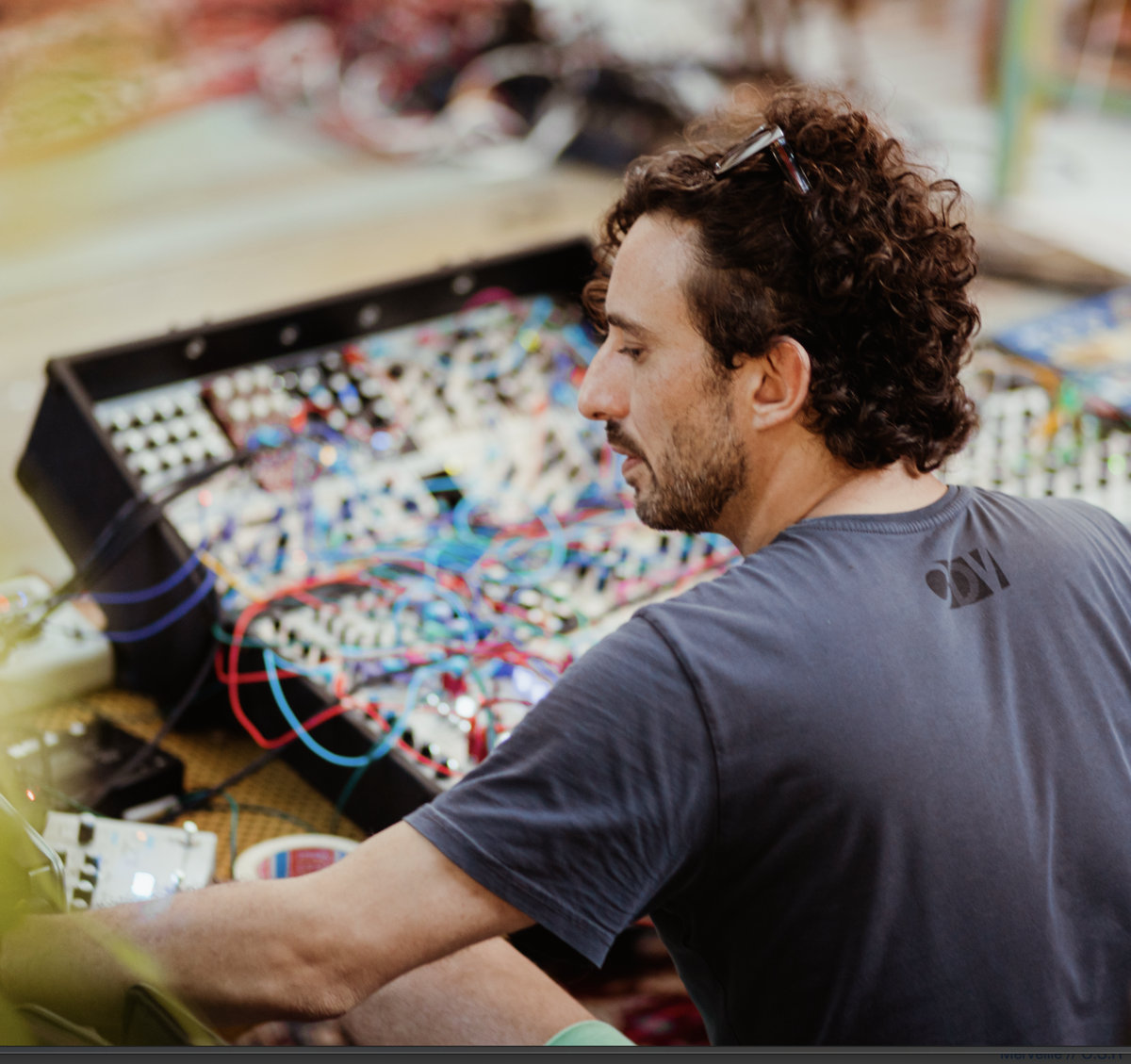
Occupation: Producer, DJ
Current release: César Merveille's new EP CDV Whispers is out via Unreleased Ltd.
Recommendations for Berlin, Germany: I would recommend a small place called Ikii. It’s a natural wine bar, a very intimate spot where they play ambient music. It’s not a loud or flashy place – it’s more about atmosphere, sound, and connection. It represents something I really appreciate about the city: small, thoughtful spaces where people gather to listen, talk, and just be present.
Topics that I am passionate about but rarely get to talk about: Outside of music, I’m actually passionate about very simple, grounded things. I love cooking. I also have a dog who means a lot to me – she’s a bit mischievous but incredibly sweet, and having her around brings a lot of balance to my life. I’m also a fisherman, and I love being in nature. Spending time in the countryside, taking care of a house there, going fishing, being near water – these are things that really ground me. They offer a very different rhythm from the constant stimulation of music, clubs, and cities. I wouldn’t say I openly talk about this a lot, but it’s definitely an important part of who I am. Beyond that, I have a strong interest in the arts in general.
If you enjoyed this César Merveille interview and would like to stay up to date with his music, visit him on Instagram, Facebook, and bandcamp.
What musical experiences planted the seed for your interest in electronic music?
My father planted that seed, he had a small studio in my bedroom when I was very young. There were synthesizers like the DX7 and drum machines everywhere. I was fascinated by the lights and sounds, even before understanding the music itself.
Later, I moved from rock to hip hop. But what really brought me close to electronic music was my first experience at the Rex Club in Paris, hearing Laurent Garnier. Experiencing that music on a proper sound system, surrounded by people, completely changed how I perceived electronic music.
That was the moment I understood how this music was meant to be experienced, loud, surrounded by people from everywhere who share a common love for that music.
What does the term “electronic music” mean today?
At its simplest, it’s music made with computers and electronic instruments such as synthesizers and drum machines.
Beyond that, it’s such a broad term now that it almost resists definition. Disco, house, techno, drum n bass, IDM and many other genres where it’s about a lot more than just music.
For you personally, is electronic music still a way of life and if so, in which way?
Absolutely. Making music is a life choice.
Electronic music grew from a small underground movement into something much bigger, but it still carries that spirit. It remains deeply connected to communities, shared values, and alternative ways of living.
Debates around electronic music often focus on technology. What have you learned through talking to colleagues or through performing/or recording with other musicians? What role does community play for your interest in production and getting better as a producer?
When I started, there were no tutorials or YouTube videos explaining everything. You learned from friends. You taught each other. Community was essential to progress.
Today, it’s possible to learn everything alone in your bedroom, but something gets lost in that process. Exchanging ideas, sharing music, learning different approaches – that’s what truly enriches you as an artist.
Community teaches you that there isn’t just one way to make music. There are infinite paths, and you grow by sharing rather than guarding your knowledge.
What are examples for artists, performances, and releases that really inspired you recently and possibly gave you the feeling of having experienced something fresh and new?
My Friend Lenny Mailleau 1/2 of Zendid, is finding some interesting rhythms and colours in his productions, quite distinguishable from the music of his already great duo.
In terms of performance the Der Visionaere Band is absolutely amazing. My favourite band to see live at the moment.
What kind of music/sonic materials, and ideas are particulary stimulating for your work right now? Where do most of your inspirations come from – internal impulses or external ones?
Inspiration comes from both internal and external sources. Sometimes it’s a record, a sound, a sample, or a new module that triggers days of work. Other times it’s a purely internal idea – a desire to explore chords, structure, or a specific feeling.
The state of mind and conditioning of yourself can make a great difference, too.
Tell me about the sounds, creative directions, artists and communities as well as the colleagues and creative hotspots of your current hometown, please. How do they influence your music?
A central place for me is Club der Visionäre, where I’ve been a resident for over a decade. The community around it is strongly influenced by people connected to Perlon – artists like Ricardo Villalobos, Zip and Melchior Productions, who now have their studios nearby.
It’s a very tight-knit, long-term community. We listen to each other, influence each other, share studio time, and exchange ideas over many years. That kind of continuity is incredibly valuable.
Recently, for example, I had the chance to spend time with Chris Coda, Seth Troxler, and DeWalta, discussing polymeters, polyrhythms via Chris Coda’s software which he originally developed for himself in the late ’90s. Spending days exploring that system together was a perfect example of what this community offers: deep exchange, curiosity, and shared exploration.
Today, electronic music has an interesting relationship between honouring its roots and exploring the unknown. What does that balance between these two poles look like in your music?
For me, it’s a constant back-and-forth. I’m inspired by older machines, older approaches, and the history of electronic music, but at the same time electronic has always been about innovating.
This is the description of my label if you go visit the website: “A NATURAL HARBOUR FOR A CROP OF ARTISTS FOR WHOM SOUNDS, HISTORIES AND FUTURES DANCE TOGETHER.”
That’s why my setup mixes old gear with new modern modular systems and new tools. It’s a dance between past and future, and I don’t think one can exist meaningfully without the other.
What were some recent tools you bought, used, or read about that changed your perspective on production, performing, or making music?
Nothing fundamentally changed my perspective in a dramatic way, but one thing that made a significant difference was working with very high-end speaker monitors.
High-quality speakers completely change how you shape sound. You start hearing depth, space, and balance in a way that’s simply not possible on lesser systems. When you switch between different monitors, you immediately understand how sound translates differently, and that awareness deeply affects how you produce.
In term of gear for performance I got some new modules like Shakmat Bishop’s Miscellany Mk2 which help creates riffs on the fly and Befaco Oneiroi that creates incredible ambiances.
How do you see the role of sampling in electronic music today?
Sampling has always been a fundamental part of electronic music. That said, today it sometimes feels like we’re dealing with samples of samples of samples. That repetition can become uninspiring.
One of the reasons I moved toward modular systems was to escape a dependency on samples. I still appreciate a well-used sample.
But overall, I feel sampling is a bit overused at the moment, and I’m more interested in creating sounds from the ground up.
What are some of the most recent innovations in sound design for you, and what are your current personal limits in realizing the sounds you have in your mind?
There has been an incredible amount of development in sound design tools. Modular systems, samplers, granular synthesis, computers – there’s already more possibility than one person could fully explore in a lifetime. Even very specific things like stereo filters open entire worlds of sound. Speakers and 3D / Immersive sound is going to become a big thing too.
At the same time, my personal limit isn’t really technical. I’m still searching for the sound that exists in my mind. I often describe it as “chasing the dragon.” Every time you feel like you’re getting closer to what you want, another layer appears, another possibility opens up. Your taste evolves, your ears change, and what felt right yesterday might feel incomplete today.
I like sounds that combine air and punch at the same time, but defining that precisely is an ongoing process. There’s no final destination – just continuous refinement.
In as far as it applies to your work, how would you describe the interaction between your music and DJing/DJ culture and clubs?
My music spectrum is really large. I have a jazz band in which I use modular systems, I work with classical musicians, and have a wide range in electronic from ambient to house. I like to keep more freedom in my productions, looser structures, more adventurous than what I play.
When you play in front of a few thousand people who want to dance you play accordingly. I don’t want my productions to become too mechanical and leave room for exploration.
How would you say your live performances and recording projects are connected at the moment? How do they mutually influence and feed off each other?
My live performances and studio work are directly connected.
For the live project I do with Viken as VIZARE, our approach is deeply rooted in how we work in the studio. I take small elements from studio sessions and adapt them for live use, and vice versa. We focus on a limited set of tools that allow us to improvise. Improvisation is very important for us, because it brings something organic into the performance.
We aim for something that feels alive and responsive.
The studio feeds the live set, and the live experience feeds back into the studio. It’s a continuous loop, and that exchange keeps both sides evolving.
Even if AI will not entirely replace human composition, it looks set to have a significant impact on it. What does the terms of composing/producing mean in the era of AI, do you feel?
For me, composition has always been about the journey rather than the result.
One of the main reasons I moved toward analog gear and modular synthesizers is because they force you into very personal paths. The way modules connect, the way signals interact, the unpredictability – all of this shapes the composition itself. A lot of the magic happens through trial and error. You don’t always know where you’re going, and that’s precisely what makes it interesting.
AI, on the other hand, is often about recreating things perfectly, even recreating imperfections. But for me, what interests me is the process: the failed attempts, the detours, the moments where you suddenly discover something unexpected. That journey represents a huge part of the value of making music. As long as humans keep exploring new systems, new routes, and new ways of working, there will always be something personal that AI can only imitate, not originate.
I also believe that, even in the future, people will care about whether something was made by a human. Just like vinyl still matters to people, knowing that someone physically went through the process of making something gives it meaning.
The human element – the uncertainty, the mistakes, the exploration – is what makes music alive.