

Name: Charlotte Lang
Nationality: Dutch-Swiss
Occupation: Saxophonist, composer, improviser
Current release: Charlotte Lang's debut album The Journey is out via Unit.
If you enjoyed this Charlotte Lang interview and would like to know more about her music as well as upcoming gigs and releases, visit her official homepage. She is also on Instagram, and Facebook.
What were some of the musical experiences which planted a seed for your interest in jazz?
The seed for my interest in jazz was planted early on, likely through moments of discovering the expressive possibilities of music and hearing the unique voice of jazz - particularly the powerful sounds of big bands. These ensembles remain one of my favorite and most influential formats.
A transformative experience came when I had the opportunity to study with George Garzone. His "triadic chromatic approach" opened an entirely new dimension for me, offering fresh ways to think about melody and harmony.
I explored these ideas in one of my compositions, "OKAY," where I sought to let his concepts shape the musical narrative. This piece probably stands out on the CD, as I usually draw on other compositional techniques.
Jazz was about a lot more than just music in the 60s and 70s, from politics to fashion. For you personally, is jazz still a way of life – and if so, in which way?
Yes, for me, "jazz" is much more than music - it's a way of life.
I see it as improvised music with structure and a common thread, and I approach life the same way. A lot of things are new, and they may not happen how I thought they would, but that’s what keeps it interesting. It’s challenging but exciting. Some days, it's easier than others.
Just like in "jazz", life requires flexibility and creativity. You adapt to unexpected changes and turn them into opportunities for growth. It’s about finding the moment, staying curious, and embracing the beauty in surprises. This mindset shapes how I approach work, relationships, and everyday experiences.
Many people perceive jazz as a genre with high barriers of entrance, both for listeners and musicians. What have your own experiences been in this regard?
"Jazz” as a genre is incredibly diverse and open. Quite often, I hear, "Oh, you're a jazz musician - well, I don't like jazz." Many people perceive jazz as loud, intense, or extreme - what some might call "free jazz." While that’s one side of “jazz”, there are so many different subgenres, styles, and layers that offer so much.
One of the most important aspects of jazz for me is its focus on improvisation. The freedom to create and respond in the moment makes it accessible and deeply personal for both musicians and listeners. It’s about expression and connection, which lowers the perceived barriers once you start exploring.
In my own work, I aim to create music that welcomes listeners into the world of jazz, blending elements from different styles and maintaining a strong sense of melody and rhythm. Jazz welcomes individuality, and that’s what makes it such a rich and rewarding experience, whether you’re playing or just listening.
Derek Bailey defined improvising as the search for material which is endlessly transformable. As of 2024, what kind of materials are particularly stimulating for you?
I find inspiration in almost everything. It could be listening to one of my all-time heroes, like Cannonball Adderley, attending a concert of my saxophone students, a slam poetry performance, or engaging in a deep conversation. Inspiration often comes from unexpected places, and I’ve learned to stay open to it in all forms.
However, what’s become clear to me over time is that my creative process doesn’t thrive under pressure. I’ve realized that giving myself space and time to explore ideas leads to more promising results.
When I allow the material to develop naturally, the possibilities feel endless and transformative.
How would you describe your relationship with your instrument – is it an extension of your self/body, a partner and companion, a creative catalyst, a challenge to be overcome, something else entirely?
My saxophone is like a voice when words fail me. It offers me another way to express myself, a different form of communication. It’s liberating.
In many ways, my relationship with my instrument feels like an extension of myself and my body. It’s both a partner and a companion, though not always the easiest, as it’s also connected to many expectations. Playing it feels like a natural extension of who I am, and that connection makes it an indispensable part of my life.
For many artists, life-changing musical experiences take place live. How do you see that yourself?
Live experiences provide immediate feedback, and that direct interaction is incredibly impactful. The energy from the audience, the spontaneous moments, and the shared experience all influence and shape the music and improvisation in ways that are difficult to replicate in a studio setting.
It’s in those live moments that the music truly comes to life, evolving in real-time and creating something unique each time.
How, would you say are your live performances and your recording projects connected at the moment? How do they mutually influence and feed off each other?
It's hard to say at the moment, as my recently released album, The Journey is my debut album, and my release tour is just about to start. However, I'm very curious to see how the live performances and recording projects will connect and influence each other.
I expect that the energy and spontaneity of live performances will bring new dimensions to the material, while the recordings will serve as a foundation that shapes how we approach the live shows.
There are various models to support jazz artists, from financial help to mentorships/masterclasses. Which of these feel like the best way forward to you?
I believe both are essential. Without financial support, many projects simply aren’t feasible. However, having a mentor can help a lot.
A mentor can provide guidance in finding the right direction, offering valuable insights and motivation - something that can be especially challenging when you’re navigating the ups and downs of an independent career.

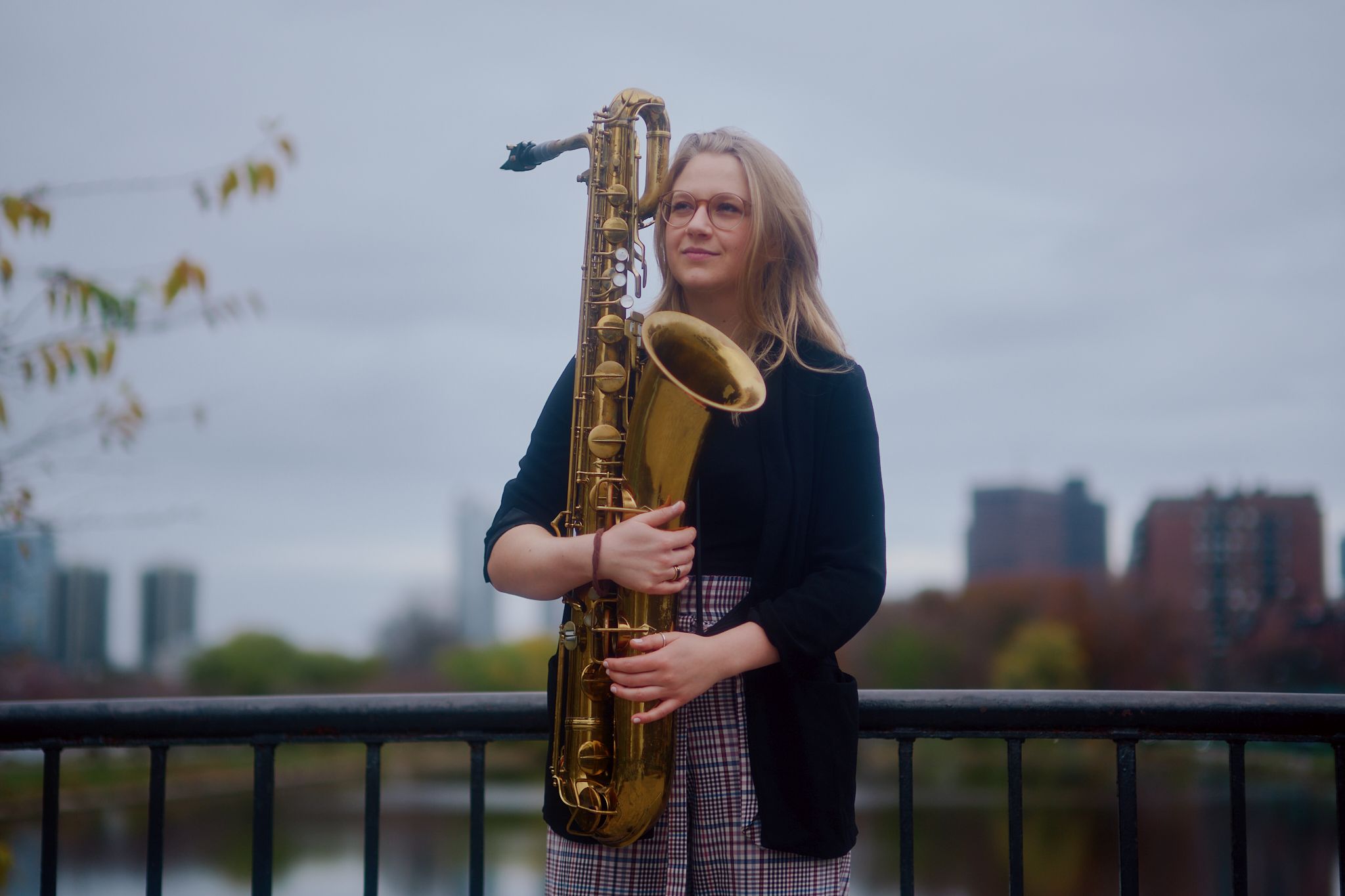 Charlotte Lang Interview Image by Ken Yin
"When I allow the material to develop naturally, the possibilities feel endless and transformative."
Video
