Published
Name: Chicarica
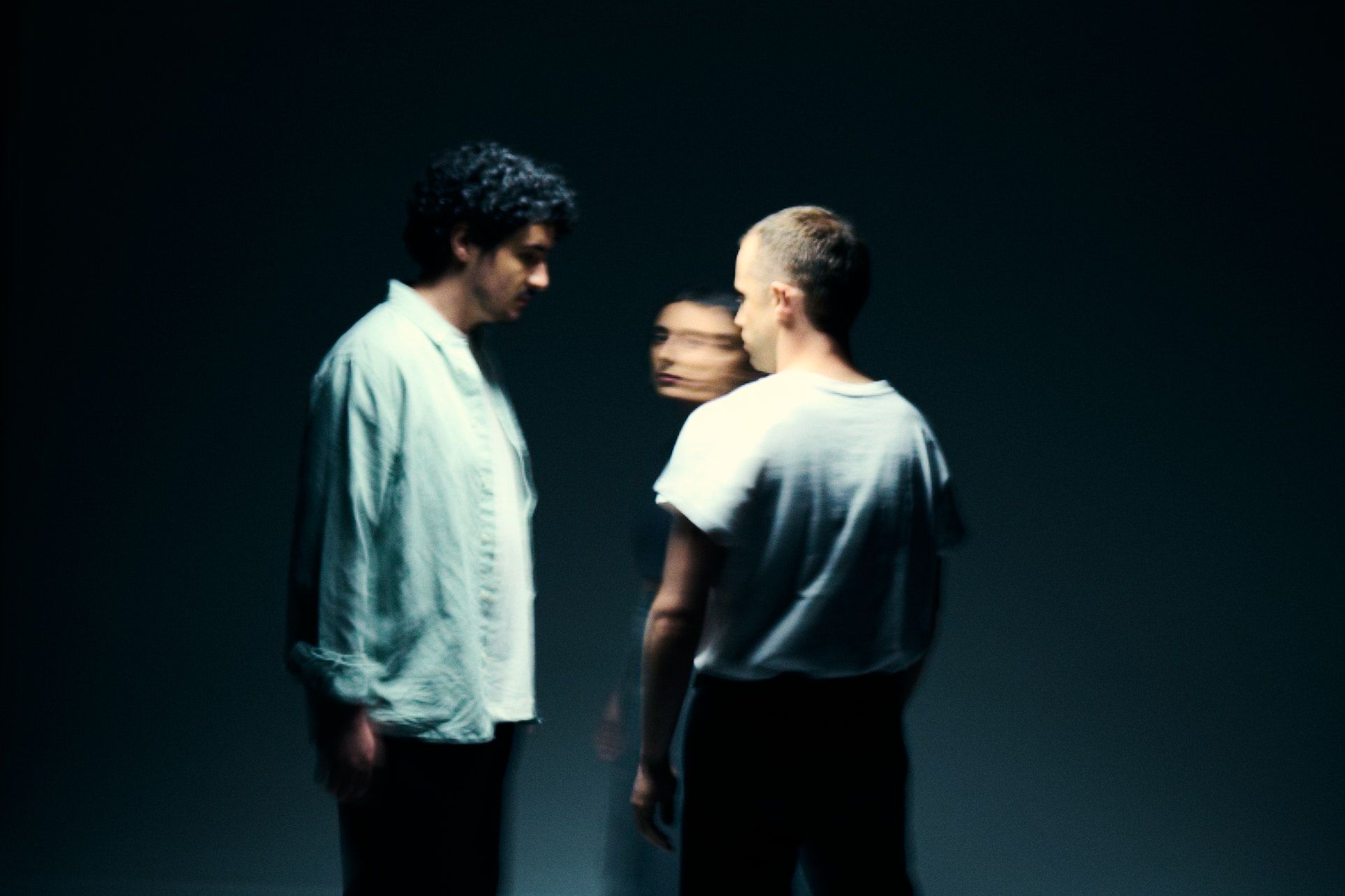
Members: Lorena Pulgar (vocals, synths), Martín Pérez Roa (synths), Felipe Zenteno (synths)
Recent release: Chicarica' new album Invierno en la playa, is out May 30th 2025.
Recommendation for Chile:
Martín: If you come to Chile you should eat a completo, the chilean hot dog. It's like our national food. My favourite is completo italiano, which has avocado, tomato and mayo. Don’t know which is the best in the city but any place that has a bunch of people eating should be good enough.
Topic that I am passionate about but rarely get to talk about:
Lore: I love talking about colors, buildings, and light. I don't know much, but I love it.
If you enjoyed this Chicarica interview and would like to stay up to date with the band and their music, visit them on Instagram, Facebook, and bandcamp.
Where does the impulse to create something come from for you? What role do often-quoted sources of inspiration like dreams, other forms of art, personal relationships, politics etc play?
Martín: I think our music comes from the need we have to make music we’d like to hear. Also we have a lot of fun jamming together and that’s where the songs are made.
Particularly on Invierno en la playa, personal relationships are important to the lyrics, the things we have experienced and lived through while making the album are in the music.
Lore: On this particular album, personal relationships, love, heartbreak, and our life as friends who want to focus on giving this band project space and opportunity were fundamental themes when creating the lyrics and music you're about to hear.
For you to get started, do there need to be concrete ideas – or what some have called a 'visualisation' of the finished work? What does the balance between planning and chance look like for you?
Martín: We do talk a lot about the music we want to make. In this case, we agreed that we wanted to make an album with a danceable mood, an album that can be played at a party but with our special sound. Besides that, there’s a lot of improvisation and little planning.
Lore: I think planning would mean making music with a very specific purpose, and that would take away the fun of creating, because music is our means of expression, and if we don't express honest things, then it would be more of a chore than real art.
Although we do set goals to be able to achieve certain things we want to do, such as finishing an album and putting on our show - that's where we do achieve balance.
Is there a preparation phase for your process? Do you require your tools to be laid out in a particular way, for example, do you need to do 'research' or create 'early versions'?
Martín: Maybe our “research” is jamming. We jam a lot before starting the process of this album, we had to figure out the music we could make with our instruments. Trying different BPMs, rhythms and sounds.
Felipe: Adding to what Martín said, during the conception of this album we would each practice individually in our places before meeting up. This allowed us to be more comfortable when playing with our machines together.
Lore: I feel we need to have all our instruments and tools in the space so we can experiment and play with whatever we want, without any room for judgment.
We've known each other for many years, which also allows us to be very critical of each other's work, and we're also very honest about when we like something and when we don't.
Do you have certain rituals to get you into the right mindset for creating? What role do certain foods or stimulants like coffee, lighting, scents, exercise or reading poetry play?
Martín: The thing that works for us is to go to some place, install our studio and be away from distractions, work and the city. This way we can connect with the music, play and experiment without worrying about other stuff.
Felipe: We enjoy being comfortable when working. A good illumination for the moment, sometimes coffee, sometimes wine.
Lore: and sometimes other stimulants ... but above all, as much time as possible to achieve ease and comfort.
We work best when we do our little residencies and it's just the three of us.
For Invierno en la playa, what did you start with and how did the new material develop?
Martín: We started recording some jams and listening to them. Then we chatted about what we liked and what we didn't. After this we organized the material and started playing things on top. Then, we worked on the structure and lyrics.
Sometimes we start the jams with some considerations, like the mood or BPM we are going to use.
What makes lyrics good in your opinion? What are your own ambitions and challenges in this regard?
Martín: Honest lyrics are good lyrics to me.
Lore: I feel that good lyrics are those that make Spanish rich to sing and pronounce, and that when I say those words, they sound like another instrument in the mix.
My ambition is to make lyrics stories that you can imagine having more than one meaning at a time, and the biggest challenge is to write something that represents the music and not just the person singing or writing it.
Many writers have claimed that as soon as they enter into the process, certain aspects of the narrative are out of their hands. Do you like to keep strict control or is there a sense of following things where they lead you?
Lore: Nothing strict lasts for long.
There are many descriptions of the creative state. How would you describe it for you personally? Is there an element of spirituality to what you do?
Martín: Making music for me is a form of spirituality. I think that when you’re making music you’re connected to something bigger than yourself and you are a vessel for this thing.
Felipe: For me, the creative state is about continually thinking about something and looking for solutions to achieve it, as well as recognizing in other people's work how they did something that aligns with your interests.
Spirituality is important in this regard, as I see it, because it helps you stay focused on what you're after.
Once a piece is finished, how important is it for you to let it lie and evaluate it later on? How much improvement and refinement do you personally allow until you're satisfied with a piece?
Martín: I live with the idea that I’m always perfecting the music-making craft. So I try to do the best I can and enjoy the process.
With the years I've learned that you can always make changes to the piece you’re working on but it is a good thing to let them go, too. Probably the moment where you can play a song and think “there’s nothing else I can do right now” is the moment to let it go.
There’s a chance that in a few months or years you find things that could be better or that you like more but a song is the reflection of a certain moment in your life and they can be beautiful and imperfect at the same time.
Lore: It's always good to take a little step back from each piece you make. To refresh your mind, listen, and do new things, and then come back. We could refine the music endlessly, but it's also important to learn to let go to make room for new things and not get stuck.
I'm not saying it's easy, but it's the only way to move forward.
How do you think the meaning, or effect of an individual piece is enhanced, clarified or possibly contrasted by the EPs, or albums it is part of? Does each piece, for example, need to be consistent with the larger whole?
Martín: This depends on the artist’s intention. Sometimes albums or EPs have strong concepts around them and sometimes they’re just a collection of singles that can be or not related.
I’ve always liked albums that have a certain cohesive sound, I like to feel immersed in a world that has some self-imposed limits. Because when you’re inside that world everything feels more meaningful.
Lore: For me, and in this project in particular, it's important to maintain coherence not only musically but also in the visual offering.
Whether in our physical material or in a show, everything must take place within a creative world so that the experience of those who listen to us or come to see us is immersed in a reality we create for them, where all the senses are touched in a special way - just the way we want them to be touched.
In terms of what they contribute to a song, what is the balance between the composition and the arrangement (including production, mixing and mastering)?
Martín: In our case composition and arrangement happen at the same time, so the balance is really blurry.
In other cases I think if you have a good song/composition it is easier to have good arrangement/production, etc … but if your song is not that good you’re going to want the production to fix it and that does not always end well.
After finishing a piece or album and releasing something into the world, there can be a sense of emptiness. Can you relate to this – and how do you return to the state of creativity after experiencing it?
Felipe: When we finished recording Invierno en la playa, I immediately felt a sense of emptiness. It took three years of work, thinking about how to make this record.
The days that came after I felt very nostalgic immediately, but knowing that deeply in my heart was a sense of calm and gratitude for being involved in a creative process like this one.
Lore: I immediately feel a sense of relaxation, accompanied by anxiety about wanting to play live. I think it's just the first chapter of a new beginning, and there's still a long way to go before letting go and moving on to the next thing.
I'm also eager to start creating new things, as the writing and production processes are very long, which doesn't allow us to create new things for long.
I would love to know a little about the feedback you've received from listeners or critics about what they thought some of your songs are about or the impact it had on them – have there been “misunderstandings” or did you perhaps even gain new “insights?”
Felipe: We have received some insights from different media outlets that we consider important as a band, and the truth is that so far, we are very grateful for what they have said. They have all taken the time to listen to the music and write something of their own about it, no misunderstandings so far.
Lore: As Felipe says, it's very nice when the media or listeners take the time to listen and write their own opinions about new releases. Everything we've read makes sense to us, and we realize that what we transmit is what we read: we're all human, feeling the same things.
Creativity can reach many different corners of our lives. Do you personally feel as though writing a piece of music is inherently different from something like making a great cup of coffee? What do you express through music that you couldn't or wouldn't in more 'mundane' tasks?
Lore: Of course it's different. If I'm feeling bad, my coffee might taste bad, but it's never undrinkable. To create art, you need time, space, tools, and a free mind to be able to express yourself well and for it to also be something you decide to share with the world.
There are also creations that are just for you, and that's okay. You have to decide what to share, since this type of expression is very individual and intimate.
Martín: I like when art uses daily situations or objects to express something deeper behind them. Those mundane things are what surround us on a daily basis so they’re like a structure on top of which the human experience is built.
So in art, the first layer can just be a cup of coffee - but probably there’s something else behind it. That’s why I don’t think they’re inherently different, they communicate with each other.
For me, through music you can habit a common space that goes beyond spoken language (even in music with lyrics) and talk to you directly in emotions and sensations - and that’s something unique.