

Name: Chiminyo
Nationality: British
Occupation: Drummer, producer, performer
Current event: Chiminyo's next Late Late Electronic show at Ronnie Scott’s will be on Friday 25th April 2025.
Current release: Chiminyo's upcoming live album NRG 4 (Live at Ronnie Scott's) is out May 9th 2025 NRG.
Recommendation for London: Ronnie Scott’s on Friday night for their Late Late Electronic series! I’m there once a month and then on the other nights are some of the coolest electronic/jazz crossover artists! It’s a truly special night!
Shoutouts for artists, labels, tastemakers taking jazz to the future: Me! Nah sorry I'm joking. There are many to shout out who are supporting new jazz music and helping spread the music and support us artist … Whether they’re taking it into the future I’m not really sure but they’re definitely making space for innovation and without them there wouldn’t be the movement we have today.
Labels: Jazz Re:freshed, Brownswood, Astigmatic, Gearbox
Music festivals/Promoters: We Out Here, Love Supreme, Jazz Re:freshed, Brainchild
Djs/tastemakers: Gilles Peterson, Jamz Supernova, Somewhere Soul
If you enjoyed this Chiminyo interview and would like to know more about his music and upcoming live dates, visit his official homepage. He is also on Instagram, Facebook, and bandcamp.
What were some of the musical experiences which planted a seed for your interest in jazz?
I grew up playing in indie bands as a teenager, and I remember going into a record shop one day and picking up three albums:
John Coltrane – Blue Train; Cannonball Adderley – Somethin’ Else; Miles Davis – Kind of Blue
I had these albums on repeat and completely fell in love with them. That was really the moment it all started for me.
What does the term jazz mean today, would you say?
Ahaha, well, that is the big question really! I often joke that people define it as jazz if it has a saxophone, has ‘jazzy chords’ or you just generally don't understand what's going on.
To me personally, ‘jazz’ feels like an approach to music making, it's a way of listening and responding, it’s a flow state, it's being open to ideas and being able to interpret them and interact, always elevating the musicians around you and making their ideas shine!
But there’s many different languages to jazz music, and when I’ve been to jazz clubs in New York, for example, and these guys are playing the gnarliest post-bop stuff (which I love!) I’d never jump on stage with them, I don’t speak that language. And similarly, if they tried to get on my NRG stuff they wouldn’t have a clue how to speak my language when I’m playing a DnB beat. So it’s a tricky term for sure, and I think everyone has their own definition (which can get problematic).
That’s why I chose the term NRG to describe what I do, I think the scene in London has developed it’s own language which is less about ‘Jazz’ and more about the energy (NRG) we share, which is very unique and very ‘London’.
As of today, what kind of materials, ideas, and technologies are particularly stimulating for you?
As well as being a ‘Jazz’ musician, I’m an electronic music producer. And I get the most joy from exploring the intersection of the two.
I use a lot of electronics with what I do, whether it’s my solo project, in which I trigger synthesisers from each drum hit using software I built in conjunction with Ableton, or when I perform in groups and I trigger electronic drum samples from each different drum using the sensory percussion system which is a very intricate and deep system.
I’m most intrigued by technologies that allow you to extend what you’re capable of, whilst still playing them live and keeping your human feel and interactions - although I do love a machine sequenced beat don't get me wrong!
Where do most of your inspirations to create come from – rather from internal impulses or external ones? Which current social / political / ecological or other developments make you feel like you need to respond as an artist?
To me, music is a release, whether making it, listening to it or dancing to it. It’s a way of connecting with something outside of (or greater than) what we view as reality. So when I’m creating it requires me to step out from the frantic life of admin and bills that I seem to spend way too much time in and into the creative flow state.
I don’t tend to respond to particular socio-political topics or trends, but more generally I feel I get inspired by the act of escaping the heaviness of this world and connecting with what it is that makes us human. And I definitely believe music has a magical role in facilitating this in others too!
Music has become a lot more global, and incorporating elements from other parts of the world or the musical spectrum is commonplace. Do you still think there are city scenes with a distinct, unique sound? How does your local scene influence your work?
I definitely think most city scenes have distinctive sounds! At least all the ones I’ve visited have (which is many!). There’s global influences mixed in almost everywhere now, and that's a truly beautiful thing! And it’s a reflection of the global demographic of most cities.
But I think living in a place, you absorb elements of the energy, whether it’s purely musical - the fact that techno permeates every street in Berlin, that brassbands are on every corner of New Orleans or that Ipanema Beach has 20 rhoda de samba’s at all times of the day - or whether it’s more social/societal … The London work mentality vs. living in Athens; the long dark winters of Scandinavia vs. the constant sun of California; the feeling of Lisbon architecture vs. Tokyo… it will all produce very different energies in scenes that grow in these places and London is special for so many reasons!
There’s not many places in the world where every week you can see world class samba, gnawa, Turkish traditional music and go and dance to Techno, Garage, DnB until 4am afterwards. And this has definitely had a huge impact on me as a musician and as a human.
I hope people hear my music and feel the energy of my city. It’s beautiful - wouldn’t mind a bit more sun and a cheaper pint, though.
What role do electronic tools and instruments play for your creative process?
It definitely depends what I’m doing, but it’s always present for me.
Obviously I love synths and I like to get techy with building my systems for incorporating electronic elements into my live music performances. But when I’m producing electronic music I really like to go deep dive into synthesises and using systems to create randomised moments that I can than craft into something beautiful.
It is a trap though! Sometimes when you get too stuck into a techy idea you can actually forget that you're trying to make music that connects to people!
Thanks to technological advances, collaboration has become a lot easier. What have been some of the most fruitful collaborations for you recently and what approaches to and modes of collaboration currently seem best to you?
Collaboration is about exchanging energy with other people, and for me, that just doesn’t work remotely. I need to feel someone's presence to connect on these types of things.
Obviously, my NRG series (and my resulting residency at Ronnie Scott’s as part of their Late Late electronic series) is entirely collaborative. I’m bringing these musicians together and trying to nurture the best out of us all!
And the key to this, is everyone bringing the truest and most unadulterated form of themselves! When a musician feels supported and celebrated for who they truly are they come out with the strongest ideas!
Jazz has always had an interesting relationship between honouring its roots and exploring the unknown. What does the balance between these two poles look like in your music?
Yeah, to me this relates back to the ‘what is jazz’ question. In my music, I’m more concerned with exploring dance music and electronic music, and honouring and respecting the roots that they come from.
When I bring a band together we are trying to explore how producers create electronic music but trying to do that collectively from a jazz perspective and all our improvisations are built with this in mind. We don’t really take many solos and we don’t play any music from the jazz tradition, but we use our knowledge of jazz to inform how we spontaneously improvise these tunes together.
How much potential for something “new” is there still in jazz? What could this “new” look like?
There’s as much potential for something new in jazz as there is in any other genre today. What makes the London music scene so special is the way we express our jazz knowledge, but in a very different way—reflecting the music we listen to and the diverse cultures we come from.
I do think in general the development of “new” genres has slowed in the west. New genres (for the most part) would come from a fusion of existing genres with different perspectives and ideas + new technology (whether cutting edge innovation or wider access due to affordability). There’s not been as much new sounding music technology in the last few decades (when compared to the 20th century) however, in other parts of the world the influx of affordable technology is allowing for fresh sounds to emerge which is really exciting.
This is massively debatable though so please don’t quote me, hahaha!
For many artists, life-changing musical experiences take place live. How do you see that yourself?
Capturing the magic that happens during a live performance is at the heart of my NRG album series.
The music we consume these days is often over-processed, and while there’s a beauty in that, it can loose the human element.
I’m aiming to share those raw, mystical moments of live improvised music through these albums—the kind of moments that remind us of the magic in human connection.
How, would you say are your live performances and your recording projects connected at the moment? How do they mutually influence and feed off each other?
Well, truly the beauty of NRG is that the live performance is the recorded project! It’s pretty unique in this sense.
But definitely after producing 5 albums this way (and having produced another 6 or so studio albums) I’ve really been developing a strong sense of what translates well on a record from the gig. Not everything that pops off at a gig is going to work so well on a record and vice versa.
I also get to hear intimately how I approached a certain groove or developed an idea and I have learnt so much from that!
Ímprovisation is obviously an essential element of jazz, but I would assume that just like composition, it is transforming. How do you feel has the role of improvisation changed in jazz?
I’ve had the pleasure of gigging/recording with Gary Bartz (who worked for years alongside Miles Davis, McCoy Tyner, Art Blakey and many more) and he would always say that it’s not improvisation, it is spontaneous composition. And I quite like that perspective.
To improvise would mean to ‘make something up’ but when you’ve practiced your instrument for 20,000+ hours you’re not really making it up, your more recycling previous ideas and presenting them in new ways with new intentions. And the language of your improvisation is the language of your practice and the ideas you’ve ‘input’ into your playing.
So in that sense the language of improvisation will mirror the compositional styles you learn, practice and listen to. In that sense I think they can grow and change in tandem.
What, would you say, are the key ideas behind your approach to improvisation?
Like I said earlier, I’m always trying to emulate and mirror electronic dance music with my improvisations.
So when I put together one of my bands for NRG or my Ronnie Scott’s residency I always chat to them about the language we’re gonna be using for our improvisations. We’ll listen to some electronic tunes together and discuss how the producers layer different ideas and then develop them throughout an arrangement, then when we improvise our tunes we are trying to move like one producer, layering ideas on top of each other and then developing them or bringing them in and out in the way a producer does.
It’s definitely not easy, but so far it’s worked really well!
The Montreux Festival intends to preserve its archive of recordings for future generations. Do you personally feels it's important that everything should remain available forever - or is there something to be said for letting beautiful moments pass and linger in the memories of those that experienced them?
I’d say a bit of both. If none of these legendary moments are recorded it would be sad and it would be hard to understand the developments in the music and you’d miss some magical moments. But recording everything seems a bit much.
A good anecdote of this is last weekend, legendary rapper Common jumped on my set at Ronnie Scott’s. It was one of the most amazing music experiences of my life! It wasn’t recorded, and I’m fine with that, I’d never be able to release it anyway, but I was gutted when I realise no-one filmed the moment in it’s entirety.
And then one guy got in touch with a video of the full 10 minutes and I can honestly say I’m so glad to have it and be able to relive the moment. I’ll be showing it to my grandkids for sure!

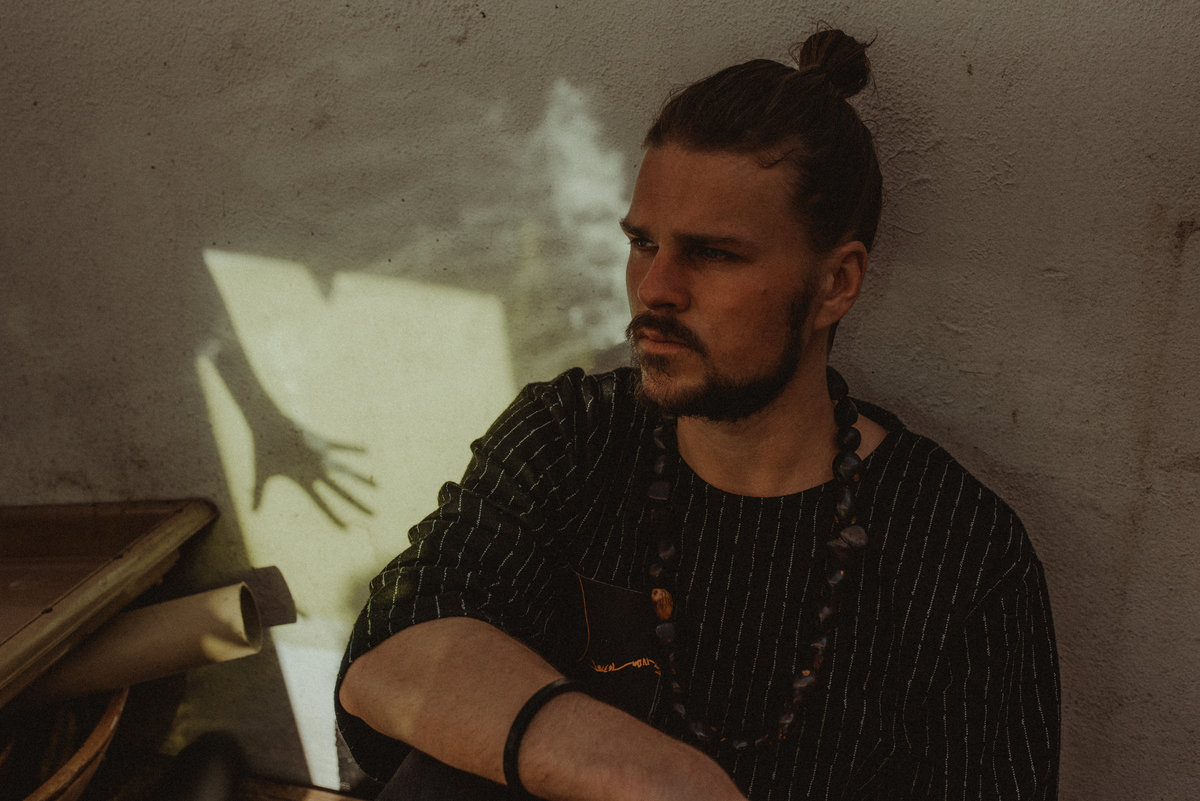 Chiminyo Interview Image by Karolina Wielocha
"Obviously I love synths. But sometimes when you get too stuck into a techy idea you can actually forget that you're trying to make music that connects to people!"
Video
