Published
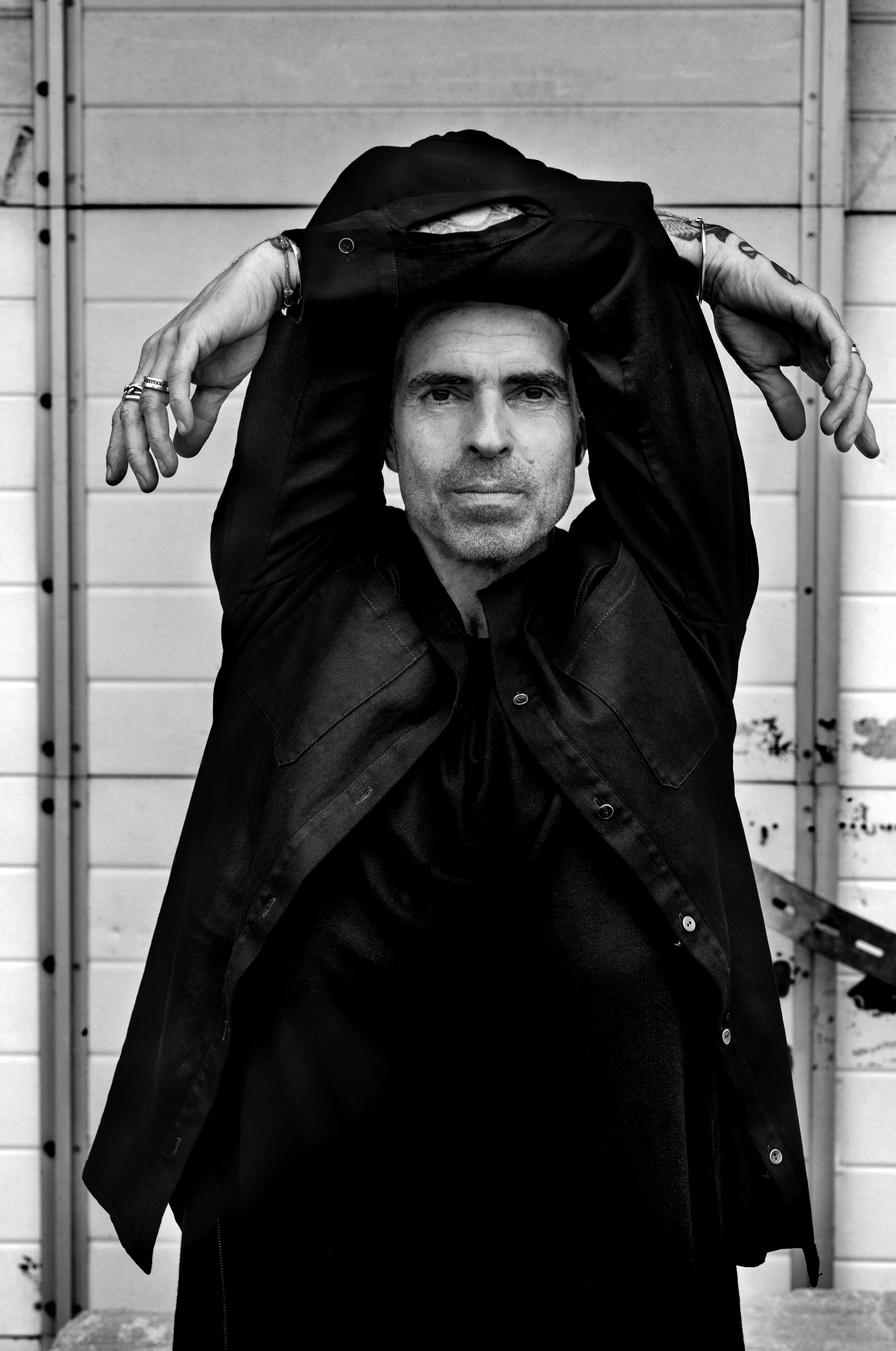
Name: Chris Liebing
Nationality: German
Occupation: Producer, DJ, label founder at CLR
Current release: Chris Liebing's new album Evolver is out March 27th 2026 via CLR.
Recommendation for Switzerland: The ski slopes at the mountaintops and the lakes. It's a beautiful area.
Topic I am passionate about but rarely get to talk about: I am a skier, and I am addicted to skiing. This is why I live in a ski area. And I am very passionate about animals. I have been vegan for 15 years, so I would say that I am passionate about nature and animals. I also highly value having good friends to come home to.
If you enjoyed this Chris Liebing interview and would like to stay up to date with his music, visit his official homepage. He is also on Instagram, Facebook, and Soundcloud.
For a deeper dive, read our earlier Chris Liebing interview.
What were some of your earliest collaborations? How do you look back on them with hindsight?
My first original collaboration was with Andrew Wooden, working on the Stigmata series and my own releases at the time. For the first five to seven years of my career, Andrew was the man in the studio that I relied on to produce all the music together. Only when I started building my own studio in 2004 did I begin working more on my own.
The first of the early collaborations was with Speedy J at the beginning of our Collabs 3000 time in the early 2000s, along with other amazing techno heads back then. But there had already been a few other collaborations much earlier, when I was still running a house label called Soap Records. We collaborated with George Acosta in Miami, which led to a remix for Planet Soul, released on Strictly Rhythm in 1996.
And then we did one together with Marshall Jefferson, which must have been around the same year. It was released as Marshall Jefferson vs Noosa Heads “Mushrooms”. Noosa Heads was the project name I had with André, aka Andrew Wooden.
When I look back at these collaborations, I have to say one thing that was great about all of them: each happened organically, without any big planning. Basically, they were just about people on the same wavelength who were making music together.
[Read our Marshall Jefferson interview]
There are many potential models for collaboration, from live performances and jamming/producing in the same room together up to file sharing. Which of these do you prefer – and why?
All of these ways to make music together are very good and very beautiful. If you don't have much time, you can still share files, talk a lot about the music without being in the same place, and even work together online.
There is software that lets you link your DAWs and work on a song simultaneously. That's something I have done with Ralf Hildenbeutel and Daniel Miller for my albums on Mute Records. While we were producing Burn Slow and Another Day, we were sometimes in three different countries, but working on a track together, thanks to technology.
There are different types of producers: with some, you share files; with others, you would rather just jam in the studio. One of the artists I always prefer to jam with in the studio is Speedy J. We are having such a good time recording stuff. So it can work differently on every level of the process, and I don't really have a preference. Whatever makes sense and gets the best results.
How did the collaborations for Evolver come about?
Very organically and each one of them in a unique way. All of those artists are people I work with anyway, like Speedy J or Luke Slater, with whom I do a lot of back-to-back sets. So we naturally ended up talking about the album.
And then there are the other guys I hang out with in Lech every winter for a week (Daniel Miller, Terence Fixmer and Pascal “Stubbleman” Gabriel, aka “The Alte Stuben Modular Ensemble”). We always jam and make music together, so I just recorded it, took it to my studio and made a track.
With "The Advent," it was a file-sharing experience, as was the case with Charlotte de Witte, who provided incredible vocals and loads of acid synth and drum parts, which I then used for the final production in my studio.
[Read our Terence Fixmer interview]
What did you know about each other before working together? Describe your creative partner in a few words, please.
I have known every collaborator for a very, very long time.
Speedy J, Luke Slater, The Advent, Terence Fixmer, and, obviously, Daniel Miller are absolute legends in the music business and the music game. Jochem, Luke, Terence and Cisco are some of my early techno heroes. Working with them on my album was a huge, full-circle experience for me, and it all happened because we were talking a lot and sharing ideas.
With Charlotte, it also came together naturally, as we had been working together 7 years earlier on her first release for her KNTXT label. I had the idea that she might be willing to contribute a track for my album, which she happily did.
So yes, I actually want to know a little bit about the collaborators before working with them, and knowing people in the industry for a while is definitely a bonus.
What do you generally look for in a collaborator and what made you want to collaborate with each other specifically?
Oh, they should share the same vision for what we want to create musically and bring a lot to the table that I can't. To make a true collaboration, you want all parties to contribute their ideas.
And most importantly, you want to have fun together. It is all about having fun in the production process, even though it is sometimes gruelling, tough, and exhausting; it should always be fun as well.
Tell me a bit about your current instruments and tools, please. In which way do they support creative exchange and collaborations with others?
During the album's production, my studio has been, and is still, quite a chaotic place. I have a lot of nice hardware stuff, drum computers and outboard equipment that I use, but I combine that with my DAW and all those incredible plugins that are out there. So in a way, there are infinite possibilities in what you can do with the technology at hand.
One thing I've always done when I was at a certain point was render and bounce certain things to finish one little step in the production process and keep going. I used to do this mainly to send files back and forth without the chance to alter them again and to avoid making the process more complicated than necessary.
Before you started making music together, did you in any form exchange concrete ideas, goals, or strategies? Generally speaking, what are your preferences when it comes to planning vs spontaneity in a collaboration?
Everything was possible.
In the case of The Advent, I made a track that really reminded me of one of his old tracks. That´s why I contacted him, and I said: “Listen to this, this is almost like a remix of an old track you've done”. So I asked him if he could provide some extra stuff, which he agreed to, and we turned it into the track you can find on the album now.
With Speedy J, it was just a recording we made while jamming in the studio.
For the track with Luke Slater, I asked him if he wanted to be on the album. He gave me an acid intro, and we started building a track around it. Again, of course, there was a lot of communication and a rough idea of where it should go, but from then on, it was pretty intuitive and just going with the flow.
I think, since we've known each other for so long and have been working in this techno scene for decades, we pretty much know what we need to do to ensure a project develops and can be finalised.
Describe the process of working on Evolver, please. What was different from your expectations and what did the other add to the music?
It seems like even after 20 or 30 years of producing music, you never stop learning. At the same time, the technology is advancing rapidly, so there's always new stuff to learn. I am still really eager to learn, especially about mixing and mastering.
What's new about this one is that I have done an album project this time. I wanted to take on the task of making an album, a techno album. There was a lot of chaos in my studio, which I like to call creative chaos. There were synths lying around so that I could just connect them and record something. Then I would go on to do other things, letting the moment decide what I would do next.
I also let go of the idea of trying to do something like “inventing the wheel”, trying to do something completely new and different from what I have done in my whole life. That was not my mission, and I think that is why it had a good flow.
And above all, the collaborators added exactly what was needed, namely the elements that were lacking across all those collaboration tracks on the album. I was working on the basic construct, but the collaborators definitely added the most important stuff. They really came up with some amazing ideas, like in Luke's case, the acid line or in Charlotte's case, the vocals and the 303 line. We spoke about the vocals before, and everything, including the way she delivered them, was all her idea.
So everybody added their personality, and it wasn't even with a lot of effort, it just happened.
Is there a piece which shows the different aspects you each contributed to the process particularly clearly?
Yeah, it was “Double Split” with Luke Slater.
This one is a good example because I had a rough track done, and I could not really continue on my own. I had run out of ideas and didn't really know what else to do with it. Then I sent my project, including his first input, to Luke and told him that we really needed something else, because an important element seemed to be missing. And he was like, "Okay, let´s just try a simple acid line."
And then he came up with this really awesome acid line, so it´s pretty clear that this is Luke's part.
What tend to be the best collaborations in your opinion – those with artists you have a lot in common with or those where you have more differences? What happens when another musician take you outside of your comfort zone?
You know, it really depends on the project you are working on. If you want to do something completely new, great, go to the studio and work with somebody who has a completely different idea of how to approach things and how things should sound.
Leaving your comfort zone is a very good way to come up with new ideas, but in my case, I didn't really want to do that. I wanted to work with people who shared my vision when it comes to techno tracks.
So again, in my opinion, there is no best way to collaborate with other artists. It is really just a matter of what your goal is and what you are trying to achieve.
Decisions between creatives often work without words. How did this process work in this case?
It's always interesting to be in the studio with somebody, or even if you're sending files back and forth. And if there is something you don't like too much, it is important to find the right words to communicate this and to explain it in a respectful way.
Making music is quite an emotional thing, and you want to be careful about how you talk to each other about creative stuff. The better you know the other artist, the easier it gets, because you can just say: “Hey, that's crap, let´s delete it”. You also have to be a little bit more open-minded, because that´s the whole idea of a collaboration and the beauty of it. At some point, you will surely come to an agreement.
Sometimes it takes a few emails back and forth to discuss the issues, but you always find a compromise. For me, this is the key to a good collaboration.
What are your thoughts on the need for compromise vs standing by one's convictions? How did you resolve potential disagreements in this collaboration?
There shouldn't be any major disagreements, because if you decide to collaborate, you should be willing to compromise.
For example, regarding the mixing of this album, I told everybody I really needed to mix and master those tracks myself. Of course, I asked for their approval once they were mixed. The reason for this condition was that I wanted the whole album to sound completely coherent in itself and as one piece.
But apart from something like that, on an artistic level, you definitely need to compromise. That is the whole point.
Do you find that thanks to this collaboration, you changed certain parts of your process or your outlook on certain creative aspects?
Every collaboration gives me new ideas for how to work on my own. I have learned so much from each collaborator. It is always amazing to see how others work and how you can improve your own workflow based on that.
And yes, every single thing you learn will change the way you approach things in the future. This is another awesome benefit of collaboration: we learn a lot.
Collaborating with one's heroes can be a thrill or a cause for panic. Do you have any practical experience with this and what was it like?
Yes, it can be a thrill, not really a cause for panic. You have to trust yourself that you can do this.
But you grow and learn, and that's really the beauty of it.