Published
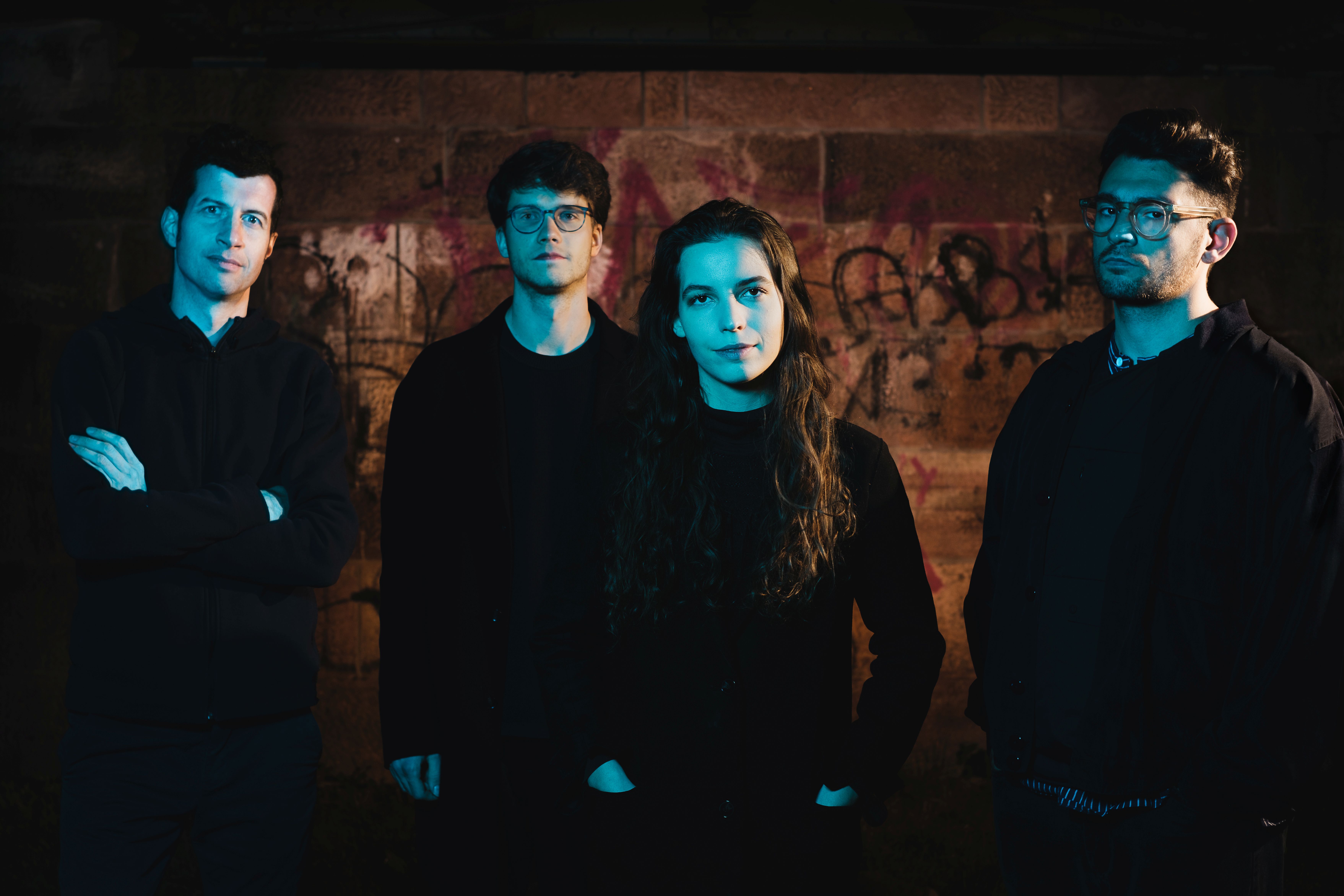
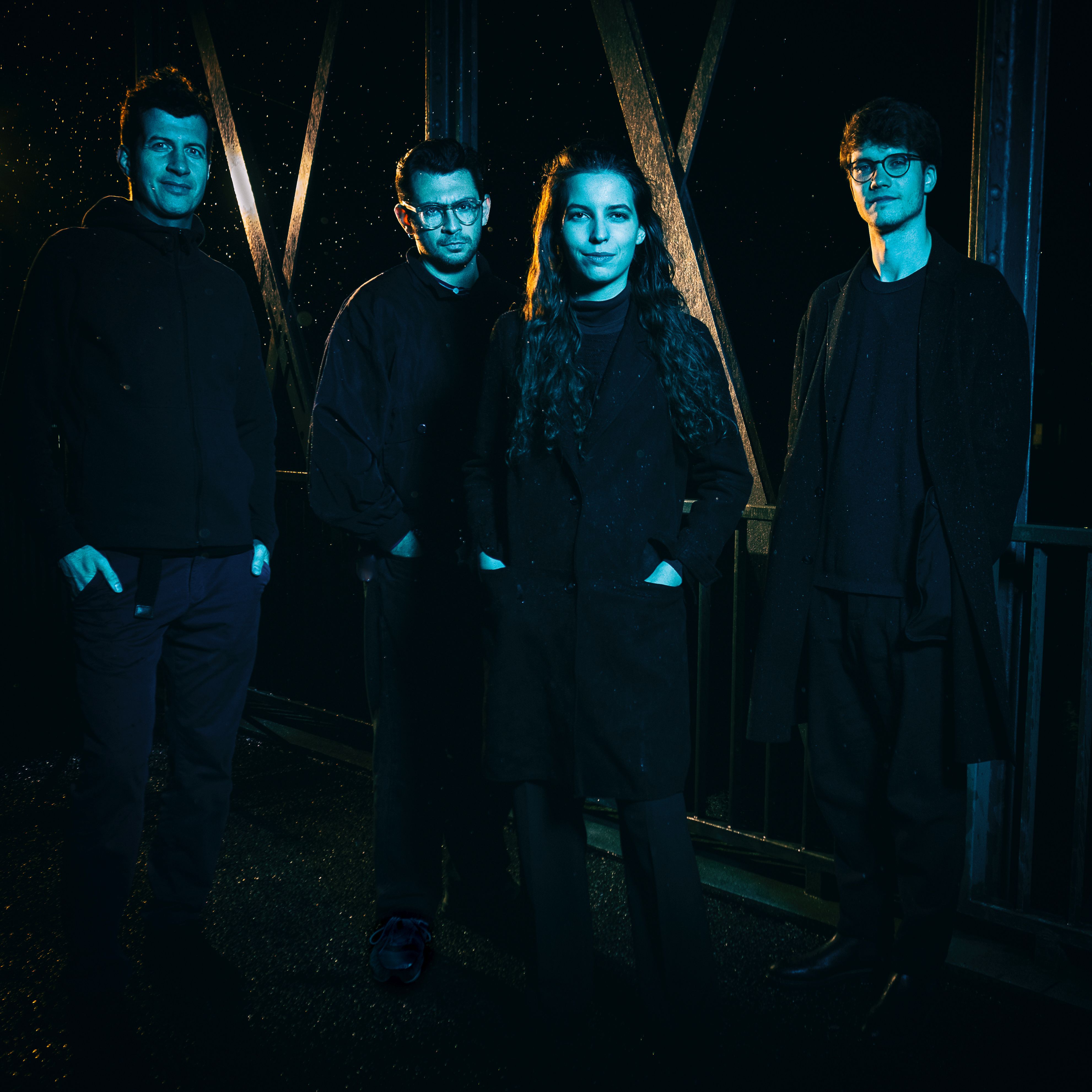
Name: Clara Vetter Trio
Members: Clara Vetter (piano), Mario Angelov (bass), Lucas Klein (drums)
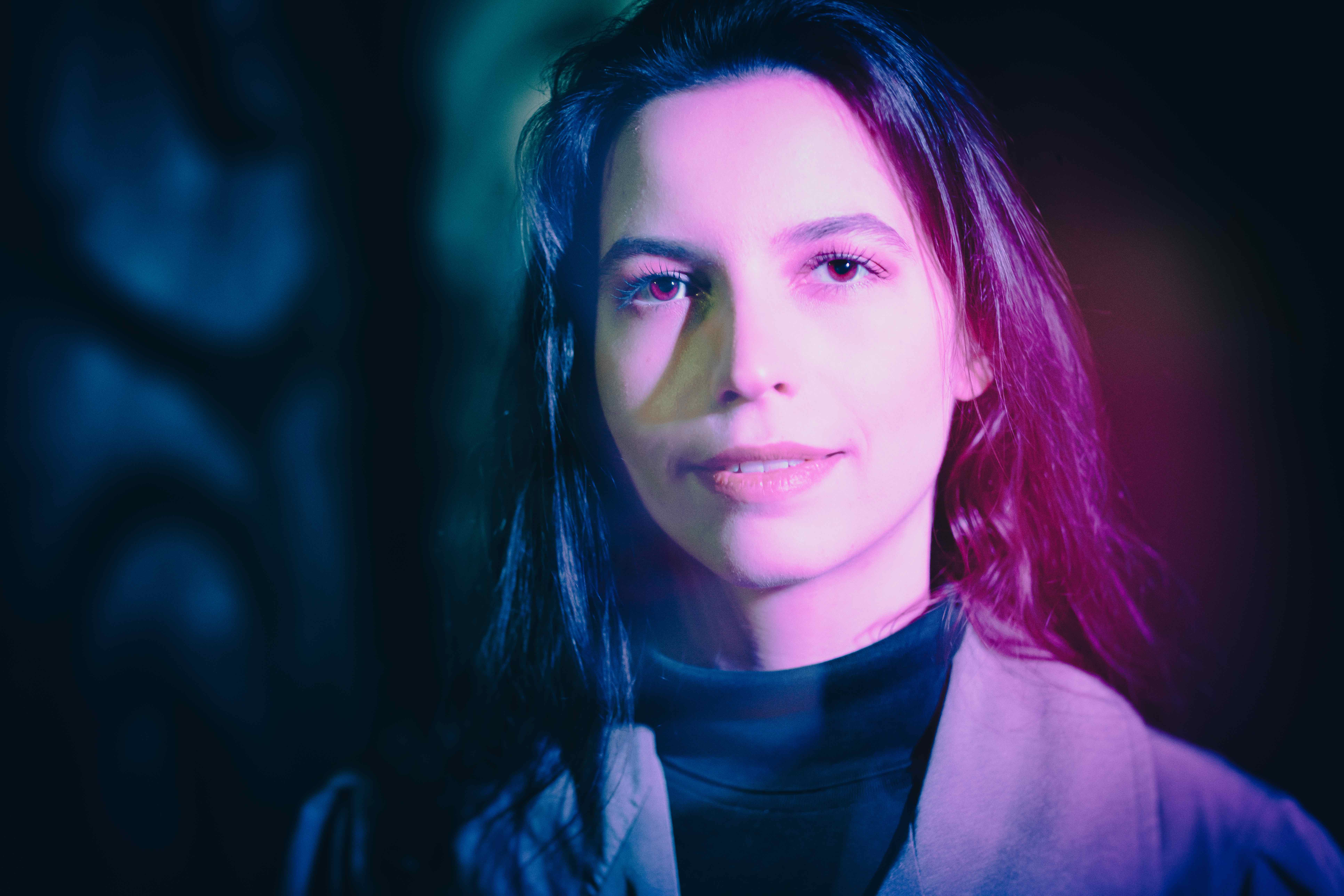
Interviewee: Clara Vetter
Nationality: German
Current release: The Clara Vetter Trio's Fabulae, feat. Ronny Graupe on guitar, is out via Unit.
Recommendations: Here I would recommend to simply follow your own interests without compromise. Then everyone will find the work they should know about. What may have been relevant for me may be something completely different for someone else.
As for myself, Debussy's Préludes and Stockhausen's "Tierkreis" are two works that have influenced me a lot recently.
If you enjoyed this Clara Vetter interview and would like to know more about her work and upcoming performances, visit her personal homepage. She is also on Facebook.
Do you think that some of your earliest musical experiences planted a seed for your interest in improvisation?
Growing up in a very musical family, I was already involved with music as a toddler. At that age, I had three main interests: Music, painting and inventing stories.
For me, all three are united in improvisation, and whenever I improvise, it helps me a lot to get in touch with this "inner child" that I once was.
When did you first consciously start getting interested in musical improvisation? Which artists, teachers, albums or performances involving prominent use of improvisation captured your imagination in the beginning?
My first impulse that sparked my interest in improvisation was attending a concert by my uncle, who is also a jazz pianist. I was about seven years old and knew that I wanted to do something like that as an adult.
Since then, it took a few years before I had the courage to approach improvisation, as I had a purely classical education at the time. At the age of 14, I decided to go down the path of a jazz pianist because I was afraid that it might be too late in the future. I don't know if that would have been true, but the thought itself was a very strong motivation.
Since I was little I was always interested in creating / inventing, and improvisation is a great platform for that. When I first started getting into jazz, my musical influences were mainly related to fusion jazz because I was fascinated by a certain harmonic and rhythmic complexity.
I listened a lot to Weather Report, Allan Holdsworth and Frank Zappa and went back step by step in jazz history to Bill Evans, Thelonious Monk or John Coltrane.
Tell me about your instrument and/or tools, please. What made you seek it out, what makes it “your” instrument, and what are some of the nost important aspects of playing it?
What probably fascinates me most about the piano is that I am able to orchestrate. It is possible to play several voices at the same time. The challenge very close to my heart is to play everything from an auditive-guided creativity.
I feel that on the piano it is quite easy to play something from pure knowledge or muscle memory, because compared to other instruments, many notes can be played at the same time without having to hear each one of them exactly.
My personal goal is to make every note "sing" that I play. To create this impression on a piano, you have to have a very deep connection to the instrument and the improvisational idea that you want to make hearable.
How would you describe your own relationship with your instrument – is it an extension of your self/body, a partner and companion, a creative catalyst, a challenge to be overcome, something else entirely?
For me, the piano is something like a partner, a translator of my inner self, who sometimes seems to know a little more about me and my musical ideas than I do myself.
Derek Bailey defined improvising as the search for material which is endlessly transformable. What kind of materials have turned to be particularly transformable and stimulating for you?
There was a time when I tried to block out all stimuli except the auditory ones, and later I realized that I can use so many different levels of stimuli that I can transfer into my improvisation.
A few years ago, I realized that my drawing background brought me to synesthetic audiovisual perceptions such as colors for certain tones/tonal centers and graphic shapes for intervals. Sometimes I look at the piano keyboard and colors and shapes appear, and when I follow them, they turn out to be exactly what I want to hear. When I drew these impulses as accurately as possible, people associated my shapes with stellar constellations. 
Clara Vetter Trio ft. Ronny Graupe Interview Image by Michael Gunzert
With this, the idea for my latest album Fabulae was born. I found a way to work with the visual material of certain constellations that functions similarly for me to following my own visual impulses. As an additional layer, Greek mythology inspired me to create musical illustrations of the constellation characters in my own language.
Link to a concert with my own visual impulse drawings as projections to the played compositions:
Do you feel as though there are at least elements of composition and improvisation which are entirely unique to each? Based on your own work or maybe performances or recordings by other artists, do you feel that there are results which could only have happened through one of them?
Actually, I like the perspective that improvisation and composition are the same thing. As an improviser, it's easy to hide behind the fact that you have more time to create a composition than an improvisation, which happens in real time. I don't want time to be an indicator that makes a composition more valuable because you have time to reflect/think/research.
The same processes can happen in an improvisation, and basically in zero time. I believe that we can train our intuition to guide us in an improvisation based on everything we've ever heard or practiced. Without consciously thinking about all this (because we don't have time to do so while improvising), our subconscious mind is able to navigate extremely fast through all the data we have collected in our lives to the point where we are playing our current improvisation.
I believe that these processes happen especially when we lose control while playing and sometimes we don't like the result at first because we were way ahead of our conscious mind at that moment. I've often found myself listening to an older recording of mine that I didn't feel comfortable with at one moment while recording it.
But then, when I listened to it again, I realized that it became something that I do on purpose, that I even practiced for a few years to be able to play it consciously ...
When you're improvising, does it actually feel like you're inventing something on the spot – or are you inventively re-arranging patterns from preparations, practise or previous performances? What balance is there between forgetting and remembering in your work?
I like the mindset of inventing something on the spot, but it's probably a mixture of both. My goal is to consciously create something "completely new" and unconsciously nourish it with everything I've ever learned before.
I wouldn't call it "forgetting" and "remembering", but rather "letting go" and "creating".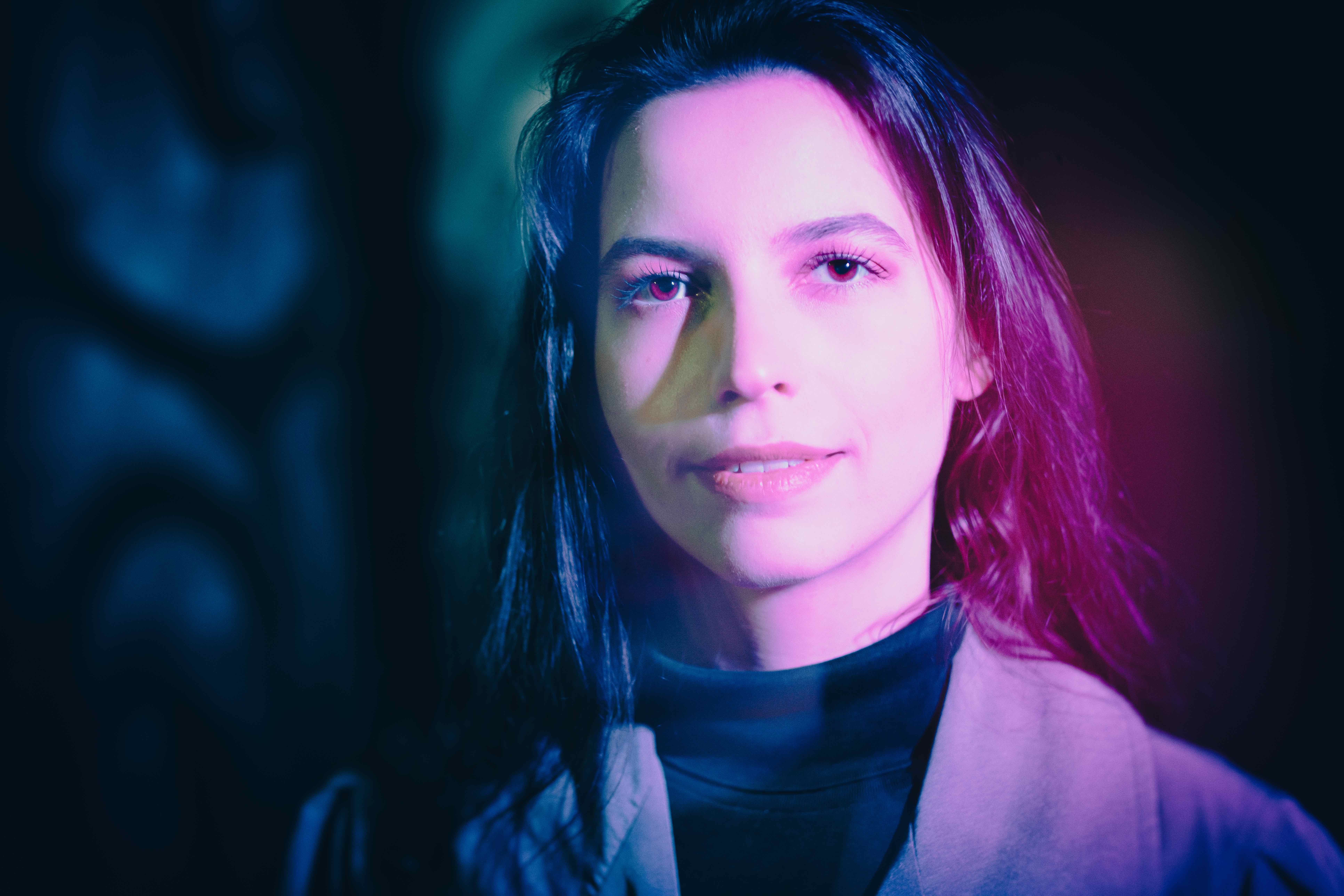
Clara Vetter Interview Image by Michael Gunzert
Are you acting out parts of your personality in your improvisations which you couldn't or wouldn't through other musical approaches? If so, which are these? What, would you say, are the key ideas behind your approach to improvisation?
Generally, I try not to see improvisation as being separate from other musical approaches. I believe that there is improvisation in every kind of music, as there is always a level of interpretation that allows you to show all aspects of your own personality.
For example, when you play a classical piece, there is of course fixed musical material that you have to stick to, but how exactly each note is played, how you build the dramaturgical arcs, which details of the composition could be emphasized ... All these aspects and many more give a musician the greatest freedom to express his or her personality - to improvise.
There is probably no music without some layer of improvisation, at least when it is played by humans.
In terms of your personal expression and the experience of performance, how does playing solo compare to group improvisations?
In this case, I also try not to differentiate too much between a solo and a group improvisation. In both cases, we have to interact with what's around us and what's inside us.
There is always something around us - if not the fellow musicians, then it is some kind of environment, a place, a space, a smell, a temperature, an atmosphere, maybe an audience. It's up to us to deal with the situation we find ourselves in so that we can realize what we want to say musically.
In your best improvisations, do you feel a strong sense of personal presence or do you (or your ego) “disappear”?
Sometimes I find it hard to label an improvisation as "good" or "bad", which relates to the point I touched on about comparing composition and improvisation.
But the recordings of my improvisations that appeal to me the most are the ones where I'm completely in the moment, which means I'm so connected to the playing that I don't have time to think about anything else.
For me, complete personal presence makes the ego disappear.
In a live situation, decisions between creatives often work without words. From your experience and current projects, what does this process feel like and how does it work?
Based on my previous statements about how I see processes in playing, communication without words means really being in the moment, being fully present, perceiving as much as possible and not thinking ahead or looking back. I see it like this: when all players are in this mindset, impulses are transferred between people in real time. They are simply perceived in a certain way, mostly auditory, but the perception of body language or even empathy can also contribute.
The beauty of it is that the audience can also enter this mindset and be part of what is happening in the music on stage by being present, non-judgmental and curious.
Stewart Copeland said: “Listening is where the cool stuff comes from. And that listening thing, magically, turns all of your chops into gold.” What do you listen for?
For as long as I've been living, I've aimed to strengthen my sense of hearing, and I practice deep listening at every possible moment.
Although listening to music is probably the smartest thing you can do as a musician, I often find myself getting overwhelmed by too much music. I would rather spend a long train ride listening to all the interesting sounds around me than listen to three different albums.
There can be surprising moments during improvisations – from one of the performers not playing a single note to another shaking up a quiet section with an outburst of noise. Have you been part of similar situations and how did they impact the performance from your point of view?
Yes, of course! I remember a moment, which can be heard on my Live in Cologne CD with my band Letters From Nowhere, where I really felt that my colleague Håvard Funderud and I were about to play the same phrase in our collective improvisation.
I remember even feeling some resistance to playing the exact same phrase as him and turning my idea in a slightly different direction after the first few notes - I wonder what would have happened if I had put that resistance aside. But now with some distance from the recording, I think it's a very beautiful moment that shows a strong connection between us.
I have always been fascinated by the many facets of improvisation but sometimes found it hard to follow them as a listener. Do you have some recommendations for “how to listen” in this regard?
I don't think we can challenge ourselves enough to be more open - improvised music (both to play and to listen to) is a great playground to experience and learn to be more open.
Being open means not to judge, which also means not judging ourselves if we don't understand something at first. Exposing ourselves to something we don't know very well helps us grow, whether we like it, hate it or don't understand it at all. We will always think about it later, and new thoughts help us grow.
One key could be that we become better at enjoying what music or other art forms do to us. This teaches us to open up to more intense perception, and this ability allows us to connect with people and therefore also with artists and their art forms.
In a way, improvisations remind us of the transitory nature of life. When an improvisation ends, is it really gone, just like a cup of coffee? Or does it live on in some form?
I think it is our responsibility to decide about that.