Published
Name: Close Counters
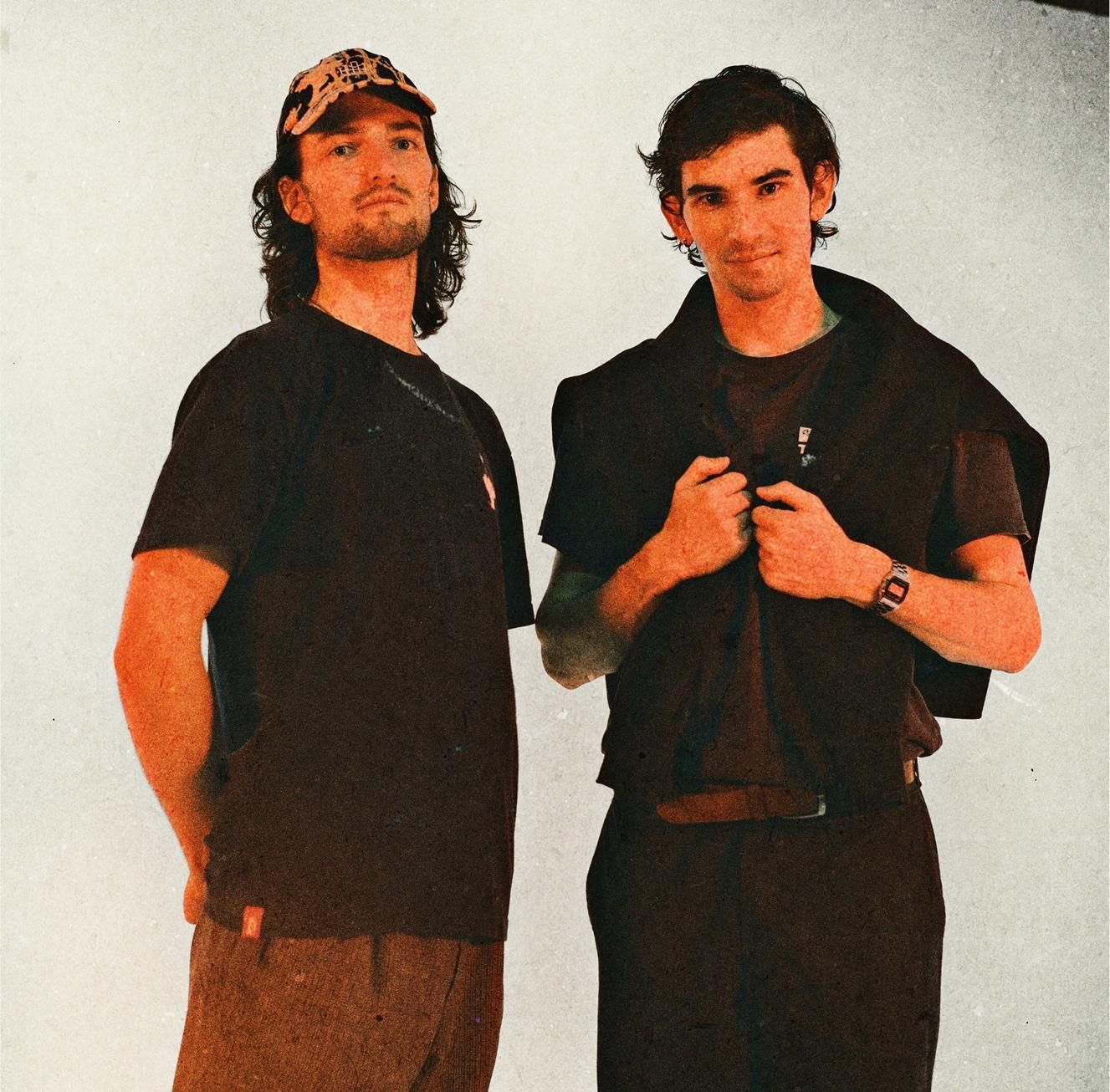
Members: Allan McConnell, Finn Rees
Nationality: Australian
Current release: Close Counters's new album LOVERS DANCE ACADEMY is out now.
Shoutout: We want to give a shout-out to Support Act, an incredible Australian organization that provides vital assistance to artists, crew, and music workers facing hardship. They offer support through financial aid, mental health services, and other resources to help those in the music industry when they need it most. Their work is making a huge difference, and we highly encourage everyone to check them out and support their mission.
If you enjoyed these thoughts by Close Counters and would like to know more about the band and their music, visit their official homepage. They are also on Instagram, Facebook, and tiktok.
For a deeper dive, read our earlier Close Counters interview.
Production is a discipline bordering technology, art, and creativity. How do you see the relationship between these and what is their balance for your own music, do you feel?
For us, production is about balancing technology, art, and creativity. Technology gives us the tools to shape sound, but the music has to feel human and expressive.
We start with live instrumentation and improvisation, then use production to refine and enhance the energy.
Creativity ties it all together—whether through sampling, sound design, or arrangement, the goal is always to serve the groove and emotion.
Which part of the production process do you draw the greatest fulfillment from?
We get the most fulfillment from the moment a track comes to life—when a groove locks in, or a melody and chord progression pairs perfectly. A lot of that happens early on when jamming where things feel raw and exciting.
But there’s also something deeply satisfying about the final touches, mixing and mastering. Seeing an idea evolve from a loose sketch to something that feels alive is what keeps us coming back.
For you personally, where does composition end and production start (or vice versa)?
For us, composition and production blend together—one constantly shaping the other.
A groove or chord progression might start the process, but sound shaping and arrangement often inspire new ideas.
Is technology something that you would like to have disappear behind your music – or is it a musical element that you want to bring to the fore and play with?
We like to bring technology to the forefront and play with it. It’s a core part of our process, and we enjoy exploring how new tools can shape the music. Whether it's through sound design, sampling, or synthesis, technology adds an exciting dimension to the creative process.
Rather than having it disappear, we want to use it to enhance and push the boundaries of our sound.
Could you describe how your relationship with your studio/set-up feels like - is it an extension of your self/body, a partner and companion, a creative catalyst, a challenge to be overcome, something else entirely?
Our studio feels like a creative partner for sure. It’s where we spend a lot of time experimenting, collaborating, and turning ideas into songs. It’s a space that holds both comfort and challenge - it pushes us to explore new sounds while providing the tools to shape our music.
In a way, it feels like an extension of our creative selves, always evolving as our process and sound evolve. It also surprises us, helping us push past creative limits and into new territory.
How and for what reasons has your music set-up evolved over the years and what are currently some of the most important pieces of gear and software for you?
Our setup has evolved as we’ve embraced more synths and hardware to expand our sound.
We started with live instruments, but now we incorporate pieces like the Prophet, Sub 37, Grandmother, and Fender Rhodes to create richer, more dynamic textures. These instruments allow us to experiment and push our creativity in ways we couldn’t before.
[Read our feature on the Fender Rhodes]
Our setup continues to grow with our music, always reflecting how we want to shape new sounds.
Tell me about the space of your current studio/workplace and how you've set it up to further your creativity?
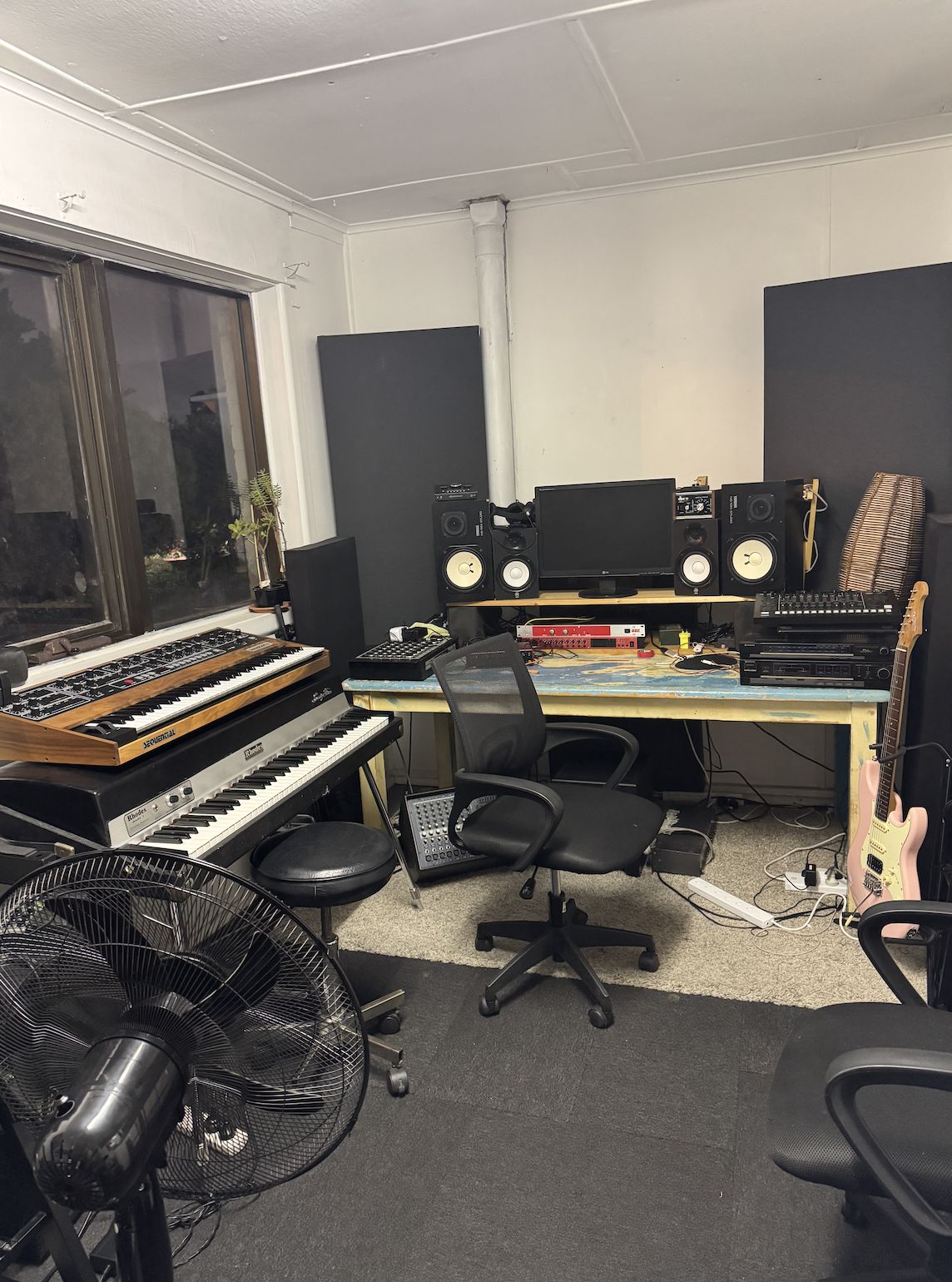
We’ve set up our studio to work for both rehearsing as a three-piece band and jamming out new ideas. It’s got enough flexibility so we can easily switch between playing live and getting into production mode.
We also made sure it’s a space that can be shared, so when we’re collaborating with others, it feels open and ready for anyone to jump in and add to the mix. It’s all about keeping things flowing and spontaneous, which really helps with creativity.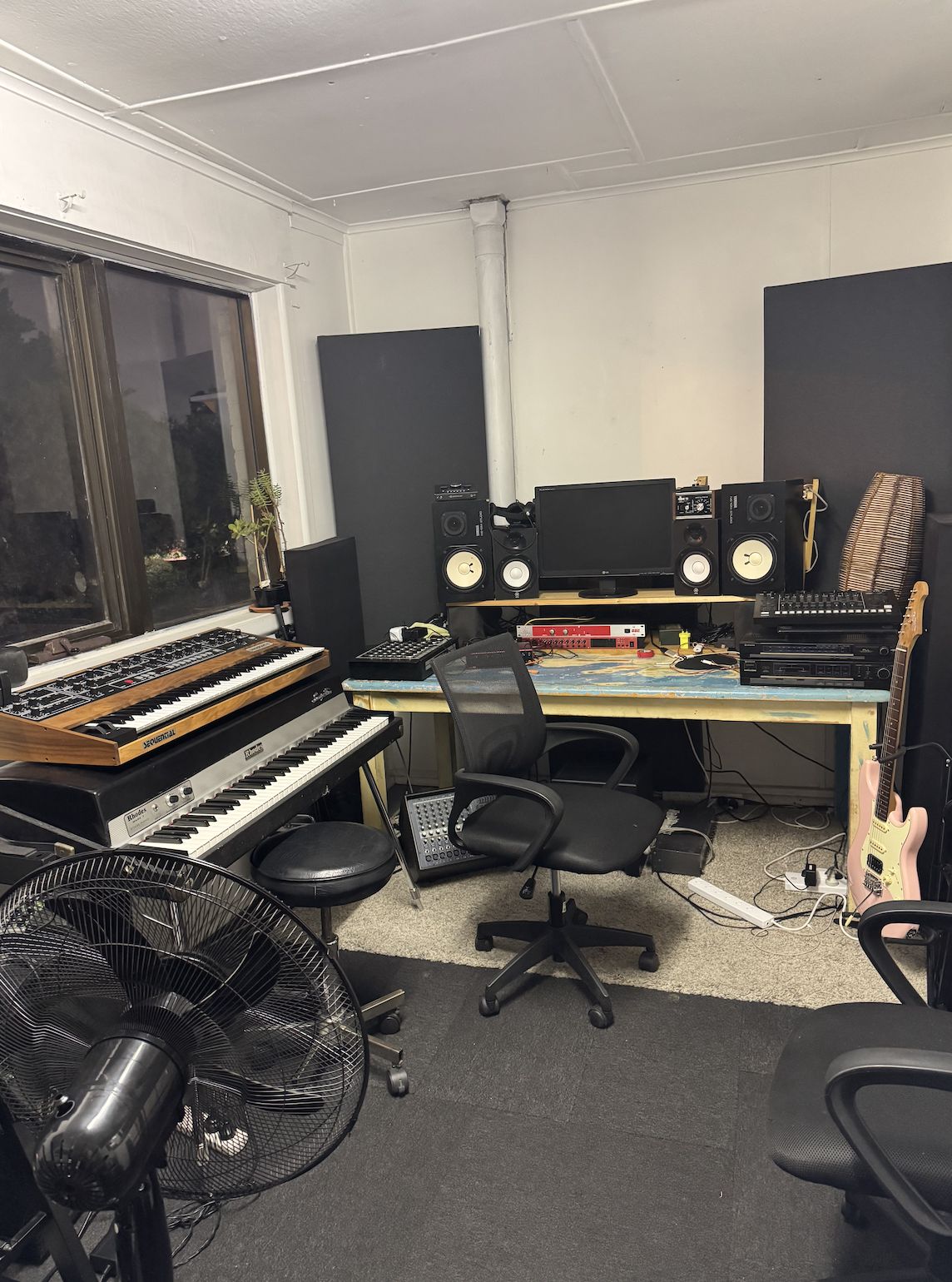
Close Counters Studio Photo (c) the artists
Late producer SOPHIE said: “You have the possibility with electronic music to generate any texture, and any sound. So why would any musician want to limit themselves?” What's your take on that?
We totally agree! Electronic music offers an infinite canvas and you can shape any texture, sound, or atmosphere you want. The possibilities are endless, and that’s part of what excites us about producing.
However, we also believe there’s something powerful in limiting yourself at times to spark creativity. Sometimes, having constraints, whether it’s working with certain instruments or a specific sound palette can push you to be more inventive and make more out of less.
Tell me about one or two of your early pieces that you're still proud of (or satisfied with) in terms of production – and why you're content with them.
One of our early pieces we're still proud of is "SOULACOASTA." It’s still a key part of our live set eight years on.
The groove and vibe still hit the way we intended, and we love how it showcases a range of influences.
Another track is "BESPOKE" ft. Wallace.
This one stands out because it combines some exploration into the new territory of broken beat music with a really strong vocal performance. It feels like a perfect snapshot of where we were at the time, and we’re still satisfied with how it came together.
From the earliest sketches to the finished piece, tell me about the production process for your current release, please.
For LOVERS DANCE ACADEMY - we began by sketching ideas across a few different studios, experimenting with different sounds and textures.
Once we had a solid foundation, we brought in live drums to establish the groove, followed by bass to lock in. From there, we layered in percussion to add depth and energy. The vocals came next, with a mix of solo and group vocals to create dynamics and bring out the emotional core of the track.
The whole process was about building piece by piece, and letting the energy of the performances guide the production.
There are seemingly infinite parameters to change, influence and shape the sonic results. From your experience, what actually makes a piece better and what sets a “finished” version apart from one destined to linger in the archives?
What makes a piece better, in our experience, is clarity of intent - when every part, from composition to arrangement etc, serves the core idea and enhances the feeling you want to evoke. The best tracks usually have a strong sense of direction, even if that direction evolves along the way.
A "finished" track stands out when it feels complete, when you know every sound and every section has purpose and impact. It’s got that perfect balance of dynamics and energy, and nothing feels like it’s lingering or unnecessary.
How do you see the relative importance of arrangement versus sound design versus composition (including, potentially, lyrics)?
For us, composition is the foundation - it’s where everything begins, whether it’s a chord progression, melody, or rhythm. Without a strong composition, the arrangement and sound design don’t have as much impact. Arrangement comes next, shaping how the composition unfolds and making sure there’s a dynamic flow.
Sound design is where we get to experiment and add unique textures, colors, and emotions. It can elevate the composition and arrangement for sure. Lyrics, when present, are the glue that connects everything. They can elevate the composition and the overall vibe, giving the song a deeper meaning and emotional resonance.
Ultimately, it’s a balance between all three elements, with each playing a crucial role in bringing a piece to life.
How, would you say are your live performances and your recording projects connected at the moment? How do they mutually influence and feed off each other?
Our live performances and recording projects are closely connected and influence each other. The energy from our live shows often shapes our studio recordings, while studio experiments lead to new ways of performing the music live.
The two feed off each other ... ideas from live shows inspire arrangements in the studio, and production choices give us fresh ways to bring the music to life on stage.
Have you used AI or generative music tools for your own productions? If so, in which way and what did they add?
We haven’t used AI or generative music tools in our own productions, but we’ve experimented with AI-based stem splitters to remove acapellas from samples. It’s been useful for isolating specific elements of a track, but we haven’t really gone further into AI-generated music.
For now, we prefer to keep the creative control in our hands and focus on more traditional production techniques.
One big question resulting from the use of "intelligent" production tools and AI is whether the results are as important (or even more important) than the process (and the joy of creating). How do you see that yourself?
For us, the process and joy of creating are always more important than the end result. The journey of collaborating and refining an idea is what makes the music meaningful.
While AI and intelligent tools can certainly enhance or streamline certain aspects of production, the emotional connection we have with the music and the creative decisions we make along the way are what truly define the piece.
The result is important, but it’s the experience of creating that gives the music its soul.
How much potential for something “new” is there still in production? What could this “new” look like?
There’s still a lot of potential for something "new" in production.
With evolving technology, there are endless ways to experiment—whether it's blending genres, using unconventional sound sources, or pushing the boundaries of live performance. It’s all about exploring new creative territories.