Published
Name: Cloth
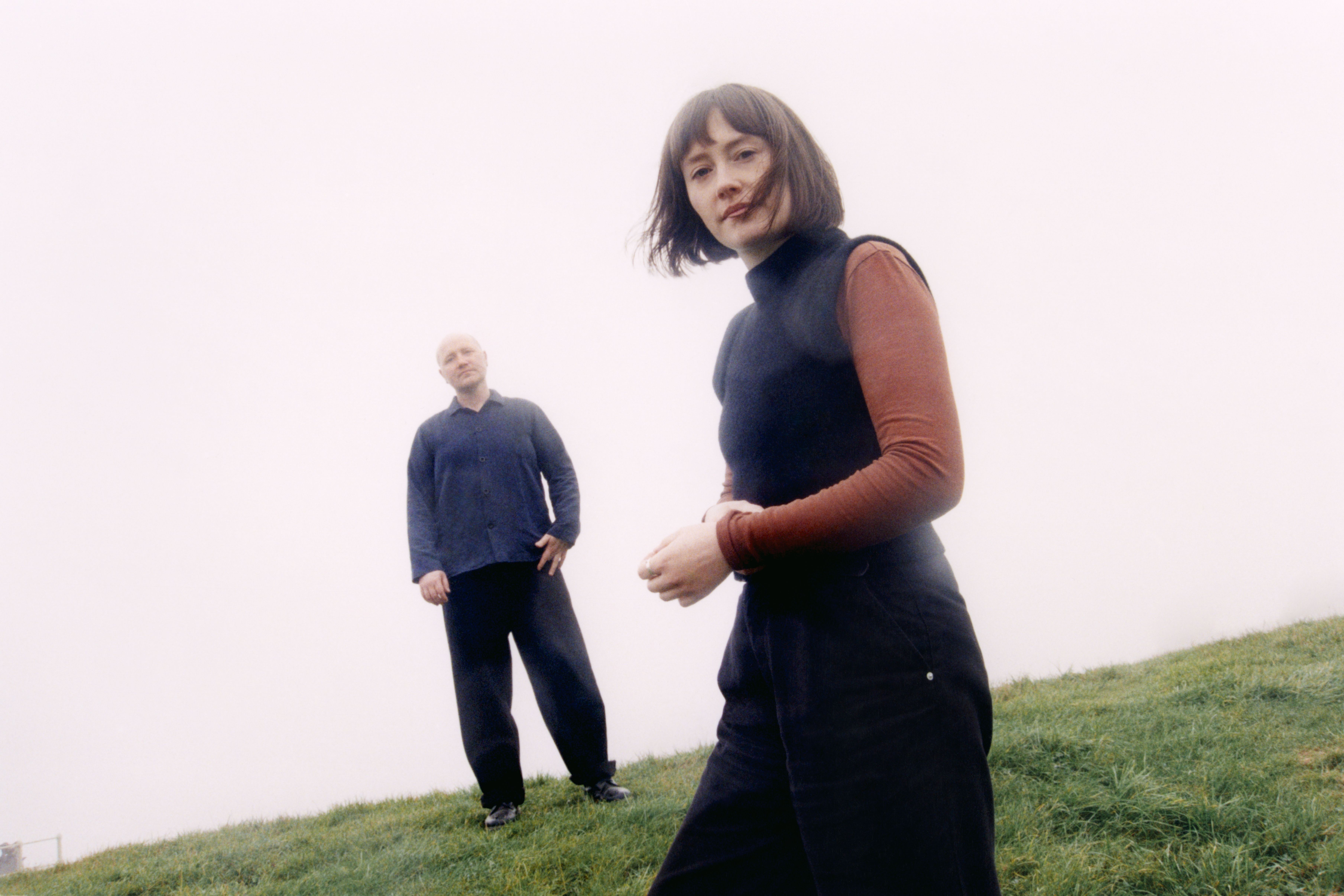
Members: Rachael Swinton (vocals, guitar, bass, drum programming), Paul Swinton (guitar, bass)
Interviewee: Paul Swinton
Nationality: Scotish
Current release: Cloth's third full-length album Pink Silence, featuring Mogwai’s Stuart Braithwaite, Portishead’s Adrian Utley, and Owen Pallett, is out via Rock Action.
Recommendation for Glasgow, Scotland: If you like coffee you must visit The Good Coffee Cartel. The coffee is delicious and it’s a really nice café space.
If you enjoyed this Cloth interview and would like to know more, visit the band's official homepage. They are also on Instagram, Facebook, and bandcamp.
Where does the impulse to create something come from for you? What role do often-quoted sources of inspiration like dreams, other forms of art, personal relationships, politics etc play?
The impulse to create always comes from being exposed to other people’s art.
For us, this is most often music - we’ll hear something that taps into our sensibilities and gets us excited about going into the studio and creating something.
For you to get started, do there need to be concrete ideas – or what some have called a 'visualisation' of the finished work? What does the balance between planning and chance look like for you?
Most of the time, our songs start with a simple idea or ‘seed’ as we refer to it. We’ll record this on our phones so that we don’t forget it, then we’ll either bank it for later or go ahead and keep working on it to see if it turns into something interesting.
Very often, one of us will come up with an idea and then we’ll spend time working on an accompanying part designed to turn it on its head a bit and makes it more interesting.
If we achieve that, then we’ll know it has the potential to become a full song and that’s when we’ll work to flesh out a proper structure.
Is there a preparation phase for your process? Do you require your tools to be laid out in a particular way, for example, do you need to do 'research' or create 'early versions'?
We don’t have any processes that we’ll strictly adhere to but there are some things that we like to have in place before we start working, just so things feel more conducive to writing. That can be as simple as a nice tidy studio, with everything - instruments, effects - all accessible.
We always create early versions of songs, just so we can revisit these with a bit of perspective and see what needs added or subtracted. The early versions can range from quite fully fleshed-out demos with drums and synths to really rudimentary sketches consisting of just guitar and voice.
On Pink Silence, we purposefully chose to keep all of our demos very simple, so that we could discuss the arrangements with our producer Ali (Chant) and build these in the studio.
We had ideas going into recording of where we wanted to go with things, but keeping the songs stripped back to their essence was helpful as we weren’t tied to a particular approach from the outset.
Do you have certain rituals to get you into the right mindset for creating? What role do certain foods or stimulants like coffee, lighting, scents, exercise or reading poetry play?
Coffee is extremely important! Not only does it help keep us going while working in the studio, it’s also a really enjoyable, social aspect of the recording process.
We were in Bristol for two weeks recording the album and each morning Ali would make us a coffee and we’d talk about the songs and just chat generally. It was a lovely morning ritual to start each day.
For Pink Silence, what did you start with? If there were conceptual considerations, what were they?
Before we even started writing, Rachael had a conversation with Ali where he encouraged us to ‘let go’ on this album. He didn’t really elaborate too much on the specifics of what that meant, as I think he wanted us to find our feet with it. It became a bit of a mantra while writing and recording as it encouraged us not to overthink ideas and work more instinctually.
We knew we wanted to go bigger on this album, with larger arrangements and heavier sonics, so the idea of ‘letting go’ emboldened us to go after that.
Tell me a bit about the way the new material developed and gradually took its final form, please.
During the writing process we recorded quite a lot of ideas on our phones that we’d play around with, leave for a while, then revisit. Not everything ended up being something that we turned into a full song, but out of this bank of material came 10 or so full songs which we then recorded very simple versions of on Pro Tools.
After sharing those demos with Ali, we talked about where we could go with the songs and who might be good to collaborate with on some of the tracks. He suggested getting Adrian (Utley of Portishead) in for a couple of days for some synth and guitar work. Adrian is on 5 tracks and his contributions really elevated each of the songs.
In the title track “Pink Silence”, for example, he put down some monstrous layers of synth using an Oberheim OB-1, as well as some really unusual guitar parts using clips and pliers.
Things like that brought a sonic aesthetic to the album that’s quite different from anything we’ve put out before.
We also have string arrangements on half of the record, courtesy of the incredible composer Owen Pallett. This was another first for us and a real eye-opener as Owen’s arrangements had an utterly transformative effect on the songs.
Their arrangement on “The Cottage”, for example, adds a deep, mournful poignancy to quite a stripped-back arrangement.
What makes lyrics good in your opinion? What are your own ambitions and challenges in this regard?
Good lyrics need to inspire a genuine emotional reaction in the listener.
I often find that they are one of the more taxing elements of writing as I’m always striving for that. They need to complement and elevate the music by adding another, more visceral dimension.
What are areas/themes/topics that you keep returning to in your lyrics?
I often find myself writing about loss, grief and the process of trying to self-assure.
I have OCD and a hallmark of that condition is always seeking assurance from others, rather than yourself. I’m in a much better place with things now but it’s a topic I often find myself returning to.
There are many descriptions of the creative state. How would you describe it for you personally? Is there an element of spirituality to what you do?
Its a wonderful feeling when you’re chasing an idea and things feel exciting and full of potential.
We often talk about ‘cracking the nut’ when we’re writing, which really just means getting to a place where we feel happy with a particular part or melody. It does feel a bit like the rest of the world falls away when you’re really focused on achieving that.
Once a piece is finished, how important is it for you to let it lie and evaluate it later on? How much improvement and refinement do you personally allow until you're satisfied with a piece?
Perspective is so important for us when writing.
There have been times in the past when we’ve recorded something that initially feels really exciting, then we’ll come back in a few days and it will be immediately apparent that something isn’t quite right or needs changed.
It’s fun to work quickly and make creative decisions instinctually but we always allow ourselves plenty of time to go back and refine something before we feel sure that it’s finished.
How do you think the meaning, or effect of an individual piece is enhanced, clarified or possibly contrasted by the EPs, or albums it is part of? Does each piece, for example, need to be consistent with the larger whole?
If an individual piece can be situated within a larger whole and everything feels cohesive and journey-like, then the individual piece will always be lent a greater degree of potency and impact as a result.
Music and the accompanying artwork are often closely related. Can you talk about this a little bit for Pink Silence and the relationship that images and sounds have for you in general?
In the past, we have always used paintings as the artwork for our music, however, we took a different approach for this album and used a photograph of ourselves, taken by an incredible photographer called Sandra Ebert.
We wanted to create a powerful and impactful sound on Pink Silence, so it made sense to us that the artwork should feel more immediate and less abstract.
After finishing a piece or album and releasing something into the world, there can be a sense of emptiness. Can you relate to this – and how do you return to the state of creativity after experiencing it?
It’s always a very weird feeling when an album you’ve worked on for so long is suddenly out in the world. For such a long period of time you’re working on these songs which are very personal to you, and then they are available everywhere and that can feel quite jarring.
That feeling does subside the longer the music is out though and we do get really excited about the prospect of people forming their own connections with our music.
We love making music so we don’t leave it too long before getting back into the studio!
Creativity can reach many different corners of our lives. Do you personally feel as though writing a piece of music is inherently different from something like making a great cup of coffee? What do you express through music that you couldn't or wouldn't in more 'mundane' tasks?
The coffee analogy is quite a good one as, at the end of the day, the more care and attention you put into something, the better the end result is going to be and the more satisfied you’ll feel with it.
Putting time into crafting something because it’s important to you is always a worthwhile pursuit, in my opinion.