Published
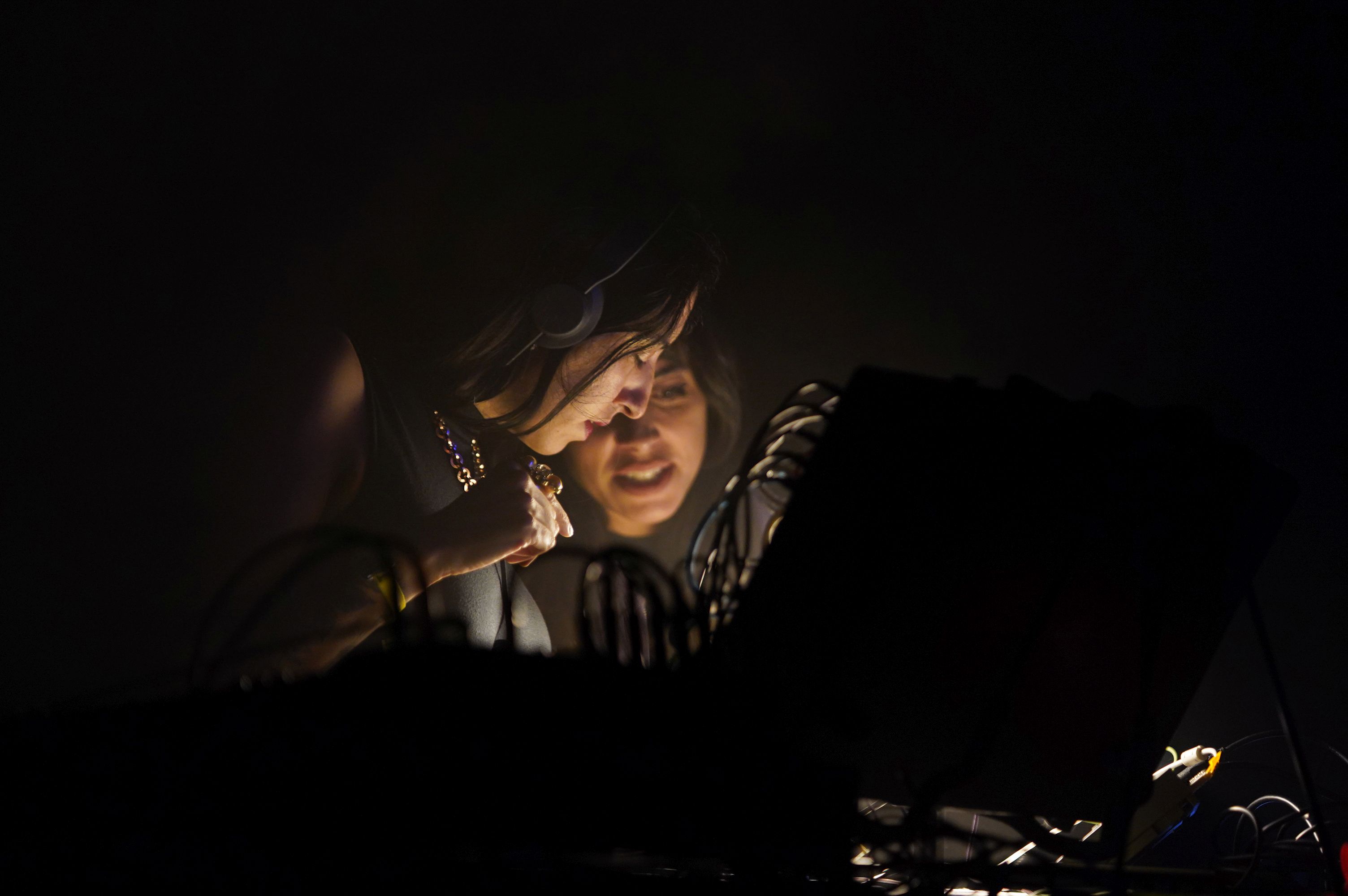
Name: Sofia Acosta aka Coast2c
Nationality: Mexican
Occupation: Producer, modular synthesist, live electronic artist, DJ
Current Release: Coast2c's Radical Devotion EP, featuring remixes by Max Cantrell and Isabella Koen, is out August 1st 2025 via White Owl. About the release, Sofia says, “I am very exited to be releasing this modular techno EP through White Owl, a label based in New York highlighting experimental, live and odd techno.”
If you enjoyed this Coast2c interview and would like to know more about her music, visit her official homepage. She is also on Instagram, Soundcloud, bandcamp, and Facebook.
What were some of the musical experiences which planted a seed for your interest in electronic music?
When I was little, my dad had a box filled with tapes from different genres and sounds. Changing the tapes and putting them back in the order of what I liked most is one of my most vivid memories—it made me super excited about music in general.
When it came to electronic music specifically, I was drawn to the retro-futuristic and robotic sounds and visuals of bands like Kraftwerk and Devo, which I discovered in high school. I also loved the aesthetic side of it—the colors, the textures, the graphics they used.
Around that time, I got into all sorts of music. Shortly after college, I started exploring DJing.
Most genres of music make use of electronic production means. What does the term “electronic music” mean today, would you say?
I think that definition nowadays has evolved beyond its original meaning of music made exclusively with electronic instruments and technology.
I think it refers to music where electronic sound design and production are central to the aesthetic, not just the process.
I grew up mainly listening to electronic music but have of lately, along with others I've spoken to, been somewhat disappointed by most new releases. I'd be curious about your own view on this, the “creative health” of the scene and potential reasons for the disappointment.
I think about this too. In my opinion, it’s a combination of many factors happening in the world right now, but a few stand out to me as having a direct impact.
First, the way we’ve been consuming music on streaming platforms over the past decade has reached an unsustainable point. Music creation is now often shaped to satisfy the demands of social media and streaming algorithms.
Second, electronic music tools are more accessible than ever, and the combination of more artists producing music with platforms that reward quantity and algorithm-friendly tracks has led to a saturation of whatever style is trending at the moment. There’s a noticeable lack of risk-taking when the goal is to be favored by the algorithm—much of it feels over-polished, safe, or overly referential.
But at the same time, there’s still a lot of exciting music coming from micro-labels and DIY scenes. As always, the most interesting sounds tend to come from the margins.
I also find a lot of inspiring music through cross-pollination with other art forms—performance, live electronic music, and, of course, within the modular synthesis community.
What were some of the recent releases, or performances of electronic music that left a deep impact on you?
The last two live shows I played I shared stage with other live acts. The White Owl / Beautiful Machines show in NYC was a stack line up of live electronic music and some of my favorite performances were JWords, Kanyon, AceMo, Relaxer …
On a larger scale, I recently saw the Justice show in a stadium in Mexico City and that was a great show. The possibilities of a massive event with great sound, synths, stage lightning and performance. On point.
What kind of musical/sonic materials, and ideas are particularly stimulating for your work right now?
I recently redid my studio in Mexico City, after moving a year ago. I’m adding new “old” modules to my workflow and setting everything up in its new environment. I’ve also been doing a deep clean and selling gear I no longer use. This new space feels really inspiring.
While my studio was torn down, I used the Analog Rytm as my only musical tool. I uploaded some sounds from my latest EP, Radical Devotion, and programmed a live set with it. I performed that set in NYC, Tokyo, and Mexico City, and it was exciting to see how it evolved over time and with practice. It also turned out to be a great travel companion—easy to jam with anywhere you can plug in.
That said, I’m definitely ready to play with modular synths again.
Where do most of your inspirations to create come from – rather from internal impulses or external ones? Which current social / political / ecological or other developments make you feel like you need to respond as an artist?
From both internal and external sources. Everything in the external world influences and affects my internal world.
“Urgency of Action” is the first track of the EP I wrote. It's a sonic response to the feeling of frustration and overwhelm with everything going on in the world right now.
“Lover’s don’t say Goodbye” is about loss and so on. All tracks are references to and inspirations from my real world.
Music has become a lot more global, and incorporating elements from other parts of the world or the musical spectrum is commonplace. Do you still think there are city scenes with a distinct, unique sound? How does your local scene influence your work?
Even though music has been globalized, I believe the city and the environments affect the local sound and how we experience music. I spend my time between the woods and the city.
The local scene in the city is huge and there are so many micro niches and pockets of music happening everywhere at the same time. Any given night you can experience a massive rave or a small intimate experimental show or a night of friends DJing. There are million different sounds happening, even the sound of chaos in the city itself.
The local scene takes me to different collaborations. I am making more dance forward music than when I started playing modular synths in Portland for example.
Today, electronic music has an interesting relationship between honouring its roots and exploring the unknown. What does the balance between these two poles look like in your music?
There are some fundamental rules that work well in music. Knowing the basics of music theory, for example, can help you create sounds that fit together harmoniously—but I don’t think it’s strictly necessary.
I like to approach it both ways. When it comes to melodies, understanding chords and how notes relate to each other is useful, but there’s also a real sense of freedom in jamming—letting a sound or beat unfold naturally and take you wherever it wants to go. What sounds good to you? That’s what matters.
As a modular synthesist I especially love how these systems lead you down unexpected paths. The possibilities feel infinite.
How much potential for something “new” is there still in electronic music? What could this “new” look like?
Every creation is a copy or inspiration of something that already exists … nothing is really new, especially now with the tools available for creation.
I think that each person’s voice and soul creates the “new”. The little decisions we take while creating, those are unique and unrepeatable.
What were some of the recent tools you bought, used, or saw/read about which changed your perspective about production, performing, and making music?
I am trying to get rid of tools and instruments I don’t use before buying new ones … I haven’t acquired a new piece of equipment in a very long time.
The last module I bought was the Gliss from bela.io which is a module using a recordable touch sensor to introduce gestural control in modular systems. I'm excited to incorporate that into my workflow.
On the other hand, I have been really enjoying the Elektron workflow with the Analog Rytm. Such a deep and performative piece of gear, I love it.
Do you think that there is a limit to what can be done in sound design – and what defines these limits?
Yes but these limits are fluid and depend on context. As new technologies, formats, and listening habits evolve, the boundaries of sound design continue to expand.
Ultimately, the most significant constraints often come not from what’s technically possible, but from the purpose behind the sound, what you intend it to communicate or evoke.
In as far as it is applicable to your work, how would you describe the interaction between your music and DJing/DJ culture and clubs?
I started DJing before diving into music production and synthesis. I was actively DJing but since the pandemic and moving back to Mexico, I’ve been doing less of that.
I think the interaction of clubs and raves are very important but it has not been a space I've recently attended. It comes in waves for me.
I am especially excited to bring my modular techno and live sets back to the club scene. I am also ready to go dancing to a good DJ set. It’s important that my music lives on the dance floor. There is this direct connection of your piece in a larger context blending with other music and people dancing and reacting to it. It’s great!
How, would you say are your live performances and your recording projects connected at the moment? How do they mutually influence and feed off each other?
All my creative practices are connected, I am also a painter and the mental space when I paint vs when I make music, jam my synth or even DJ are completely different and one practice helps generate new ideas in the other different fields.
The brain is another muscle and exercising different parts of it is important. When I paint, I sometimes I feel I am hypnotizing myself and I liberate the burden of trying to solve a technological problem and I let the paint go.
Giving myself long brakes after making a track is important and that time I use it to perhaps listen to other people’s music which also feeds new ideas to my own work. All of it is connected.
Even if AI will not entirely replace human composition, it looks set to have a significant impact on it. What does the terms composing/producing mean in the era of AI, do you feel?
I use AI for some aspects of my life but I have never used it to create music. I enjoy the hands-on process of modular synthesis, the process of making music and solving the problems I face along the way. I enjoy the feeling of discovery and self-fulfillment.
When I learn how to use a new module, a piece of gear or a new production technique, especially with modular synthesizers I am learning a new concept not only in music but in life, a different paradigm, a new idea. That piece of gear is one universe that you can connect to other ones and most of the time you end up learning a valuable skill like physics or maths or discovering a new sound you just made. I want to learn that, I want to know what these ideas are and what I can create with them. To dive in the process and the struggle of creating is part of the beauty of the outcome.
That being said, AI can be used in many different aspects of making music that can accelerate the process of production and not interfere with creativity and discovery and even sometimes even boost that discovery.