Published
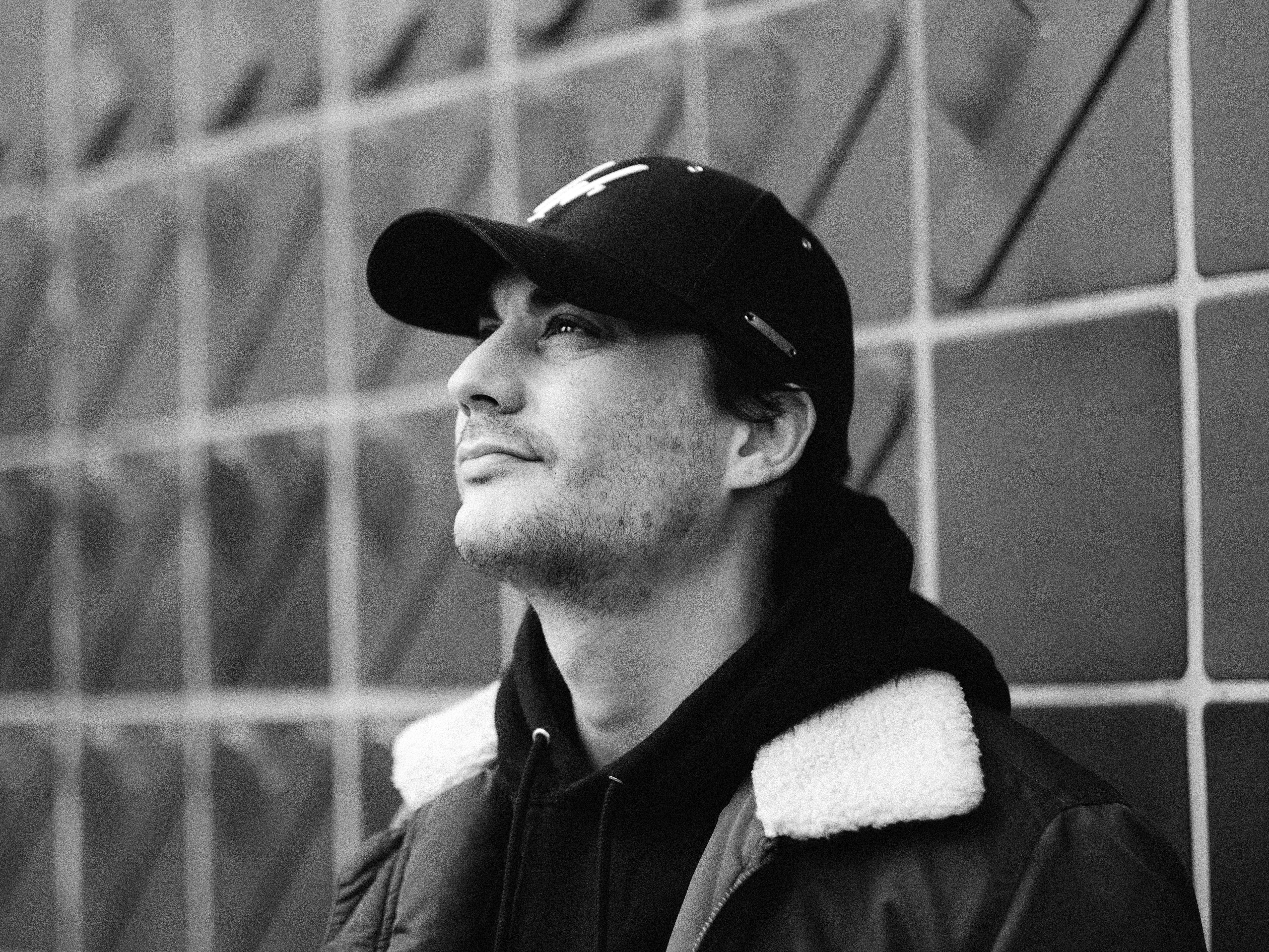
Name: Adrien Erra aka Cosmonection
Nationality: French
Occupation: Producer, DJ, songwriter
Recent release: Cosmonection's deep, mesmerising debut album Hidden Places is still available as a double LP from Pont Neuf. More recently, he released the Sunset Thoughts EP, a collaboration with Soren Lyann, also on Pont Neuf, and the single "Race of Love".
If you enjoyed this Cosmonection interview and would like to stay up to date with the project and Adrien's music, visit him on Instagram, Soundcloud, and Facebook.
How did you get in touch with Thomas, who runs Pont Neuf?
I have known Thomas since our childhood, but we reconnected after high school when he was working at a student radio station.
At that time, I was starting to make music with another artist from the label, Saudade, and Thomas invited us to his show to talk about our passion. From that day on, we have never parted ways.
Who else was part of that community?
I quickly met people who became great friends: Madcat, Berzingue, Kx 9000, and finally Tour Maubourg a year later. From the very beginning, we created numerous events in Paris, notably at Wanderlust, which became our favorite meeting place.
[Read our Berzingue interview]
The Rex residency seems to have been an important stepping stone for the label and its artists. Did you ever go there?
The Rex Club remains one of the label's fondest residency memories. We were able to host numerous nights with talented artists like Swelly, Session Victim, Marcel Vogel, DJ Gregory …
I had the chance to play there several times, and I remember being transported each time. The sound system is undoubtedly the best in Paris.
Your own music has an interesting connection to the club. It's clearly inspired by it, but sometimes, I feel like it's almost like a dream of the club experience. How would you describe your approach and your aesthetics in this regard?
Indeed, I am very much a dreamer by nature, and I find that dance and the dreamy side of people blend perfectly. I love deep house for this reason. It provides a groove that allows us to dance while also escaping, almost as if in a dream.
I dream of clubs where people let themselves be carried away by emotion, where the music transports them to another dimension.
You recently collaborated with fellow Pont Neuf artist Tour-Maubourg. What do you appreciate about his music and how did you record the track for your debut album Hidden Places?
I really enjoy working with other people and learning from them in general. We all have different ways of producing, and it's always nice to see how others do it; it has allowed me to make a lot of progress over the years.
I shared my music studios with Tour-Maubourg for 2 years, so it was natural for us to create music together. We often came together without a fixed idea, just with the intention of making music without any constraints.
He has taught me a lot about production, and I am particularly amazed by the grace he brings to his sounds. He is extremely meticulous in his work.
There is a lot of diversity on the Pont Neuf roster, but there is a shared sensibiltiy for sound. How would you describe your own sound and what, in terms of production, defines it?
I would say that my sound is "romantic," inspired by deep house with layers and melodies that evoke a sense of journey. I enjoy using organic sounds, especially on the drums, to create a natural feeling, as if one were looking at a landscape.
I like when sound gives the impression of warmth, of sunshine. I really enjoy using analog instruments for that purpose. So, I would describe it as romantic deep house.
How and for what reasons has your music set-up evolved over the years and what are currently some of the most important pieces of gear and software for you?
I have always worked with hardware that I have significantly expanded over the years. My Juno-106 has been a central piece that I have used extensively, being a classic staple.
[Read our feature on Juno 106]
I have also invested in several Moog synthesizers and drum machines (such as Jomox and Roland) over time.
[Read our feature on the Moog DFAM]
[Read our feature on the Moog Modular]
I don't have a strong preference for any particular instrument; I enjoy changing depending on the projects I am working on. Currently, I am spending a lot of time with the Osmose by Expressive E.
From the earliest sketches to the finished piece, what does your current production workflow/process look like?
I like to start by drawing inspiration from a lived moment or a landscape. I sort of create a mental movie before I begin. Next, I enjoy searching for chords to start with (they set the tone for the piece). Then, I let myself be guided by ideas. Once I have enough tracks, I begin the editing process.
Each time I create a sound, I make sure to establish a structure by the end of the day. This allows me to listen back and identify any areas that need adjustment.
In the light of picking your tools, how would you describe your views on topics like originality and innovation versus perfection and timelessness in music? Are you interested in a “music of the future” or “continuing a tradition”? What role do vintage machines play?
Tools have always evolved in music. In the 1970s, there were no sequencers; everything was recorded on tape. Imagine making edits back then!
I believe both the past and the future are fascinating and can complement each other. Personally, I still use a lot of hardware, and I'm not a big fan of computers.
Are there everyday places, spaces, or devices which intrigue you by the way they sound? Which are these?
The sound that I find most appealing is the sound of the sea waves. I really enjoy organic sounds, which I like to record with my Zoom recorder. It could be the wind, water, or sand ...
Have you ever been in spaces with extreme sonic characteristics, such as anechoic chambers or caves? What was the experience like?
Yes, the IRCAM in Paris has an anechoic chamber. You quickly realize that without any sound, you can go crazy haha. I wouldn't recommend staying there for more than 20 minutes.
What are among your favourite spaces to record and play your music?
I enjoy being by the seaside to find ideas, then in my studio for peace and isolation from the world. For playing music, I particularly like sunset sessions on the beach.
Do music and sound feel “material” to you? Does working with sound feel like you're sculpting or shaping something?
In a way, yes. Moreover, I really enjoy the process of creating something from these sounds and then starting over. It's an endless process.
I have a lot of respect for machines and the different sounds around us. I try to use them with my heart.
Sound, song, and rhythm are all around us, from animal noises to the waves of the ocean. What, if any, are some of the most moving experiences you've had with these non-human-made sounds?
The sound that impresses me the most is the noise produced by orcas to communicate with each other. It's like an underwater opera.
Some of their frequencies sound like guitars, it's amazing.