Published
Name: Kali Malone
Nationality: American
Occupation: Composer, performer
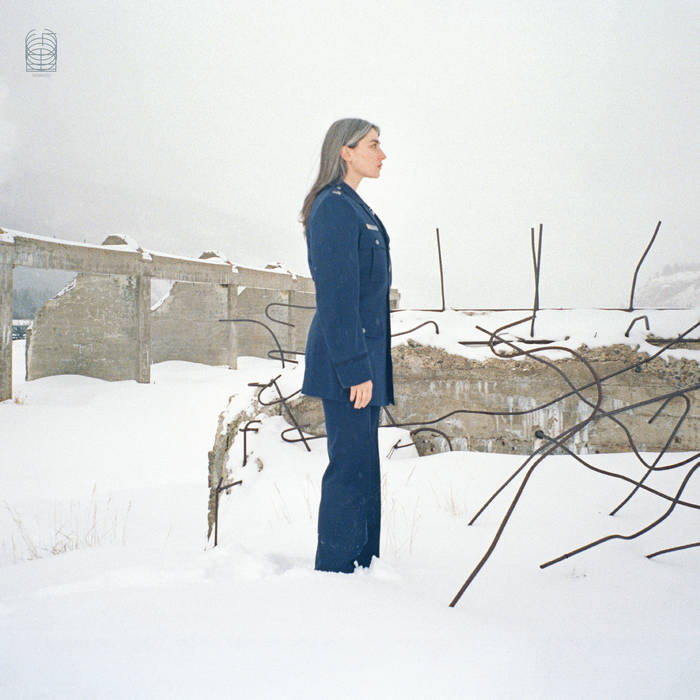
Current release: Kali Malone's All Life Long is out via Ideologic Organ.
If you enjoyed these thoughts by Kali Malone and would like to stay up to date with her music, visit her official website. She is also on Instagram, and Facebook.
The following thoughts about various aspects of her work are sourced from several interviews Kali Malone has given over the years. For more, follow the links to the full versions.
Music and Composing
“When I am in the music, I can time travel between my memories." From: The Quietus
“There’s a leaf-blower that wakes me up every morning. I remember once sprinting outside with my recorder because five guys were leaf-blowing together – it was one of the best sounds I’ve ever heard. There’s so much beautiful sound out there – it’s all just your perception whether you experience it as music.” From: The Guardian
"When I was younger, music was an especially cathartic form for me, and I had certain experiences where I felt like I over shared or memorialized too much through the music. The final pieces held so much weight over me and even fossilized certain memories and experiences. I love that music, but it’s private.
Since then, I’ve been figuring out new processes that achieve the same result but do not take such a personal toll. In recent years, I’ve stuck to composed music and algorithmic structures. For example, all of that organ music that I just put out, that was all generative and rule-based but it’s still very personal to me." From: Tiny Mixtapes
“When you have a bunch of restrictions, you lose control because there’s some sort of agency that is given to the composition that you submit yourself to. It’s a big puzzle. And then when it does fit together, the piece is so much more perplexing than I could have really imagined or linearly composed.” From: Bandcamp Daily
“I think that athleticism exists in anything ambitious. There’s an athleticism in the introspection that goes with creating art. You have to commit to go deep and pull out the ugly and the beautiful [...]. From: The Quietus
Singing
"Singing allows me to compose at any time; when on a plane or train, for example, because I can embody the sound within myself. There’s a visceral and physical empathy to it. I can visualise the harmony because of my training as a singer.” From: The Quietus
“I stopped singing because it got to a point where using the voice became a bit too vulnerable. It expresses so much; it’s almost like showing someone your bare body.
I think that, throughout my work, I’ve been trying to create more boundaries or shields for myself to make it more difficult for certain indulgent expressions or intuitions to come through uninvited.
Although, of course, that’s going to happen no matter what. No matter how many barricades you put between your ego and what the final result of the music is, you’re still going to be completely exposed in the end.
So I think that not using the voice and creating more generative, rule-based music has been my formula for challenging that osmosis.” From: Tiny Mixtapes
"My experience of vocal music is forever within me, and I still enjoy singing casually. Compositionally, I’m inspired by the structures of early polyphonic vocal music and intrigued by the interplay of multiple voices harmonically coordinating simultaneously.
I used this as the main compositional and recording framework for my album The Sacrificial Code.
I separately recorded each voice of the four-part harmony as if in an SATB format, then reassembled the voices in a multichannel acousmatic environment. Even though all four voices can conjoin and be smoothly played by two or four hands at once, the process of isolating the four voices aided in my conception of a woven contrapuntal network in which autonomous moving voices may convene at any moment.
This element doesn’t necessarily need to be observed by the listener, but it’s fundamental for my conception of the music and its technical inspiration." From: Re-Imagine Europe
Organs
"During the first and only organ lesson I had, we spent all but 5 minutes at the console before I insisted we go inside of the organ. All of my questions where either about the acoustic properties of the pipes or their tuning possibilities. The teacher didn’t answer many of my questions but was kind and gave me a stack of sheet music and arranged a date for me to meet with an organ tuner. We met and immediately bonded over our shared passion for tuning." From: Re-Imagine Europe
"Other tuning systems are completely absent from the conversation at music schools. It’s like a language that has been dissolved. That’s why I’m interested in organ tuning, because it’s one of the few places where that conversation and craft is still alive. Even if the organists don’t know much about it, the tuners do." From: Tiny Mixtapes
Tuning & Tuning Systems
"For me, tuning is a deeply focused and perceptually challenging process that leads to a lot of sensory growth. My creative process uses tuning as a catalyst for composing, leading me to seek intervallic relationships that provoke profound sensory and emotional resonances." From: Re-Imagine Europe
“I don’t understand why more people don’t know about harmonics. We learn about chemistry, about colour – the science of sound doesn’t just apply to musicians – we experience sound every moment of our lives.” From: The Guardian
"I’m really interested in discovering harmonic expressions that have been erased from our musical narrative since the standardization of equal temperament in the 18th century.
Before equal temperament, you had many tuning systems for different instruments and cultures and feelings. Tuning systems differed depending on whether you were in a small village or a big city, mountains or seaside, or if you were in the church or the castle. It’s obvious to me that my musical experiences translate into my understanding of reality and society. Those emotional and aesthetic experiences create our understanding of the world.
I think it’s actually terrifying that our Western musical experiences have been narrowed down to a combination of twelve tones. Those are also non-periodic, they’re not even in tune. It’s only the illusion of pitch since they are all actually equally out of tune. Equally bad, equally good.
I definitely have a lot of thoughts fueling this quest for non-standardized harmony and creating harmonic experiences that can be meaningful and jarring, even if they are not typically atonal and appear surface-level normal. I’m making the most harmonious music I can, but I think it can be just as blistering and subversive as noise. […] From: Tiny Mixtapes
"I love tuning organs, but the cultural element attached to a church is almost damping the idea that I’m profaning its structure—which is what I originally was so inspired by. I used to be like, “wow, I’m allowed into these churches, I have different beliefs, how can I subtly profane this experience, tune the pipes pure.”
I mean, thinking proportionally, as you do with just intonation, is difficult but once it snaps it interferes with other things, for instance, I’m having a hard time counting. Like if your counting between one and three, is it two or is it three? Do you start from zero or do you start from one?
With these things, I feel like I’ve lost it in some way. I’ve been trying to re-organize my brain so much with proportional values and making sense out of... Well, I come from a system of equal temperament that doesn’t make any sense. Nothing is proportionate or rational in that system.
Coming from a system that does not make any sense and then trying to go towards something that is rational and sensible confuses a lot of other things for you." From: Schauspielhaus Zürich
The complexity of chord combinations shows the space between emotions: if you think of harmony as the space between two opposing things, there is space between ugly and beautiful, between life and death.” From: The Quietus