Published
Name: Dame Evelyn Glennie
Occupation: Percussionist, composer
Nationality: British
Current release: Dame Evelyn Glennie teams up with deaf Jamaican British poet Raymond Antrobus for their duo album Another Noise, out now via Toy Gun Murder.
Recomendations: Art work: Judith Scott – any of her artwork but I especially like her piece deploying a shopping trolley/cart and filling it to the brim with found objects which is further dramatized by the woven core which holds all of the objects as though in a prison within the cart. This piece of art can be seen in the book: Judith Scott – Bound & Unbound
Book: Tending the Perennials by Eric Booth
If you enjoyed this Dame Evelyn Glennie interview and would like to stay up to date with her music, visit her official homepage. She is also on Instagram, Facebook, and twitter.
Where does the impulse to create something come from for you?
I feel it comes from the knowledge that humans are natural creators, even the instinct to survive requires creativity. For me creativity is the food for my whole being and existence, whether it’s thinking how I might store cups or mugs in my kitchen to writing or interpretating a piece of music or cooking a piece of salmon. Creativity seems to have its own natural ebb and flow.
Observing what is around me every day is crucial for my creativity but this is not done whereby I‘m actively looking for inspiration. If it comes, it comes; if not, so be it. I like to give myself plenty of space for reflection, and unclutter the inner-chatter with no preconceived agenda other than giving myself space and time.
The completely free-flowing improvised album I made called Shadow Behind the Iron Sun is a classic example of emptying the mind of clutter, looking at the objects in front of me and playing what entered my mind at the time without judgement or expectation.
What role do often-quoted sources of inspiration like dreams, other forms of art, personal relationships, politics etc play?
If I have been asked to engage with a project such as writing music for a TV drama, wildlife documentary, milk advert or a Shakespeare play, it’s easier to gain inspiration from the source you are dealing with. Otherwise, I cannot say that I feel directly influenced by other sources but I do think aspects probably seep into my system organically which I may draw upon without really realizing.
I don’t really hinge myself on things but let the mind be free in the hear and now. Sometimes things can feel completely ad hoc or what appears to be random or unrelated that fly in my head that can create a germ of an idea. Because I read a lot, especially on my travels, there are many things that inspire me but I don’t try to hang on to something – instead it is allowing that time to reflect in order to see how it may organically evolve within me.
For you to get started, do there need to be concrete ideas – or what some have called a 'visualisation' of the finished work? What does the balance between planning and chance look like for you?
It really depends on the project, who the collaborators are, what medium is being addressed, what demographic is being targeted, the legacy of the project and many other factors. Sometimes concrete ideas need to be put in place as regards to timing, number of musicians used, types of instruments used etc. These are more practical/logistical issues.
It’s rare for me to visualize a finished work when I start a project although I can sometimes visualize the feel that I would like people to experience. I think the variables in the types of projects are too varied for me to have a set way of dealing with things.
Is there a preparation phase for your process? Do you require your tools to be laid out in a particular way, for example, do you need to do 'research' or create 'early versions'?
Again, this very much depends on the project. I am usually quite free and open as regards to what I need to start a project. Sometimes I start with very little and then build on what I feel is required; sometimes it is the opposite and I lay out lots of things but then make reductions.
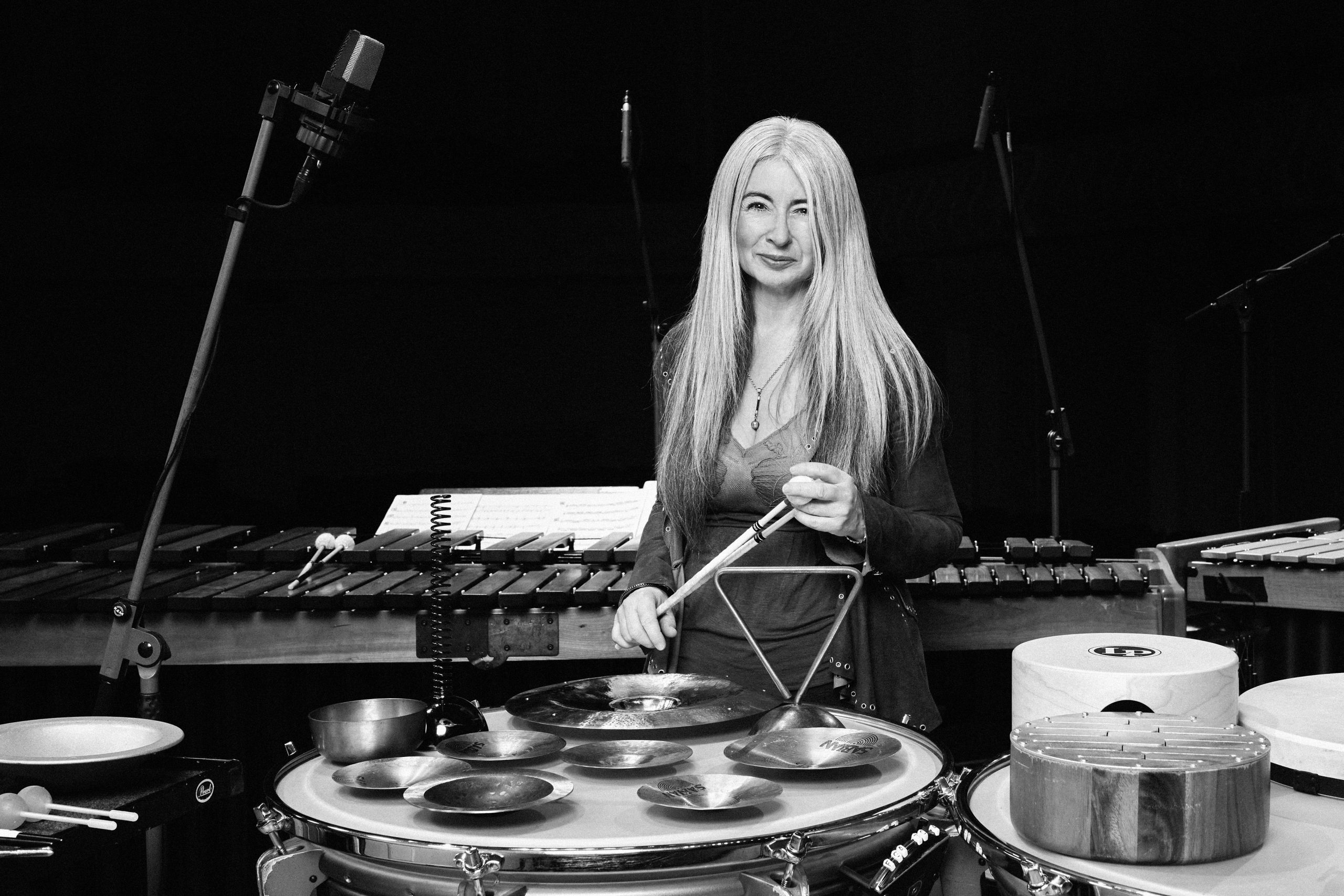
I have a collection of over 3800 percussion instruments (as part of The Evelyn Glennie Collection) and so it could be easy to become drowned in too many possibilities or options, so I often start with less tools and build up (such as with Another Noise).
Do you have certain rituals to get you into the right mindset for creating? What role do certain foods or stimulants like coffee, lighting, scents, exercise or reading poetry play?
No, nothing! I’m either in the mood or not. Even if I don’t feel in the mood to be creative, I still give myself a chance just in case an idea arises; sometimes the results can be a pleasant surprise. If I’m not in the mood, I give myself about 20 minutes just to see if any creative juices come to the fore. If not, 20 minutes is not a huge amount of time to have spent without a result.
The important thing is giving myself the opportunity and therefore you rarely feel as though you’ve wasted time. In my mind, simplifying a situation helps me enter a creative landscape.
What do you start with? And, to quote a question by the great Bruce Duffie: When you come up with a musical idea, have you created the idea or have you discovered the idea?
I would like to think ideas are discovered. It is what we do with those ideas that then becomes a creative journey.
We often think of something being created as not having existed before. We have infinite ingredients out there, not to mention the butterfly effect, and of course the power of listening, and so the creative part is how we use the discoveries.
Some people may think they are not very creative but actually we are all capable of discovering and from that we can then embark on the creative path.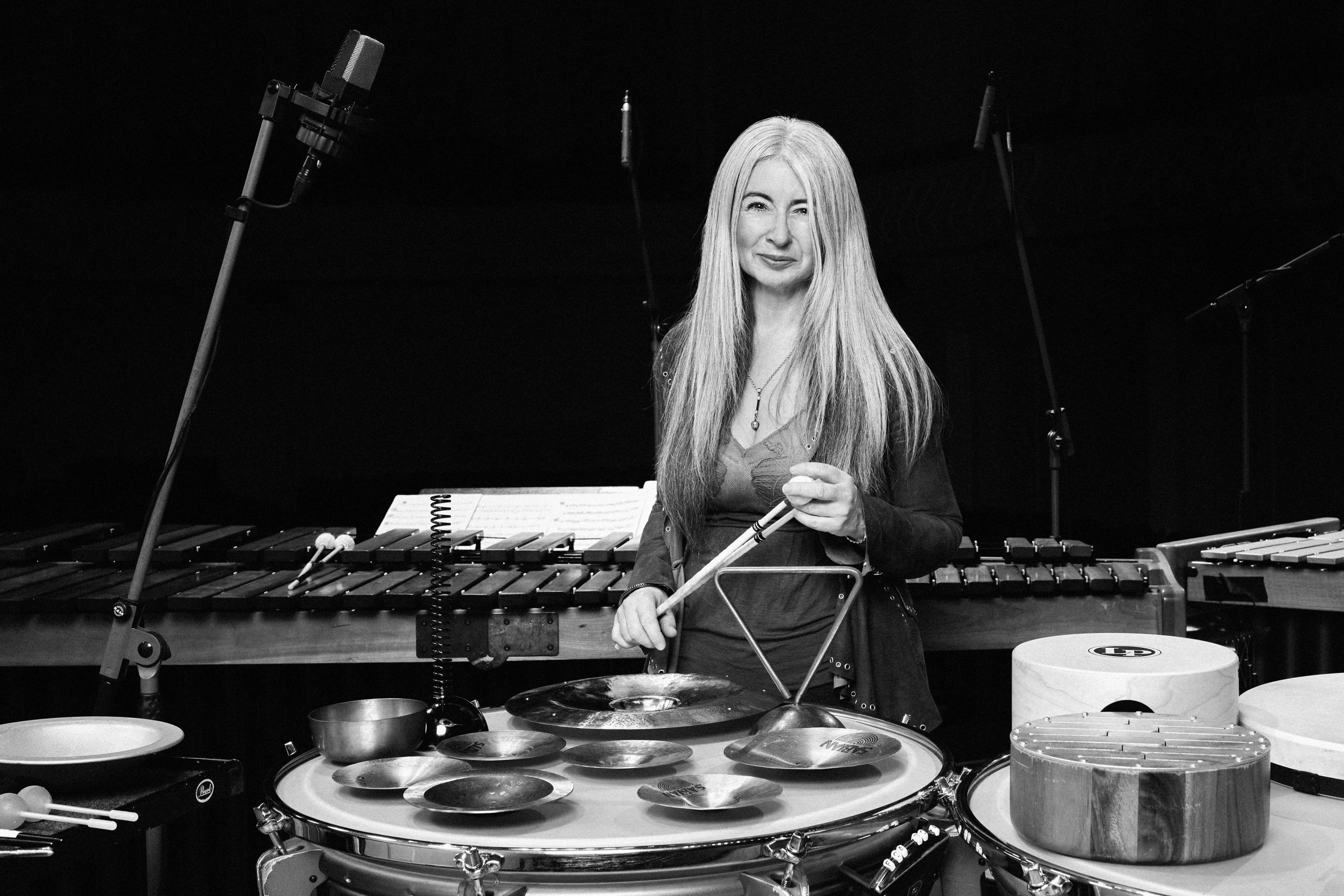
Dame Evelyn Glennie Interview Image by Kaupo Kikkas
Many writers have claimed that as soon as they enter into the process, certain aspects of the narrative are out of their hands. Do you like to keep strict control or is there a sense of following things where they lead you?
It very much depends on the project but most of the time I like to keep the creative process open and see where things may lead. If I’m writing a film or TV score then there is a sense of needing to be in control but at the same time there is the Director at your heels with their ideas.
Trust and freedom with yourself and others can help to create good creative flow even if you are steered in other directions.
Often, while writing, new ideas and alternative roads will open themselves up, pulling and pushing the creator in a different direction. Does this happen to you, too, and how do you deal with it? What do you do with these ideas?
This can happen most of the time.
I may be writing for a particular project, and an idea suddenly emerges which is suitable for another project. I try to keep a note of all ideas just in case. If I’ve forgotten the idea within a minute or so then I know it wasn’t perhaps worth noting. It is this flexibility and elasticity that I enjoy when writing.
There are many descriptions of the creative state. How would you describe it for you personally? Is there an element of spirituality to what you do?
I don’t really over-analyse what happens or the state I may be in when being creative. When things flow, I’m content but I don’t really feel I’m in any kind of spiritual state. It is more complete focus and contentedness in what I’m doing that gives me a sense of purpose and satisfaction.
As a player (solo percussionist), I have occasionally been seduced by something more spiritual but in reality that is a rare occurence.
Once a piece is finished, how important is it for you to let it lie and evaluate it later on? How much improvement and refinement do you personally allow until you're satisfied with a piece? What does this process look like in practise?
If I’m performing a piece of music, the process of refinement is a life-long mission unless I have the feeling of `shelving`a piece (such as John Corigliano’s Conjurer). If I’m writing a piece, I will refine it to the point whereby I think it is ready to let go, even if I feel there could still be other possibilities with it.
Part of the realization in creativity is knowing that everyone will have their own take on what has been created. If the process lingers on too long, there can be the tendancy for the creative spirit to move into a `I want to please everyone` stage.
Knowing when to let go is a skill in itself. Once I do let go, I then see myself as a potential interpreter rather than the creator, so that the piece is always evloving in my own mind.
When you're in the studio to record a piece, how important is the actual performance and the moment of performing the song still in an age where so much can be “done and fixed in post?“
It’s crucial that I record a piece as though there is an audience there. I need to be able to play a piece as though I’m playing it at a concert so that the overall instinct of what you want to say musically is experienced as one sound meal. After that, little sections can be re-done. I’m quite good at keeping the audience in my mind even if passages need to be re-recorded several times. However, if I have to do something over and over because there is a technical issue or a producer is picking at how certain notes are played, I then can lose that sense of spontaneity. It’s a very fine balance.
I have made commercial recordings in recording studios and in concert halls – both can create a different vibe but mentally that audience needs to be at the foreground of my mind no matter what 4 walls I am surrounded by.
When I made the recording of Sir James MacMillan’s Veni Veni Emmanuel, it happened at the Usher Hall in Edinburgh. I was positioned at the level where the audience sit facing the stage whilst the orchestra was on stage (it is a high stage). I had the sight of the conductor’s back!
The reason for this placement was that recording engineers had little experience recording percussion concertos in the early 1990s and the only way they felt they could get separation was by planting me completely away from the orchestra!
How times have changed.
Even recording a solo song is usually a collaborative process. Tell me about the importance of trust between the participants, personal relationships between musicians and engineers and the freedom to perform and try things – rather than gear, technique or “chops” - for creating a great song.
Chemistry between all parties is key. Amazing things can happen when there is good, positive chemistry. I have been in situations whereby a group of class A musicians have come together and it has been challenging because of the lack of chemistry. Good chemistry ignites great listening between all the creative forces.
Positive listening goes a long way in building trust. That does not mean we have to agree on everything but instead really know how to listen and give each person a voice – not to mention producing a sprinkling of humour here and there.
What's your take on the role and importance of production, including mixing and mastering for you personally? In terms of what they contribute to a song, what is the balance between the composition and the arrangement (performance)?
I’m so used to recording pieces as though they are played live with very little time or money for retakes or post-production. I remember making my first solo recording, Rhythm Song, within 3 days from start to finish. In the next studio to me at the time was a pop group whereby they spent those entire 3 days putting a cowbell track down. I did offer to do it for them!
I also remember making my first completely improvised recording, Shadow Behind the Iron Sun, wherey the intent was for it to be highly produced. It was an amazing experience. I loved how the producer was an extension to my whole sound world. It gave me the appetite to really explore production in live performances and other recording projects. I think it is down to what each player is comfortable with.
I always like to feel the human hand is felt – that weight, dynamics, nuances, placement and so much more that only the human being can produce and for the post production to be an extension of that human landscape.
After finishing a piece or album and releasing something into the world, there can be a sense of emptiness. Can you relate to this – and how do you return to the state of creativity after experiencing it?
I find that once I have completed a project, I can let it go quite easily. I think this might be because I don’t listen to music in the normal way due to my deafness. I listen to so little music, including my own, which means that every project is a new venture in the here and now rather than in the past.
I seldom listen to my own recordings or music because I know that that was a frozen moment in time, and in my head I had a million different ways of interpreting a piece. In my mind, I’ve already moved on.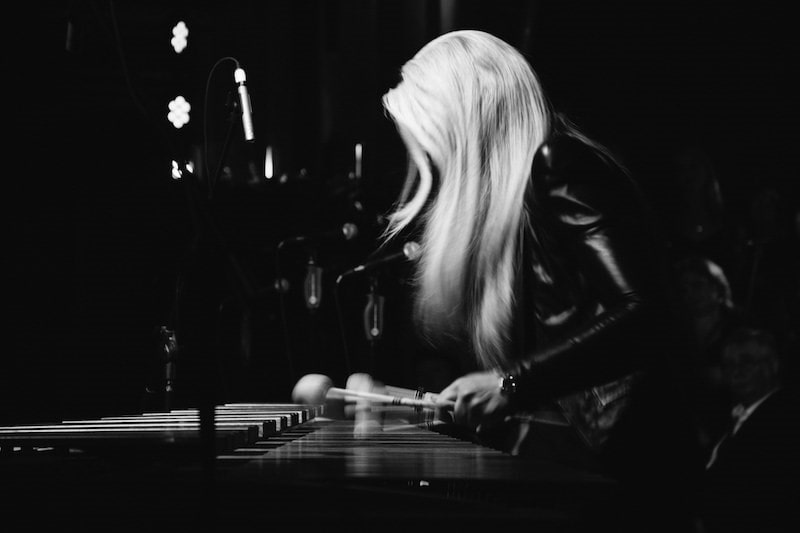
Dame Evelyn Glennie Interview Image by Ian Olsson
Music is a language, but like any language, it can lead to misunderstandings. In which way has your own work – or perhaps the work of artists you like or admire - been misunderstood? How do you deal with this?
I really don’t think about this. My work and the projects I involve myself in are so eclectic that I have not thought about this question simply because it is not something I have been affected by or am too bothered about.
People will always have opinions and that will no doubt change over time. It’s not something I can control or have any desire to control. Music, discovery and creativity are like a flowing river or slow moving kaleidoscope.
Creativity can reach many different corners of our lives. Do you personally feel as though writing a piece of music is inherently different from something like making a great cup of coffee? What do you express through music that you couldn't or wouldn't in more 'mundane' tasks?
I believe we are what we notice. We notice things for many different reasons including instinct, desire, habit, as well as to satisfy our own curiosity.
We often think that newness creates attention but the skill in attention and noticing is experiencing the not-so-new as if it were new or as if there is another layer to notice and pay attention to. It is the capacity to rediscover within the known that we can all practice the art of. As we get older, we often unclutter our thoughts and possesions and sometimes what we choose to do – things can have more directness about them, but that doesn’t stop us from becoming less interested – it is simply seeing more in less.
Creativity delicately balances effort and relaxation. Making a cup of coffee requires attention in how much coffee we put in the coffe pot or cup or making sure the water is boiled and that we don’t spill it all over the counter or onto our hands. And at the same time we can relish in the smell of the coffee, the texture, seeing the colour of the coffee, the taste, the satisfaction of other people enjoying the coffee.
Life really is there to be discovered and experienced.