Published
Name: Daniela Belcheva
Occupation: Singer, songwriter
Nationality: Bulgarian
Current release: Daniela Belcheva's new album NAIVE is out now.
Pure vocal recording recommendations: When listening to music I can’t separate roles of vocals from roles of instrumentation in vocal albums. I mean the whole thing moves me or not. A few days ago I’ve heard on the radio the voice of Patti Austin who I haven’t been listening to for a very long time and it felt very good to go back to some voices I listened to before. Now except listening to some Cyrille Aimee, Kurt Elling, I tend to turn periodically to the orchestrated versions in Joni Mitchell’s “Both sides now” and “Travelogue”. Also Laura Mvula, Jordan Rakei. I like the singing of scandinavian artists such as Beady Belle, Torun Eriksen.
If you enjoyed this Daniela Belcheva interview and would like to find out more about her music, visit her on Instagram, and bandcamp.
Do you think that some of your earliest musical experiences planted a seed for your interest in your voice and singing? How and when did you start singing?
Definitely so. I started singing in a choir at the age of five but I remember feelings of awkwardness, because everyone there was much older than me.
A bit later, in my teen years, the orthodox, classical and traditional Bulgarian choir repertoire came and I think that was the time when I developed a true love of singing and for being a part of an ensemble where many participants perform together, paying attention to the gestures of the conductor in front. I still keep my memories of great excitement when going on stage and hearing that deep and rich sound of voices singing acapella.
Discipline was a must-have. Also contributing to the whole sound, never singing above the others. Everyone’s style and way of thinking is a result of each stone along their path, and I’m grateful for those early years.
If you're also playing other instruments, how does the expressive potential of these compare to your own voice?
I don’t play an instrument as a player.
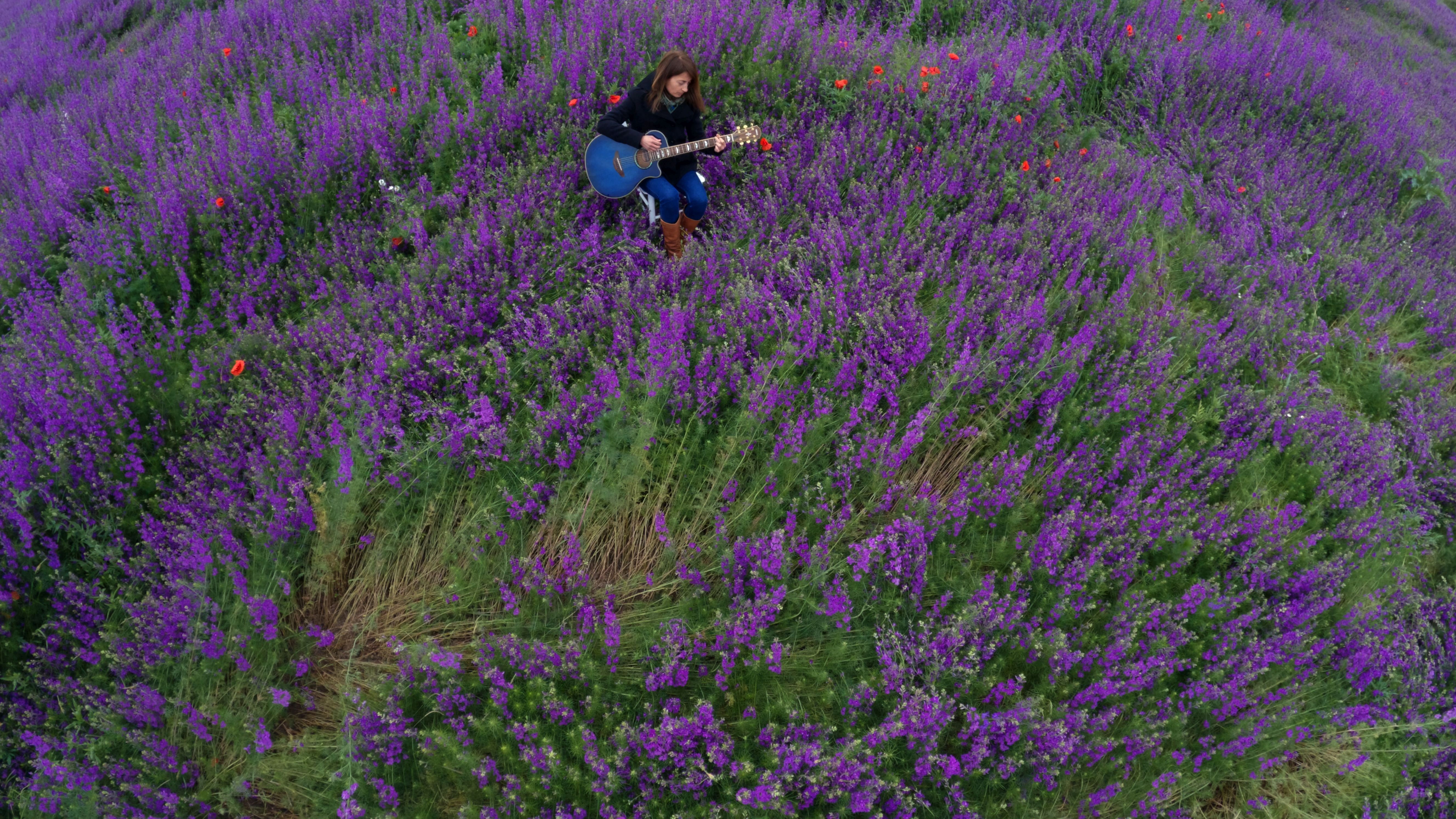
For the purpose of my songwriting I use the guitar, and when I work on a new song, the melody and the lyrics go together, supported by what can I put down at the same moment as a harmony.
What were some of the main challenges in your development as a singer/vocalist? Which practices, exercises, or experiences were most helpful in reaching your goals – were there also “harmful” ones?
For quite some years I’ve been performing on both boats’ and hotels’ stages, with different bands, different kinds of pop music, often for five hours per night. So keeping the voice healthy and clear of problems for a long period of time was the first thing I tried to find in my own way. To this end, I updated what I had learned to be able to make it fit my own body and sound.
It's good to know vocal technique rules but a singer should realize them through their own battles as well. I still prefer to sing and talk mostly in a mix to a headmix voice, to stay away from hard tension.
How do you see the relationship between harmony, rhythm and melody? Do you feel that honing your sense of rhythm and groove has an effect on your singing skills?
Everyone knows these three things work together and for each other - no matter how much one knows about music. Maybe we can add sound as well.
I can’t talk much about harmony, so the first thing that comes to my ears is the melody, then probably the sound of this melody. Melody is a line that can sit in a beautiful bed of chords or it can exist alone without any support. That’s one of the reasons why sound is important for me I think. What I hear must have a straight impact on my soul and the only messengers are my ears.
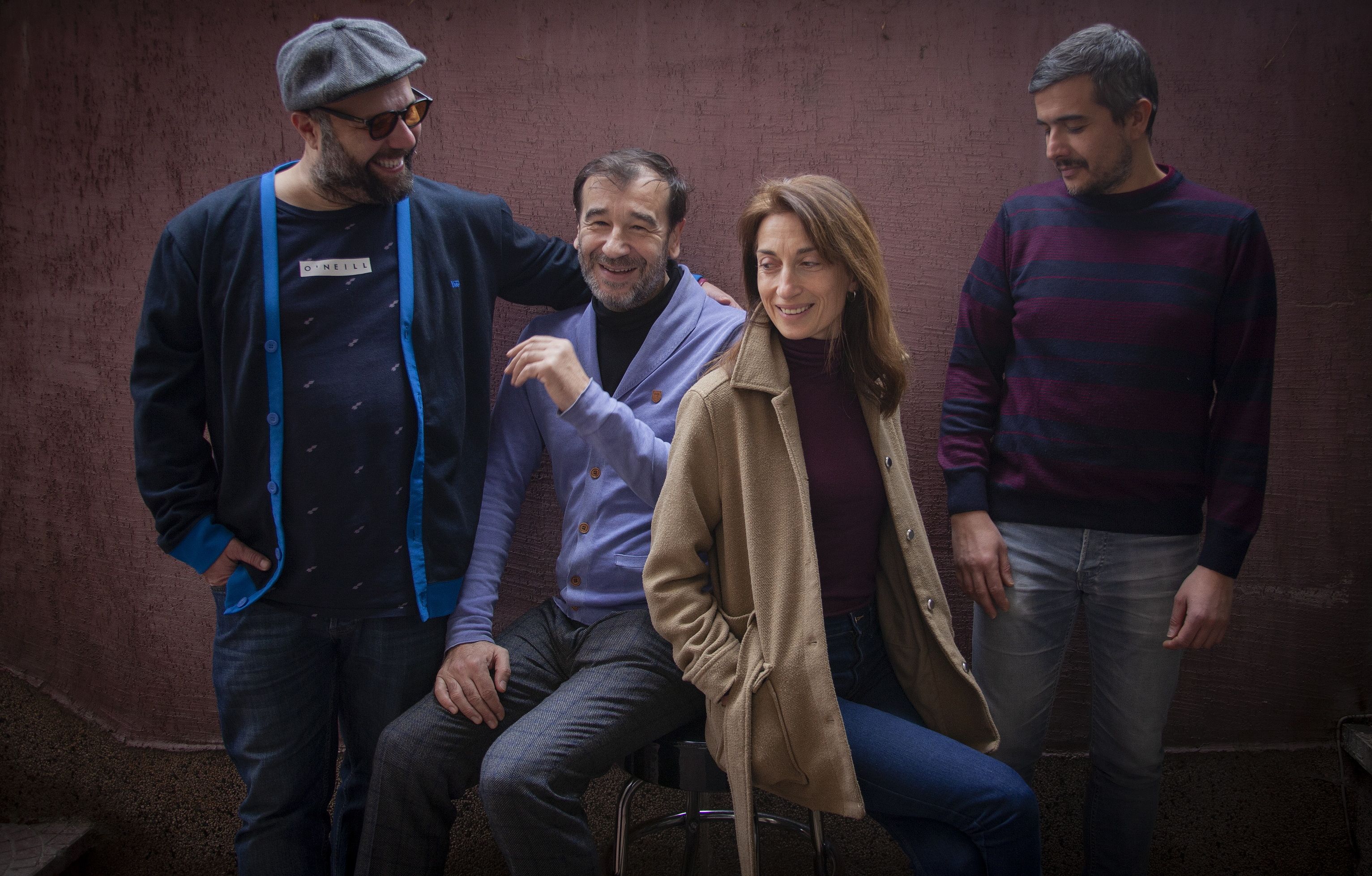
Harmonically I try to learn or find some new things but the purpose is always to be able to serve the song that I want to bring out. Then we work on the song with the guys in a team – Milen Kukosharov /piano/, Mihail Ivanov /double bass/, Dimitar Semov /drums/. I like this team and I love the whole process of hearing how the song grows to its final version.
Daniela Belcheva and band Image (c) the artist
What I feel in terms of groove is something that reminds me of the word ‘fire’ or the word ‘engine’, something that burns continuously no matter if it’s slow like a pale candle flame or if it’s massive like a bonfire. Learning from good players, also artists, is what keeps me curious and excited.
What are the things you hear in a voice when listening to a vocalist? What moves you in the voices of other singers?
First of all, their being there for the music. There is a cliché that music comes from the soul but people have different ears and different taste and coming from the soul means a different thing to each of us. We have different ways of expression.
I already talked about the sound. A voice can grab my ears only by its sound. Then the phrasing. It can either be complicated or not, but it must be something you want to hear more and more.
How would you describe the physical sensation of singing? [Where do you feel the voice, do you have a visual sensation/representation, is there a sense of release or tension etc …]
I love this question, it reminds me of childhood because we tried to answer to it back then in our childish way.
Singing is definitely a thing between the body, mind and the soul, just like playing an instrument. Technically, singers use the abdomen, the back, the chest, the throat box, almost everything in their heads, but the physical sensation during the singing is an answer of the self.
There are some great experiential moments during singing sometimes, and I can describe those moments of mine as a journey of the voice coming from inside then going through each small nerve in me and taking a way out to what, or to whom, is out there. Sometimes it feels like my forehead sings, or my fingers sing, or the skin all over, it’s a wonderful feeling.
What kind of musical settings and situations do you think are ideal for your own voice?
Studio recordings and performances among players who make me feel like singing with them more,- I love both. The studio work gives me this sensation of growth of the song which is a wonderful feeling. It’s like being intimate with the song while it grows. In our case it happens within a small team where we share some tiny moments between the working hours.
Small concert rooms are good when you want to read in the eyes of audience. But I think the ideal situation is the good connection and the good sense between players, plus good quality sound, plus a warm, responsive audience.
Daniela Belcheva Interview Image (c) the artist
We have a speaking voice and a singing voice. Do these feel like they are natural extensions of each other, ends on a spectrum or different in kind?
I think it’s best to sing closer to your speaking voice, to sound like yourself. So both the singing and speaking voice should sound the same. Both of them can have different colours, dynamics, height, it depends on what you want to express.
There is a variety of emotions that we show with our voices when we talk or laugh, so it is when we sing.
From whispers to screams, from different colours to dynamics, what are the potentials and limits of your voice? How much of your vocal performance can and do you want to control?
I don’t scream, I’m not a singer of loudness and I prefer to have control of what comes from my mouth as much as possible. I’ve always been a fan of fully supported tones in pianissimo as a part of a mastered performance. It’s a matter of taste of course. I know what I can’t do with my voice and I stay away from that.
Going fluently from low to high register of the voice, singing intervals, knowing where to pay a bit more attention while supporting the tone – those are important basic things.
But above all I love to sing without thinking about anything. It’s like the song itself sings with my voice.
When you're writing song lyrics, do you sense or see a connection between your voice and the text? Does it need to feel and sound “good” or “right” to sing certain words? What's your perspective in this regard of singing someone else's songs versus your own?
Regarding the songs of other artists, there are many tunes which a singer can accept as very close to his or her heart and then the performance will cling to the listeners as well. But I am really interested in my own songwriting at the moment, and trying to explore and improve it.
Lyrics should match the nature of the songwriter first and foremost. In a song you say things that you believe in. You sing them as if you want to say them to a very close friend, someone who can understand them.
When I search for words to fit the melody I always sing the lines and listen to how they sound in music. I often need an open vowel on the highest pitch of the melody for example and I seek the most word that feels ok. Because the melody should flow without any obstacles. I guess the sound has a leading role again and it would be perfect if the poetry lines talk meaningfully and beautifully at the same time, and the song sounds as if I’m speaking to a friend.
A song often comes because one needs to remind the self of memories or hopes. A song can be described as a musical photo of a moment or of a state of mind which one needs to remember. Because we forget. Here is a song called “Silver Lining” from latest album “NAIVE”.
It’s a song about the everyday need of repeating that light is out there. It’s about accepting that things are so, they may be not so good and not so bad, but there is always something that reflects the light.
Strain is a particularly serious issue for many vocalists. How do you take care of your voice? Are the recipes or techniques to get a damaged voice back in shape?
When I sing I never push too hard even if emotions are quite strong.
The best thing to do to avoid damage is to speak less during the day of the concert. Or to not speak at all. But this is not that easy for us women, although I consider myself not much of a talkative person.
The worst thing for the voice are respiratory diseases, the cough, laryngitis etc. Inhaling helps a lot.
How has technology, such as autotune or effect processing, impacted singing? Has it been a concrete influence on your own approach?
Technology is a part of all corners of the industry and audio softwares have become an unavoidable mainstay of our era. When editing and processing we need to be thoughtful about balance, taste, dosing, serving the genres.
Good engineers know their job. I’m not a big fan of much editing and tuning the vocals. The natural sounds of breathing, unevenness, some “ugly” tones between notes should be left for the ears of the listener because that brings a sense of genuineness. Technology should only help the whole process. Vocal albums which sound closer to live performances sound better to me. Even if the singing is slightly imperfect in terms of the vocal technique. The vocal track which is not so “beautiful” all the time is more catchy.
When I listen to vocalists I wait to hear something more than a good and flawless singing. People call the imperfections perfect spots but those are elements of naturalness and style. Of course everything should happen flowingly, beyond vocal technique, without much thinking.
For recording engineers, the human voice remains a tricky element to capture. What, from your perspective, makes voices sound great on record and in a live setting?
They all say that working on voices is a very specific job. And I count on those guys.
Motherese may have been the origin of music, and singing is possibly the earliest form of musical expression, and culture in general. How connected is the human voice to your own sense of wellbeing, your creativity, and society as a whole?
Singing is always there in the life of a singer and I don’t have in mind just daily practicing and singing on stage, nor the humming in the car and in the kitchen. I often sing at home for relaxation, I need this. Breathing in and out quickly or supporting longer notes for example demands some muscle job like exercising in the gym and that makes me feel good after.
Then the emotional expression connects me to something which is very mine deep within. That connection is stronger after singing. Singing is both a physical and emotional experience and does only good to the body and the mind.
Voices can speak. They show something that others catch. One surely can guess the mood of friends and family members only by their “Hello!”. We might love someone from his or her voice in the first place. They say voices show what’s in people’s hearts and we all agree we need voices that convey goodness.