Published
Part 1
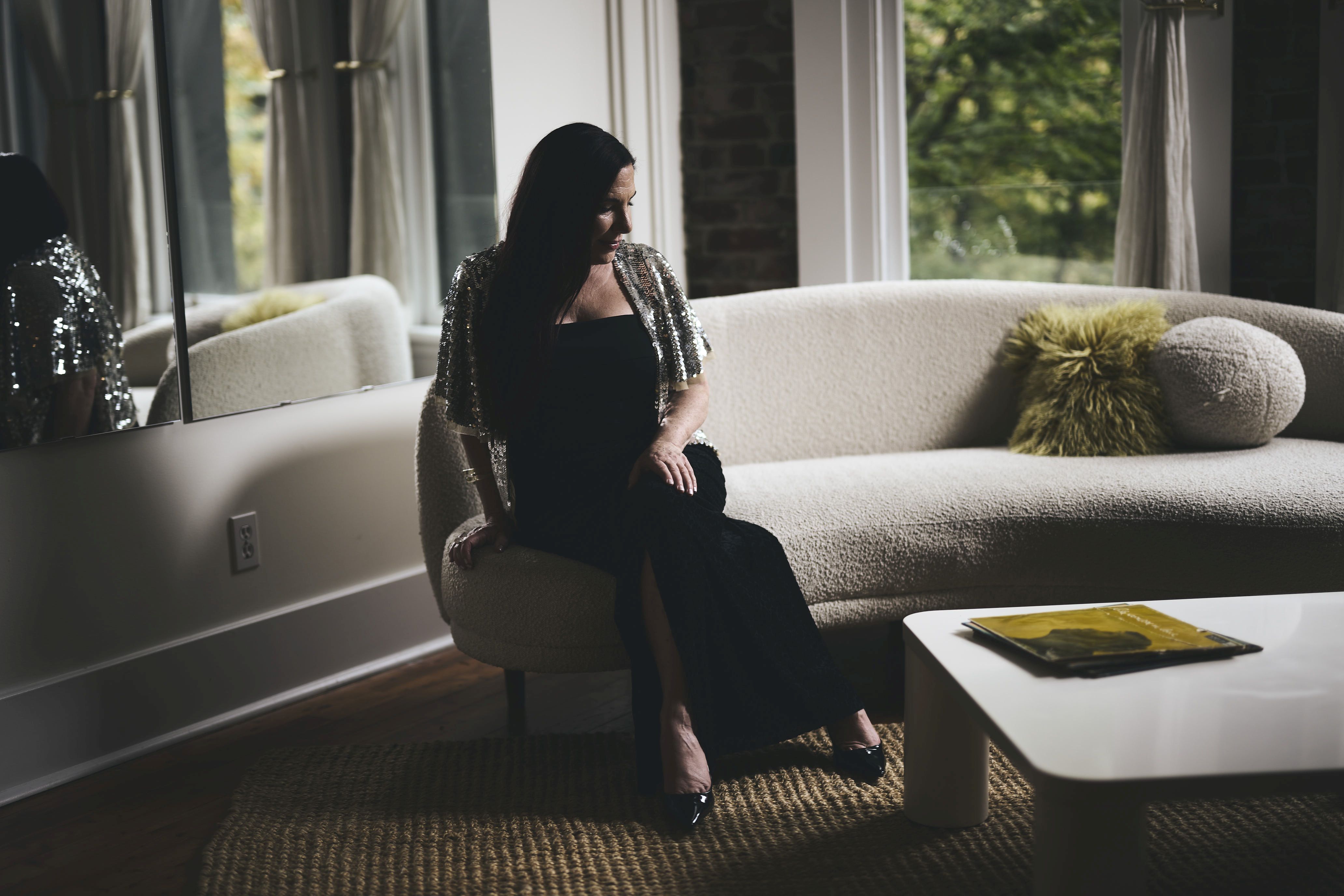
Name: Daphne Roubini
Nationality: British, Vacouver-based
Occupation: Vocalist, songwriter, podcast host, creative entrepreneur, multi-instrumentalist
Current release: Daphne Roubini's new album with Black Gardenia, Whisky Scented Kisses, is out via Cellar Live. Stream it here, and buy a copy from bandcamp. The band comprises of Paul Pigat (guitar, arrangements), Brad Turner (trumpet, flugelhorn), Stephen Nikleva (guitar), Jeremy Holmes (bass), and Dave Say (saxophone).
Recommendation for Vancouver, Canada: I recommend walking the seawall in Stanley Park. I walk there most days. With the sea on one side of the path and a forested park on the other — with eagle, otter, seal, and sometimes even whale sightings — it is amazing to think I live in a city. I highly recommend it.
And for great jazz: Frankie's Jazz Club or Tyrant Studios.
Things that you are really passionate about but rarely get to talk about: I am passionate about living life authentically. When I was in my twenties, I had a spiritual teacher called Manuel Schoch, who lived between London, Zurich, and Athens. He had a philosophy that if you lived your life authentically, then you would be aligned and in health. Whether you loved stamp collecting, puzzle-making, music, or art, it didn’t matter — the important thing was to be authentic to that, however “silly” it may have seemed.
I think now, with social media, we are all so influenced by what others think is cool that our true natures can become blurred. I have done many things in my life, all alongside music, because they have been authentic to my own journey — from being a massage therapist who played ‘Kind of Blue’ to her clients, to running a very successful ukulele school and festival. All of these were inner callings that did not make much sense at first.
That is what I would recommend to your readers: do what is authentic to you. Think about what you loved when you were four or five years old — therein lies your path and your joy.
I am about to start a podcast called ‘Like a Pearl’: conversations with creatives in arts, business, and life, where people talk about how their creative journeys have unfolded. The subject of creativity is one of my enduring passions, as, of course, is singing.
If you enjoyed this Daphne Roubini interview and would like to know more about her music and upcoming performances, visit her official website. She is also on Instagram, and Facebook.
When did you first consciously start getting interested in singing? What was your first performance as a singer on stage or in the studio and what was the experience like?
I remember deciding to be a singer when I was around 5 years old.
I would always put on shows for my parents as they lay in bed on a Saturday morning, with scarves on my head and as many necklaces as I could wear around my neck, and would sing in made-up languages that sounded disturbingly like Spanish or Russian, even though I could only speak English. My parents always knew where I was in the house as I was always humming or singing.
The first time I ever sang in public was at an open mic in London at the Spice of Life, at a singer’s night. I was so nervous that I absented myself, I started singing, then everyone was clapping loudly at the end, and I don’t remember what happened in between.
Learning to return to the little child who sang for her parents was a challenging journey of personal evolution as well as artistry. And now I can sing in front of 100,000 people and not be nervous.
If you're also playing other instruments, how does the expressive potential of these compare to your own voice?
I love that question.
The human voice came first, and then equal temperament emerged and instruments were tuned. In many ways, intonation was then imposed onto the human singing voice so that it could sit alongside man-made instruments. I often think about that relationship, and about how a singer’s intonation exists within the sonic context of those instruments.
The voice is the most expressive of all. I play piano, guitar, and ukulele. Sometimes when I am writing a song (like Today), I find the melody comes to me first, from the silence of my mind, and then, to convey that, I write it down. I use the piano for that. Then, to create the harmony, I collaborated with Noah Walker, with him playing guitar. It became a lovely musical dialogue. So in terms of expressive potential, the instruments in this case are able to create a sonic vehicle and context for my voice.
When I am playing a melody on any of the instruments, there is another kind of freedom, where my internal voice can be expressed perhaps in keys, or in parts of my register where I wouldn’t usually sing. It can feel really liberating and special.
They sing for me, and with me, as I am always hearing my voice too. It’s like a kind of duet.
Singing is an integral part of all cultures, and traditions. Which of these do you draw from – and why?
I’m Jewish (non-practising), and as a child I always loved the sound of the cantor singing in shul. He was so expressive and beautiful — it was the only part I really liked, quite honestly. I would become mesmerized, and because I didn’t understand what he was singing, I simply heard these beautiful melodies and would get lost in them.
Later, when I discovered and fell in love with the Black American art form known as Jazz, I was reminded again of some of those melodies and scales — the small chromatic movements that capture us so deeply when we are listening.
For me, listening to the music of the mid-century jazz vocalists, horn players, and pianists became the foundation of my musical landscape. As an interpreter of songs, I was educated through learning and performing the classic jazz repertoire of Billie Holiday, Ella Fitzgerald, Nancy Wilson, Peggy Lee, and others.
When I started to write my own songs, those influences seeped out naturally. It wasn’t a conscious decision to draw from this style of music; it came from a place of deep love for the genre.
What were some of the main challenges in your development as a singer/vocalist? Which practices, exercises, or teachers were most helpful in reaching your goals – were there also “harmful” ones?
Firstly, my parents did not want me to be a singer, so it took a while for me to move beyond their expectations for me and do it regardless. They didn’t think it was “fitting” for me to be an entertainer.
It took the calling within me — and my inability to ignore it — for singing to finally break through and become the central part of my life. My grandmother sang and played the mandolin, so I guess it’s in my bones. It’s always interesting for me when I meet people whose parents fully supported their musical journeys. My parents did encourage my piano lessons; they just didn’t think I should be on stage. I often wonder what would have happened if they had. I don’t dwell on it, though.
One teacher during my Jazz Foundation at the City Lit in London almost stopped me singing altogether, quite honestly. She could be incredibly harsh in her criticism. I remember one occasion when I was playing piano and singing a solo I had written as an intellectual exercise. I actually liked what I had created, but she laughed and said, “Oh, playing and singing together — not something I like,” and then walked out of the room. At that stage in my development, experiences like that were deeply inhibiting.
Another comment, which I can laugh about now, came after I sang a scat solo. She said, “Daphne, you only sang four notes, and if you turn into Sade I’ll kill you.” I remember thinking but I liked all four of them. Thankfully, by that point I no longer really regarded her as a teacher, so I was able to find the humour in it rather than let it diminish me.
I did chuckle recently when I read that Sade had been inducted into the Rock & Roll Hall of Fame. I still love her relaxed style of singing to this day.
What are the things you hear in a voice when listening to a vocalist? What moves you in the voices of other singers?
Tone, a sense of phrasing, timbre, and presence. I would say authenticity over technical prowess always.
I have very eclectic taste in vocalists, what ties them all together is being able to hear who they really are, their unique vocal presence.
How would you describe the physical sensation of singing? [Where do you feel the voice, do you have a visual sensation/representation, is there a sense of release or tension etc …]
I am a very natural singer, in that I approach my voice as it is, rather than reaching for a voice I would like to have or aspire to. I have chosen a conversational style which feels most natural to me.
Having said that, I do love to deepen my relationship with my voice and sound by exploring it, rather than trying to achieve a particular note or certain sound. During those moments, I like to visualize a cathedral where I “ring the bones” of my face and skull to create sound. It is so relaxing — I can almost feel my pineal gland breathe a sigh of relief.
I believe that as we relax into our voices, our vocal range expands to its natural capacity. We all have a whole sound landscape within us, silently waiting to be discovered.