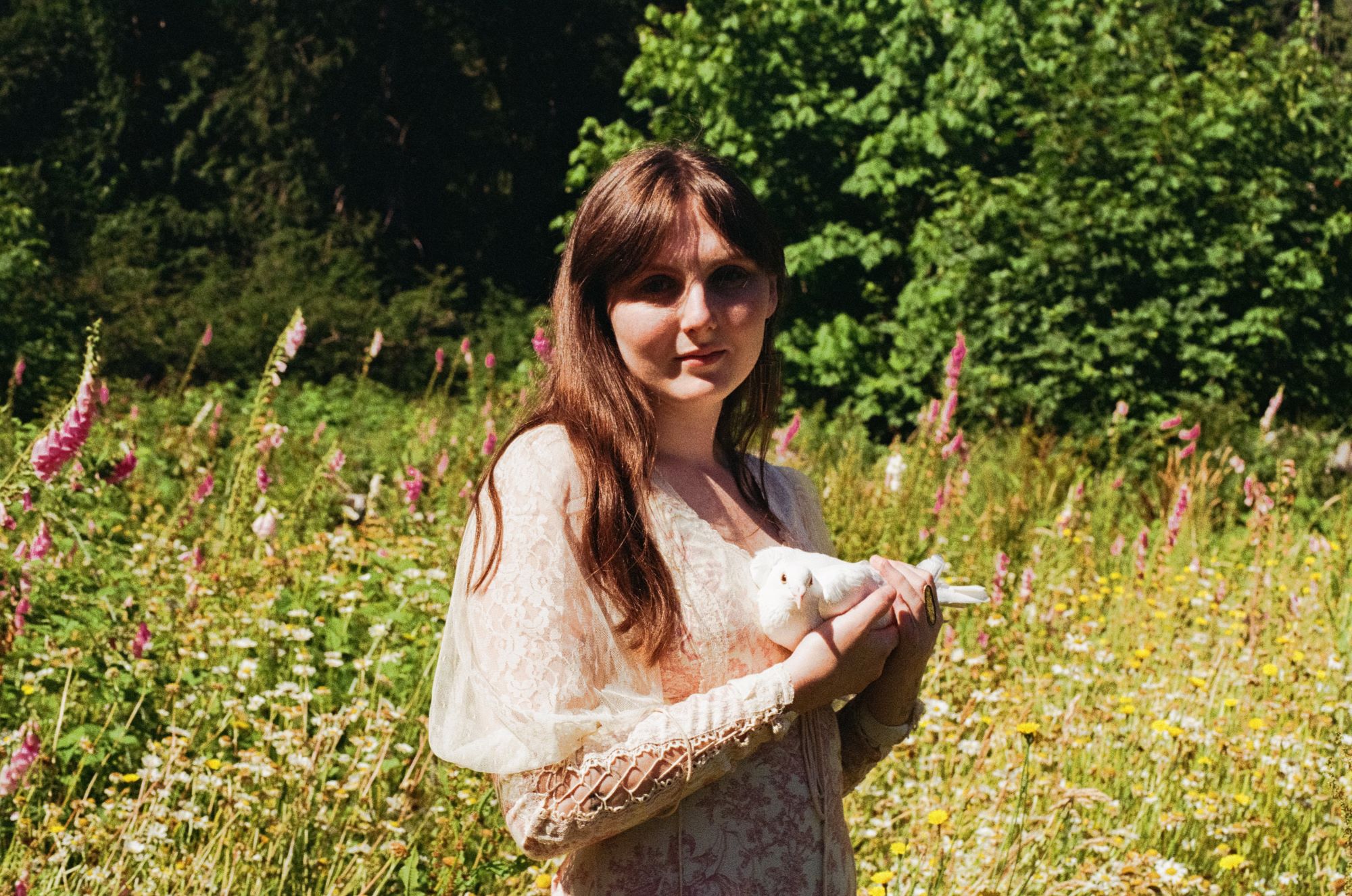
Published
Name: Darci Phenix
Occupation: Singer, songwriter
Nationality: American
Current release: Darci Phenix's new album Sable is out via Get Loud.
Recommendation for Portland: 1 hour out of Portland, OR is a State Park called Silver Falls. They have a trail here called the Trail of 10 falls. My partner, Colin, and I often go and hike half of it. In 5 miles we can see 5 magnificent waterfalls, all with vastly different characteristics. The woods here feel untouched and mysterious. I recommend going here for the day and stopping in Mt. Angel for beer and brats on your way back.
Topic I rarely get to talk about: I’m really passionate about the show Twin Peaks and the work Now Only by Mt. Eerie. I just feel like parts of myself that are hard to communicate are really embodied by these projects. I vividly experience the interweaving of light and dark and appreciate art that not only acknowledges but really digs into the duality of being.
If you enjoyed this Darci Phenix interview and would like to stay up to date with her music, visit her official website. She is also on Instagram, and bandcamp.
When did you first consciously start getting interested in singing? What was your first performance as a singer on stage or in the studio and what was the experience like?
When I first started creating music, words always came first and I didn’t think much about the vocals. It wasn’t until a few years ago that I started seeing local Portland artists like Merle Law and Anna Tivel perform that it truly set in how much meaning clear and accurate vocals could add to the lyrics.
This experience as well as working with producer Tejas Leier Heyden on my latest record, Sable, are what led me to actively seek out vocal lessons and become quite serious about my vocal performing.
If you're also playing other instruments, how does the expressive potential of these compare to your own voice?
This is an interesting question. I do find singing to have more expressive potential than playing guitar only because it relates so directly to the experience of myself in my body. When I feel calm and grounded, I can more easily and clearly sing in low tones. When I feel open and dreamy I can more easily sing in high tones.
Singing reminds me of working in stained glass. The way glass and light collaborate to make a piece is similar to the way sound and feeling collaborate in singing. They both involve sculpting, channeling, diffusing an immaterial, but powerful force.
What were some of the main challenges in your development as a singer/vocalist? Which practices, exercises, or teachers were most helpful in reaching your goals – were there also “harmful” ones?
I sing in a soft airy way which takes a lot of precision. It was challenging for me to learn when to engage my core and sing more loudly in an effort to distribute breath across a phrase.
My big challenge at the moment is the positioning of my mouth and tongue to create the clarity of sound I want. The practices that are most helpful to me are over-annunciating words when I sing and lip trills.
I had a vocal teacher in Portland named Sarah Maines who is one of the best teachers I’ve ever had. She taught me that self-trust and an awareness of your body are fundamental to improving your voice.
What are the things you hear in a voice when listening to a vocalist? What moves you in the voices of other singers?
I love when vocalists are playful. Aldous Harding is a great example of this. She can sound like flutes, birds, other people, you name it. She is so fun to listen to.
I also saw Laurie Shook perform a few years ago at my friend AC Sapphire’s record release and she made these epic bird-like sounds that I still think about.
As a singer, it is possible to whisper at the audience, scream at the audience, reveal deep secrets or confront them with uncomfortable truths. Tell me about the sense of freedom that singing allows you to express yourself and how you perceive and build the relation with the audience.
I feel like singing has the potential to really soften the blow of hard truths similar to the way a story does. When a moral or truth is revealed in the context of a story, the layers of setting and plot are there to catch you.
Framing it through a character’s journey helps you take it less personally and let it filter into your reality in a way that works for you.
This reminds me of singing. For example, Elliot Smith’s beautiful harmonies and soft vocals really catch you on the come down of realizing how bleak the lyrics are sometimes.
I feel like the production really comes into play here too. If you hear a sweeping pedal steel or a soft trumpet, it can make you feel safe, calm and ultimately more receptive.
(Bonus points here if your song is also a story!)
How has technology, such as autotune or effect processing, impacted singing? Has it been a concrete influence on your own approach?
Autotune has distinctly influenced the path of my growth as a singer.
Early on in my journey of producing and making records, I worked with folks who didn’t really convey how much autotune they were using on my voice. They were trying to be sensitive with me, which I appreciate, but also, it was hard for me to tell which areas I needed to grow in.
On Sable the producer I worked with, Tejas Leier Heyden, trusted me enough to share the truth about how much autotune he would use in a session.
At first, it terrified me and made me feel bad about myself. Over time though, I’ve become really grateful to him for this. He believed in me enough to challenge me to grow. Once he learned that I wanted to use as little autotune as possible on Sable, he began pausing sessions to work through hitting specific notes.
Shortly thereafter I started vocal lessons and have been taking them on and off ever since. Because of this experience, I no longer feel like I’m flying blind when I perform live.
Motherese may have been the origin of music, and singing is possibly the earliest form of musical expression, and culture in general. How connected is the human voice to your own sense of wellbeing, your creativity, and society as a whole?
Every night as a kid my mom sang the same lullaby to me. She ended it with a prayer wishing that I always see the love and light within myself.
The tone, the pace and the volume of her voice as she said this prayer will remain in me forever as an example of how the sound of someone’s voice can convey how present they are in a moment.
As capitalism and modern “progress” are in many ways happening at the expense of humanity’s wellbeing, slowing down is an important act of rebellion. The way our voice sounds can be a reflection of how present we are in our lives and therefore a tool for growth.