Published
Name: Darone Sassounian
Nationality: American
Occupation: Producer, DJ, label founder at Rocky Hill
Current release: Darone Sassounian's new single “Clementine’s Absentia“ is out via Rocky Hill. Full-length album Synthetic Instincts will follow on November 15th 2024.
If you enjoyed this Darone Sassounian interview and would like to know more about his music and current live dates, visit him on Instagram, Soundcloud, and Facebook.
Are there examples of minimalism in music that impressed you?
There are certainly styles and examples of minimalism that impress me, however I was never intending on making music “minimally” or with a minimalistic approach.
Truth be told, I don’t think much about the way I do things in terms of making music and sound sculpting. It just flows naturally from within me and is articulated as best as possible in the recording process.
Were you interested in minimalism as a style – from Philip-Glass-variety to minimal techno?
Definitely, I am and always have been an admirer of Philip Glass and a variety of minimal techno (and jazz), but I’ve never consciously gone about creating with minimalism as a philosophy.
I will say though, naturally, I’m quite “limited” and “minimal”, looking at it from hindsight, in my approach to making music. I do enjoy a bit of gear, but that causes me to slow my process and over think the creating process.
I like to utilise what I’ve got to the fullest potential possible. It’s limitless and doesn’t put me in a box, allowing me to flow free in the creative process.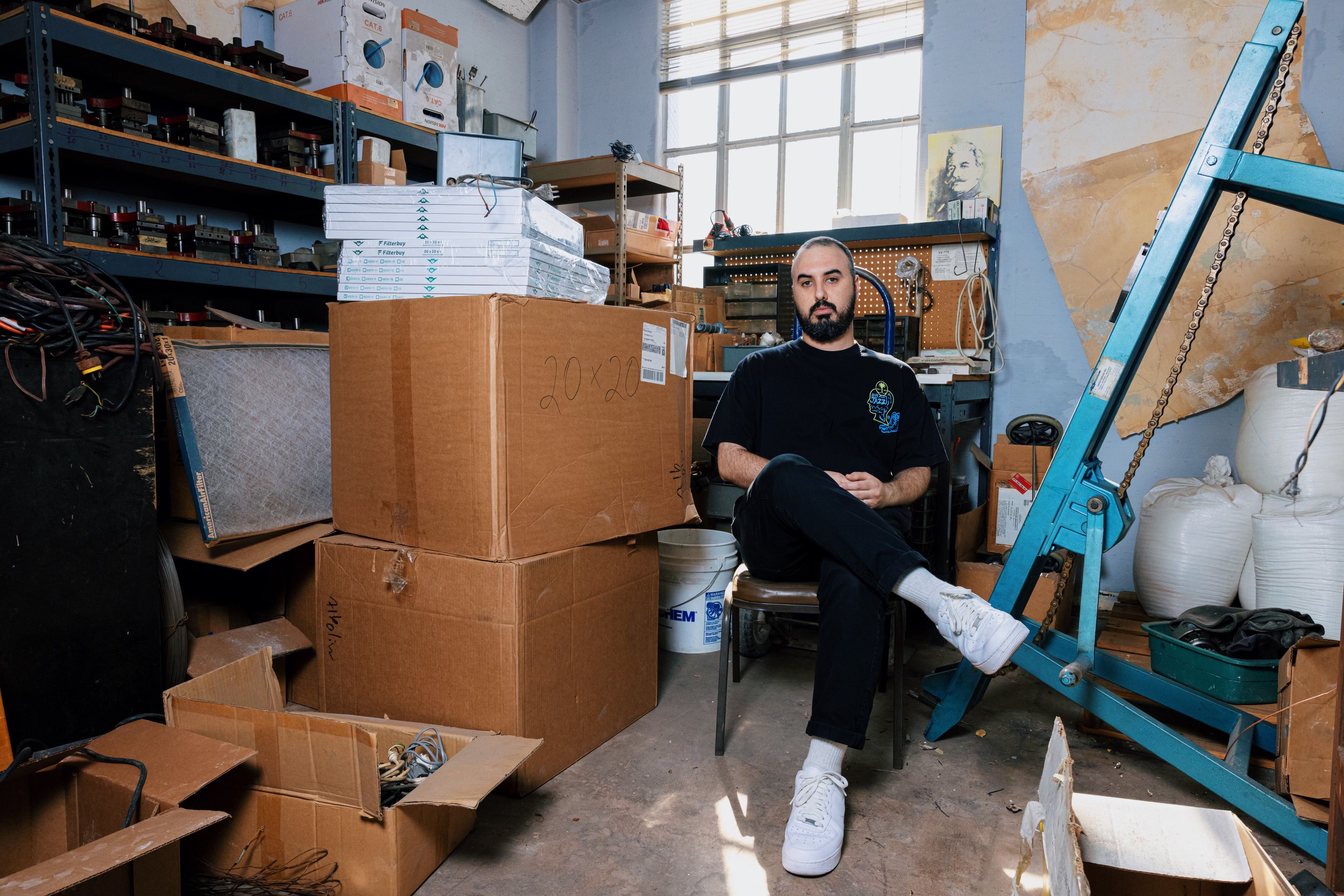
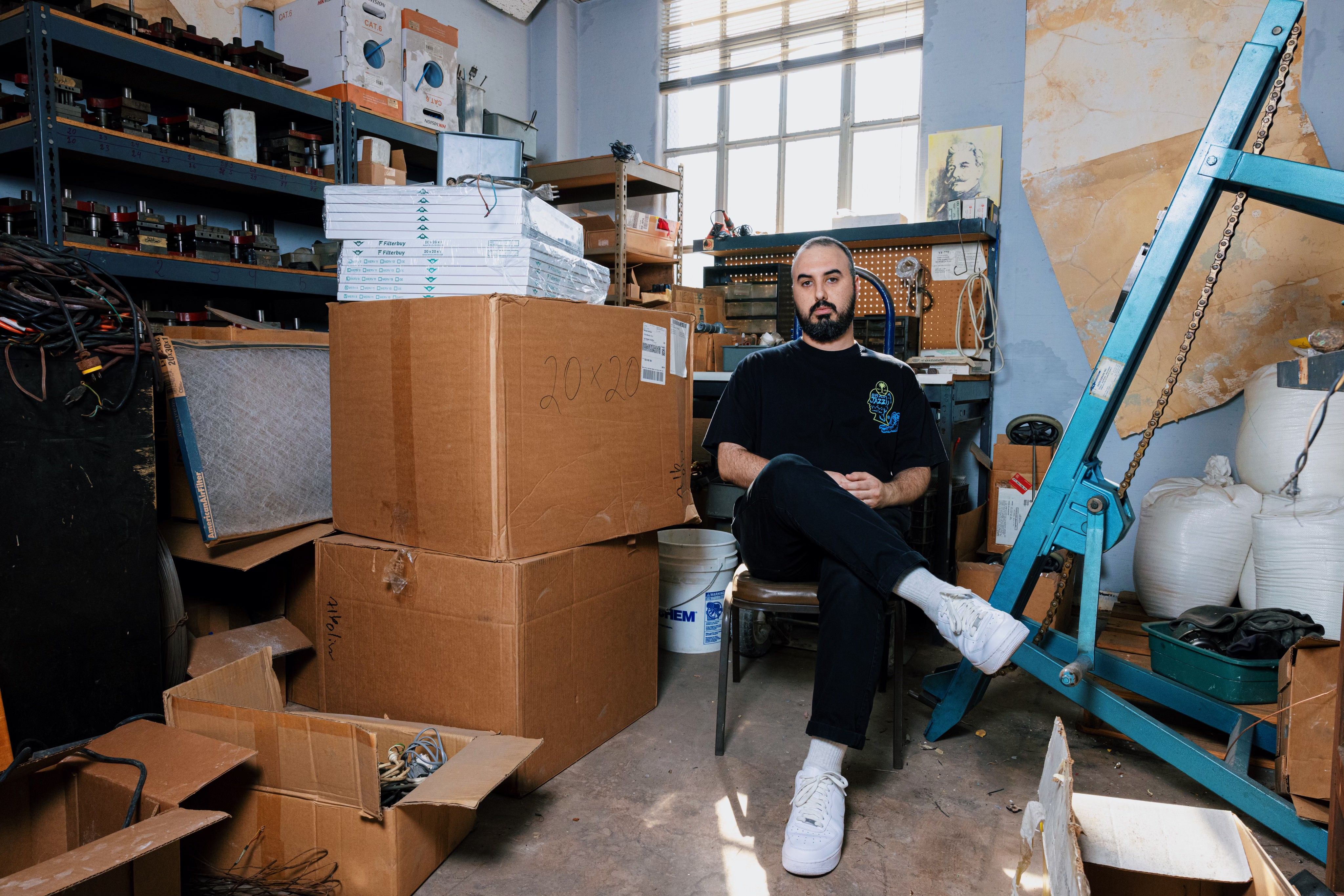
Darone Sassounian Interview Image (c) the artist
Especially in very minimalistic house and techno, the line between a “tool” and a carefully crafted “composition” can be a fine one. How do you see that – and the difference between “tool” and “track” in general?
I think a tool is a composition that is categorised for the “floor” and a track can be a fitting for different occasions and spaces.
However, I think it’s subjective. There’s a specific end of each spectrum that can sway from “tool” to “track”, if the intentions are clear and genuine.
Do you tend to find that, as many claim, “less is more?” Are the notes you don't play really as important as the ones you do play?
Yeah … the claim “less is more” is definitely something I’ve been encountering in the creative process in my head. I certainly would like “more”, but where can I get to with “more”? There’s a well known quote from Moodymann from nearly a decade ago that resonates with me until this day. “It ain’t what you got, it’s what you do with what you have”. I couldn’t agree more with him.
I’m not opposed to having the world’s greatest synth collections or drum machine collection. I just utilise what I have and it works for me. I think it’s subjective in terms of approach and creativity. It’s the canvas and paint that I prefer. (for lack of a better term or analogy). The paint I don’t add to the canvas is as important as the paint I add to the canvas.
Do you feel as that music is a process of adding elements until it is done – or one where you chisel away pieces from something that is already there?
I think there’s a bit of both of that going on. Naturally, I prefer to challenge myself and try to find something within and chisel away at pieces that may be right in front of me.
But sometimes it’s necessary to add elements along the way, tastefully and carefully.
Synthetic Instincts arrives at a moment when you've been active as a producer, DJ, curator, and label head for years. Was waiting with your debut LP caused by a lack of time – or motivated by wanting to see what the core of your work actually was?
It’s true, I’ve been doing all of these things for a few years now and it can be difficult to find the time. Juggling a personal life, family, a record label, DJing and performing on the road, radio broadcasting, curating compilations on the Armenian rare groove side of things and collaborating with others, it can get really difficult to find the time for myself (and my productions).
It comes in waves and I really like to create music, so when that wave hits me, I do not intend on wasting time. It’s my way of writing poetry without the words. It’s an outlet for me to say what I want to say and what I feel I need to say.
With Synthetic Instincts, I felt a natural progression from my earlier works into where I am or was while creating it. In reality, it took me only a couple of weeks to record the record, but I wanted to sit with it. I wanted to hear what I was trying to say with the record for quite some time.
What were some of your starting points for Synthetic Instincts?
Some of the starting points for Synthetic Instincts stemmed from sounds and frequencies I was messing with. A few limitations and acoustics that I was really feeling at the time made sense to articulate my emotions and thoughts as best as possible.
There was no real direction. Instead, some pieces and fragments of my life (and environment) were the key focal points for the record. A lot of reflecting and internal self-struggles. Emotional textures and Proustian moments. Hidden memories that needed self-induced chiselling. Finding the moments and slowly building and laying the blocks. Then allowing myself to directly translate it into a full record and intellectualise it into notes and harmonies. It’s a process that I abide by.
In terms of the creative process, do you like to set yourself limitations? If so, which were some of those limitations for the new pieces?
The limitations I like to set for myself can be conflicting. I use my environment and my life as the creative catalyst, which can be really difficult to boil down into a musical composition.
However, I set a time from start to completion. If a sound recording I’m working on doesn't have things down to where I want the energy within 2-3 hours, I dispose of the recording or stop working on it altogether. It’s a bit harsh, but I purposely do this to myself to capture the moment and intentions naturally in a timeframe that won’t allow me to over analyse.
The sonic palette of the album, somewhat against the title, feels organic and warm.
The title acts as a juxtaposition to the attitude and approach of things. It was more “screw you” to contemporary trajectories and the landscape we were currently finding ourselves on.
What were some of the most important pieces of gear for this release?
The gear I use is quite limited. I use a dusty sampler that I’ve had for over a decade. (The main cable works half the time. It has a mind of its own at times.) A budget synth, Yamaha DX100, a piano at times, then I manipulate.
During the editing and mixing process, I’m using a stubborn and dusty Yamaha PM700 to add some spice to a few elements, a little bit of Pultec EQ, and finally Ableton for arranging - “printing”.
Would you say that you approach equipment and gear with a minimalist mindset? Or do you need a wide choice of instruments and tools to make music?
It’s a minimal approach for me. It doesn’t only apply to my recording gear either. It’s quite the same for my monitors and amplifiers at the home studio. Sometimes I like the struggle of a minimal and more “vintage” or more “organic” piece of equipment that may or may not give me a different output on any given day.
It’s a challenge that I prefer. It keeps me in check and allows me to push myself while I compromise my “comfort”.
From my listening perspective, the grooves of these pieces are mesmerising – yet at the core of Synthetic Instincts are the pads. Some of them have that special quality of pulling the listener in a deep space of reflection. How do you find these evocative atmospheres and how do you know which of them has true “staying power?”
It's precisely that. Capturing the moment and pulling myself (and eventually the listener) into something reflective.
There’s always a different perspective, but the real challenge is finding the one true unifying factor. The moment where I can put my finger on the connection of where the music itself can take the driver seat in terms of the narration of my work is vital. It’s super important to allow the clashing moment of interpersonal connections in music to be the driving factor at times.
Music and sound sculpting is truly beautiful. It’s a gift. Finding the moment where it evolves into its truest form, is powerful. It happens naturally and the real challenge is letting it do its thing. You have to be comfortable to let it go. At least, this method works for me.
Next to the pads, drums also seem extremely important for the sound of Synthetic Instincts. How do you approach drum programming, processing and production?
Similar to the pad work, the sampler I’m working with captures the most natural sounds for me. Programming drums comes from that same methodology. I don’t have a drum machine, but I can create rhythms, program, and sequence. There’s an immediacy with what I do and what I have. I can arrange the same composition a few times.
There are ideas floating around and there’s a rhythm, but there’s always the “accident” which get’s included in the result. I can try to get to a moment that sometimes allows my ego to take over and can begin dictating a different outcome. Identifying this is a key factor.
It’s humbling myself and simplifying down to the bone gristle. “I’m here, I’m not there yet, let it be the way it's intended to be”. Let the paint dry where the brush landed. It’s about allowing the moment to not be forgotten.
Especially since most tracks feel like they're made up of just a few elements, the choice of samples seems particularly important. Can you talk a bit about the vocal samples on the album and whether or not they hold a special importance for you?
Yes, it’s like that. The few elements that can take the important role and really shine throughout. The same can be said with some of the vocal inclusions. It's not really clear and it's not too muddy either. The moment can help the “breakthrough” during the sound building process.
The rhythms can be simple or non-musical in certain moments in the record. The vocal samples add the counter effect to that at times. A texture that’s not replaceable in all human beings.
How do you arrange these pieces? All have a floating feeling, as if they're performed live rather than laid out in a DAW …
They were arranged on the fly, jamming through it live then laid down. It sounded different at first as I was messing around with ideas.
It's also hard for me to make “shorter” tracks. Some of my shortest tracks are on this record. Most tracks I make are in the 15 - 20 minute range before editing. It’s challenging for me to shave compositions down at times, but that's just the ego.
With that being said, the process of translating the internal and giving it a language for the listener is important.
I love how many of the atmospheric elements of the tracks are mixed way upfront, as if to envelope the listener.
I cannot stress enough on keeping the essence of tracks being a part of the theory of the record. I treat it as notes on a theory sheet and it was important to have it not only arranged the way I did, but mixed that way too.
I’m not the best at mixing my own music. I’m really working on that to get a method down. I tried to keep it upfront, forward, and as raw as I liked it to be. Big shouts to Armand Kambourian, a long time friend and colleague who assisted in mixing the record with me.
Would you say that minimalism extends into other parts of your life as well?
I haven't thought of it that way, but maybe it does? Things should be done naturally and flow the same way. Forcing and building something for the wrong reasons becomes quite evident and obvious fast.
Many artists are becoming more minimalist in their music as the years go on, focusing on the “essence.” After many years of making music – how is that for yourself?
I grew up in jazz drumming at a young age, then crossed over quickly into studying jazz and classical piano with theory between the ages 8 - 18. Learning and trying to master the essence of a single instrument can possibly be the reason why I have this approach.
Minimalism can be misinterpreted to be a genre. In this case, it’s far from that. It’s about the approach and philosophy in sound sculpting. Focusing on the essence and growing from that moment or with that moment is beautiful. I think that’s one of the very few ways of capturing a time, moment, feeling, and in turn, moulding it into a medium that does not have boundaries.
Finding the “unexpected gift” during the process of crafting a record and evolving with that is the sweetest pleasure. Letting go is the delicate action where the essence takes the driver’s seat and guides you in the natural direction.