Published
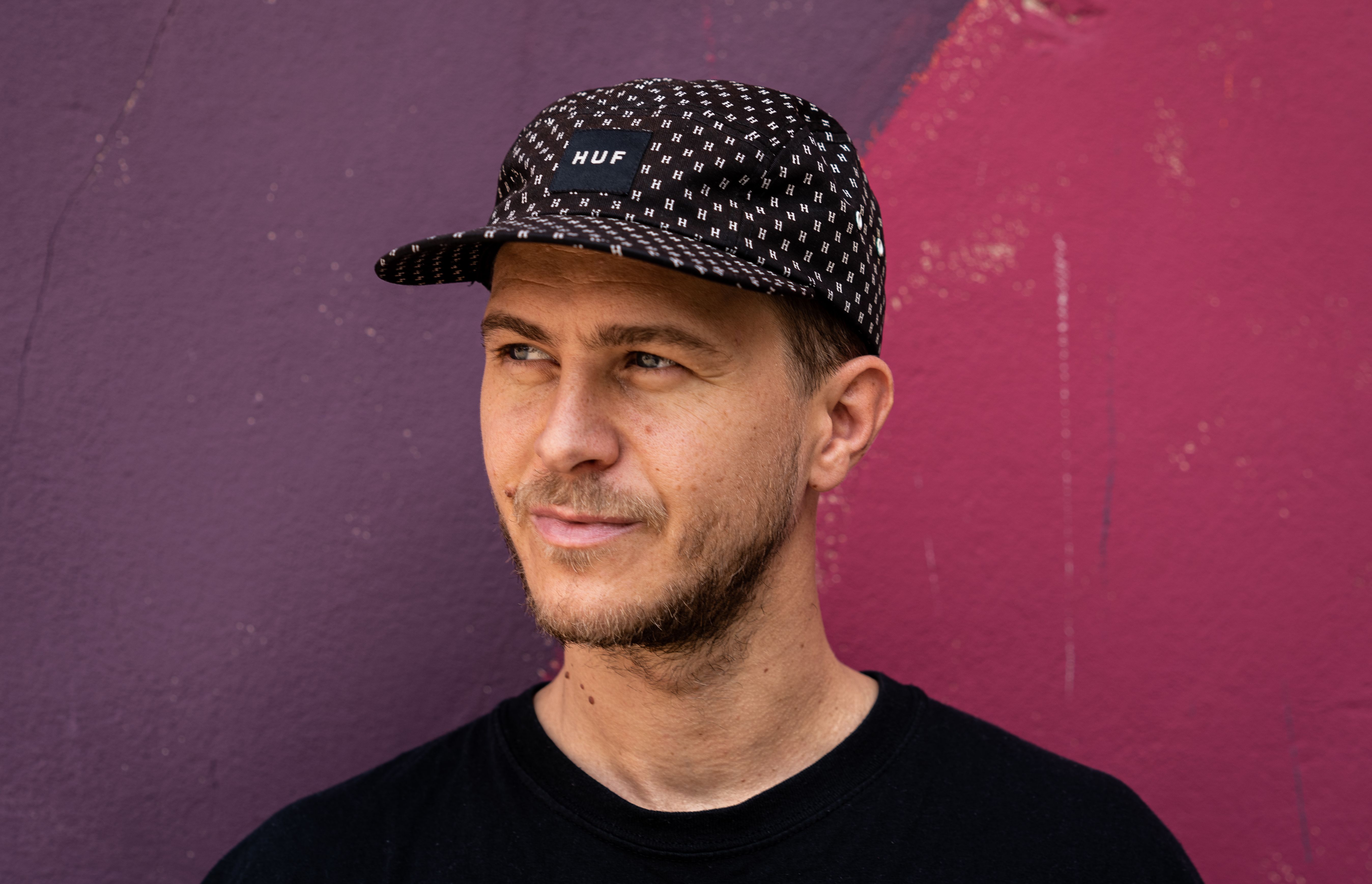
Name: David Mayer
Occupation: Producer, DJ
Nationality: Columbian
Current release: David Mayer joins Nico Stojan, and Tooker for the Coda EP, out now via SONARA.
If you enjoyed this David Mayer interview and would like to stay up to date with his music and live dates, visit him on Instagram.
The path to becoming a producer is a process - but from many interviews, I am under the impression that there are nonetheless one or a few defining moments. If this was the case for you – what were they and why were they so incisive?
Being connected to a group of incredibly visionary and talented artists was the foundation that shaped me into a more professional creator.
I learned everything by observing how others worked—especially those who were more advanced or more technically obsessed than I was. This support system made all the difference between treating music as just a hobby and becoming a touring artist for years.
That support came in different forms. Sometimes it meant facing relentless pressure and honest criticism that pushed me to improve. Other times, it was nurturing and patient guidance when I needed encouragement. But underneath it all was trust—trust in each other and in the creative process.
Collaborating with others and learning from their expertise was essential for my growth, and it still is today.
Tell me about one or two of your early pieces that you're still proud of (or satisfied with) in terms of production – and why you're content with them.
One of my favorites to this day is my remix of "Lust" by Tigerskin and Keene featuring Elli. Working on that track revealed a few key obsessions of mine, and I felt completely at home in the creative process.
I'm talking about layering multiple synths, creating drops that happen three times but sound different each time, and blending sustained notes with funky bassline elements. What makes it even more intriguing to me is that I've never been able to recreate that exact sound since.
Another favorite is "Pi" on Ouïe Records. This track moves and progresses in a way that I genuinely admire as a listener—and it still gets crowds going every time, which makes me proud of its timeless appeal.
Honestly, I can't figure out how I pulled it off. But I know it took an incredibly long time, with countless revisions, until it suddenly clicked and completed itself.
That experience taught me that patience and persistence—trying again and again—will eventually lead to something great.
There are artists who can realise their ideas best with a traditional – or modified – piano interface, others with a keyboard and a mouse, yet others by turning knobs or touching screens. What's your preferred and most intuitive/natural way of making music and why?
I fell in love with "touching knobs" one particular night, chilling on the couch at my friend NGHT DRPS's house while casually playing around with his Elektron Machinedrum—a pretty sophisticated drum machine.
The incredible, shuffling groove that came out of it that night became the foundation for my track "Machinedrum Calypso."
[Read our feature on the Elektron Machinedrum]
It was instantly clear that those loops were worth recording. But here's the funny part: neither of us knew how to save the pattern!
We didn't trust our understanding of the manual, so my friend kept the machine exactly where it was—sitting on his couch, plugged in and powered on—for three whole days before we finally made time to set it up properly and record the stems one by one. I'm still grateful to him for providing those stems.
This incident taught me that hardware machines can occasionally deliver something I could hardly achieve working purely in software. And, it's incredibly fun. Happy accidents like this have given me many tracks over the years.
From that point on, I started recording hardware whenever possible. But, my primary production method is still the DAW—I really value that flexibility.
Tell me about the space of your current studio/workplace and how you've set it up to optimise creativity.
I used to share a studio space for many years, but I always maintained a functional home setup too. Come 2020, I decided to make my home studio my primary workplace, and I've kept it that way since then.
To save space, I put a patchbay at the center of everything. This way, the whole setup fits on a smaller desk. With the patchbay's outputs hardwired to my soundcard inputs, I can wire any external source I want to record into the front inputs and also run everything through my two pedals—delay and reverb. Sometimes, I borrow equipment from friends, and with the patchbay it's easy just to plug and play.
Speaking of twisting hardware knobs, my recent track "Jezzebell" was recorded exactly this way. First, I recorded my Prophet 12, then I let that recording run back out through the patchbay, passing through my Strymon BlueVerb reverb to capture extra layers of effects.
The fact that these recordings aren't as easy to edit afterwards can be both a blessing and a curse—it really depends on the situation. I love audio editing, so I'll usually figure out a way to cut everything into place if needed.
From the earliest sketches to the finished piece, tell me about the production process for your track “Nano”, please.
It really depends on testing sketches with a good crowd. That experience pushes the process toward completion considerably. Even if it's just a friend testing rough ideas for me, getting their feedback to build on is priceless.
So first, I make a sketch, mixing it as well as possible while developing the arrangement at the same time. In the best case, I end up with something I can test in a set or send to a trusted friend for feedback. I'll then take that feedback and apply changes until it's completed and ready to be mastered.
It's very important to me to treasure those personal happy moments in the creative process. Sometimes, these moments happen at the very beginning of production. Then it becomes a matter of focus and professionalism to make sure those core elements don't get lost over time. It might just be a vibe that's worth protecting.
"Nano" (Out now on SONARA) is no exception. I came to Nico's place, where he had a tiny little sketch of something going, and we just jumped on it. First, we did some obvious stuff—trying out typical groove patterns and seeing what stuck. Then we took it from there, listening to our intuition and literally reading each other's reactions, reading the room. What I can say is that I've learned to rely on the principle of question and answer, or call and response. This technique really helps with making decisions, thinning things out, and developing an arrangement.
So "Nano" was defined by a vibe, first of all. But technically, it sounded incomplete. It took a long time until we had the final mix ready, just because we were so cautious not to "lose" that vibe. Nico kept playing it in his sets, and every version worked like a charm. But at home, it didn't sound "competitive" enough for a release! So we went back and forth—changed something, then ended up reverting to the previous version and tried again. It may have taken two years before it was finally completed.
Bottom line: I've learned that thoughts and conscious decisions alone don't drive my process. Emotions play a greater part in it. Some tracks are brought to life only through frustration, anger, or anxiety. Others are based on happy moments, love, and harmony.
It could be what Rick Rubin said: "Real art is created for the artist's own sake. When you make something truly for yourself—placing inspiration and personal vision above an external audience—you actually serve your audience better.”
Late producer SOPHIE said: “You have the possibility with electronic music to generate any texture, and any sound. So why would any musician want to limit themselves?” What's your take on that?
I used to think I wasn't limiting myself at all. In my perception, I kept reinventing my sound with every new track. But every once in a while, people would tell me, "Hey, I could hear that it was your track immediately—you have such a recognizable sound," and I'd be like, "Well ..."
It became clear to me that I do follow a pattern after all, no matter what I try to do to change my outcome. Finally, I chose to embrace that. Having my own way of doing things isn't a limitation in that sense—it's a naturally evolved pattern that guides me.
That said, my rule number one is to follow my inner drive, my gut feeling. The results I enjoyed making, or poured my heart into in any other way, would always be the ones that people resonate with most. Whenever I tried too hard to "do something different this time" or sound like someone else, the result usually failed noticeably.
So whenever I find joy in something, I embrace that, even if it might resemble something I've tried before. The comfort of the known has become a catalyst for innovation. Also, most limits bend gradually over time.