Published
Name: Tinkertown
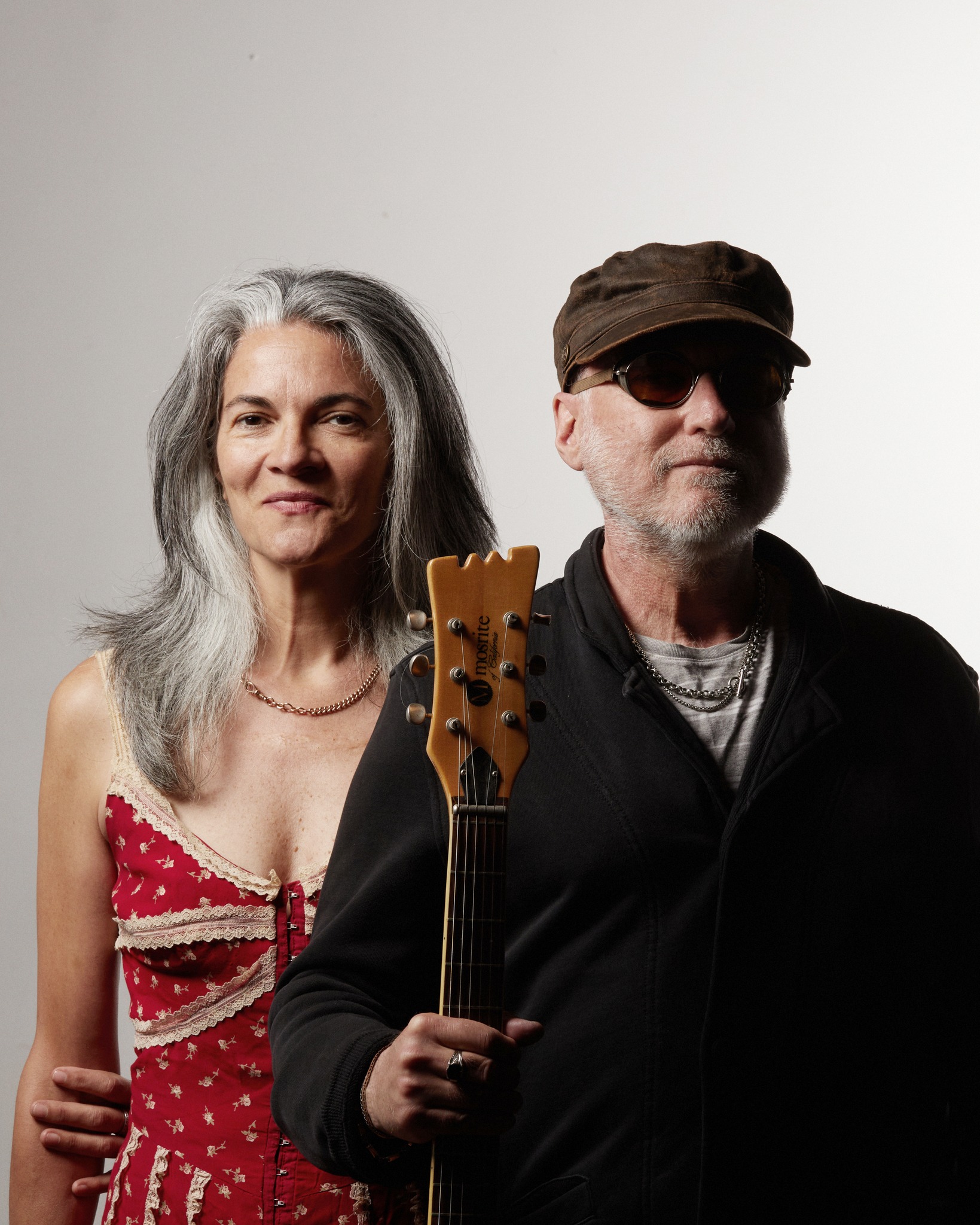
Members: Dean Fisher (multi-instrumentalist, songwriter), Gabriella Lawrence (vocalist , songwriter), Elizabeth Steen (keyboadist, accordionist), Joe McMahon (bass player), Russell Chudnofsky (guitarist)
Interviewee: Dean Fisher
Nationality: American
Current event: Tinkertown debut album American Gothic is out June 21st 2024 via American Laundromat.
Recommendations: I would like to recommend the novel Tinkers by Paul Harding and the paintings of Chil Mott
For an interview with one of Dean's collaborators, read our Juliana Hatfield interview.
If you enjoyed this Tinkertown interview and would like to stay up to date with the band and their music, visit them on Facebook.
Where does the impulse to create something come from for you? What role do often-quoted sources of inspiration like dreams, other forms of art, personal relationships, politics etc play?
A large majority of the time, my writing starts with instrumental music. It could be a riff or a chord progression, but it needs to have something that feels original about it for me to want to pursue it.
It is not always reinventing the wheel, but it has to have a uniqueness to it, a familiarity about it but with its own spirit.
For you to get started, do there need to be concrete ideas – or what some have called a 'visualisation' of the finished work? What does the balance between planning and chance look like for you?
Once I get started I try to let the piece go where it wants to go, feeling out when it should change to a new section or needs to repeat something, what instruments should come in or be taken out, moment to moment.
I don’t see the whole thing right away.
Do you have certain rituals to get you into the right mindset for creating? What role do certain foods or stimulants like coffee, lighting, scents, exercise or reading poetry play?
I don’t have much ritual to my process, it happens different ways. I suppose I do have early versions of songs, I don’t rush them at all as I’m writing them.
I let them germinate a long time until I feel satisfied with the result.
What do you start with? And, to quote a question by the great Bruce Duffie: When you come up with a musical idea, have you created the idea or have you discovered the idea?
That is a difficult question, I’m not sure anyone could say for certain how it happens.
I am definitely not one of those people for whom songs come fully formed, like a gift from somewhere. It is a journey of many steps for me.
When do the lyrics enter the picture? Where do they come from? Do lyrics need to grow together with the music or can they emerge from a place of their own?
When I was first trying to write lyrics I had to attempt to create a certain type of song, a typical song in a particular genre. Basically, I was tricking myself into getting started. Now I am more comfortable with that process, crystalizing a thought or a feeling into words.
Often though I will just start humming a melody until words that fit come to me, and take it from there.
What makes lyrics good in your opinion? What are your own ambitions and challenges in this regard?
I want to write lyrics that are original, cogent and cohesive. It is the most challenging part for me and I don’t take it lightly. I tend to stay laser focused on a topic or theme when I’m writing;
I envy people who can write more freely, taking songs in many different directions and have it work. That said, I am very comfortable with who I am as a writer.
Many writers have claimed that as soon as they enter into the process, certain aspects of the narrative are out of their hands. Do you like to keep strict control or is there a sense of following things where they lead you?
I always think of my role is as one who exists in service to the song, not that it is an expression of me.
But, songs don’t exist in nature, so I have to keep asking how I can make it stronger, better, constantly interesting to listen to as it progresses.
Often, while writing, new ideas and alternative roads will open themselves up, pulling and pushing the creator in a different direction. Does this happen to you, too, and how do you deal with it? What do you do with these ideas?
For me, those are the best moments. If it occurs to a writer to take a song in an unexpected direction it’s exciting for the writer and It’s exciting to listen to, and that’s when real originality can take place.
If you try to force those moments it can sound like mashing two songs together.
There are many descriptions of the creative state. How would you describe it for you personally? Is there an element of spirituality to what you do?
I feel that if you are going to make music, or anything, you have to put absolutely everything you have into it. The music needs all of your heart, soul, creativity and intellect to be as good as it can be.
I consider that spirituality.
When you're in the studio to record a piece, how important is the actual performance and the moment of performing the song still in an age where so much can be “done and fixed in post?“
The musician/ friends that I play with are enormously important to my process. They inspire what I write because I know the wide range of musical genres that are comfortably within their wheelhouse.
Once I create the structure of the songs and general musical themes, their playing breathes life into the project. So I look forward hearing those more spontaneous elements of the music.
Even recording a solo song is usually a collaborative process. Tell me about the importance of trust between the participants, personal relationships between musicians and engineers and the freedom to perform and try things – rather than gear, technique or “chops” - for creating a great song.
I feel that the musicians, my song writing partner, the engineer and myself are friends first, which is very important to creating an open and positive atmosphere for everyone to collaborate.
I think I have the perfect group of people with me because they always choose minimalism, taste and feeling over virtuosity.
What's your take on the role and importance of production, including mixing and mastering for you personally? In terms of what they contribute to a song, what is the balance between the composition and the arrangement (performance)?
For me, it is all the same thing. Whether you are writing or working on a single instrumental part you should always be thinking of the end result, which means, thinking like a producer.
So, even through to the mastering, every element is important as it all affects what ultimately ends up at the listener’s ear.
After finishing a piece or album and releasing something into the world, there can be a sense of emptiness. Can you relate to this – and how do you return to the state of creativity after experiencing it?
For me, that is energizing. I think not just of songs but an album of songs, stretching in as many directions as possible to make a whole. As much as that collection of pieces can say, I feel like there is always more that is not touched upon.
That is why when we finished American Gothic I got started writing again right away.
Creativity can reach many different corners of our lives. Do you personally feel as though writing a piece of music is inherently different from something like making a great cup of coffee? What do you express through music that you couldn't or wouldn't in more 'mundane' tasks?
I do believe in open interpretation of creativity, that it can be a way of approaching daily life as well as how we view ourselves and the world around us.
Making music is my favorite activity though because it gives me a chance at making something that wasn’t there before, something more perfect than myself.
It preserves magical moments that might have gone unnoticed or been forgotten.