Published
Name: The Delines
Nationality: American
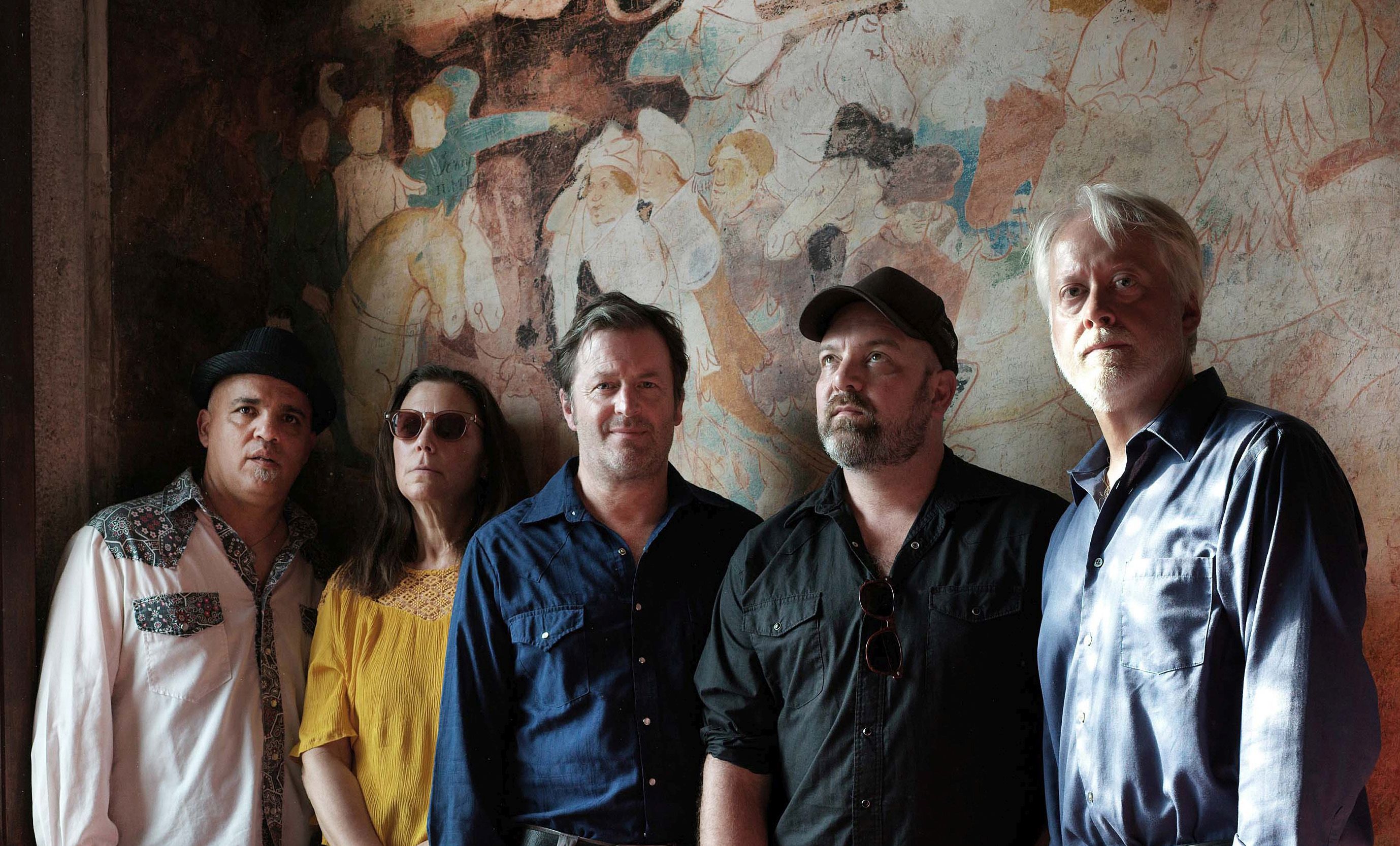
Members: Amy Boone (vocals), Cory Gray (keyboards, trumpet, flugelhorn), Sean Oldham (drums, vocals, percussion), Freddy Trujillo (bass, vocals), Willy Vlautin (guitars, vocals)
Interviewee: Willy Vlautin
Current release: The Delines' new album Mr Luck and Ms Doom is out February 14th 2025 via Decor.
Global Recommendation: Ah Mother Foucault’s bookstore in Portland. It’s the best.
Topic I rarely get to talk about: Ha, I’m obsessed with Italian soundtracks from the ‘60s-70s. I love Morricone of course but also people like Gianni Ferrio, Bruno Nicolai, Nora Orlandi, Giani Marchetti, Berto Pisano. People think I’m nuts but I listen to that sort of stuff all day and will go weeks without listening to rock.
If you enjoyed this The Delines interview and would like to know more about their music, projects, and upcoming live dates, visit the band's official homepage. They are also on Instagram, Facebook, and bandcamp.
Do you think that some of your earliest musical experiences planted a seed for your interest in writing lyrics or poetry? How and when did you start writing?
I started writing tunes at 11. They were dark even then.
My older brother wrote songs and I copied everything he did but not his style. Mine were unlistenable and very dramatic and his were cool love songs.
Entering new worlds and escapism through music and literature have always exerted a very strong pull on me. What do you think you are drawn to most when it comes to writing?
Escapism was it for me. As a kid, I was saved by records. The idea that you could put on a song and suddenly be a million miles away, the power of that just floored me. It still does.
I think that’s why I’ve always gravitated toward folk songs, story songs. Songs that can easily take you somewhere else.
What were some of the artists and albums which inspired you early on purely on the strength of their lyrics? What moves you in the lyrics of other artists?
My brother turned me on to Bruce Springsteen and then I found the Pogues both when I was 13 or so. The lyrics of both really got me.
Then in high school I found Tom Waits. He scared the shit out of me, Swordfishtrombones, but I loved his lyrics. I still do. He’s been a big hero to me.
Have there been song lyrics which actually made you change (aspects of) your life? If so, what do you think, leant them that power?
I think in high school The Replacements’ Let it Be had a pretty big effect on me. I was a beat-up kid with a very working class self-destructive side to me. A lot of self-hatred and I loved boozing.
So when I heard The Replacements I’d found my band, at least for a little while. They seemed to make being a loser, giving up, honourable.
That’s a dicey worship to have and luckily I got out of thinking that way.
I have always considered many forms of music to be a form of poetry as well. Where do you personally see similarities? What can music express which may be out of reach for poetry?
I mean, song lyrics and poetry are brothers, they’re connected. Hell, you put a soundtrack to a good poem and repeat a few of the lines and “WHAM!” You have a song.
Music obviously really can help a poem, it can elevate even a great poem and it can put a decent suit on a bad poem. You can get away with a lot lyrically if you have a good melody holding it up.
The relationship between words and music has always intrigued me. How do you see it? In how far can music take you to places with your writing you would possibly not have visited without it?
The crazy thing is at home I usually only listen to instrumental music.
That being said you put the right music under a line like, “I love you, baby,” and you sing it right and the music works, well it can bring you to tears or can make you jump around in pure joy and romance.
Good music can save bad lyrics, but if both are good it’s heavenly.
What are areas/themes/topics that you keep returning to in your lyrics?
Since I was a kid I’ve written about beat-up people on the skids. A lot of the characters are doomed, sometimes by self-inflicted wounds.
I’ve always been political in the same way – working class issues and I’ve always kept a ragged sort of romance to me.
On the basis of a piece off your new album, tell me about how the lyrics grew into their final form and what points of consideration were.
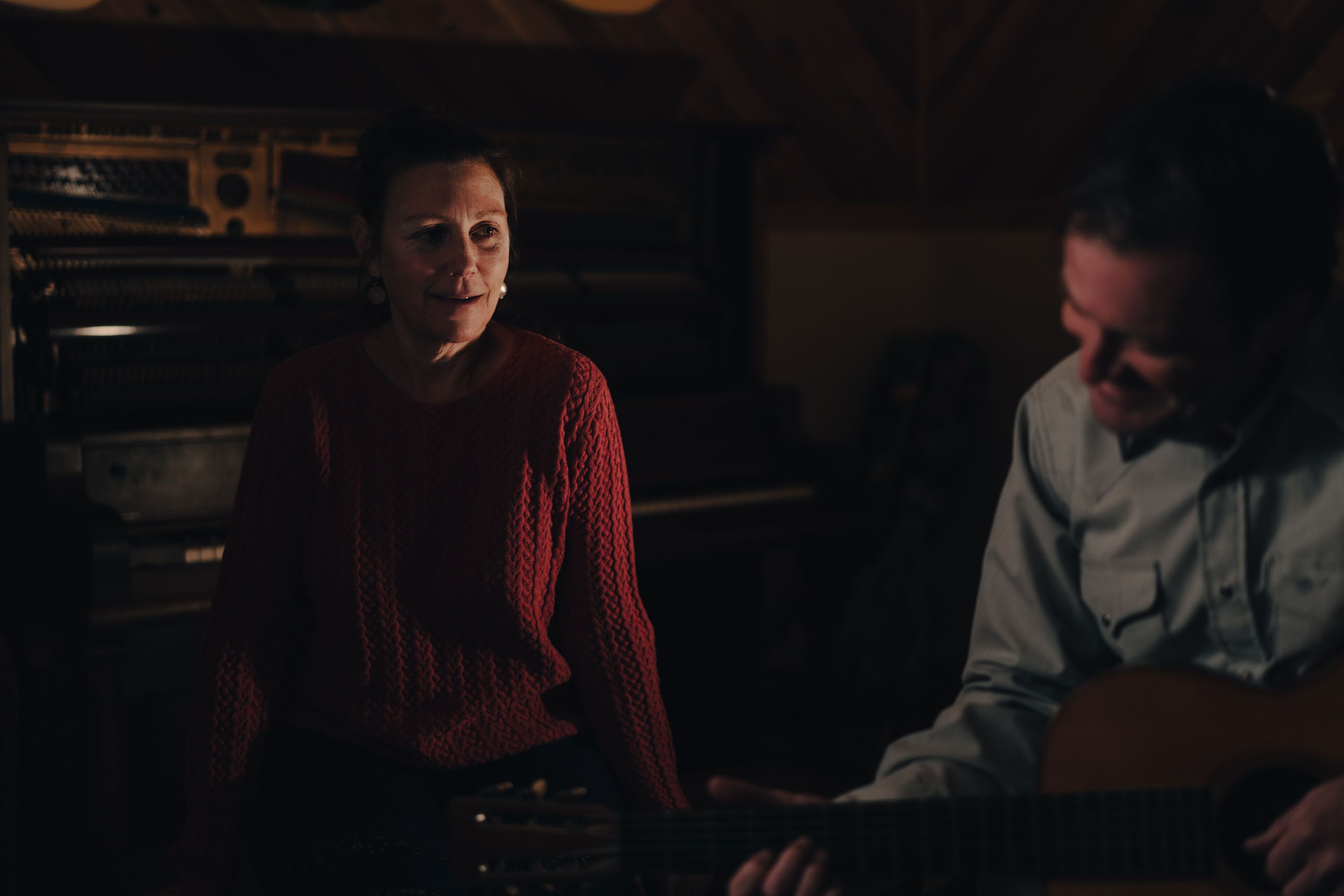
The Delines’ new record, Mr. Luck & Ms. Doom, began in earnest when our singer, Amy Boone, took me aside after a gig one night and told me to write a love song where no one died and nothing went wrong.
She said, “You’re killing me with these dark tunes, man. Write me a love song where they get the money and stay in love or I’m gonna go nuts.” 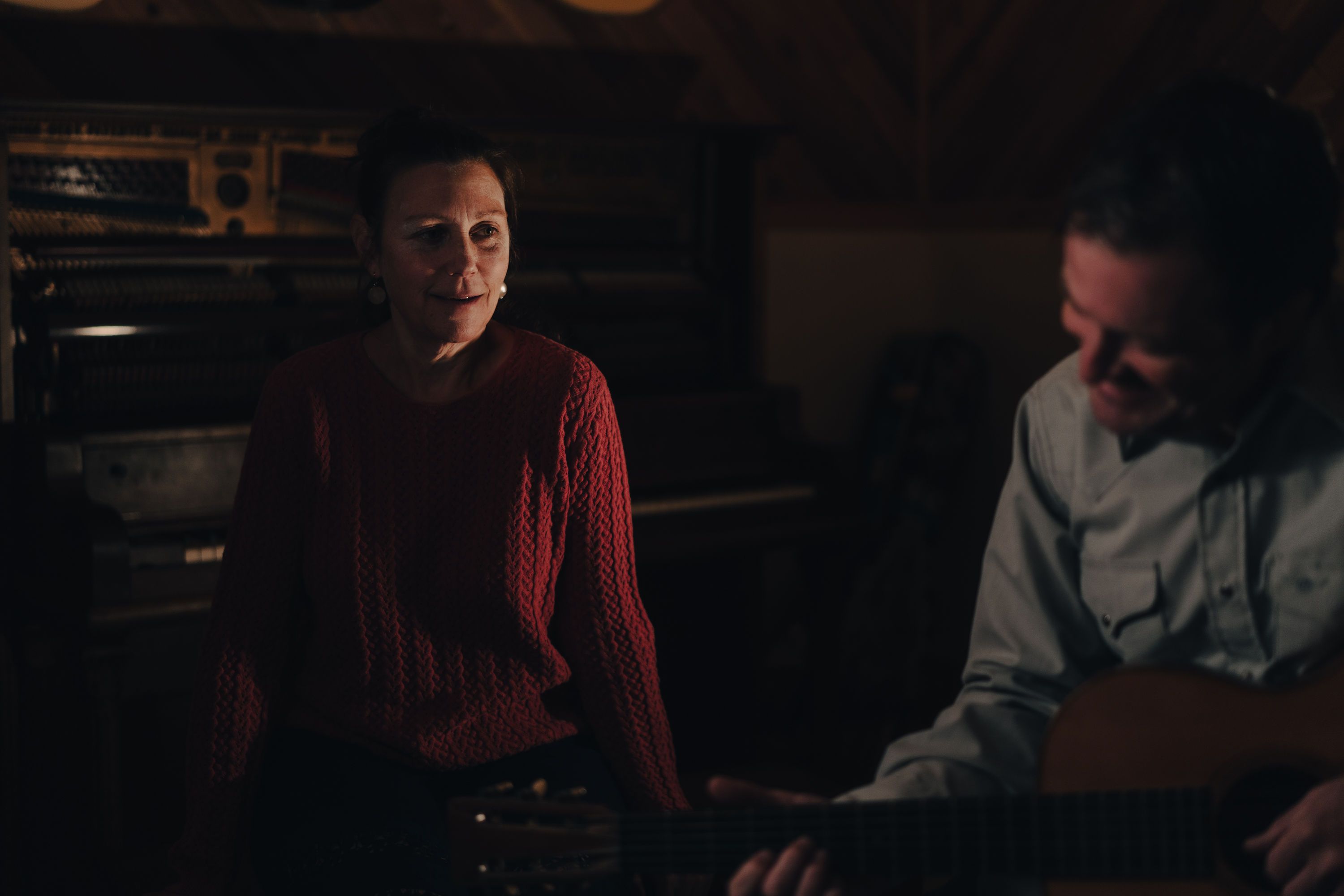
The Delines Interview Image (c) the artists
So I tried and tried and tried but “Mr. Luck & Ms. Doom” is the only happily ever after song I came up with that worked.
The rest on the record don’t end so good. “Her Ponyboy” and “JP & Me” didn’t get out so easy.
Do you tend to start writing with what will be the first line of the finished lyrics? The chorus? At a random point? What are the words that set the process in motion?
I usually start with the overall concept of the song. The story of the song.
After that, I think of what kind of music would fit that story and then I just start tinkering. I’ll get a line and a melody and then stumble around from there.
I'd love to know how you think the meaning or effect of an individual song is enhanced, clarified or possibly contradicted by the EPs, or albums it is part of. Does the song, for example, need to be consistent with the larger whole?
I mean a good song is a good song. If it’s on a single or a compilation or an EP or LP, I don’t think it matters. But if you’re interested in creating a world that goes on for more than one song, then well, the EP or LP is the thing.
I’ve always written in the themes so I like having the room of an LP. I’ve always liked records where you think the writer had to go down some jag and couldn’t stop. They broke up with a partner, they got out of rehab, they’re on a bender heading to rehab, they are taking on politics, they are writing about living in the city, the country.
When you feel like you’re an observer when someone is consumed with a vision, well, I’ve always dug that.