Published
Name: Derek Piotr
Nationality: American
Occupation: Composer, sound artist, vocalist, folklorist, songwriter
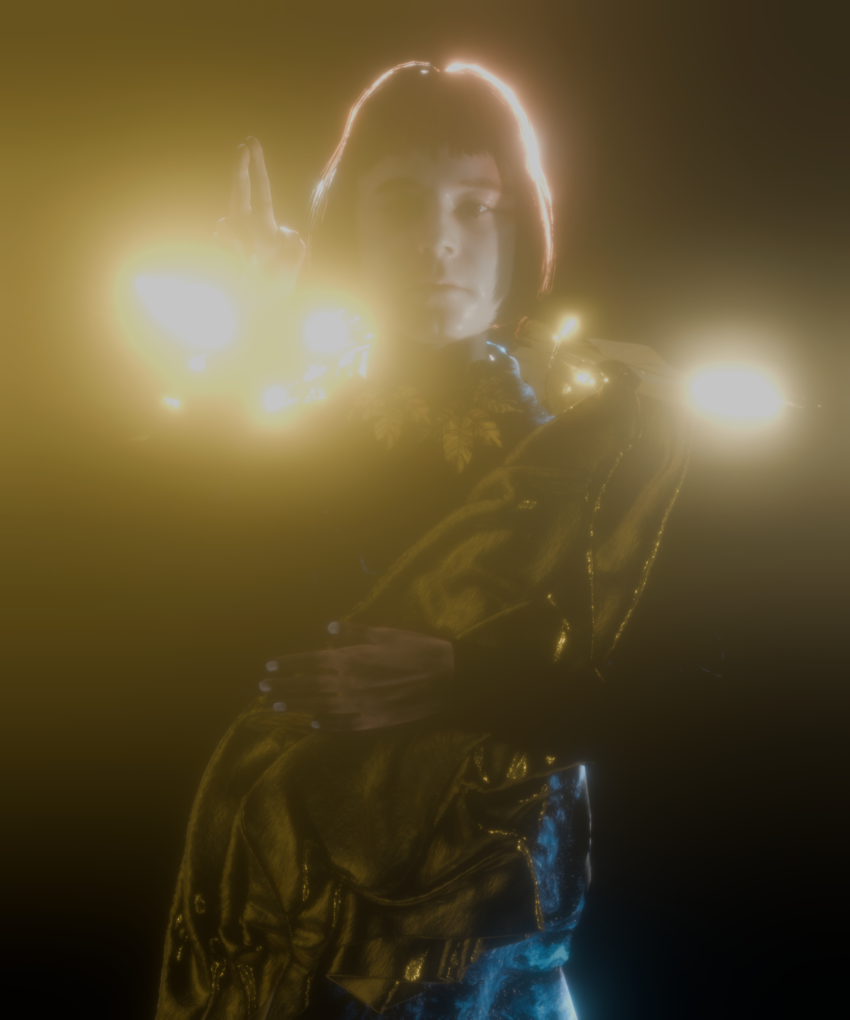
Current release: Derek Piotr's Divine Supplication is out via DPSR.
Recommendations on the topic of sound: fieldwork-archive.com
If you enjoyed this Derek Piotr interview and would like to stay up to date with his music, visit his official homepage. He is also on Instagram, and Soundcloud.
Do you think that some of your earliest musical experiences planted a seed for your interest in sound?
I think that I was likely born with a proclivity towards sound and music and my earliest musical experiences (singing as a child in choir, along to movies and my first bought CDs) more reinforced and watered the seed than planted the seed. The seed itself was planted beforehand, and was nurtured by these experiences.
My family was not particularly musical – so it was in my own nature to absorb.
Do you experience strong emotional responses towards certain sounds? If so, what kind of sounds are these and do you have an explanation about the reasons for these responses?
I think all musicians react emotionally to sounds - otherwise they would not be in this job. I think all sounds elicit emotional responses to some degree, for everyone, and it’s the musician’s job to make all these nuances fit into a kind of puzzle which becomes a song …
But it seems like you are asking what songs elicit particularly strong emotional responses to me ... : rain on a tent, the sound of a train whistle in the distance, children crying, dogs barking, people cheering at the horse races, collective booing at the theatre … these are just a few that push buttons for me ...
Are there places, spaces, or everyday devices which intrigue you by the way they sound? Which are these?
Maybe not places so much, except next to a tornado. The roar is like a waterfall.
I do sometimes go to Regina Laudis to hear the vespers sung by the nuns and the experience is always so hallucinogenic - you are not sure if 2 minutes or two hours passed at the end. But that is maybe a spiritual effect of the space, and not a sonic one.
Devices? Commercial dish washers and slot machines.
For some, music equals sound, to others they are two distinct things. What is the relation between music and sound for you? Are there rules to working with sound, similar to working with harmony, for example?
I think I answered this above: all sounds can become musical, properly arranged … and that is exactly the musician’s job.
A snare drum in the abstract is an unpleasant noise: under a bassline or lead melody, it’s magic.
What were your very first active steps in terms of working with sound and how would you rate the gains made through experience?
I was chopping up pop songs on my big old tower PC in 2006 using Audacity and GarageBand. In some ways I still make fucked up pop by chopping up sounds on a computer, so I don’t necessarily feel I’ve gained anything ...? Other than nuance that comes with age.
I actually re-recorded one of the songs from this period for my new record - “Perfect Matrimony” was the very first song I wrote, in 2007, when I was 16. Now, at 32, or twice the age I was when I wrote it, I completely re-recorded the song with help from Fennesz and it found its way onto my new record.
This was the first thing I wrote that was an original piece - everything I did before that was just edits and chops of existing songs. Kids stuff!
For your own creativity, what were some of the most important things you learned from teachers/tutorials, other sound artists, or personal experience?
I don’t think I can get around shouting out AGF here – she helped me produce my first record, and was a massive influence on me really early on. Head Slash Bauch, her debut, changed my brain.
Since then I’ve gotten her to do things she maybe wasn’t so known for at the time - making my album covers or mastering my albums - and we’ve kept in touch for 16 years now - wow!
How and for what reasons has your music set-up evolved over the years and what are currently some of the most important pieces of gear and software for you?
I have always kept my setup embarrassingly minimal, but I am okay with this.
I will never forget playing ISSUE Project Room with Thomas Brinkman and we had the exact same minimal setup to play live – just an A/D box and our macbook. Really validating.
The thing that changed for me is last ~5 years I work more and more with session players and instrumentalists, and then edit their takes myself on the laptop. But now, not all the sound is from me.
Late producer SOPHIE said: “You have the possibility with electronic music to generate any texture, and any sound. So why would any musician want to limit themselves?” What's your take on that and the relevance of limitations in your set-up and process?
I think this is true, but it is also why noise music is so interesting – we can generate any style of sound, or image now, with technology, but our choices define our output.
So in noise music, if you listen to many examples, you begin to hear the person's energy or rather soul emerging in the seemingly chaos of the sound itself. This of course is easier to define to the listener in more organized modes of music, but is still traceable even in pure noise creation.
So I think it’s less about the freedom of doing anything, but rather where the person is called to go with sound. But of course it is all possible now, more than ever before. And it will keep becoming more fluid.
Could you describe your creative process on the basis of one of your sounds, pieces, or live performances that's particularly dear to you, please?
I really love DJing for hours and crashing tracks into each other – pop songs, radio rips from Nigeria, old field recordings from Arkansas, and mixing them all up where it’s unredictible. also platforming unknown voices.
This for me is the result of years of crate diving and then I kinda get to show off what I found.
How important is sound for our overall well-being and in how far do you feel the "acoustic health" of a society or environment is reflective of its overall health? What importance does silence hold in this regard from your point of view?
Sadly I think sound gets abused or ignored often by society, or not elevated on the same status as say a painting or sculpture is.
But at the same time sound is kinda everywhere, feral, and fills so many roles: on-hold or elevator music, specific raps that communicate social status, traditional dance pieces for celebration, a kind of hidden language that exists in many territories.
I used to think that sound was damaged by being in low grade environments but now I think it’s kinda a semaphoring vital component of post-verbal assimilation and communication.
It’s a very social thing, even if it’s less about the sonic and more the message.
Tinnitus and developing hyperacusis are very real risks for anyone working with sound. Do you take precautions in this regard and if you're suffering from these or similar issues – how do you cope with them?
I keep sounds at a low level and plug my ears for sirens passing in the street.