Published
Name: Devin Gray
Occupation: Drummer, composer, bandleader
Nationality: American
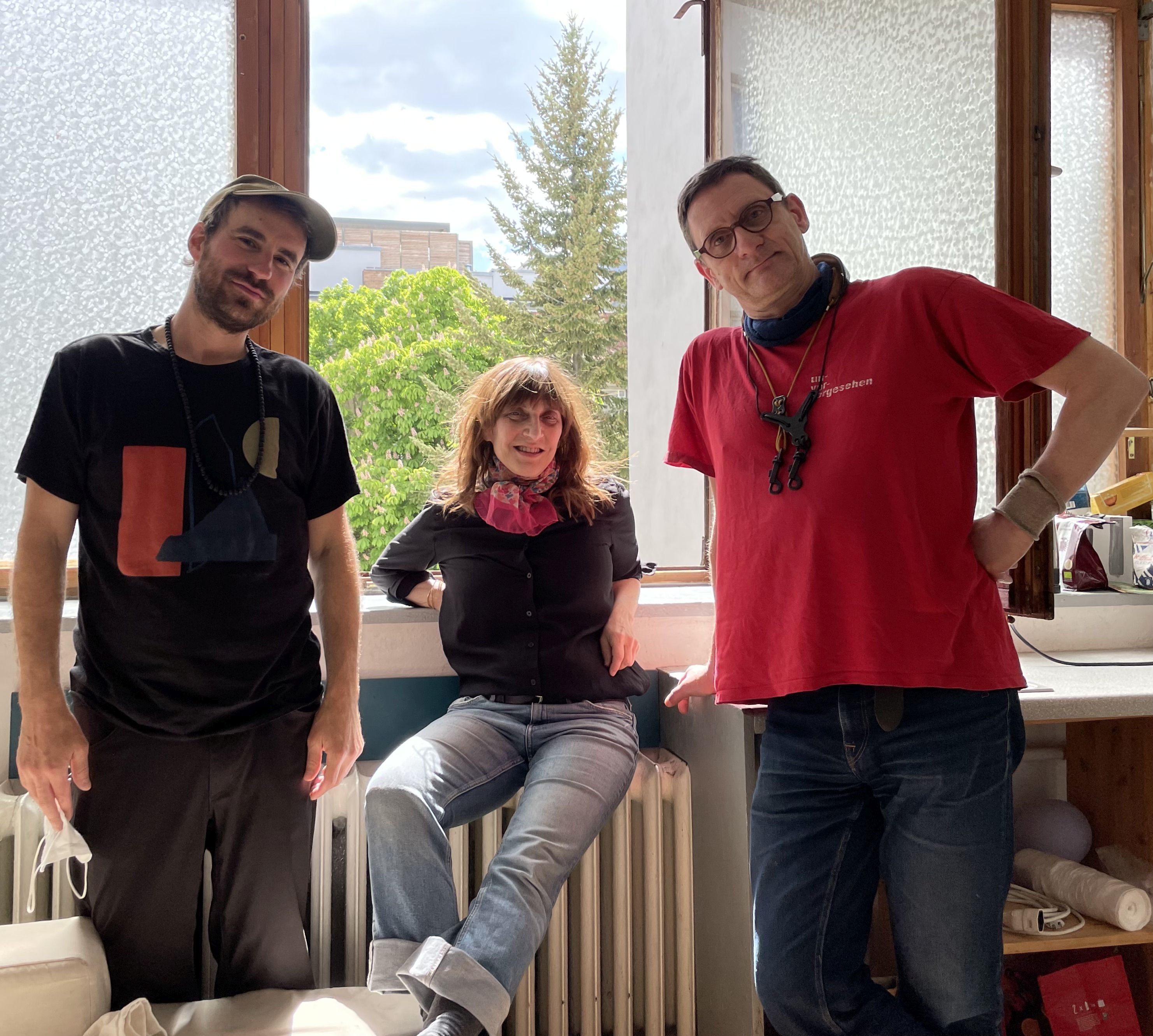
Current release: Devin Gray teams up with Andrea Parkins and Frank Gratkowski for Hz of Gold, out via Rataplan.
Current event: My most recent release is out March 20th! With our live release show on the 21st in Berlin, at Sowieso! Come hang!
If you enjoyed this Devin Gray interview and would like to know more about his music and current tour dates, visit his official website. His label Rataplan is also on Instagram.
For a deeper dive, read our earlier Devin Gray interview.
When did you first consciously start getting interested in musical improvisation? What was your first improvisation on stage or in the studio and what was the experience like?
This might sound cliché, but as I started playing drums in an almost too entirely autodidact way, improvisation was already there for me. As I didn't really know what I was doing, all I could do was listen and use my imagination, so making music comes from that place in my mind - quite lucky I suppose in hindsight.
Of course this is slightly different than say improvisation over "Giant Steps," or studying how Bach or Beethoven may have improvised. But its all apart of the same thread to my ears.
I'll always remember a middle school teacher of mine (a great drummer himself!) giving me my first "open" drum solo in a school concert at the middle school, and saying, "ok just remember; think, beginning, middle, end" and I will never forget that very lucky and informative early experience!
Tell me about your instrument and/or tools, please. What made you seek it out, what makes it “your” instrument, and what are some of the most important aspects of playing it?
Growing up I had a drummer neighbor in a working band, so I would always hear drums around in the open and that (easily) inspired me to also chose that sound for myself!
Fast forward to today, its still always somehow about my very personal set up of the instruments (I like my drums placed in VERY specific positions (and try to get that every time)) and of course tuning to my liking and cymbal choices that allow me to reach for the feel I am trying to get. I have a travel set of cymbals and I can get a bit cranky these days when I don't use them, no thanks to the airlines :)
I should also mention that I write music almost daily, and this is a VERY important tool for my life in music, as it gives me another space to create and allow me to share different musical elements that are a part of my life, which in return are all deeply rooted in improvisation.
How would you describe your own relationship with your instrument – is it an extension of your self/body, a partner and companion, a creative catalyst, a challenge to be overcome, something else entirely?
Strictly speaking about the drums, I love practicing my instrument very regularly to try to get my touch and feel to as comfortable of a place where I can express myself on the highest level as possible. This usually requires a minimum of 2 hours a day for at least 2 weeks straight of just going for it, doing it everyday/reaching ahead, trying something … just working on something.
I really love this connection and the feeling of playing when I am in that state of connection with my instrument. It usually goes hand in hand with my composition process, as I am often preparing for tours and recordings, so it's definitely full/overtime energy needed often to even allow myself to come close to where I'd like it to be ...
Derek Bailey defined improvising as the search for material which is endlessly transformable. What kind of materials have turned to be particularly transformable and stimulating for you?
This can also sound cliché, but listening in general (to everything) is my material.
I love continuously listening and studying what my friends are currently making, and what has happened a long time ago in music history. These materials usually reflect which ever city my friends happens to be in; whether it's Brooklyn, Berlin, or Chicago, I love feeling that growth!
In general, keeping those ears open is SO so important for me, not trying to get caught up in only one sound or way of doing things. I have to keep it moving!
Do you feel as though there are at least elements of composition and improvisation which are entirely unique to each? Based on your own work or maybe performances or recordings by other artists, do you feel that there are results which could only have happened through one of them?
Yes absolutely, because with composition you can hear the same thing (ideally) again, because it is locked in with written notes, which already sets up "a similar" approach when playing a piece.
With improvisation, you could even try to play the same thing again, (which actually is a whole very separate but interesting approach) but we're searching for the unknown say as a group or a trio, right? Who knows what will happen? Of course, if you truly allow that space to be honest within the context.
Here is an example of a composition (with a bit of that trying to play it the same way again approach I just mentioned) that could have only happened by writing, and it sounds that way each time the band plays it (which sounds like it's improvised/which I LOVE :)
Here is an example of an improvisational approach that could have only happened by ... not talking about it.
When you're improvising, does it actually feel like you're inventing something on the spot – or are you inventively re-arranging patterns from preparations, practice or previous performances? What balance is there between forgetting and remembering in your work?
Great question, because a lot of the times I am actually thinking about how can we - or rather, how are we going to - make something new through improvising. In my mind, it's kind of a searching type of zone that I am trying to get into. Perhaps we'll start by just playing and seeing what happens, and as it goes on, then we are actively accessing (or not at all) what to do more or less of.
For me, it mostly it comes down to how well the others are able to listen at large … musicians with years of experience (Like Andrea and Frank) are really fun to improvising with because they allow for anything to happen and still be super creative and fresh and innovative. There's something about a balance point of expression that is really hard to reach.
I feel the same way about this with Keith Jarrett, as with Derek Bailey, as examples of master improvisers, though, of course, in the end I will always side more with Keith because of the MASS VOLUME of music he is dealing with and from SO many angles … In my mind basically doing whatever he wants - and that is something deep in music that will keep motivating me for the rest of my life.
Artists from all corners of the musical spectrum, not just “free jazz” have emphasized the importance of freedom in their creativity. What defines freedom for your improvisations?
I really don't like the label and use of "free jazz" as I often find that the implications of that phrase are not in line with my overall musical experiences and goals.
I like to be free in music in general because in the end it is so huge I don't want to limit myself. And if I want to play a nice melody (either written for melodic instruments, or just solo melodic drums) then I do it, and whatever you wanna call that cool, but it will never be that for me because freedom is the combination of music at large, all of it, together with no separation.
Now, freedom of my improvisations ... that's given by not taking about it! By just doing it, and trusting in yourself and each other. You need to know for yourself that it will be fun and honest. That is freedom to me.
Taking your recent projects, releases, and performances as examples, what, would you say, are the key ideas behind your approach to improvisation? In your best improvisations, do you feel a strong sense of personal presence or do you (or your ego) “disappear”?
My best improvisations are when I have no idea what's going on, OTHER than, that something is going on. .. and then it takes on a life of its own. When that happens, it's usuallly the best way to disappear into music.
For sure getting lost is super critical, as well as letting go, and just allowing yourself to open up and just listening ... ultimately this is about creativity and letting that flow and being honest about giving that to the world.
This trio project is so special for me because we have been playing on and off since 2015! And somehow the energy and vibe just gets better every time we hang and play! So letting go and just letting it flow is almost immediate these days (I hope I don't jinx it, by saying this!)
What are some of your favorite collaborators and how do they enrich your improvisations?
Andrea & Frank! I love their energy and experience and openness to going for the unknown, it's so refreshing!
In a live situation, decisions between creatives often work without words.
More musical words please, let's get to the talk with hands part!
From your experience and current projects, what does this process feel like and how does it work?
The better the artist, the less talking needs to be done.
Make your musical statements via your music. Make your art your work.
Stewart Copeland said: “Listening is where the cool stuff comes from. And that listening thing, magically, turns all of your chops into gold.” What do you listen for?
I listen for many things at once, but usually I am listening for things that I like, or that inspire me: new sounds, new textures, new rhythms; things that I can grab onto and improvise with or try to work with in a new way.
Generally musical ideas and circumstances that inspire me to push forward with music!
There can be surprising moments during improvisations – from one of the performers not playing a single note to another shaking up a quiet section with an outburst of noise. Can you tell me about such situations from your own performances and how they impacted the performance?
Well, if you listen to the new release, there are plenty of moments in there that reflect this.
For me, this comes down to taste, and not only showing how you listen but showing that you ARE listening to each other and working with what is happening, or going against it. We're talking about trusting each other as improvisers and artists, and that takes time, or perhaps even a lifetime of playing music.
How lucky am I to work with Andrea and Frank! :)
As a listener, do you also have a preference for improvised music? If so, what is it about this music that you appreciate as part of the audience?
Sure, live is best.
As an audience member I love listening to people that I've known for years and don't get to hear often, and equally to people I haven't met yet, and love just diving into their sounds and checking out their approaches to their instruments or at least the thought process of how I think they might be thinking or hearing improvisation and music.
In a way, we improvise all the time. In which way is your creative work feeding back and possibly supporting other areas of your life?
Yes, and I think that staying on your toes and being open to the fact that things will keep changing are really good skills to keep around on a day to day basis!