Published
Part 1
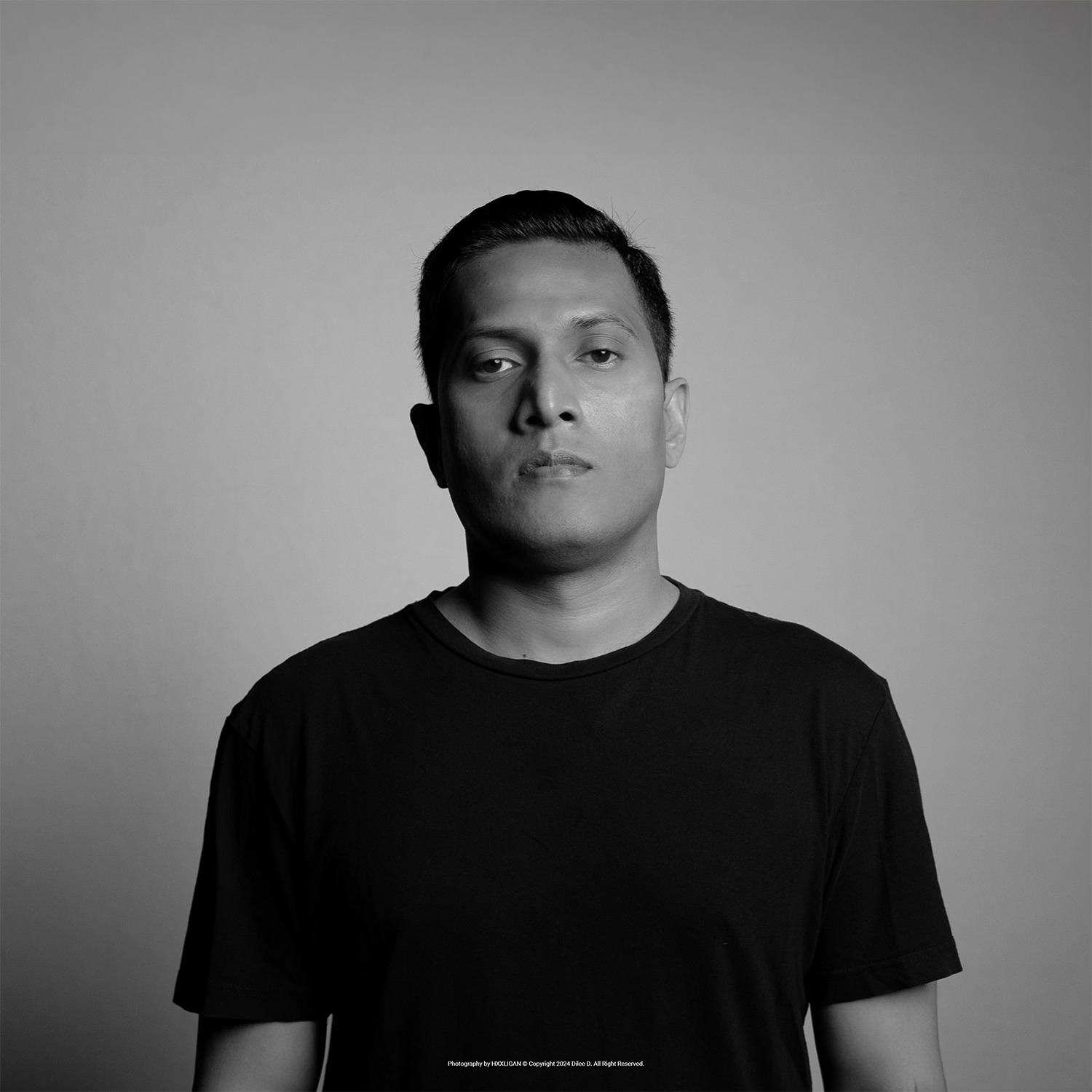
Name: Dilee D
Occupation: Producer, DJ, label-owner at Idyllik
Nationality: Sri Lankan
Current release: Dilee D teams up with Florian Kruse for their Clockwork Mind EP, out via Sasha's Last Night On Earth.
Global Recommendations: In Colombo, Sri Lanka – Lamprais (a must-try traditional dish that reflects the city's rich culinary heritage).
Now living in Chicago, IL – Go to the Cubs game because it’s a pretty old tradition of the city.
Topic I am passionate about rarely get to talk about: One thing I’m really passionate about but don’t often get to talk about is science and the universe. I find it fascinating how everything, from quantum mechanics to astrophysics, connects to the bigger picture of existence.
Just like in music, where sound is shaped by frequencies and patterns—the universe operates on its own set of rhythms and structures. Exploring these ideas always sparks my creativity in unexpected ways, influencing the way I approach music, sound design, and even storytelling through electronic dance music.
[Read our Florian Kruse interview]
[Read our Sasha interview]
If you enjoyed this Dilee D interview and would like to know more about his music, visit his official homepage. He is also on Instagram, Soundcloud, and Facebook.
What were some of the musical experiences that planted a seed for your interest in electronic music?
My interest in electronic music began with my early experiences in the school marching band, where I developed a strong foundation in rhythm and structure. Originally from Colombo, Sri Lanka, being part of an Eastern marching band also exposed me to a diverse range of instruments, allowing me to navigate both Western and Eastern musical traditions.
Beyond music, I have always been a tech enthusiast. I built my first computer in 1995, running Windows 95, which sparked my fascination with technology. This early interest in computers, combined with my passion for music, naturally led me to electronic dance music, where sound design and digital tools became central to my creative process. Over time, my deeper understanding of digital tools allowed me to integrate technology more effectively into my work.
In 1997, I was actively involved in metal and live bands as a lead guitarist. However, I always gravitated toward electronic dance music and computers, which sparked my growing interest in the digital side of music creation. Around 2000, I began my journey into DJing and music production, starting with PCDJ to learn the art of mixing. This introduction to digital DJ software ignited my passion for electronic music, shaping both my performance style and production approach.
During this time, I explored several music production platforms, including Image-Line Fruity Loops, Propellerhead Reason, Steinberg Nuendo, and Digidesign Pro Tools. However, I found my true passion in creating mashups and bootlegs with Sonic Foundry Acid. As I honed my skills, I transitioned to Ableton Live around 2005, which has since become the cornerstone of my production process.
In 2010, I moved to Kuala Lumpur, Malaysia, to pursue my music career, and it was during this time that my interest in computers and technology deepened even further. I began my computer science degree, which greatly enhanced my understanding of digital tools and their applications in music production.
Today, my creative process seamlessly blends my technical expertise with my passion for electronic music, where sound design, digital tools, and the fusion of audio and visual elements remain central to everything I create.
What does the term “electronic music” mean today, considering that most genres use electronic production?
Electronic music today is a broad term that encompasses any music created using electronic production tools. In the past, digital audio was often recorded at 8-bit or 16-bit depths with sample rates like 22.05 kHz or 44.1 kHz. Technology has since evolved, with modern audio production now using 24-bit or 32-bit depths and sample rates of 48 kHz, 96 kHz, or even 192 kHz, alongside immersive technologies like Dolby Atmos.
This shift has not only transformed how music is produced but also how it is experienced. As electronic production tools have become a core element in music creation, most genres today blend electronic components, whether it’s synthesizers, digital effects, or drum machines. This makes electronic music less about a specific genre and more about the tools and techniques used in production.
For me, it’s not about sticking to one genre but about using ever-evolving digital tools to explore new sonic landscapes and push the boundaries of both sound and production.
How do you see the “creative health” of electronic dance music today?
Electronic dance music has never been more accessible. With powerful digital software and computers, music production is easier than ever, opening up new opportunities for creativity.
However, the real challenge is not just creating music but pushing the boundaries of what's possible, exploring new tools, blending genres, and finding fresh, innovative approaches.
For me, it’s about staying ahead of the curve, using technology to break new ground rather than repeating what's already been done.
What are some recent electronic music releases or performances that left a deep impact on you?
Several Definitions – Reminiscence
Paul Brenning, Shiffer – We Care
Sasha, Jody Barr – Phaxon
What kind of musical/sonic materials and ideas are particularly stimulating for your work right now?
Right now, I'm inspired by blending actual instruments with granular synthesizers to create evolving and textured soundscapes. I enjoy combining the organic feel of traditional instruments with the flexibility of granular synthesis.
I also work with both analog and digital gear, continuously exploring new ways to shape sound and use spatial audio to add depth and dimension to my music.
Where do most of your inspirations to create come from—internal impulses or external influences?
My inspirations primarily come from internal impulses, but I also value external influences. There are no boundaries to what you can try or learn from the world around you, and these influences often push me to experiment and explore new ideas.
Working with Florian Kruse on our upcoming collaboration, Clockwork Mind, set to release on LNOE, has been a particularly exciting experience. His unique approach and musicality have pushed me to expand my creative boundaries even further.
How does your local scene influence your work? Do you still think certain cities have a unique sound?
I’m based in Chicago, the birthplace of house music, and I take great pride in being part of a city with such a deep electronic dance music legacy. While electronic dance music has become more global, Chicago’s scene remains unique, driven by innovation, a super friendly community, and a forward-thinking approach to music and technology.
The city isn’t just about its history. It continues to push boundaries, embrace new sounds, cutting-edge production tools, and fresh talent. It’s an inspiring place to be, surrounded by artists who are passionate about evolving the scene while staying true to its roots.
Some of my favorite places to play here include Spybar and Concord Music Hall, venues that truly capture the underground energy that makes Chicago a real music city.
Today, electronic music has an interesting relationship between honoring its roots and exploring the unknown. What does the balance between these two poles look like in your music?
While Florian and I were on a call, we were both amazed when we received a direct reply from Sasha approving the Clockwork Mind EP.
That moment truly gave me goosebumps and became a keynote for me. It was an affirmation of the journey Florian and I are on—blending deep influences with fresh, innovative ideas. It perfectly represents how I strive to honor the roots of electronic dance music while continuously exploring new creative directions.
Sasha’s music library continues to evolve, and I’ve always admired his ability to push boundaries while staying true to his artistry. Seeing how he supports and nurtures up-and-coming talent through LNOE has been nothing short of magical. His global influence in shaping electronic music and giving a platform to new artists makes a significant impact.
Witnessing this firsthand is incredibly inspiring, reinforcing the importance of constant evolution and contributing to the broader global dance music community.
How much potential for something “new” is there still in electronic music? What could this “new” look like?
Innovation has always been at the heart of electronic dance music. With constant advancements in synthesis, AI, spatial audio, and sound design, the possibilities for new directions are endless. New tools and techniques continue to emerge, allowing artists to explore uncharted sonic territories.
This evolution isn’t just about new genres or hybrid styles; it’s about rethinking how we experience music, whether through immersive 3D audio environments or AI-driven composition that adapts and evolves in real time.
As technology progresses, electronic dance music continues to reinvent itself while staying true to its core. Florian and I are continuously working on new music, always looking for fresh ideas and new sounds to explore. I hope you’ll hear something from us soon that reflects this drive for innovation while staying true to what makes electronic dance music exciting.