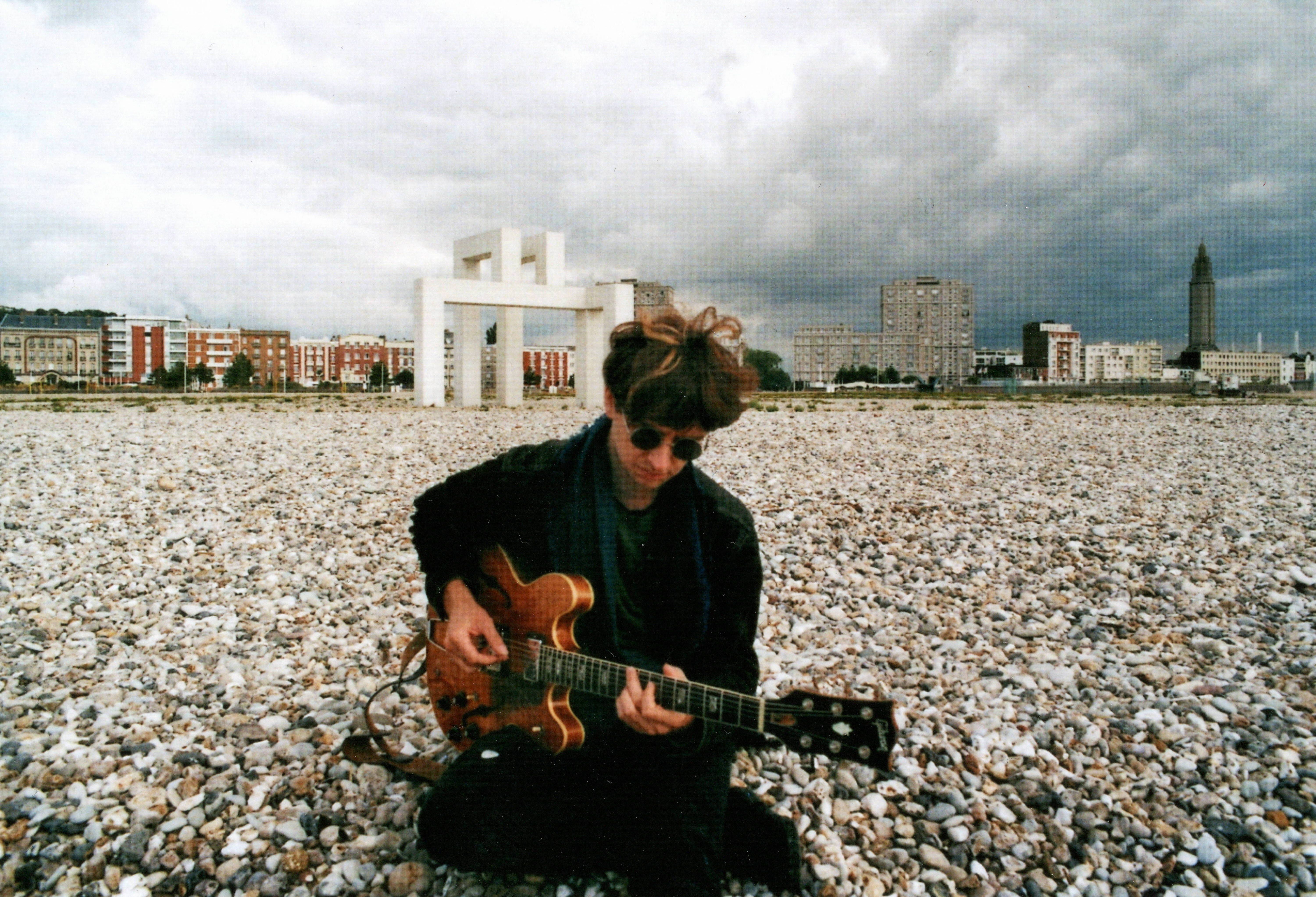
Published
Name: Dimitri Howald
Nationality: Swiss
Occupation: Guitarist, composer, producer
Current release: Dimitri Howald's new album Southern Return is out via XJAZZ!
Recommendations for Dimitri's current home town of Bern, Switzerland: In Bern, you should definitely swim in the Aare, the river which surrounds the city. It’s a feeling of floating, you just have to stay on the surface and the rest will be done for you.
If you enjoyed this Dimitri Howald interview and would like to know more about his music, visit his official homepage. He is also on Instagram, and bandcamp.
Where does the impulse to create something come from for you? What role do often-quoted sources of inspiration like dreams, other forms of art, personal relationships, politics etc play?
“I survive through my songs.”
This a line from a song of one of my favourite singer-songwriters Louis Jucker.
I totally agree: Writing songs, recording and producing my own music keeps me alive and is – besides my work as a professional musician - a personal form of meditation and processing for me. It’s essential for my mental health. I have to do it.
Everything that happens in my life plays a role and results in my compositions somehow. This can happen consciously or subconsciously. I often try to describe feelings, moods in certain situations, sometimes I’m thinking of a specific person, a dream and also quite often I am inspired by the beauty of nature. A certain constellation of clouds, the way the wind blows into the trees, the way the sunlight is reflecting on a lake …
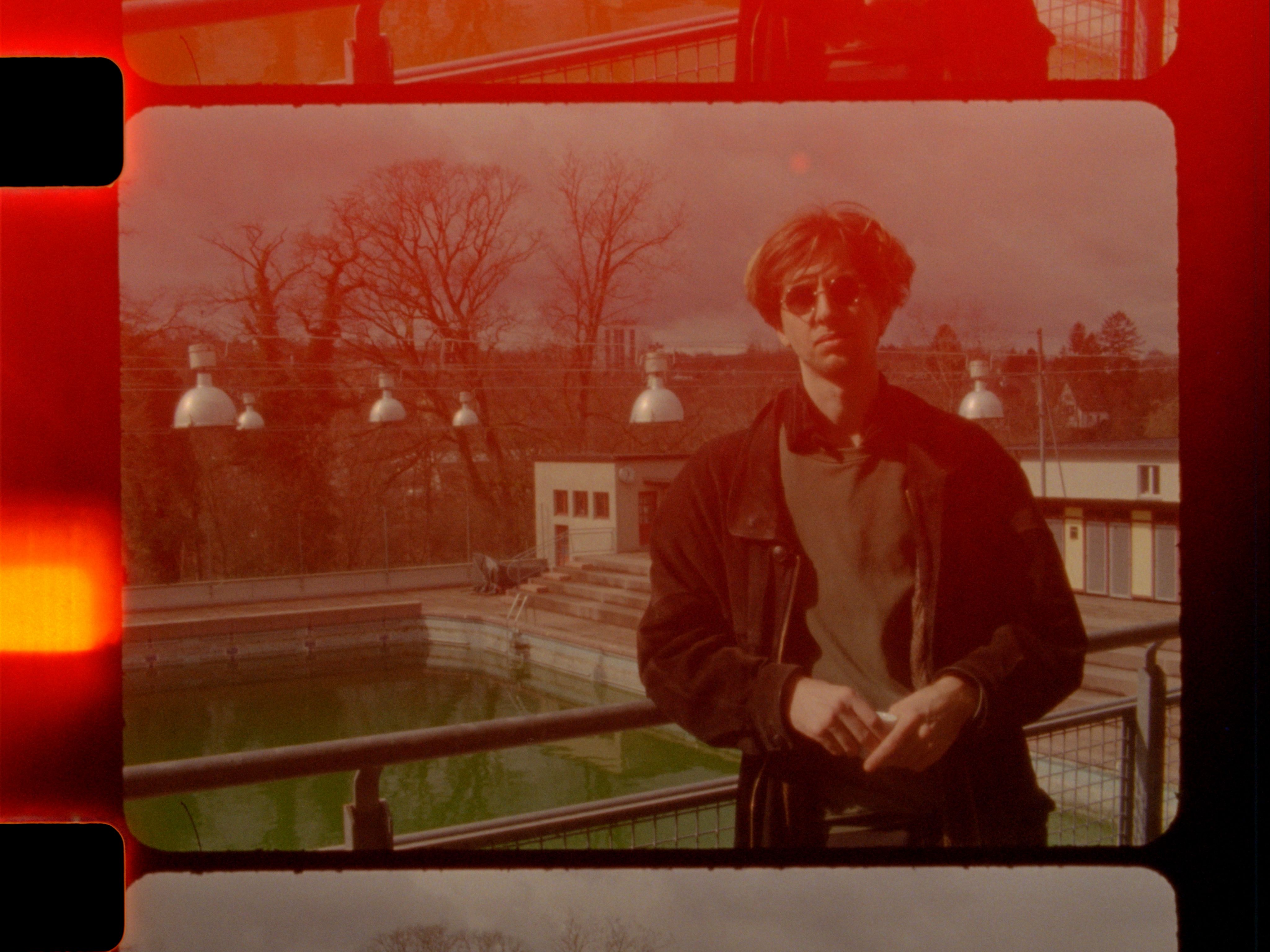
For this album the work of my friend photographer Tim Rod, which is all about palm trees and abandoned swimming pools, played a role. Some examples:
The song “Serafin” is inspired by my favourite book in my childhood, Serafin & His Miracle Machine- it tells the story of how important imagination is in life, even if there are many roadblocks in the way.
“Blurry Lights” was composed out of a melancholy state: you're driving in a car through a big city and everything is going fast around you, but you are very sad. As the tears start to pour from your eyes and it’s already night time, all the lights are blurring in front of you, which is again very beautiful in a way.
For you to get started, do there need to be concrete ideas – or what some have called a 'visualisation' of the finished work? What does the balance between planning and chance look like for you?
I am very much trying to trust in the idea of the moment.
These ideas come to me in completely random moments in my life. So it’s very important for my work to document them: If it’s a melody I’ll record a voice memo into my phone or if it’s an idea for a specific chord progression, I’ll take a note etc. Then, if I am working in the studio, they are sometimes very quickly turning into a finished song. For example “Akimi” was written in 10 minutes.
While sometimes I have an almost finished song with a concrete form, a drum beat, all the harmony and bass lines already recorded, but no melody at all. “Serafin” was one entire year in this state of the production and I’ve found the matching melody only one year later.
Like that, my songs and albums are coming together like a puzzle, every element in its own time. The only thing I can plan is to work as hard and as often as I can. But I can’t force the good ideas to come. If they don’t come, I take my notes and memos and I try to process one of the ideas into a song, sometimes it works, sometimes not!
This process of production has always been very natural to me.
Is there a preparation phase for your process? Do you require your tools to be laid out in a particular way, for example, do you need to do 'research' or create 'early versions'?
For my new album release Southern Return the preparation was mainly to be able to play all the instruments myself.
I’ve had specific drum beats in mind, which I’ve recorded with drum computers and I sometimes wanted to play and record those also on drums. So I practiced these drum beats until it felt natural to eventually record them. The same with the keys or my voice. It was a lot of fun to learn these instruments in a very autodidact way. Eventually I’ve had a track and it felt always amazing to finalize it with recording the melodies and improvisations over it on my main instrument, the guitar. After that ground work, this always felt like adding the final magical shimmer to it.
This process of my solo work very much differs from the work with my groups (for ex. my Trio), where I would bring a lead sheet of a song and the version would be created together. I am enjoying both ways very much.
Do you have certain rituals to get you into the right mindset for creating? What role do certain foods or stimulants like coffee, lighting, scents, exercise or reading poetry play?
First of all I need to forget all the everyday-hustle and be as free in my mind as possible. A day of production might look like:
I have a coffee, do a long walk with the dog and have my lunch before getting into the process of creation. Then I like to just do my ground works and technical exercises on the guitar for 2 or 3 hours.
After that I am ready to create or record and the chance is high that I’m getting into the “zone”, into a flow in which I am forgetting what time it is and I am able to totally dive into the creation.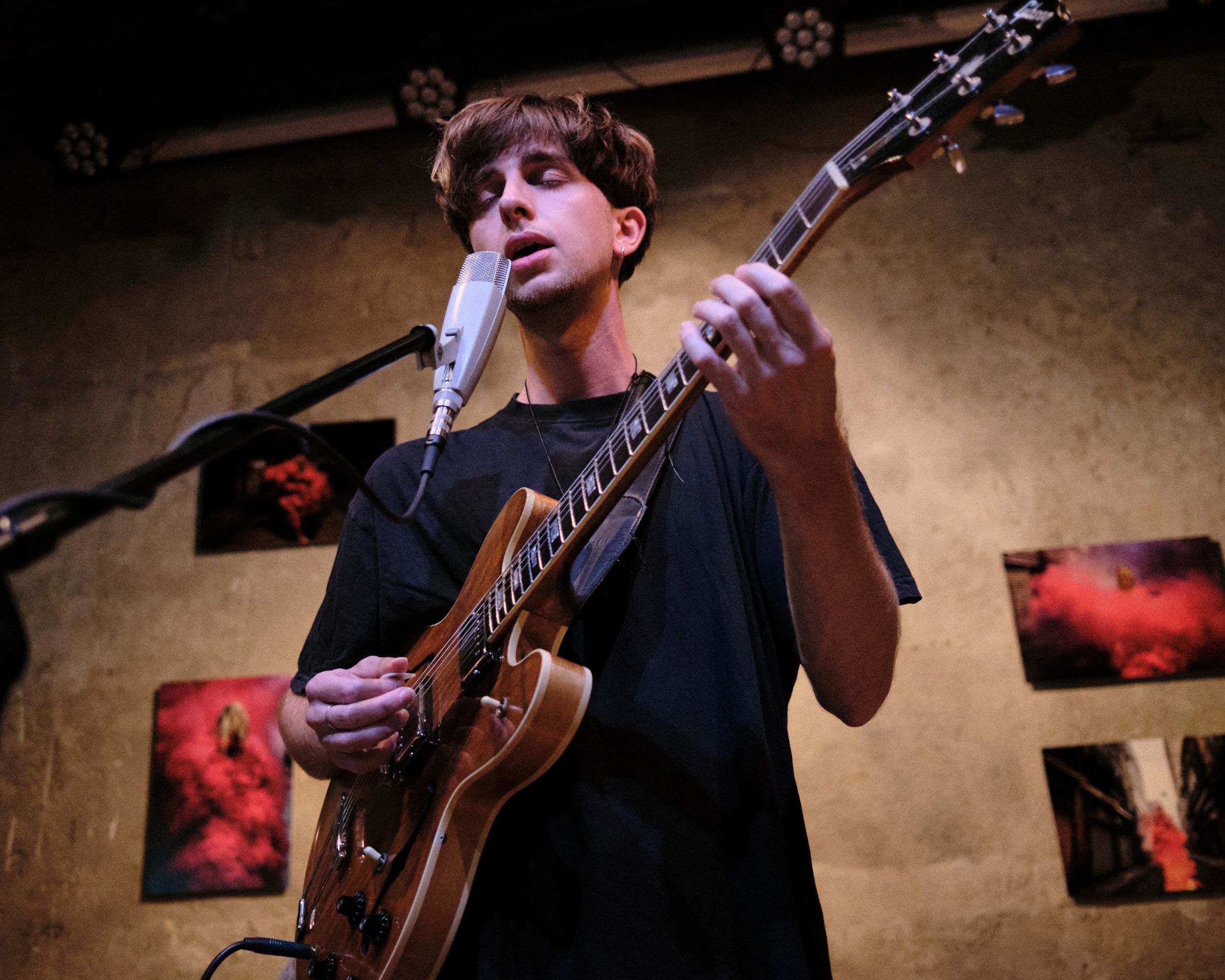
Dimitri Howald Interview Image at Cabaret Voltaire (c) the artist
For your latest release, what did you start with? If there were conceptual considerations, what were they?
Some of the conceptional considerations were:
- I want to work with drum-machines because I like New Wave and I am trying to translate this element into the world of Contemporary Jazz.
- Over the last years, I discovered my voice as an important element and I want to work with it, mainly doubling the guitar to add a personal touch to the melodies.
- On the album I’d like to have fully produced songs alternating with shorter and more intimate pieces.
- I want to mix acoustic and electronic elements. (So I recorded much of the harmony using plucked acoustic guitars, blending with the electronic rhythms of the drum-computer and synthesizers.)
- I don’t try to neglect any of my (early) influences, all of them can find their ways into the songs. Even more, it forms the aesthetics of this solo project.
Tell me a bit about the way the new material developed and gradually took its final form, please.
As I already mentioned a bit in Question Nr. 3., it was like a puzzle. On the title track “Southern Return” for example I first had the harmony part using 3 tonal centres.
Then I was jamming around on the acoustic guitar, eventually came up with a picking (which later became the basis of the track “Vortex”).
I wanted to add a beat inspired by a samba groove, using a specific clave. Since it’s in 5/4 it’s quite hidden. But I like the big tom on the 3. I was always recording those elements which I’ve just written in my home studio. Then I came up with a bass line and eventually with the melody. I recorded all the instruments myself, using only 5 microphones.
Also it was important to search for the right sound first, and then record it. I almost never used digital effects from the computer.
On the other hand there are also improvised tracks like “Blurred Intro”.
One summer I visited my friend, drummer and producer Lukas Rutzen (who mixed all my solo records so far with me) in Leipzig, where we added overdubs including synthesizers and organ parts.
Slowly all the parts came together and I did rough-mixes on my own. Later, we mixed everything down at Studio Suze in Biel using analogue equipment.
Many writers have claimed that as soon as they enter into the process, certain aspects of the narrative are out of their hands. Do you like to keep strict control or is there a sense of following things where they lead you?
Yes, I can relate. At some point of the process, the song is starting to live its own life. If that happens, I accept it, and I even totally enjoy that!
Furthermore: The song will live forever, it’s eternal.
There are many descriptions of the creative state. How would you describe it for you personally? Is there an element of spirituality to what you do?
For me, it is very much fulfilling and as I mentioned, it’s very much necessary to keep going. I feel grateful to be able to do this work.
And yes, this work brings spiritual elements with it. While improvising and finding melodies over these songs songs I often get the feeling as though I’m connecting with something bigger, the universe, the galaxies, other planets, whatever it may be.
Once a piece is finished, how important is it for you to let it lie and evaluate it later on? How much improvement and refinement do you personally allow until you're satisfied with a piece? What does this process look like in practise?
I am a perfectionist. Sometimes it’s helpful, sometimes not at all.
For me every little detail has to be right. I’m trusting my feeling, it tells me when something is there. In practice it looks like that some steps will take a shitload of time.
How do you think the meaning, or effect of an individual piece is enhanced, clarified or possibly contrasted by the EPs, or albums it is part of? Does each piece, for example, need to be consistent with the larger whole?
Yes, for me every piece has to be consistent with the larger whole. I love the form of an album to create a bigger picture.
With this solo project there are three possible sizes to look at it while all of them are connected:
- The three solo albums so far: Industrial Plants (2019) , Amnis Alsace (2021), Southern Return (2024)
- The story each album is telling when you listen through it
- The story each song tells on the album separately.
What's your take on the role and importance of production, including mixing and mastering for you personally? In terms of what they contribute to a song, what is the balance between the composition and the arrangement (performance)?
All of these topics are playing a huge role and every topic has to match with the others.
In my case, some compositions needed a big arrangement including huge instrumentation and effects, some other needed just guitar and voice. The mixing and and mastering have to match the mood of the song. It’s all a matter of finding the right balance.
These steps took a lot of time as well. Personally, I think it’s very important to take the time until you feel it’s there- with every step of the production.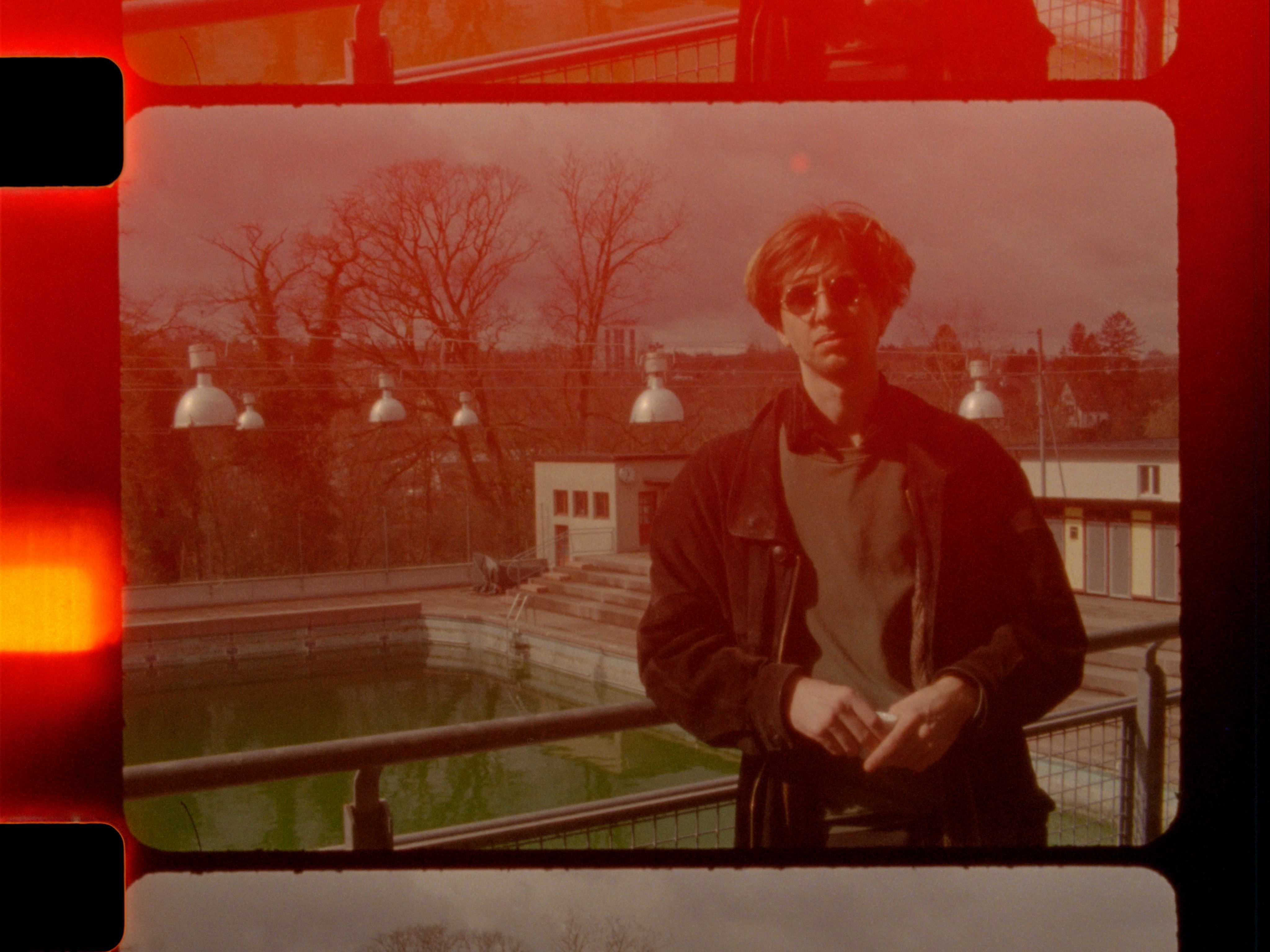
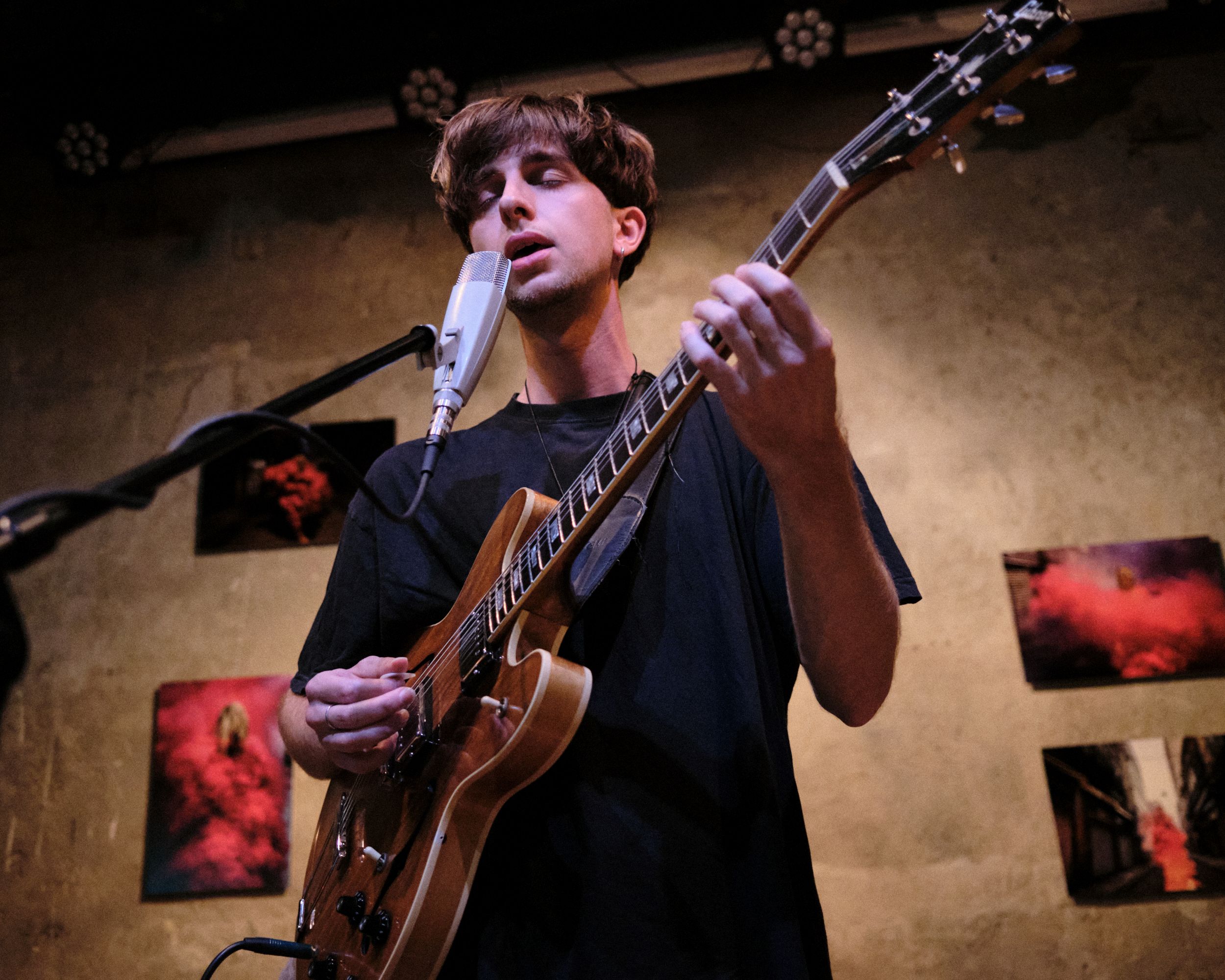
Dimitri Howald Interview Image by Yannick Mosimann
After finishing a piece or album and releasing something into the world, there can be a sense of emptiness. Can you relate to this – and how do you return to the state of creativity after experiencing it?
I can relate, but on the other hand I think it’s an important step to finish the work and bring it out, to start something new after it.
I like these quotes by the great Rick Rubin:
“The mission is to complete the project so you can move on to the next. That next one is a stepping stone to the following work and so it continues in the productive rhythm for the entirety of your creative life. All art is a work in progress.”
“Once it’s done you sign off on it, LET IT GO, and begin the next chapter of your life's work whatever that may be.”
In my case the next chapter is playing this music on stage with my group Dimitri Howald & The Amnis Band, so I am very much looking forward to this and to present the new music on stage.
We’ll play a record release show in Berlin at Donau115 on January 25th. It would be great to see you there!
I would love to know a little about the feedback you've received from listeners or critics about what they thought some of your songs are about or the impact it had on them – have there been “misunderstandings” or did you perhaps even gain new “insights?”
So far, I’ve received a lot of beautiful feedbacks and I am grateful that my music is being listened to. One of the most beautiful quotes from a friend who helped me a lot finalizing the mixing:
“It was my pleasure to offer my help in some small way, and be involved in such a piece of beauty. Thank you for all you bring out into the world through your being and your music. It’s very much appreciated by anyone that crosses your path.”
Another friend told me: “While listening to your songs, I was in a dream state, dived up from the bottom of the ocean, sunlight, reaching to the surface and then suddenly a free fall into a canyon.”
A press quote: "Howald consistently finds ways to bring the best out of himself and his music, elegantly adjusting the narrative each time" - Blue In Green -
Creativity can reach many different corners of our lives. Do you personally feel as though writing a piece of music is inherently different from something like making a great cup of coffee? What do you express through music that you couldn't or wouldn't in more 'mundane' tasks?
I like the thought that Everyone is a Creator and that every single mundane task, even if it’s very simple, is a creative act. It’s really the way how you see it.
I feel that with almost any task, but I think cooking is a good example: There’s no big difference for me in cooking a meal than in playing or writing a song. You treat all the ingredients carefully, every element has its own timing, you balance the spices as best as you can. Like that you try to create something beautiful which can be enjoyed by your environment.
The other day I watched a documentary: a woman was cleaning her pots at the river, very carefully, with a lot of patience, her movements were precise, she did that during a long time until the pots shined in the sunlight. I thought it was very beautiful and touching. And definitely a creative act.
Do you have things that you are really into but rarely get to talk about?
Well, I think definitely others might also be interested in it, at least I hope! I really love the work of Bernd and Hilla Becher. The way they’ve documented all this industrial architecture on analogue photograhy is a huge inspiration for me.
Another big inspiration are the movies by Jim Jarmusch or Aki Kaurismäki.
Feel free to give a shout out to a person, organisation, website, or anyone else that our readers should know about who are currently changing the world for the better.
I want to give a big shout out to you. These are great and deep questions and it made me think about a lot on my creative process and it was great to dive into it and reply them. I appreciate your work and all the interviews.
Thank you for having me at 15 Questions.
Also, I want to thank everyone involved in the making of the new album during the last three years!