

Name: Diogo Piçarra
Nationality: Portuguese
Occupation: Singer, songwriter
Current release: Diogo Piçarra's latest album is SNTMNTL, out via Universal.
Current event: Diogo Piçarra will perform at Islington Assembly Hall on 27 February 2026. For more information and tickets, go here.
Recommendations for Portugal: I definitely recommend visiting the Algarve in the summer, for its exceptional climate and unique beaches. Lisbon, where I currently live, is also an excellent European city, with inviting architecture and great food.
Topics I am passionate about but rarely get to talk about: I love tattoos, obviously. Football as well. Barbershops have become my latest obsession. And finally, Muay Thai has been the sport where I currently release my energy.
If you enjoyed this Diogo Piçarra interview and would like to stay up to date with his music, visit him on Instagram, and Facebook.
When did you first consciously start getting interested in singing? What was your first performance as a singer on stage or in the studio and what was the experience like?
I never thought of myself as a singer, or even of singing. What first appeared was the curiosity to play an instrument when I was around 16 or 17 years old. Only after that did I start combining my voice with the guitar.
My first live performances were alongside my guitar teacher, later in a bar where I played during the breaks of another artist in Faro, Algarve, and then at a later stage with my newly formed band, playing in schools, band contests, and similar settings.
Because of that, the studio was basically nonexistent in those early years.
If you're also playing other instruments, how does the expressive potential of these compare to your own voice?
I believe my main instrument will always be my voice.
The instruments I play, whether guitar, piano, or drums, are a complement in my live shows, but even more so in the studio, where they allow me to record, play, and produce a song from scratch without needing help from anyone else.
Singing is an integral part of all cultures and traditions. Which of these do you draw from, and why?
Since I write in Portuguese, that’s where my main influence comes from: Portuguese words and Portuguese culture.
There is a certain way of writing that differs greatly from English. Words tend to carry a stronger meaning, and not everything sounds good when sung.
Musically, however, my sound is more contemporary, drawing from alternative roots and a more international sonic language.
What were some of the main challenges in your development as a singer or vocalist? Which practices, exercises, or teachers were most helpful, and were there also harmful ones?
One of the main challenges was finding my own tone and voice. In the beginning, it’s very common to latch onto an idol or reference and try to sing like them.
Over the years, you start to understand that technique alone is not everything. The real challenge is finding your own voice and trying to be unique, combining tone with charisma.
What are the things you hear in a voice when listening to a vocalist? What moves you in the voices of other singers?
Above all, I listen for tone and personality. Those matter more to me than technique or vocal range.
And then there’s intention: how the words are sung. It’s not enough to simply deliver lyrics or musical notes.
How would you describe the physical sensation of singing?
Singing is a mix of sensations, both physical and emotional. There are different vocal registers that change how it feels in the body.
Sometimes the voice sits in the throat, sometimes in the chest, the head, or even the lips. It depends on whether you’re singing lower or higher, the kind of vibrato you want, or whether you’re pushing harder in a more intense section.
Alongside that, there’s the emotional side, where you feel like you’re leaving part of yourself in a song. It can feel like butterflies in your stomach or something raw and sad.
In the end, singing should be as natural as speaking. Something human, where there’s no real difference between talking and singing. The feeling has to be there, even with all the technical awareness of what’s happening.
We have a speaking voice and a singing voice. Do these feel like natural extensions of each other, or different in kind?
For me, there is no difference.
There’s a very thin line between speaking and starting to sing.
How do you see the relationship between harmony, rhythm, and melody? Do you feel that honing your sense of rhythm and groove affects your singing skills?
The more theory, the better. You can never know too much.
Understanding musical theory, harmony, and rhythm always helps your skills and the way you approach your voice, or even composition in the studio. Knowing more theory gives you more tools, often helping you avoid repetition or solve creative blocks.
What are the potentials and limits of your voice? How much of your vocal performance do you want to control?
Talking about myself never feels completely natural, because it will always sound biased. I was born with my voice, and we grow up hearing it every day.
What I want is a versatile voice, one that can be soft for a ballad or strong for something more energetic or rock-oriented. My exercises and warm-ups are always focused on that versatility.
More recently, I had the opportunity to take part in the dubbing of a film, which was a challenge and allowed me to develop a cleaner, more musical, and technical side of my voice.
As a singer, it is possible to whisper to the audience, scream at the audience, reveal deep secrets, or confront them with uncomfortable truths. How does singing shape your relationship with the audience?
Being a vocalist, frontman, or entertainer gives you the power to hold the attention of thousands of people. That attention can be used politically or purely for entertainment.
Some artists adapt their message depending on the concept of their project. In my case, the goal isn’t to be an activist, but to give voice to emotions, whether they’re positive or negative.
I’d love to know more about the vocal performances on your latest release and the qualities of your voice you wanted to bring forward.
In my latest releases, I’ve been increasingly focused on bringing my rock influences into my original music.
It has been both a challenge and a clear goal, not only vocally but also in terms of production.
When you're writing song lyrics, do you sense a connection between your voice and the text? What’s your perspective on singing your own songs versus someone else’s?
When I write, I don’t feel the need for the lyrics to be autobiographical.
The story can be imaginary, but the emotion will resonate with someone, and that’s what makes it real.
Strain is a particularly serious issue for many vocalists. How do you take care of your voice?
I always try to stay in shape, both physically and vocally. Everything helps maintain a healthy voice: a healthier lifestyle leads to more vocal longevity and a longer career.
Vocal techniques also play an important role in avoiding strain and being able to handle many concerts in a row.
How has technology, such as autotune or vocal processing, impacted singing? Has it influenced your approach?
In the production of my songs, technology plays an important role in the search for original sounds, something that stands out and isn’t just a guitar or piano song.
Autotune, however, is not a priority for me. I believe I can sing, so I don’t use it as a way of protecting or correcting my voice.
For recording engineers, the human voice remains tricky to capture. What makes a voice sound great on record and live?
If your instrument is the voice, or if you’re an engineer recording a lot of vocals, investing in a good microphone is key. Of course, everything else matters too: good equipment, a solid computer, and a proper audio interface.
A well-recorded voice is already halfway to a high-quality song, often without needing much processing.
Motherese may have been the origin of music. How connected is the human voice to your wellbeing, creativity, and society as a whole?
Music is the most rudimentary and ancestral form of culture, and a symbol of our prehistoric intelligence.
When we talk about language, we also have to talk about music. Perhaps even before language existed, music was already there, whether in a percussive form or inspired by animals that sing, like birds.
Music is all around us in nature, so it couldn’t be any other way.

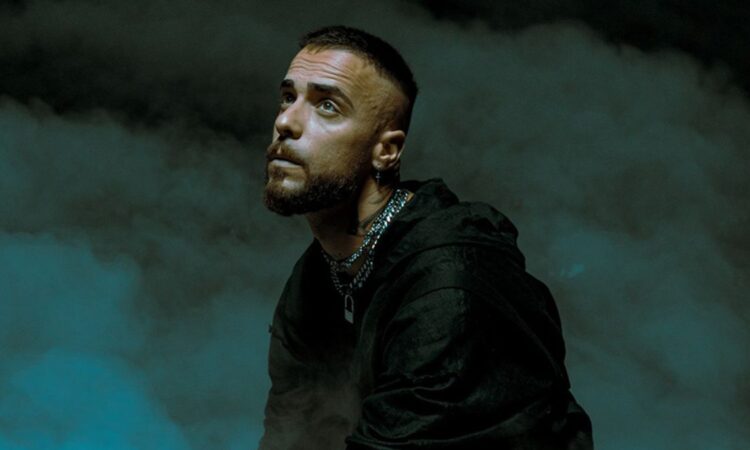 Diogo Piçarra Interview Image (c) the artist
“In the end, singing should be as natural as speaking.“
Video
