Published
Name: Helmut Josef Geier aka DJ Hell
Nationality: German
Occupation: DJ, producer, composer, label founder at International Deejay Gigolos
Current release: DJ Hell's new album Neoclash is out via his very own International Deejay Gigolo. Stream and buy here.
Fashion Recommendations:
1 black leather engineer work boots
2 burbery vintage trench coat
If you enjoyed this DJ Hell interview and would like to stay up to date with his music, visit his official homepage. He is also on Instagram, Soundcloud, and Facebook.
For a deeper dive, we recommend our earlier DJ Hell interview.
To keep reading, visit our features with other artists who have released on International Deejay Gigolos in our Chris Korda interview, Miss Kittin interview, Terence Fixmer interview, Tiga interview, Orlando Voorn interview, Abe Duque interview, Peter Kruder interview, and Joyce Muniz interview.
Do you think that some of your earliest musical experiences planted a seed for your interest in fashion as well?
Definitely. My earliest musical experience were never just about sound - they were about attitude, aesthetics, the whole universe around music.
When I discovered punk and new wave, these scenes where both sonic and of course visual. People expressed themselves with style as much as with records. Later, club culture in Germany pushed that even further.
Music taught me that identity is something we create and fashion became another medium for that. It's all connected.
Fashion and music are often closely related to one's identity. Can you please tell us a bit about your own sense of identity – and how it concretely influences your creativity?
My sense of identity has always been built on contrasts - elegance and darkness, discipline and chaos, nostalgia and futurism. My identity isn't fixed, it's something you design, re-invent, destroy, rebuild and start from scratch.
This mindset allows me to pull from the past without becoming retro and pushing into the future without losing myself in technology. Roxy Music and David Bowie had a big impact when I was a kid.
According to scientific studies, we make our deepest and most incisive musical experiences between the ages of 13-16. What did music mean to you at that age and what role did fashion play for you at the time?
Between 13 and 16 everything hit me at once - punk, new wave, early electronic music.
Those years where like an explosion. Music wasn't entertainment, it was revelation. it showed me there were other worlds out there, other ways of thinking, dressing, acting, existing. Every record felt like a door to a different future and I wanted to walk through all of them.
The looks to all these new musical genres were a special code and it told the people who your were before your ever said a word.
Describe your personal style, please, and how your choice of fashion allows you to express it. Which fashion brands or style icons do you personally find inspiring - and why?
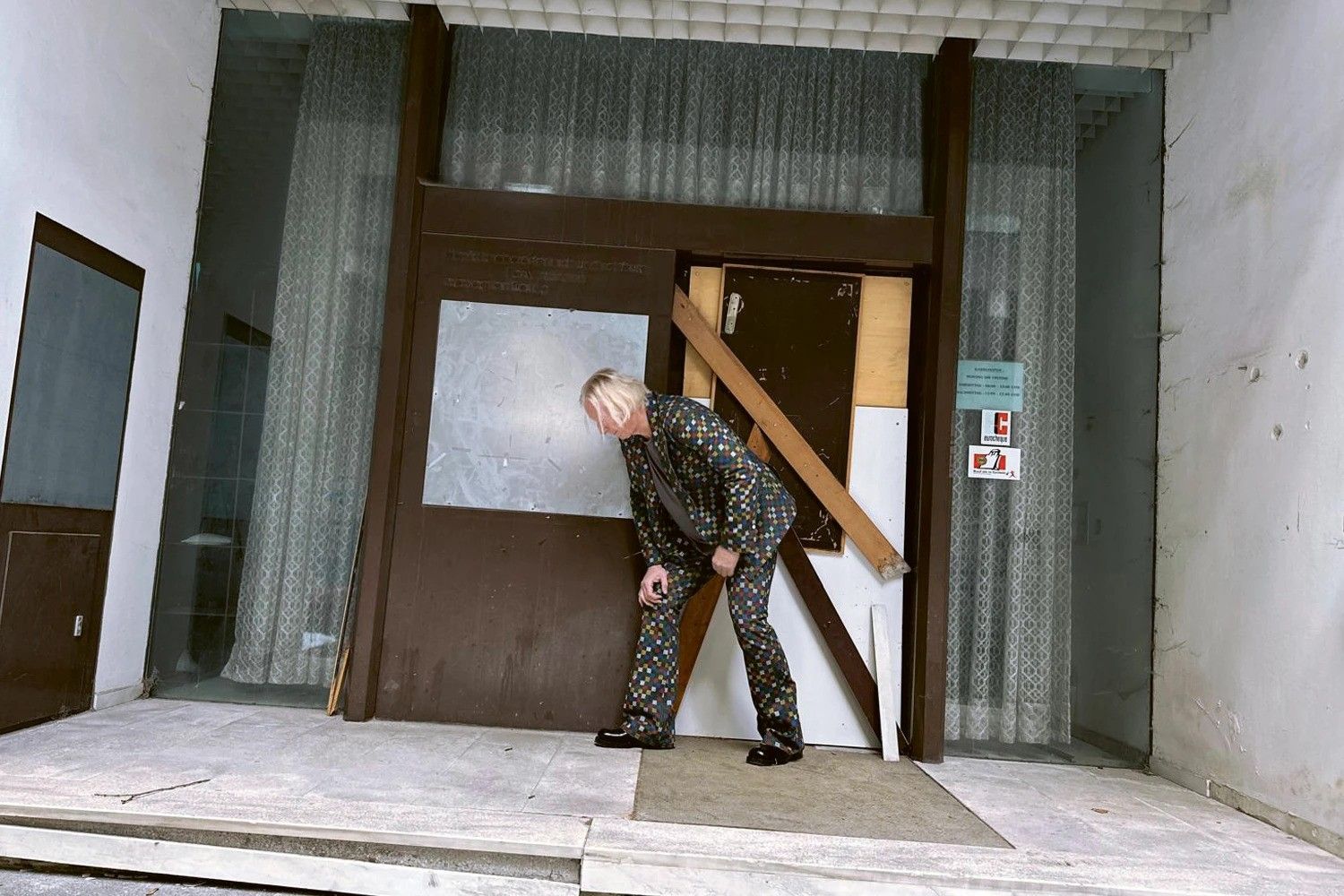
I like clean lines, sharp silhouettes, and a certain elegance. Timeless but slightly dangerous. Fashion, for me, is another instrument. What I wear helps me express the moods I am in - sometimes strict and architectural, other times darker.
On stage or during shootings, the clothes your wear become part of the performance. I am inspired by designers who understand attitude: Raf Simons, Martin Margiela, Tom Ford, Demna Gvasalia – these are just the top of the list of big inspirations here.
My personal style always included second hand clothes from the 50s via the 70s to the 80s, combined with lots of original military army clothes from all around the world.
In terms of iconic styles, David Bowie will always remain on top. But I would also mention Mick Jagger or Bryan Ferry. To me Marlon Brando, Steve Mc Queen or Vincent Golla are also untouchables style icons.
What do fashion and design add to your perception of music?
Fashion and design are inseparable from how I experience music. They frame it, give it a physical presence. When I listen to or create music, I am always aware of space, texture,and atmosphere, a design helps me translate elements visually.
Music is a multisensory experience. Fashion and design allow us to expand that world, to make it visible.
What can fashion express what music can not?
Music moves through time, it's fluid, emotional and ephemeral. You feel it but you can't touch it. Fashion, on the other hand, is immediate and physical - it shapes the way people see you, the way you move through the world.
Music opens doors to emotion - fashion walks through them and shows everyone what's inside.
Fashion and music can be expressions or celebration of identity, but they can also be an effort to establish new ones or break free from them. How would you describe your own approach in this regard?
To me, both music and fashion are tools to explore identity rather than to settle it.
When I am making music, I am not just producing sounds - I am constructing moods, worlds, personas.
Fashion works the same way. It's about pushing boundaries, testing the limits of self-expression, and sometimes giving form to identities I haven't fully discovered yet. Embracing, change, experimenting and never letting identity feel like a cage.
Does what you wear change your personality – and thus the music you create or the way you perform?
Absolutely. What I wear affects how I move, how I think. Clothes are the second skin for my creativity - they can make me feel confident, agressive, playful,or introspective. Sometimes it makes you feel sexy.
When I am performing, the outfits are part of the performance itself. They shape my presence on stage.
Are you currently active in the fashion industry? If so, tell me about your experiences, please.
This year I designed a Hell suite with a German brand called Drykorn. In 2026 I will design my first sneaker with a brand from Munich calle VOR.
When I am in Paris during fashion week, I try to visit as many shows as possible. I was at the last shows of Dries van Noten and Rick Owens is always on the top list.
Recently I also did many shootings for fashion magazines all around Europe.
Fashion extends to the artwork of releases and promotional photography as well. Could you talk about your approach in this regard and what some considerations were for some of your most recent cover designs and images?
I see fashion, photography, and artwork as part of the same ecosystem as the music itself.
A record cover or promotional image isn't just decoration. It sets the tone, frames the listener's expectations and creates an atmosphere before a single note is played. It's important that the image conveys the emotion of the music. For some recent releases I worked close with one of my favourite artists from Switzerland called Beni Bischof.
My new album cover and press photos are mostly designed by AI and myself as art director. My approach here was marrying elegance with futuristic AI art.