Published
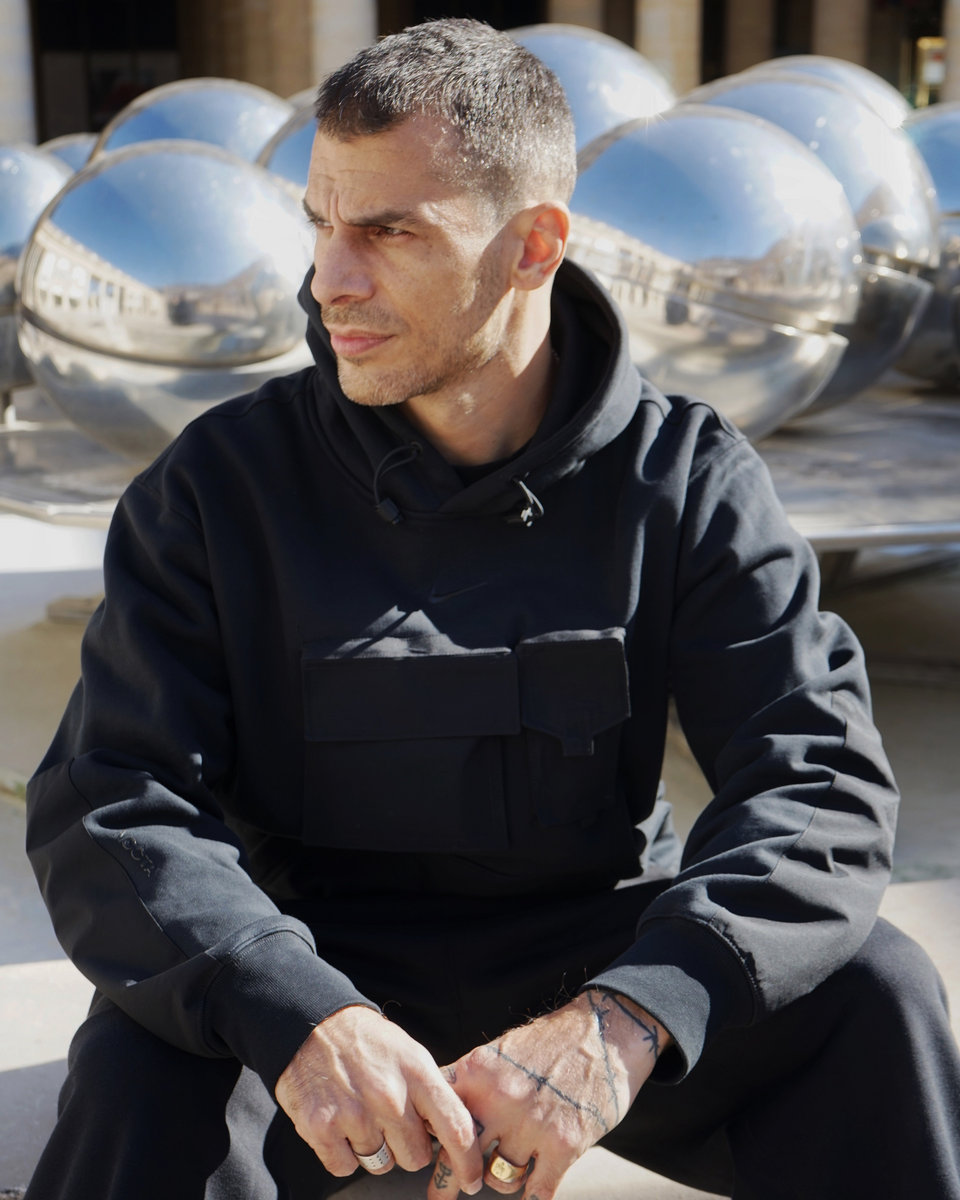
Name: Guillaume Duchastel aka DJ W!LD
Nationality: French
Occupation: Producer, DJ
Current release: DJ W!LD's new album What I Do In The Shadows is out now and spread out across two EPs on the W Label. Buy the full set of tracks at beatport.
If you enjoyed this DJ W!LD interview and would like to know more about his music, visit him on Instagram, Soundcloud, and Facebook.
Are there examples of minimalism in music that impressed you? Were you interested in minimalism as a style – from Philip Glass-style to minimal techno?
Yes minimalist composers like Philip Glass, Steve Reich, John Adams, Terry Riley, and John Cage have deeply inspired me, as have early minimal techno pioneers like Robert Hood and Daniel Bell ,Baby Ford really showed how powerful a few sounds can be.
I love the idea of creating a big impact with just a few elements—it’s about setting a mood and letting small changes keep things interesting.
Minimal house and techno do that really well, and it’s something I’m drawn to in my own music.
Especially in very minimalistic house and techno, the line between a “tool” and a carefully crafted “composition” can be a fine one. How do you see that, and the difference between “tool” and “track” in general?
As for the difference between a “tool” and a “track,” I think it depends on the listener. To someone who doesn’t know the genre, it might all sound like a “tool,” something simple and repetitive. But to someone who’s into it, they’ll pick up the layers and feel the story in a track.
A tool is often just a basic groove—maybe three minutes long—made for DJs to mix in and out. A track, though, has its own character; it’s more complete. DJs might respect a track as its own piece and play it as it is.
So in the end, whether something’s a tool or a track depends on how it’s used and the vibe it brings.
Do you tend to find that, as many claim, “less is more?” Are the notes you don't play really as important as the ones you do play?
Yes, definitely. I often strip down melodies and sounds to keep things as simple as possible.
In my music, “less is more” means giving each sound space to breathe. Sometimes, what you leave out has as much impact as what you include.
It’s all about finding that balance where everything feels right without needing to fill every moment.
Do you feel that music is a process of adding elements until it is done – or one where you chisel away pieces from something that is already there?
For me, any art is about adding until it feels right. You add sounds and colours, but at some point, you know when it’s complete.
The artist’s job is to trust their own taste and decide when a piece is ready or if it still needs work.
What were some of your starting points for your album What I Do In The Shadows?
The starting points were the title, the time period, and a melody I made with a simple two-step beat.
I remember thinking, “That’s it!” That day, I decided to make an album inspired by my UK roots.
After that, five more albums in different genres started coming together—they’ll be released soon.
In terms of the creative process, do you like to set yourself limitations? If so, what were some of those limitations for the new pieces?
I don’t really set strict limitations, but for an album, I do follow a direction and try to tell a story with all the tracks. Each track has its own feel, but I like them to connect and build something bigger together.
What were some of the most important pieces of gear for this release?
The most important piece of gear was definitely my computer.
Besides that, I used vocal samples, some samples from my records, a Roland synth, an Arturia, and some live atmospheric recordings. Each of these played a key role in creating the album’s sound.
Would you say that you approach equipment and gear with a minimalist mindset? Do you need a wide choice of instruments and tools to make music?
Not really. I started working on this album during the COVID lockdown with just my computer and speakers in St. Maarten. Later, I had access to my full setup at home.
But for me, it’s not about having a lot of gear; it’s about using what I have around me to create music.
At the core of What I Do In The Shadows are the drum loops. How do you find these loops and how do you know which of them has true 'staying power'?
I experiment a lot with different sounds and samples until I find something that sticks.
When a loop makes me want to keep listening,for ages then I know it's got that special staying power. It’s all about the vibe and how it makes you feel.
Drums seem extremely important for the W!LD sound. How do you approach drum programming, processing, and production?
I focus a lot on the rhythm.
For programming, I play around until the beat feels just right—strong and clear. Then, I process the drums to make sure they punch through the mix but still blend well with other elements.
How do you arrange these pieces?" All have a floating feeling, as if you're improvising them on the spot ...
When I arrange my music, I like to keep it loose so it feels like it's being made up on the spot. I start with a basic idea and then play around with different sounds, letting the music grow on its own.
This way, each piece can change and flow naturally, which gives it that floating feel as if it’s just coming together right then.
Tell me about the mixing of the music.
I like to mix atmospheric sounds softly so they feel like they're in the background. This creates a space in the music that feels deep and full.
It's like painting with sound, where some colors are bold and others are subtle.
What was the idea behind releasing the album in two parts?
The album cover shows it's in two parts because people can be very complex, showing different sides, good or bad.
Each part of the album explores different feelings and ideas, just like how people change. The names of the songs also give clues about what each part is about.
Would you say that minimalism extends into other parts of your life as well?
Yes, I embrace simplicity in many aspects of my life, from my living space to how I plan my day, because it helps me think clearer and boosts my creativity.
However, I also have a passion for collecting vinyl and other items that mean a lot to me. So, while I appreciate minimalism, I believe it's about more than just owning fewer things—is about focusing on what truly matters.
My approach to minimalism isn’t strict; it allows for the complexity and richness that these collections bring to my life, showing that one style or philosophy doesn’t define all of me.
Many artists are becoming more minimalist in their music as the years go on, focusing on the 'essence.' After many years of making music – how is that for yourself?
I've always leaned towards a minimalist approach in some ways, focusing on not overloading my tracks with too many elements. This allows each part to have space and maintain interest over long periods—this is my take on minimalism.
However, I'm also passionate about strong, energetic beats typical of house and hip hop, which might not seem minimalist at first glance. My affinity for vibrant drum kicks and robust infrastructures reflects my UK roots and love for these genres.
Essentially, my approach to minimalism in music strikes a balance—it's about using simplicity where it enhances the track and embracing complexity where it energizes it. This philosophy extends to how I live and consume; it's all about balance.