Published
Part 1
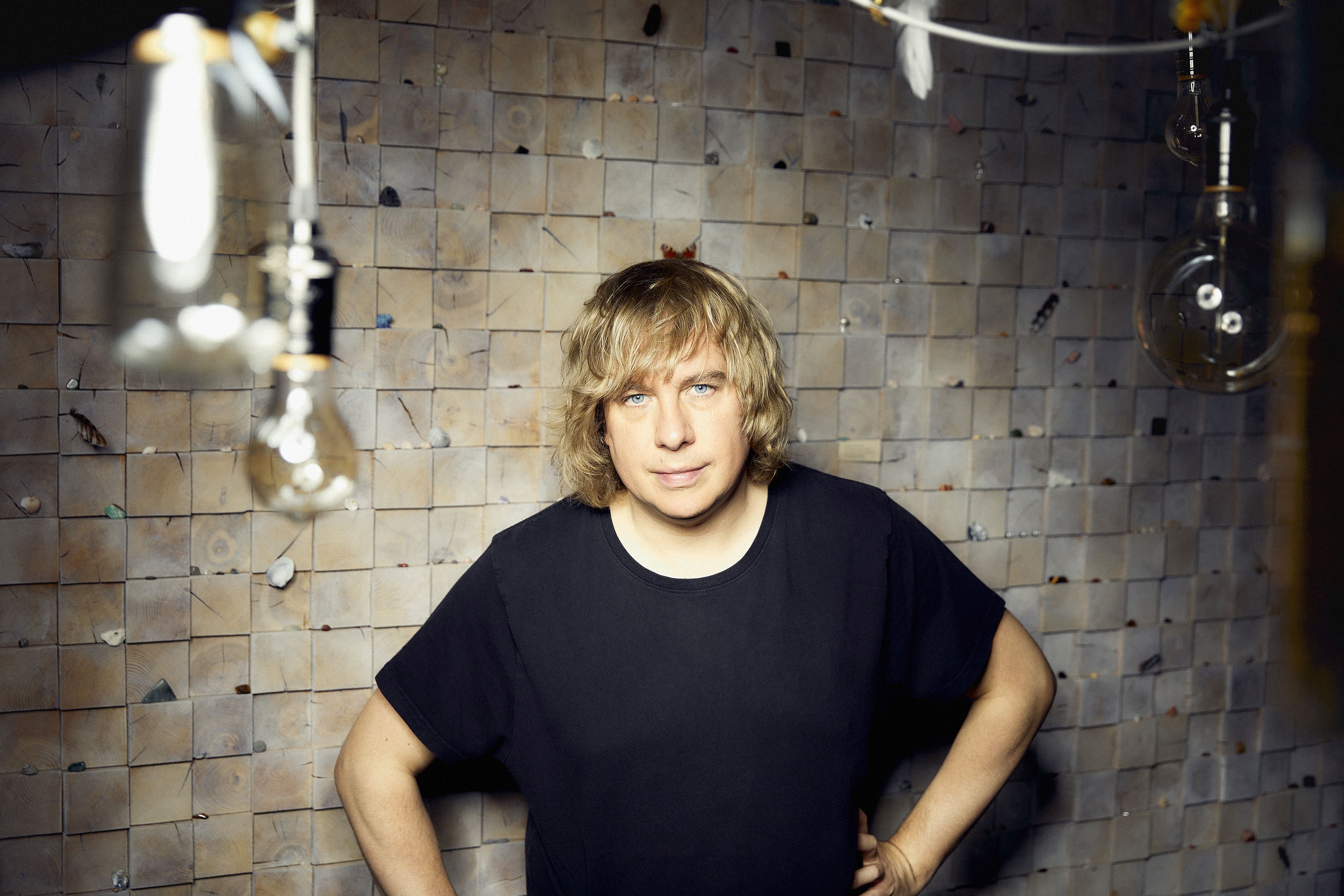
Name: Dominik Eulberg
Nationality: German
Occupation: Composer, producer, DJ, sound artist, ecologist, author
Current release: Dominik Eulberg's new album Lepidoptera is out via !K7. Order the LP here.
Recommendations on the topic of sound: For those interested in the topics I will outline from my perspective in this interview, I recommend, first, my book Mikroorgasmen überall which explores the great and small wonders right outside our doorstep and was even named Science Book of the Year in Germany.
I also recommend my book Tönende Tiere, which deals with the music of native nature. In it, I transformed native animal calls into musical notation and MIDI data, which were then used to play instruments. This transdisciplinary project is also a traveling exhibition that tours various art and natural history museums. The accompanying sculptures were created by the Leipzig-based artist Matthias Garff.
If you enjoyed this Dominik Eulberg interview and would like to stay up to date with his music, visit his official homepage. He is also on Instagram, Soundcloud, and Facebook.
When I listen to music, I see shapes, objects and colours. What happens in your body when you're listening? Do you listen with your eyes open or closed?
I listen to music with open eyes. I try to perceive music very holistically, with all my senses.
As we know today, music is older than language and is processed in the brainstem. Because of this, it also triggers very deep emotions in me—feelings that are hard to describe cognitively. They are more like instincts, or the language of an animal.
As Humboldt so beautifully put it, nature must be fulfilled.
How do listening with headphones and listening through a stereo system change your experience of sound and music?
When you listen to music through headphones, you are, of course, much more immersed in the sound, because ambient noises are filtered out more effectively. You can hear everything in greater detail and often perceive the depth layering more clearly. However, the physicality is often missing, since headphones usually don’t extend as far into the bass frequencies.
Both have their advantages and disadvantages. If it’s meant to be an intimate and very detailed moment, I like to reach for headphones. Otherwise, I also enjoy the deep bass of a subwoofer, which we can also perceive through our bones.
Tell me about some of the albums or artists that you love specifically for their sound, please.
Biosphere - Substrata, very deep transcendental atmosphere;
Caterina Barbieri - Ecstatic Computation, very distinctive ductus with the courage to leave gaps;
Rival Consoles - Persona, no one makes music like him and thus fulfils such a profound meaning in the puzzle;
Jon Hopkins - Immunity, at every level: sound architecture, arrangement, melodic structure, degree of innovation or authenticity: top of the pops!
[Read our Caterina Barbieri creative profile]
[Read our Rival Consoles interview]
Do you experience strong emotional responses towards certain sounds? If so, what kind of sounds are these and do you have an explanation about the reasons for these responses?
Since I grew up without media and anthropogenic music, I still react very strongly to the sound of nature today. For example, I almost never listen to music at home; instead, I keep the windows open and listen to the birds outside in the nature reserve where I live.
That makes me very happy, because it keeps me in the here and now, and at the same time gives me a sense of transience, of the phenological cycles—when I hear that some migratory birds have arrived, or disappeared again, or that winter guests are here, or that other species stop by only to rest.
Otherwise, I am very conditioned to natural reverberation and therefore very sensitive when it comes to artificial reverbs. Probably because I spent my childhood in a beech hall forest. My favorite reverb, therefore, is the Bricasti M7.
There can be sounds which feel highly irritating to us and then there are others we could gladly listen to for hours. Do you have examples for either one or both of these?
I find car noise and engine sounds extremely unpleasant, probably because they resemble the roar of a threatening predator.
This is also one of the reasons why I live very secluded in nature, and why traveling every weekend is a real challenge for me. I hate sleeping in hotels where I can hear traffic noise. I just sleep very poorly in such places, because every time it wakes me up and feels deeply threatening.
Natural sounds, on the other hand, I find all very pleasant—like rain pattering on a roof or footsteps in the snow. And of course, I also love the sound of waves. It has something highly contemplative about it, because it is always similar and yet always different.
That creates a sense of familiarity, and at the same time, a recurring longing and curiosity about what the next sonic outcome will be.
Are there everyday places, spaces, or devices which intrigue you by the way they sound? Which are these?
Natural sound reflections in nature fascinate me deeply. There are echoes in natural spaces when, at night, there is no air turbulence caused by rising convection heat and the level of anthropogenic noise is very low at this time.
Among everyday sounds, I especially enjoy the sound of natural bells, because it is so pure and clear.
Have you ever been in spaces with extreme sonic characteristics, such as anechoic chambers or caves? What was the experience like?
Well, I've been in recording studios that were almost completely soundproofed. It’s quite an oppressive feeling, because you hear your own bodily sounds—like ringing in the ears or your heartbeat—much louder, and this can quickly become unsettling, especially if you are hyper-interoceptive.
Besides, no one actually listens to music later in such absolutely soundproofed rooms. That’s why it was important to me, in designing my own studio, not to create a dead space, but rather a neutral, acoustically optimized room without standing waves, where of course reflections and absorptions are proportional to the emitted sound source.
At the same time, it was important to me to keep a certain basic level of reflections, in order to emulate how listeners will later experience the music.
What are among your favourite spaces to record and play your music?
My favorite place to make music is at home in my studio in the Westerwald.
For one, because I have all the sound generators I need here, collected over the course of my more than 30-year career. I also feel very comfortable and safe here and can quickly enter creative processes.
The risk of getting stuck on a single piece of material is very low, since I can engage in many alternative activities here, such as birdwatching or swimming in a lake. This is always important to me in order to gain a healthy bird’s-eye perspective and to be able to see the bigger picture.
Do music and sound feel “material” to you? Does working with sound feel like you're sculpting or shaping something?
Yes, that’s exactly how it is for me.
Making music is nothing other than selecting from infinitely many options. In order not to drown in this endless sea of possibilities, I always begin with a clear concept. Then I start creating music.
With my current album Lepidoptera, for example, the theme is butterflies. I chose my personal twelve favourite butterflies and moths that can be found here in Germany. I have a very deep connection to each of them, and I even bred them myself together with my wife. The profound emotion I feel for each species I then try to carve out like a sculptor, piece by piece.
My vision and feeling for the animal are very clear, and I hammer and chisel away until I feel that the result resonates coherently with the vibrations that have arisen within me. Interestingly, it is only through this process that my deepest intention becomes truly clear to me, and the image grows clearer, more elaborate, and higher-resolution than I could have ever imagined.