Published
Name: Kaitlin Ellwanger aka dot
Nationality: American
Occupation: Producer, DJ, label founder at Mau5trap
Current release: dot's begin again EP is out via Mau5trap.
If you enjoyed this dot interview and would like to stay up to date with her music, visit her on Instagram, Soundcloud, and tiktok.
What was the first time you were consciously impressed by technology – in and outside of music?
When I was about 6 or 7, I had a small toy karaoke machine that played cassettes and would allow me to record to tape. I somehow figured out that I could record layers of my own voice on top of one another, adding different harmonies and melodies onto this tiny loop of tape.
I was fascinated by the machine’s ability to turn one person into a small choir, and this was probably my first time experimenting with recorded music before I ever knew what a DAW was.
Tell me about one or two of your early pieces that you're still proud of (or satisfied with) in terms of production – and why you're content with them.
I’m still really proud of “No Filter,” released back in 2017 as a collaboration with Jonathan Stein.
I learned a ton from creating the Retrofuture album, and most especially from collaborating with a lot of people on TeamSupreme to bring it all together.
It’s definitely not my best production or engineering work, but the songs still feel authentic to me, and it captures a really special moment in time.
How and for what reasons has your music set-up evolved over the years and what are currently some of the most important pieces of gear and software for you?
My gear collection has fluctuated a ton over the last decade, but lately I’ve taken on a much more minimal approach; prioritizing setups that are easy to travel with, and that don’t overcomplicate the process.
I’ve learned many times over that buying the latest and greatest synths or must-have vintage doesn’t actually influence my creative output that much.
At the end of the day, it’s always my mental state that dictates the quality and quantity of music I create, and the size of my setup or gear collection doesn’t have a huge impact on results.
What are examples of production tools/instruments that you bought for a specific purpose?
I’ve really been enjoying the EP-133 K.O. II sampler and sequencer from Teenage Engineering lately.
I wanted a sampler that was compact, lightweight, and relatively low-cost to bring out on ski trips into the backcountry, and other wilderness adventures in the summer. Since my backpack is usually stuffed to the brim with food and clothes in those scenarios, it’s difficult to accommodate a laptop or other sensitive gear that doesn’t perform well in freezing temps or exposure to moisture.
I kind of view it as the GoPro of music gear – the K.O. II is a lot smaller and cheaper than my macbook, it’s easy to slip it into a waterproof bag, and it’s not as devastating if something were to happen to it while travelling.
Late producer SOPHIE said: “You have the possibility with electronic music to generate any texture, and any sound. So why would any musician want to limit themselves?” What's your take on that?
My experiences and feelings are very aligned with this statement, although I do find some types of limitations can be supportive. It’s incredible that we have virtually any sound available at our fingertips, and that there are so many music tech companies working to create products that make the music creation experience available to anyone, not just those we would traditionally define as “musicians.”
That said, it can be overwhelming to find your own unique voice or perspective within this landscape, or to even understand the value of music in our era. I’m personally very inspired and motivated by creating songs in ways that aren’t so accessible to everyone, and working in nontraditional studio environments that place some harsh limitations on what I make.
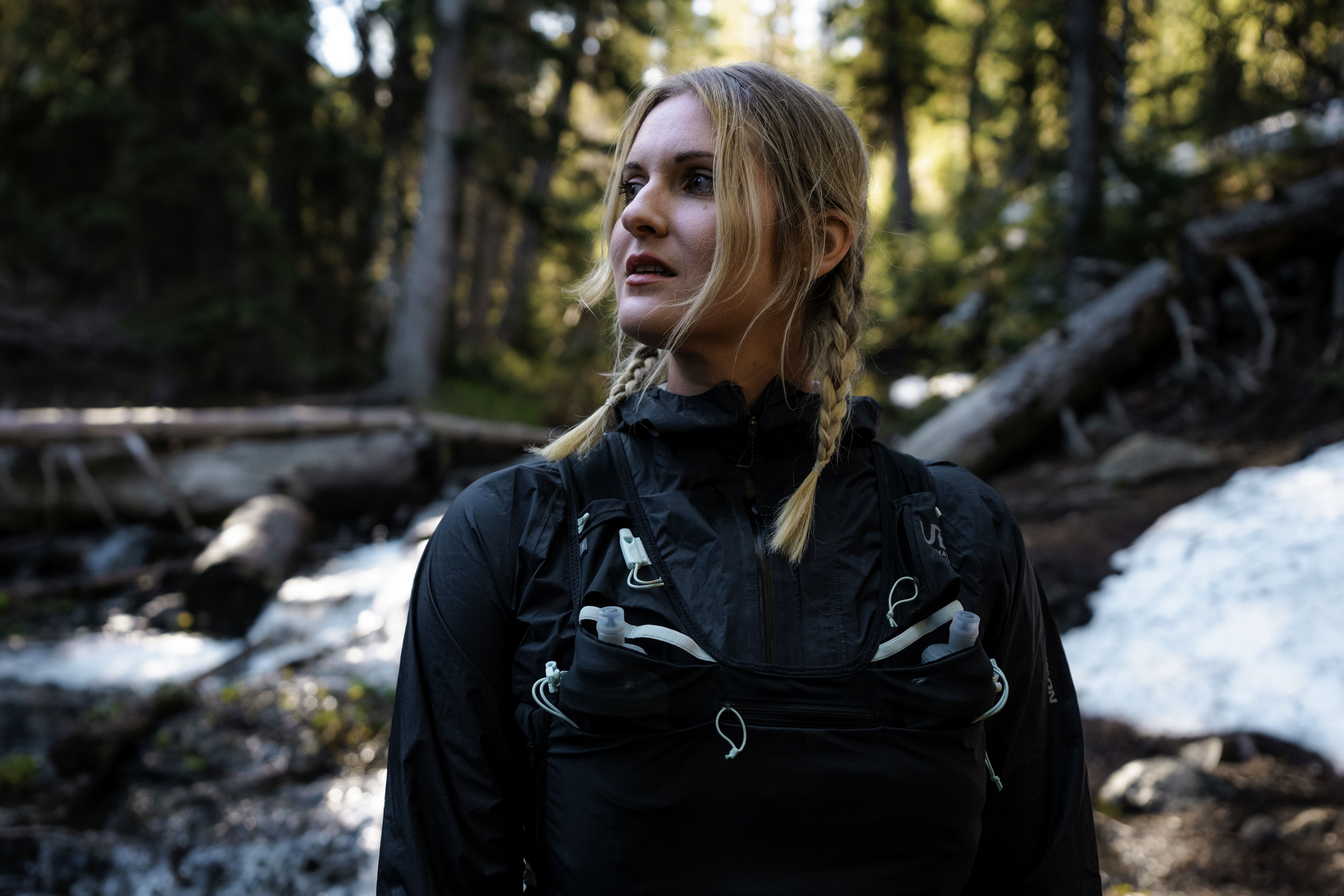
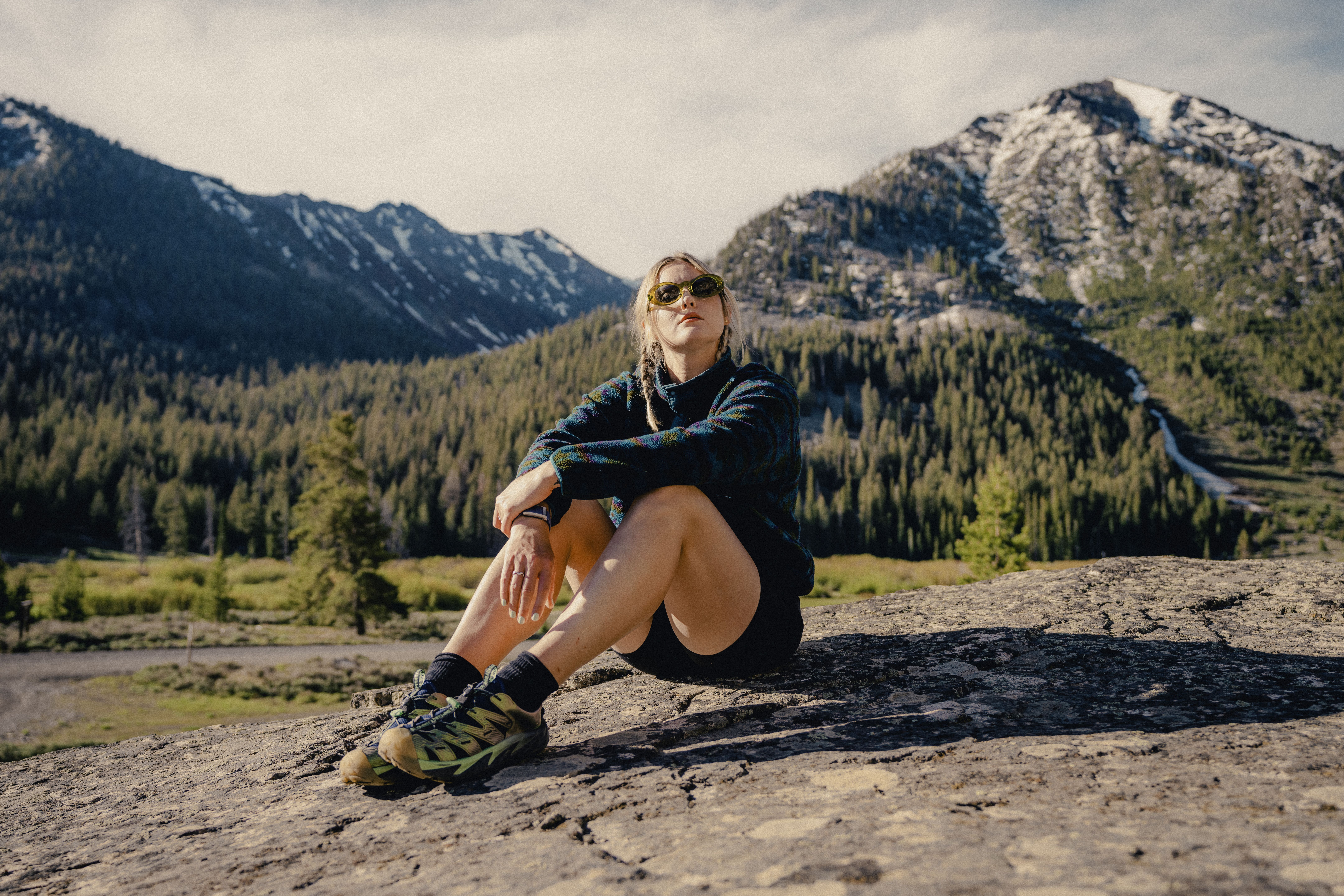
Hiking or skiing to remote areas with no cell service or power, and creating directly in the natural environments that inspire so much of my work is what I feel most drawn to right now. It limits my access to create any type of sound or texture, but it opens up doors to emotional and spiritual worlds that I personally find harder to access within the climate-controlled walls of a normal studio. 
dot interview Image (c) the artist
From the earliest sketches to the finished piece, tell me about the production process for your current release, please.
A lot of the songs were started during a hut trip in the Sawtooth Mountains in Idaho.
I brought a small ukulele, a portable recorder and an iPad to the Williams Peak yurt for a three-day solo ski trip. There is no running water or electricity up on the peak, so I was quite limited with my tools and the amount of time that my batteries allowed. But it was a successful experiment, and I eventually brought a lot of the demos that were started out there to completion back at home on my computer using Ableton.
I also wrote and produced a few of the songs live during Twitch streams, which I find helps me keep ideas moving along faster than if I’m working alone and letting the same things loop indefinitely. It blurs the lines between writing/producing and performing, and helps give an extra boost of energy to the song from time to time.
What does your own way of working with sound look like? Do you find using presets lazy?
I definitely enjoy a good preset dig from time to time, but I also find a lot of joy and satisfaction in creating my own sounds. It’s really dependent on the mood I’m in, and how much time I have available – using a preset is only lazy if you feel you haven’t given 100% of yourself to the song in other ways.
Sometimes the best sound design result comes from someone else’s craftsmanship rather than your own, and presets can be in service of the song instead of only a shortcut.
Richie Hawtin, speaking about semi-modular equipment, has stated that a deeper understanding of sound synthesis can lead to “life lessons that go beyond what we can hear.” Can you relate to that statement?
This hits close to home, especially as it relates to appreciating sounds that come from the natural world.
Years spent diving into synthesis have only made me more attuned to and aware of sounds created by plants, weather, and animals, and all that is communicated through those channels.
What were some of your most positive collaboration experiences? How did this "human element" enhance your solo approach? Did you record via filesharing or in the same room and if so, what did the recording process look like?
One of the best collaboration experiences I’ve had recently was at a writing camp for Agnez Mo, put on by We Make Noise.
Being able to work in a gender-inclusive studio environment, and not have to filter so much of my communication through the mental hoops we normally jump through as women was an unbelievable gift. To be in a room where people don’t just default to the men for final judgement or taste was such a healing and affirming experience, and all of the music that was created that weekend was truly on another level of beauty and honesty.
To some, the advent of AI and 'intelligent' composing tools offers potential for machines to contribute to the creative process. What are your hopes, fears, expectations and possible concrete plans in this regard?
I’m doing my best to keep an open mind about what this technology offers. It’s easy to fall into the negative discourse around AI and feel hopeless about the future as an artist, but at the end of the day, it’s always up to us as to how we use the tools we are given.
We can write ourselves into a distopia just as easily as we can use intelligent tools to uplift our work. The future is just as beautiful as it is frightening.