Published
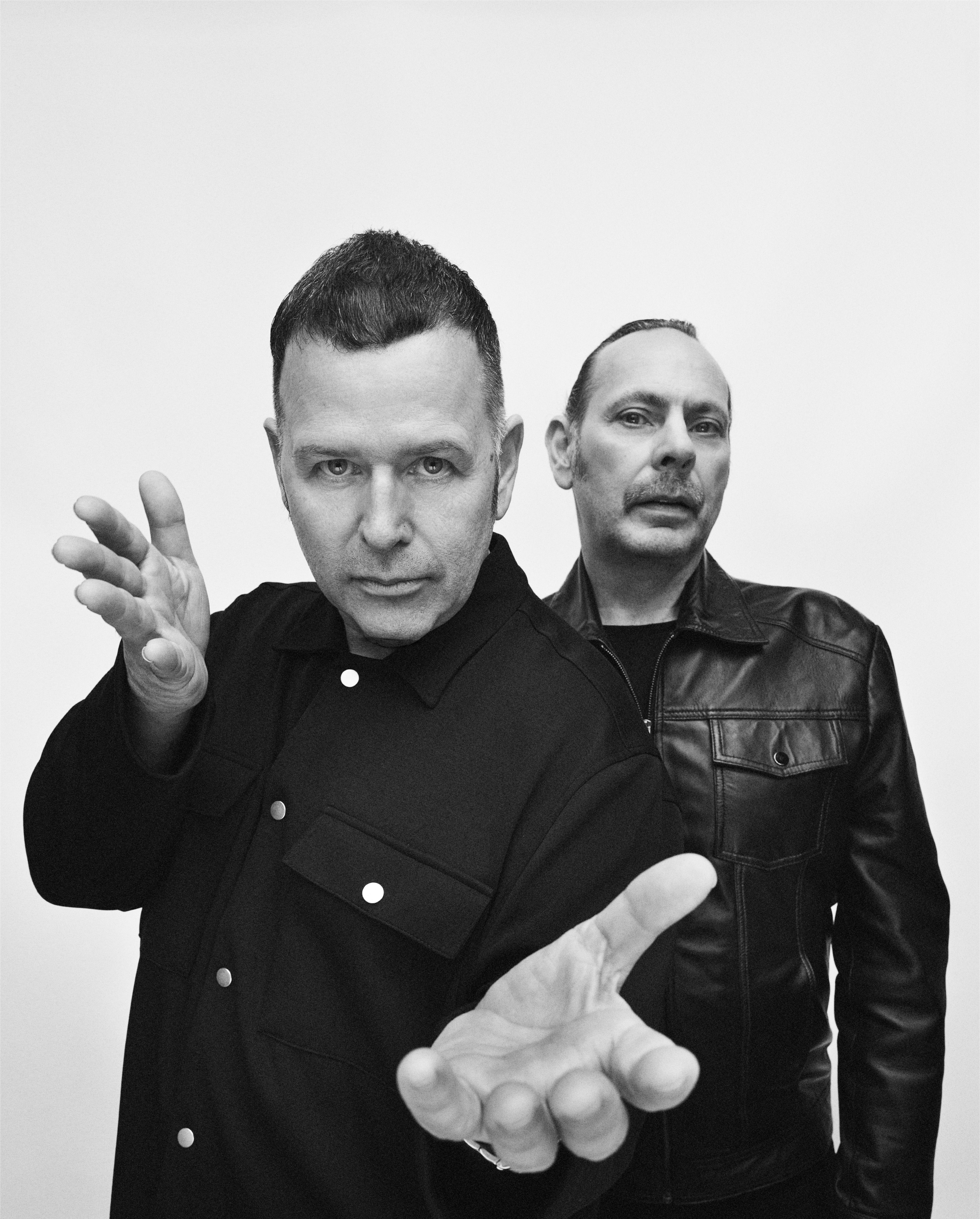
Name: D:Ream
Members: Peter Cunnah, Al Mackenzie
Nationality: Scottish (Al), Northern Irish (Peter)
Current Release: D:Ream's new full-length album Do it Anyway is slated for release August 8th 2025 via Chrysalis. The title track is out now.
Current event: In support of the album, D:Ream will embark on a UK tour. Catch them live here:
JULY
5th - Saffron Walden, 8 Day Weekend
AUGUST
8th - Cheshire, Deva Fest
17th - Hardwick Festival
23rd - Framlingham, The Summer Festival
SEPTEMBER
26th - Eastleigh, The Concorde
OCTOBER
4th - Silsden, Town Hall
Global recommendations:
Peter: Derry’s mural tradition has evolved from sectarian to cultural. You’ll find stunning murals of the Derry Girls, The Undertones, and more.
Stagger through the bars, catch some jazz at the festival, and walk the Derry Walls. You’ll meet spirited people who came through the mangle of the Troubles with a smile and a song.
Al: I’m from Edinburgh. I can highly recommend Mary King’s Close, the underground city on the Royal Mile. Trust me on this, you won’t regret it.
Things I am passionate about but rarely get to talk about:
Peter: House Martins – the birds, not the band. These fast, acrobatic little creatures return to us every April. They’re protected, but people still knock down their nests. I’d love to see more education about their value. I stand on my balcony looking out over Swilly Lake and marvel at their defiance, their beauty, their sheer joy in delichon. x p
Al: I’m passionate about a few things. However, I talk so much I tend to let everyone know about them!!
If you enjoyed this D:Ream interview and would like to know more about the band and their music, visit their official homepage. They are also on Instagram, and Facebook.
For a deeper dive, read our earlier Al Mackenzie interview, in which he expands on his production work.
Where does the impulse to create something come from for you? What role do often-quoted sources of inspiration like dreams, other forms of art, personal relationships, politics etc play?
Peter: I'm asking myself that question all the time. I'm actually tortured by thoughts – I can't even go to the bathroom in the middle of the night without a melody or a lyric popping into my head. Often I wonder, is it even mine? But I always put it into Voice Memos on my phone just in case.
I've exercised that part of my brain so much it's twitching even when I'm supposed to be switched off. I remember Prince saying the worst thing is trying to get one idea down before the next one comes along – I really empathise with that.
Al: I seldom write from personal experiences. Don’t get me wrong, I have, but it takes something very major for that to happen.
Having been in music for so long now, it’s almost like a job sometimes. I know I’ve got to make a tune so I sit down and get started!
Do you need concrete ideas or visualisations to get started, or do you follow instinct?
Peter: For the last few years, it's mainly instinct. I follow the trail from a voice memo. I drop it straight into Logic and work around it. I’ve found that if I skip the conscious brain and let the unconscious go straight into the session, I can preserve the original magic.
Back when I was writing commercially, I’d always start with a title. That was the key – unlocking the whole meaning of the song. The artist was the goal.
These days, working with Alan, it comes from all angles. Like I said earlier, you just have to be listening when the inspiration shows up. It's like having your own little radio station that only plays to you.
Al: With the band, I do like Peter to have something started that I can get my teeth into. Whether it’s a lyric or a bit of a melody. We have done things from scratch but I do like to have a starting block.
I can go mad from there sometimes, certainly lyrically. I just need that spark
Is there a preparation phase? Do you need everything in a certain way to begin?
Peter: Yes, definitely.
Al: Definitely not. There are loads of early versions of tracks though as it is a process. We work on something, leave it, digest it and go back with fresh ideas. It’s not often something gets started and finished really quickly.
It has happened though. ‘Make love Cool Again’ from the last album springs to mind where we were, pretty much, done after a couple of days.
Peter: I’ve got a palette of sounds – synths, drum loops, audio snippets I love and keep coming back to. Alan’s got crates of records for inspiration too. I like my space to be clean, everything working, all distractions switched off.
I was writing with Marcus Fines once, and mid-session, he started answering phone calls. I was horrified. I pulled him up on it and he never worked with me again – his loss.
Any rituals that help you enter the right mindset? Coffee, scents, light, poetry, exercise?
Peter: Always a buzz before a session starts. I make sure the studio’s in good shape. I’m a coffee snob so that’s lined up first – best beans, no compromise.
Al: Hahaha, yes - coffee. Lots of it.
Peter: We always have a good chat and a laugh before we begin. If you're in a bad mood, you're not going to create anything worthwhile. Children only play when they're happy – same goes for music.
Al: I also tend to do a bit of a workout in the morning, before heading down to the studio. We spend so long in there each day, it’s nice to feel I’ve done some exercise and not sat on my arse all day.
For Do it Anyway, what did you start with? Were there any conceptual considerations?
Al: We, kind of, kept working after the last album. Pete had several ideas down and we went through them, one by one, getting tracks to a decent stage, then going on to a new one. New tracks were also started whilst we were doing this.
Peter: We did consider a 20-track double album at one point, but realised we’d bitten off more than we could chew. Whittled it down to 13, and only 12 made the cut.
Al: When we got over-excited about something new, we would drop others and get stuck into that one. There isn’t really a set structure to what we do. It’s all quite off the cuff. (I’d say organic, but I don’t like that phrase!)
Peter: The line between this album and the last is blurred – Alan and I are both prolific so a lot of what’s on here has been fermenting for a while.
Take "Pedestal" – it’s had time to mature, like a good wine. The album is really the best of what we agree on. Loads of good ideas got left on the shelf.
How did the material develop and take its final form?
Peter: Some songs came directly from my scratchy late night ideas – "The Geek Who Rules the World" (our next single) started as an idea from a dream. That meant it needed a house rhythm, a chugging bass, soaring strings, funky guitar, and jangly piano. We toyed with our house music roots there.
Others, like "Jump On It", started as one thing and became another. I wrote it but Alan wasn’t feeling it – except the drums. He rewrote the chords in a George Michael style and added a Prince-style guitar lick. From there, it took off.
We don’t really sample much. It’s more like we absorb artists we love and steal from them via memory, not directly. Always with respect.
What makes lyrics good in your opinion? What are your ambitions and challenges as a lyricist?
Al: I like lyrics to create images in your head and to make some kind of sense. I’m not a fan of the banal, ‘Baby, baby, let’s make love’ kind of thing. I’m also not a fan of using words for the sake of it just to make them rhyme, especially getting tenses wrong. I’m a bit anal like that.
I do understand why it’s done but it winds me up. I would like people, those who, actually, bother to listen to lyrics, to think ours were passable. I don’t expect we’ll ever be compared to Lennon/McCartneyor Dillon but that’s ok.
As long as we’re not put in the same bracket as The Venga Boys or the like, I’ll be happy.
Peter: For me, it’s all about economy. Morrissey, Paddy McAloon, Seamus Heaney – they’re my guides.
The space between the lines is just as powerful as the words themselves. That’s why I struggle with rap – it’s too fast, too much information at once. I need time to absorb and enjoy.
Are there themes you return to in your writing?
Al: The usual. Politics, screwed up relationships, not so screwed up relationships, love and reminiscing about the old days!
Peter: Jo Jo Desmond, who shared the stage with us for a few years, once said there was a religious undertone to my lyrics. Dom Phillips, bless him, said they were vaguely profound. Both of those observations tickled me.
Alan and I love ideas that make you think and feel – we mix social commentary with a bit of cheekiness and sexiness. We like to explore the extremes – light and shade.
Do you keep control of the narrative or follow where it leads?
Peter: In my younger days, yes, I tried to control it. Not anymore. Now we follow instinct. If it goes too far in one direction, we just laugh and course-correct. That kind of need to control is rookie stuff.
Al: 100%, following things where the lead. No other way for me.
How would you describe the creative state? Is it spiritual for you?
Peter: It’s my favourite part of the whole process. If I could just sit and write songs and get them into demo form all day, I would. But life and promotion drag you back into the world.
When the world’s going mad, I find sanity in songwriting. That sacred little space is home.
Al: I’m nowhere near that stage, creatively. I’m not very spiritual though. In fact, not at all.
Once a piece is finished, how do you evaluate it? When do you know it’s done?
Al: It’s very important. The only problem is you are never, ever truly happy with a piece of work. There is always something you hear that you think you could improve. It never ends.
Peter: I once asked Dave Stewart from Eurythmics that very question in Number 10 Downing Street, of all places. I said, "When do you know an album’s finished?" He said, "Pete, you never know when to finish an album – only when to abandon it."
That still rings true.
Do songs need to fit the theme of an album?
Peter: Not always. We’ve only done a few EPs. They help keep momentum, but they don’t take away from the main body of work.
Al: It’s a very interesting and difficult question, though. We make tracks for an album. Each track has its own individual meaning. There is no question, that when we put the whole album together, we try and make them flow.
Sometimes tracks will be taken away from the album as they don’t quite work with the others so, in a way, they do need to be consistent with the larger whole. It just isn’t a consideration at the beginning of the process.
What’s the balance between composition and production in your music?
Peter: Legally they’re separate, but in practice they’re inseparable.
Production is everything now. You could have the weakest lyric in the world, but if it’s delivered with conviction and produced just right, it can be massive.
Al: They all have equal importance. On the last album, Peter had, pretty much, written all of ‘Many Hands’ but it didn’t seem to be working even though all the individual parts were there.
He left me with it for half an hour and I just moved some of the arrangement about. Ultimately, not very much done but the difference in the track was amazing. He, initially, thought I’d done more to it than I had but all I’d done was moved a few bits into different places.
Again, mixing and production are really important. A great track can be compromised if it’s mixed poorly. Some very average tracks sound great with a decent mix, so it’s very important to get the balance right
What role do images and artwork play in your work?
Peter: Massive. I have chromesthesia, so sound and colour are wired together in my brain.
I challenge anyone to open the gatefold sleeve of War of the Worlds and not be transported by it. Concept albums with visual storytelling – that’s the stuff I love.
For our album Do It Anyway, the line "Russian roulette and it’s your turn on the gun" stuck with me. I had a dream of a roulette wheel spinning, and when we lifted it off the table, there was the barrel of a gun underneath. That became the basis for the artwork.
Al: I’m not too fussy when it comes to this. I like the imagery to look nice but am more concerned with the music. I’d be happy with a plain, single coloured sleeve with the band name and title on it.
Minimal is good, as far as I’m concerned.
After releasing music, do you feel a sense of emptiness? How do you move forward creatively?
Peter: Yes – finally someone asks this!
The build-up is intense, and there’s always a come-down after. I either throw myself into live work or escape somewhere warm for a break.
Al: I have enough drama going on in my life, generally, to help alleviate such feelings! We, also, normally have a few of those tracks that didn’t make the album around so we can get on with them.
I have my own label too, so tend to be able to do a remix or something to keep me busy.
Any listener feedback that surprised or moved you?
Peter: Nothing prepared me for hearing that people walked down the aisle to "UR the Best Thing".
Even more humbling – that some buried brothers and sisters who died of AIDS to the sound of "TCOGB". That’s stayed with me.
Is writing music inherently different from making something like a great cup of coffee?
Al: Well, it is different. Music is such a personal thing that should be unique to the person/people making it. Yes, there are formulaic tracks with little soul about made for money or aimed at a certain demographic, but they are like that cup of coffee you mention. There is a formula/process to making them. Follow the instructions and, bingo, you have it.
‘Proper’ music isn’t like that. You do whatever you feel is right and it’s not really aimed at anyone else. You love it and it would be lovely if others did but, ultimately, it doesn’t matter if they don’t. It’s an extension of yourself, a part of you even. When people do get it, it really is a bonus.
Peter: The Japanese tea ceremony – sado – is art, mindfulness, philosophy, and hospitality all in one. So in that regard, I don't think it's so different. You’ll often find me singing while making coffee.
In fact, I wrote a song we’ll never record as D:Ream called “Life Is Too Short to Drink Shit Coffee.” Says it all really.