Published
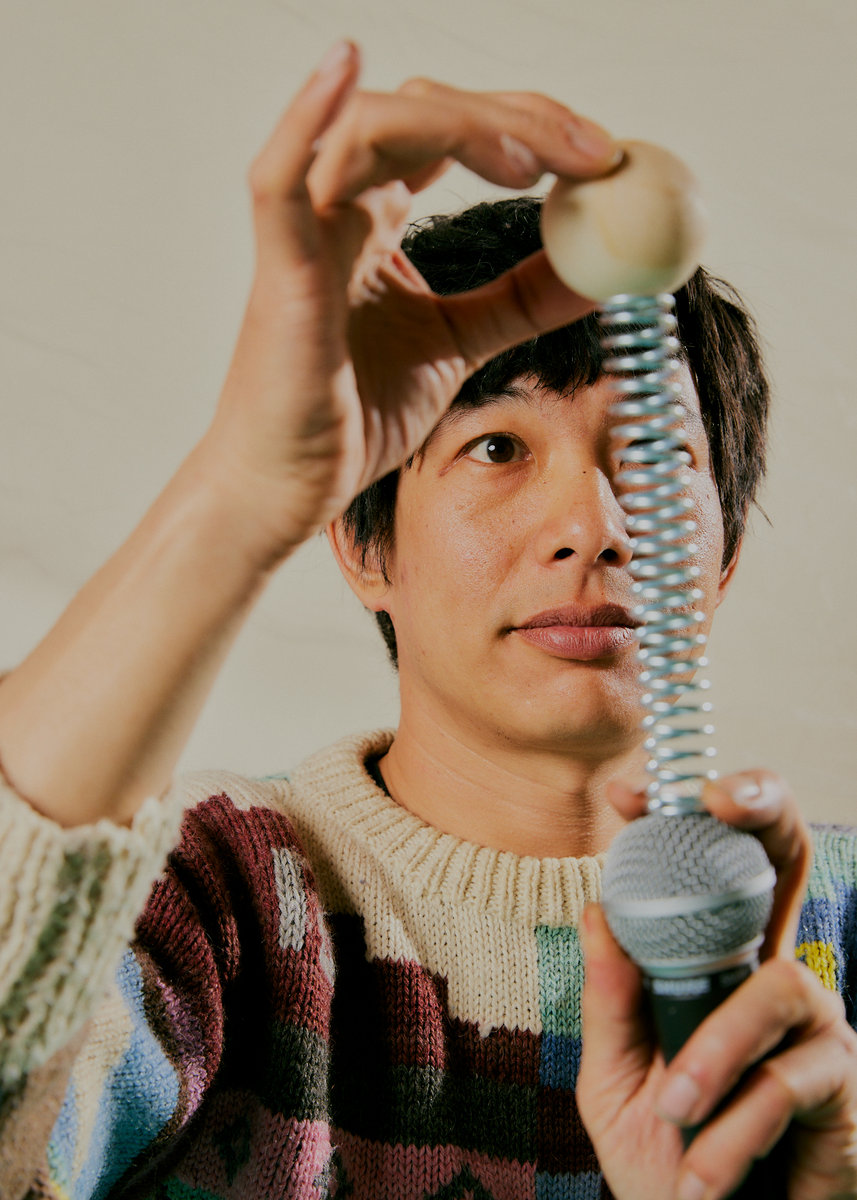
Name: Dustin Wong
Occupation: Guitarist, composer
Nationality: American-Japanese
Current release: Dustin Wong teams up with Gregory Uhlmann for Water Map, out September 6th 2024 via Otherly Love.
Recommendations: I really love Old Path White Clouds, by Thich Naht Hanh; And I love the paintings by Yves Tanguy
If you enjoyed this interview with Dustin Wong and would like to know more about his music, visit him on Instagram, and twitter.
For a deeper dive, check out our earlier Dustin Wong interview.
Do you think that some of your earliest musical experiences planted a seed for your interest in improvisation?
I had a complete misunderstanding of how music was made when I was 12-13 years old.
I thought every modern recording and compositions were all made through improvisation. I genuinely thought musicians communicated telepathically, and I would be listening to like pop punk bands like NOFX and thinking that’s how they made their music and be wowed by that.
When did you first consciously start getting interested in musical improvisation? Which artists, teachers, albums or performances involving prominent use of improvisation captured your imagination in the beginning?
I went back to Japan to live there from 2012-2019 and a lot of the shows had a proposal for an improv session at the end, with everyone on who was on that bill on that particular show.
I was incredibly new to this and extremely clumsy but as I kept doing it I could get a better sense of when to restrain and contribute.
Tell me about your instrument and/or tools, please. What made you seek it out, what makes it “your” instrument, and what are some of the nost important aspects of playing it?
I was really influenced by my friend Matt Papich who lives in Baltimore, we were actually a guitar duo when we started but when I left he started venturing in to electronics, sampling, performance art inspired by Fluxus.
I remember hanging out with him and he was making an audio flyer for a show that night, he just got his sampler and just went for it in a concentrated 10 second span, and it was complete and incredible. That was definitely a moment for me.
After some searching the Korg Microsampler became that thing for me. Recording sounds with a microphone and you can play your samples chromatically, it has been so fun to play with
How would you describe your own relationship with your instrument – is it an extension of your self/body, a partner and companion, a creative catalyst, a challenge to be overcome, something else entirely?
The guitar feels more like an extension for sure. I have been playing the same guitar since I was 15 years old, and now I am much older. It feels very natural for me.
On the other hand the keyboard and effects pedals feel like I am driving an airplane or a space ship. So in a sense there is an augmentation, and the goal is to develop a kind of second nature in approaching the electronics.
Derek Bailey defined improvising as the search for material which is endlessly transformable. What kind of materials have turned to be particularly transformable and stimulating for you?
I really love the zen gardens in Japan, and the whole idea of ma or space. The cut bamboo on a little pond filing up with water and dumping through inertia, makes a sound in the midst of the leaves moving in the wind and intermittent conversations between birds.
I live on a intersection near downtown Los Angeles, and there are a lot of sounds that happen here. I have begun to appreciate the unintended compositions that arise from the cars that woosh by while a pop song is playing that lasts maybe 5 seconds, some screaming, chants from the tamales lady from her compact car, and the sirens of various vehicles.
For me there is a connection there, in rhythm and pattern, they are different environments and sounds, yet they share something sublime and subconscious.
Do you feel as though there are at least elements of composition and improvisation which are entirely unique to each?
I have always enjoyed the term “instant composition” that I believe Can, the band, came up with.
I also have been toying with the words free co-operation rather than free improvisation.
Based on your own work or maybe performances or recordings by other artists, do you feel that there are results which could only have happened through one of them?
I think, the what if, is always there. Especially if you are improvising, the patterns and layers might follow a kind of motif yet it varies and its different.
Greg and I recording this record on a rainy day was a huge part of the sound. What would of happened if we came together on a sunny day, I don’t think it would of sounded quite like that.
When you're improvising, does it actually feel like you're inventing something on the spot – or are you inventively re-arranging patterns from preparations, practise or previous performances? What balance is there between forgetting and remembering in your work?
It almost feels like the patterns and moves you have developed throughout the years are trying to find a new pattern and a new move, for the sake of a new landscape.
My memory isn’t what it used to be, I used to be able to remember parts really well. I had to think of a new method once I started realizing this. The idea of working off motifs from my palette became way more useful for me in the recent years.
Are you acting out parts of your personality in your improvisations which you couldn't or wouldn't through other musical approaches? If so, which are these? What, would you say, are the key ideas behind your approach to
improvisation?
I always want that space to feel safe. I want that space to be a place of making something rather than presenting something.
When that is successful it really feels like I just came out of a hot shower or a spa.
In terms of your personal expression and the experience of performance, how does playing solo compare to group improvisations?
Group improvisations are more challenging, especially when the number of players grow. One person can pick you up or challenge the idea that’s being laid out.
Oddly, I tend to that to myself when I play by myself as well. Of course you have more control when you are along but there is a tendency to disrupt yourself in order to push yourself.
In your best improvisations, do you feel a strong sense of personal presence or do you (or your ego) “disappear”?
I have had that feeling of disappearing but the awareness is still there, I can see my fellow players, hear and feel.
There might be a non verbal exclamation or feeling of, “YES” in my mind as it is happening.
In a live situation, decisions between creatives often work without words. From your experience and current projects, what does this process feel like and how does it work?
The applications of resonance, of present.
Stewart Copeland said: “Listening is where the cool stuff comes from. And that listening thing, magically, turns all of your chops into gold.” What do you listen for?
When a group of people listen and search together, it creates that fluid place.
And within that place or space we all listen to find those indentations that are in the shape of our expression and identity.
There can be surprising moments during improvisations – from one of the performers not playing a single note to another shaking up a quiet section with an outburst of noise. Have you been part of similar situations and how did they impact the performance from your point of view?
They are so important, they can bring so much excitement.
There are moments when things are feeling a bit stagnant or still in a not so dynamic way, they can resurge or re-energize the group through these disruptions. Like a child interrupting a parent’s argument with something simple, poignant, poetic.
I have always been fascinated by the many facets of improvisation but sometimes found it hard to follow them as a listener. Do you have some recommendations for “how to listen” in this regard?
I think it's about peripheral and focused listening, like letting your eyes take in the whole picture rather than an aspect of it.
Sometimes forgetting what instruments are in general could help, just accepting sound as sound.
In a way, improvisations remind us of the transitory nature of life. When an improvisation ends, is it really gone, just like a cup of coffee? Or does it live on in some form?
Caffeine stays with you for a little while after you drink coffee.
The impressions of improvisations are similar I believe, the psyche does feel a little different after experiencing something, organic, playful, experimental