Published
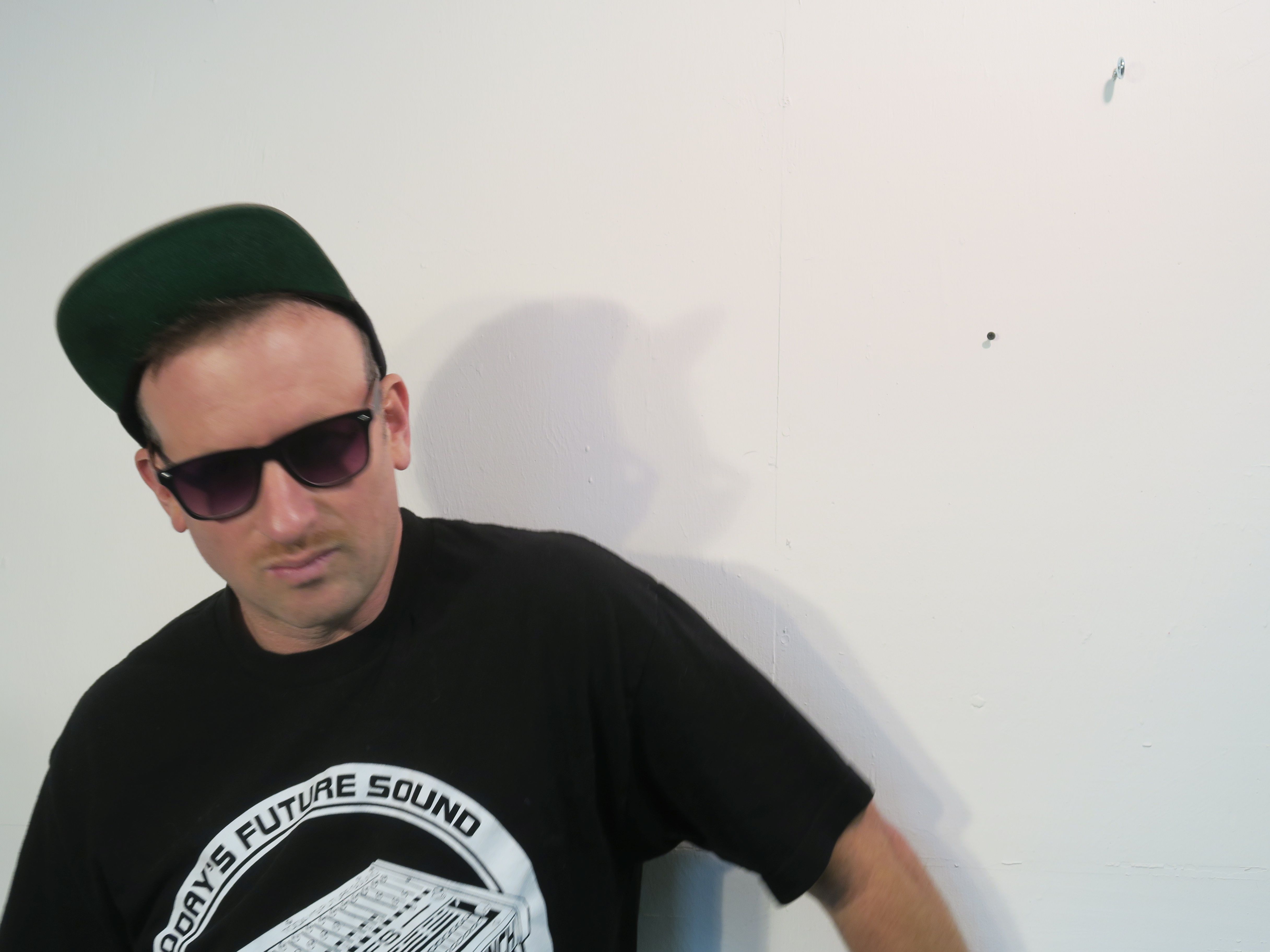
Name: Eli Hurwitz aka E. Live
Nationality: American
Occupation: Producer, multi-instrumentalist, label founder at Star Creature
Current release: E. Live's new album Boogie for Life is out via Star Creature.
Recommendation for Oakland, California, USA: The Big Easy. Solid little upcoming venue in the North bay
Topic I am passionate about but rarely get to talk about: I feel strongly about social justice. But it seems to always be the topic in some way these days so I get ample time to speak on it.
If you enjoyed this E. Live interview and would like to stay up to date with his music, visit him on Instagram, Soundcloud, and bandcamp.
The path to becoming a producer is a process - but from many interviews, I am under the impression that there are nonetheless one or a few defining moments. If this was the case for you – what were they and why were they so incisive?
I remember back when I was mostly rolling with hip-hop producers and considered myself a hip-hop producer. A time when I was purposefully downplaying my skills playing instruments.
I was sharing a track with my crew at the time and they all thought it was dope, except that they agreed there were too many Tom rolls and cymbal crashes. Hip Hop doesn't have that stuff.
In my mind, I realized that was the end of being a hip-hop producer since my tracks were just too instrumentally busy and musical.
Tell me about one or two of your early pieces that you're still proud of (or satisfied with) in terms of production – and why you're content with them.
I’m content with all of my early releases, except when I look back I would have mixed them differently based on my evolved ear and wider grasp of mixing.
And obviously I’m most proud of the ones that have become the most popular. LOL … “Do me like That,” “Feeling Nervous.”
The track “Everybody” didn’t get as much attention but I’m proud of it because it because it translates pretty well on stage and can get the place jumping.
In how far, would you say, was your evolution as an artist connected to the evolution of your music set-up and studio? Were there shared stepping stones?
My music studio setup is a huge part of my ability to produce the way I want. If I wasn’t, in my studio I would feel like I'm rubbing two sticks together to make fire.
Inside Ableton is where the magic happens for me. I have a bread crumb style system of saving and remembering patches. A good patch/preset, aka adjusted/saved setting on a synth, can make a track. Having dope patches is like having the right wrench under the hood if you are fixing a car. Quick access makes all the difference for catching a good idea. I don’t want to be adjusting a preset over and over again to get the vibe quickly.
Another crucial part of my setup is having a bass sound for my left hand and keyboard sound for my right hand when I compose. I do that every time I compose with no exceptions. When the bass and keys parts are made at the same time the groove is most excellent.
There are artists who can realise their ideas best with a traditional – or modified – piano interface, others with a keyboard and a mouse, yet others by turning knobs or touching screens. What's your preferred and most intuitive/natural way of making music and why?
I start with a beat I play from a drumkit sampler pad patch I've assembled to sound a certain extra styled way within Ableton. I’ll lay down a shorter drum loop that feels funky and has some urgency. Then, on top of that, I start banging out experimental grooves of bass and keys with both hands on my trusty studio synth controller board.
When I like what I hear, I attempt some solid takes. And when I have found a great take, I’ll keep that and move onto adding some choice melody accents on a lead patch or synth strings. Each part I add needs to add some pleasure to my amusement of the new song.
When I have fleshed out some choice parts I’ll go back and play drum pads like a drumset over the groove to give it more of a live feel and an extended drum take offering.
Tell me about the space of your current studio/workplace and how you've set it up to optimise creativity.
I have a simple stereotypical set up with a big screen and keyboard in front of it.
Oddly, I position my studio speakers in front of my desk so they would resemble two giant headphones, instead of positioning them against the wall in normal fashion. I like the accuracy of being so close to the speakers and I just keep the volume lower.
Also I like sounds from different competing programs so I keep 2 computers going, one with Ableton and one with Logic so I can switch off. But I always arrange in Ableton even though some sounds in logic are very dope and simply must be available.
From the earliest sketches to the finished piece, tell me about the production process for Boogie for Life, please.
The new group of songs I’m working on right now are my most ambitious. I want the drums to be extra crisp and retro sounding with urgent live dynamic hi hats, thumping dead toms and a little hint of classic drum machines, similar to the classic disco and funk set ups of the early 80’s.
I’m using a retro live fender bass sound for playful ear grabbing bass articulations and darker more threatening synth bass sounds. Paired with that I want a phased out lush but tight keyboard patch that's going to undulate as I play it for maximum groove effect.
I want my leads to cut thru with a compelling line that further accentuates the components of my tight groove set up by the rhythm instruments. All this with a heavy dose of live and virtual guitars. The combo of both can really give me my guitar fix which I need daily.
A few arrangement changes in there and it would be on to experimental mixing and mastering with plugin recreations of classic gear like the 70s dolby compressor units. I don’t like to use any virtual recreations of modern gear. I am really a nerd for plugin gear that strives to recreate retro mixes. But I do admit I don’t use much outboard rack gear mostly because there are so many dope virtual offerings of classic gear that sound close enough to satisfy me.
My favorite mixing plugin right now is the Type A, by audiothing. It’s a recreation of the Dolby mastering unit that everything went through back in the 70s and 80s, so it just gives you that immediate retro mix straight to the main vein. I don’t use virtual tape plugins because you can just simply lower the EQ highs and get the same muffled effect.
Late producer SOPHIE said: “You have the possibility with electronic music to generate any texture, and any sound. So why would any musician want to limit themselves?” What's your take on that?
Well my desired effect is very dense. Any one patch won’t do it for me. I want a specific virtual band sound available to me in my studio. With the sound of each instrument boiled down to its most ear grabbing state, as far as that CLASSIC sound.
I’m very much virtualizing a time machine environment in my studio. I get to go back in time when I’m manoeuvring the controls of my studio vehicle. If there is a wild new sound I can integrate, I will use it very sparingly like a hot sauce, only requiring a tiny drop for maximum sound heat.
Tell me about your aesthetic preferences for picking effects like reverb, delay, compression, chorus etc … - what was the role of these effects in the production of your current release?
One nice reverb on an aux bus is all I need, like an Arturia classic plate verb. And a little isolated reverb unit on the snare.
Delay - I’ll use choppy brass only to get a nice extended rhythm effect.
Producers work with sound in a very direct way for very long stretches of time. What are some of its qualities that you appreciate now more than before, and how do you try to bring these to the fore in your work?
I don’t consider myself an ambient textural sound thinker. Sound in the raw sense is not as interesting to me as the theoretical instrumental components of a great composition performed in different ways with different sounds.
Music for me is about cultural statements within the lexicon of late century recording techniques. Aka the hippie movement, the classic hip hop era, disco, 80s funk etc.
It all boils down to being defiant and making anti- establishment statements subtly.
The current production process allows for fast and infinite variations. Can you tell me about how you deal with this potential for the infinite and what ultimately decides on how many iterations to create and which version to release?
It’s easy. If it sounds slick and modern my internal corny alertometer starts flashing.
If it sounds raw and retro and humanly urgent I'm pleased.
Tell me about the role collaboration played in your recent productions – and how you see the potential for machines as collaborators compared to humans.
I work alone as a producer and collaborate occasionally with vocalists.
My studio is my private space at this point. I have experimented with AI platforms but I'm still waiting for a platform that can render the genre tastes I have. The prompts fall very off the mark thus far. Suno has taken a few of my arrangements to very interesting places but nothing subtle was realized.
AI music results are not subtle, and that is what I require in my music listening and creative endeavors. Subtlety.
Production, as opposed to live performance, can be a lonely process and feedback from listeners isn't always tangible. What is it about it that gives you satisfaction?
On IG my funk and producer community is dope and quick to show their appreciation.
I can read the comments and direct messages and it definitely puts wind in my sails, maybe even more than performing.
We can watch videos on production, take producer courses, and exchange deep insights on gear forums. Amidst these options to improve one's chops/skills, how do you keep things playful?
I play in funk cover bands in my local scene. That puts me in direct exposure to really great musicians that I can pick up tricks from.
New plugins are always coming out that might help me compose in a whole new way.
AI is already capable of making something most people would recognise as music. I am curious, though, and will keep this question somewhat broad on purpose: What do you think that means?
Well I love my machine learning stemming tech. It's been a game changer for me and opened up new possibilities.
I am still waiting for a platform that will take my song and render 2 other songs like it but better and with higher fidelity. When the tech can do that I will be hittin’ it like a gamer that just got a copy of the new GTA. until then it will remain an afterthought.
Creativity can reach many different corners of our lives. Do you personally feel as though producing a piece of music is inherently different from something like making a great cup of coffee? What do you express through music that you couldn't or wouldn't in more 'mundane' tasks?
Music, to me, is an identity language. Coffee is as well.
If you don’t like the genres I like, we can go our separate ways. No hard feelings. If you don’t like coffee we are absolutely going our separate ways. LOL