

Name: Edu Comelles Allué
Nationality: Spanish
Occupation: Sound artist, audio editor, cultural manager
Current release: Edu Comelles Allué's una geografia temporal is out via facture.
Recommendations on the topic of sound: I never know what to respond to these questions, I guess for me the recommendation is find a local scene with people doing this kind of stuff and learn from them, and eventually read about it, listen, support and go to gigs, exhibitions, etc,… or get a cheap recorder and a pair of headphones and just listen through it, and maybe eventually record it, and share it with more people.
If you enjoyed this Edu Comelles Allué interview and would like to stay up to date with his music, and projects, visit his official homepage. He is also on bandcamp, tiktok, and Soundcloud.
How do listening with headphones and listening through a stereo system change your experience of sound and music?
These are two completely different types of media.
With stereo systems, it's about more than just the music — it's you, the room, the context, the speakers — and how all of these elements interact. Everything affects the sound: the space changes and transforms it. Unless you're working in a perfectly isolated studio, you need a strong sense of spatial awareness. You have to embrace the environment as part of the experience.
Headphones, on the other hand, are a whole different experience. They focus on precision, detail, and drawing your attention inward. It's a personal and often cinematic way of listening — especially when we're commuting. The experience becomes intimate and immersive.
Tell me about some of the albums or artists that you love specifically for their sound, please.
I don’t listen that much to music, but from the top of my head comes to mind the sound of the album 22, A Million by Bon Iver.
I think its sound design and timbres enclose layers of meaning and context - beyond words and music.
Do you experience strong emotional responses towards certain sounds? If so, what kind of sounds are these and do you have an explanation about the reasons for these responses?
It can happen, some sort of Stendhal Effect but applied to sound. Especially when I am recording in the field.
Sometimes soundscapes respond to you in magical ways, creating patterns, compositions through serendipity, error and randomness. Some call this Sharawadji Effect.
Are there everyday places, spaces, or devices which intrigue you by the way they sound? Which are these?
Places and spaces with a high quality soundscape, which for me implies silent locations - mostly outdoors and as far as possible form traffic or urban noise.
Devices I really like acoustic objects, machines or anything that might have some sort of sonic singularity. I also love sounding objects with a story behind them.
For instance I am currently working with a piano that was destroyed during the massive floods occurred in Valencia last October.
Have you ever been in spaces with extreme sonic characteristics, such as anechoic chambers or caves? What was the experience like?
I have been. It is another interesting sonic experience among many others.
But I don’t feel particularly interested in those kinds of places. I rather like finding that kind of sonic phenomenology on random locations such as quarrys, cathedrals or confined spaces rather than an experimental room.
What are among your favourite spaces to record and play your music?
I love to record almost everywhere as long as the sonic context interest me.
As for playing, I do really love to perform outdoors, in unconventional venues, historic buildings and weird places with a sonic character.
Do music and sound feel “material” to you? Does working with sound feel like you're sculpting or shaping something?
Yes, it also feels like drawing, sewing, cooking, talking, writing, travelling … It doesn’t differ a lot from all of these activities, from my point of view.
How important is sound for our overall well-being and in how far do you feel the "acoustic health" of a society or environment is reflective of its overall health?
It's very important, especially in countries such as mine where noise pollution and acoustic unawareness is our daily bread.
A huge chunk of my work deals with it and aims to, not educate, but generate awareness that we have a sonic environment and that if we do not take care of it, it will directly affect our wellbeing.
Sound, song, and rhythm are all around us, from animal noises to the waves of the ocean. What, if any, are some of the most moving experiences you've had with these non-human-made sounds?
Maybe hidden sounds such as the ones you can capture with hydrophones, contact microphones or electromagnetic antennas.
There is a sense of magic and wonder while discovering them for the first time that amuses me a lot.
Tinnitus and developing hyperacusis are very real risks for anyone working with sound. Do you take precautions in this regard and if you're suffering from these or similar issues – how do you cope with them?
I don’t suffer from it but I tend to stay as far as possible from any harmful noises. It is an effort, but the least I can do is to be aware and stay away or stop it if I can.
We can surround us with sound every second of the day. The great pianist Glenn Gould even considered this the ultimate delight. How do you see that yourself and what importance does silence hold?
I have 5 year old twins: I yearn for silence on a daily basis. As I’m getting older I seek it, strive for it, and fight for it if needed. :-)
Seth S. Horowitz called hearing the “universal sense” and emphasised that it was more precise and faster than any of our other senses, including vision. How would our world be different if we paid less attention to looks and listened more instead?
I would be at peace if at least, for once (and as a society) we use our senses with empathy, equality and a critical approach.

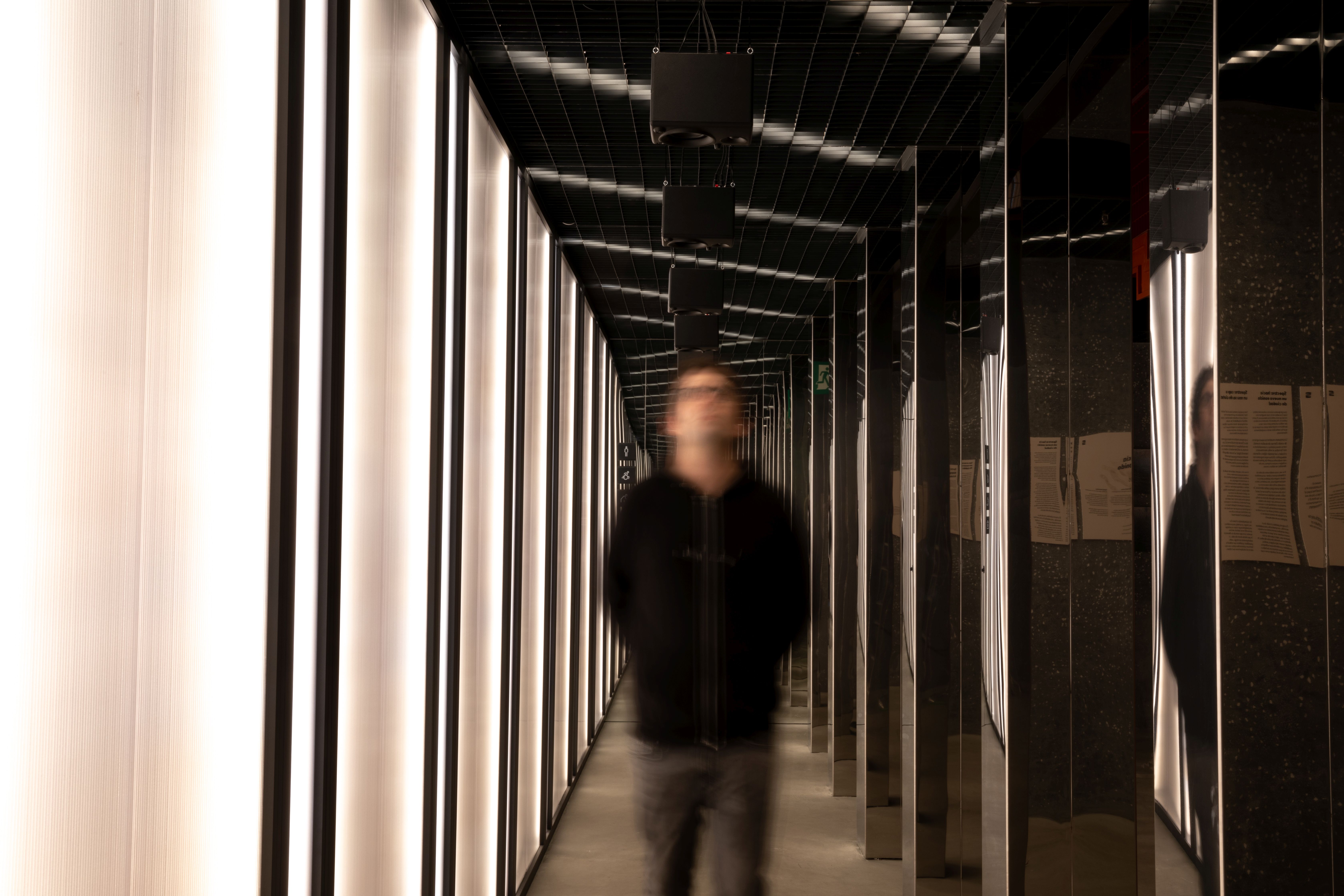 Edu Comelles Interview Image by Juan Carrion
“There is a sense of magic and wonder when discovering hidden sounds for the first time. It amuses me a lot.“
Video
