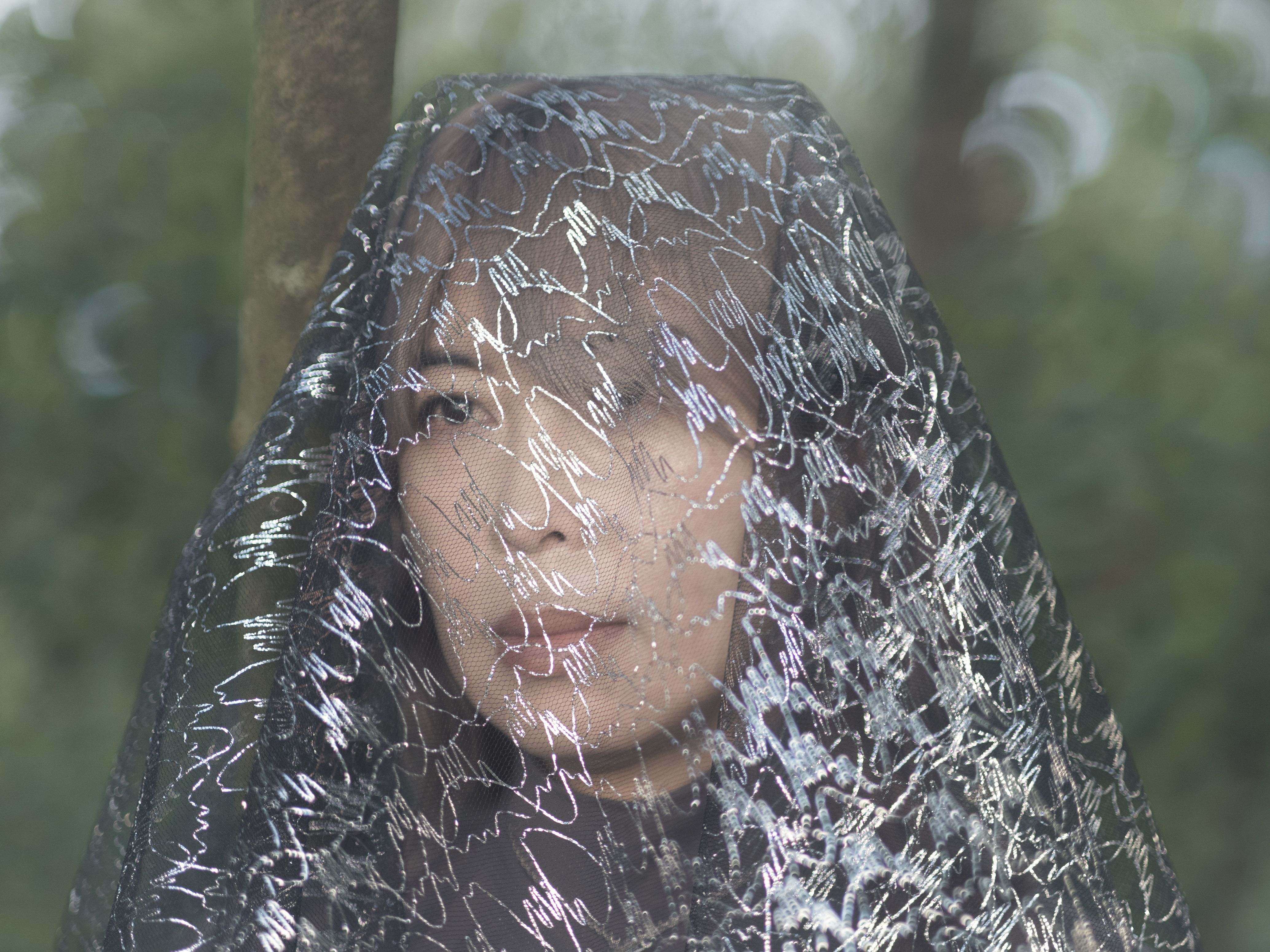
Published
Name: Eiko Ishibashi
Nationality: Japanese
Occupation: Singer, songwriter, musician
Current release: Eiko Ishibashi's new album Antigone is out March 28th 2025 via Drag City. Her latest single off that album, "October," is available to stream now.
Recommendations for her hometown of Tokyo: Los Apson (record shop)
Topic I am passionate about but rarely get to talk about: British crime suspense drama
If you enjoyed this Eiko Ishibashi interview and would like to know more about her activities and music, visit her on Instagram, and bandcamp.
For the thoughts of her long-time producer, read our Jim O'Rourke interview.
Where does the impulse to create something come from for you? What role do often-quoted sources of inspiration like dreams, other forms of art, personal relationships, politics etc play?
Anything!
For you to get started, do there need to be concrete ideas – or what some have called a 'visualisation' of the finished work? What does the balance between planning and chance look like for you?
I have a vague idea of the whole album at the beginning, but when I write songs, it's a series of coincidences. When I am writing a song, I think it is important to get away from myself as much as possible to capture the feeling that it does not seem as if I created it.
Thinking of lyrics is the final and logical step, but even then I try to enjoy coincidences as much as possible. I want the meaning to collide with the meaning and become something different for each listener.
Is there a preparation phase for your process? Do you require your tools to be laid out in a particular way, for example, do you need to do 'research' or create 'early versions’?
Yes, there is. But it is not only what I'm trying to prepare for, but also what I'm preparing for in our daily lives. You never know what will influence your work, so I try to talk to as many people as possible, I try to watch as many movies and read as many books as possible.
Once a vague image gradually develops, I will make a demo little by little.
Do you have certain rituals to get you into the right mindset for creating? What role do certain foods or stimulants like coffee, lighting, scents, exercise or reading poetry play?
If you have such a thing, please let me know.
For your latest release, what did you start with? If there were conceptual considerations, what were they?
At first, I just wanted to make music that people who listen to the album would not get tired of listening to. Something far removed from everyday life. Like when you look in the mirror and see a different landscape instead of your own, and you can step into it.
However, it turned out to be more realistic and heavy than I expected.
Tell me a bit about the way the new material developed and gradually took its final form, please.
First, I made a demo in rhodes and shared it with Jim O'Rourke, Marty Holoubek on bass and Tatsuhisa Yamamoto on drums, and recorded the basics while listening to their ideas as well.
I then took the recordings home and discussed overdub ideas with Jim, and Kei Matsumaru, Joe Talia, Mio,Kirin Uchida,and Kalle Moberg played on the tracks.
Finally, the song was recorded and Ermhoi overdubbed the voices.
What makes lyrics good in your opinion? What are your own ambitions and challenges in this regard?
Lyrics are always in trouble.
This time I wanted to use words whose meanings clash with each other and morph into something different, or sound different every time you hear them.
What are areas/themes/topics that you keep returning to in your lyrics?
Each album has a different theme. On this album, the word “graveyard” was the theme.
But the theme that is connected throughout the other albums is the theme of where human beings come from and where they are going.
Many writers have claimed that as soon as they enter into the process, certain aspects of the narrative are out of their hands. Do you like to keep strict control or is there a sense of following things where they lead you?
I'd like to reverse that question and ask how it can be controlled. These days, automatic translation and transcription functions are attached to the video, and there is no way to control it anymore.
And there are words that I write without knowing why I am writing them myself. I feel out of control in every sense of the word.
There are many descriptions of the creative state. How would you describe it for you personally? Is there an element of spirituality to what you do?
When a song is born, something magical may be happening.
But for me the process to get there is not a big deal. I just sit in my chair and touch my instrument every day.
Once a piece is finished, how important is it for you to let it lie and evaluate it later on? How much improvement and refinement do you personally allow until you're satisfied with a piece?
I think it is good to create works slowly or while sleeping a little, in that it creates objectivity. You can improve it until you are satisfied with it.
But at the same time, it is also good to have a piece of music that was created quickly in a day or a few hours with a single spark of inspiration.
It's one or the other. What's not good is a song that was created in a half-hearted rush, by twisting an idea that already exists. No matter how much you improve it, it's no good.
How do you think the meaning, or effect of an individual piece is enhanced, clarified or possibly contrasted by the EPs, or albums it is part of? Does each piece, for example, need to be consistent with the larger whole?
I don't know about that. I don't really think about that kind of thing when I make an album.
But I would be very happy if someone finds it.
In terms of what they contribute to a song, what is the balance between the composition and the arrangement (including production, mixing and mastering)?
If the core songs are not interesting, no amount of arrangement will help, and no amount of good mixing or mastering will help.
But arrangement and mixing are just as important as songwriting, and they can change the direction of an album.
After finishing a piece or album and releasing something into the world, there can be a sense of emptiness. Can you relate to this – and how do you return to the state of creativity after experiencing it?
After making a work, I usually start making other works, so I never feel a sense of emptiness.
But after a live performance, I sometimes don't know what I did it for - so I immediately go out for a drink.
I would love to know a little about the feedback you've received from listeners or critics about what they thought some of your songs are about or the impact it had on them – have there been “misunderstandings” or did you perhaps even gain new “insights?”
There is a part of me that wants to hear that, and that's why I create my works.
Misunderstandings and insights are welcome!
Creativity can reach many different corners of our lives. Do you personally feel as though writing a piece of music is inherently different from something like making a great cup of coffee? What do you express through music that you couldn't or wouldn't in more 'mundane' tasks?
I don't even know if I would call making music 'creativity'. It seems more like road construction digging up concrete, which I feel is disrespectful to the people who are working in the cold on the road.
If you call making a good cup of coffee or cleaning up after yourself 'creativity', I am not good at those 'creativities' at all.