Published
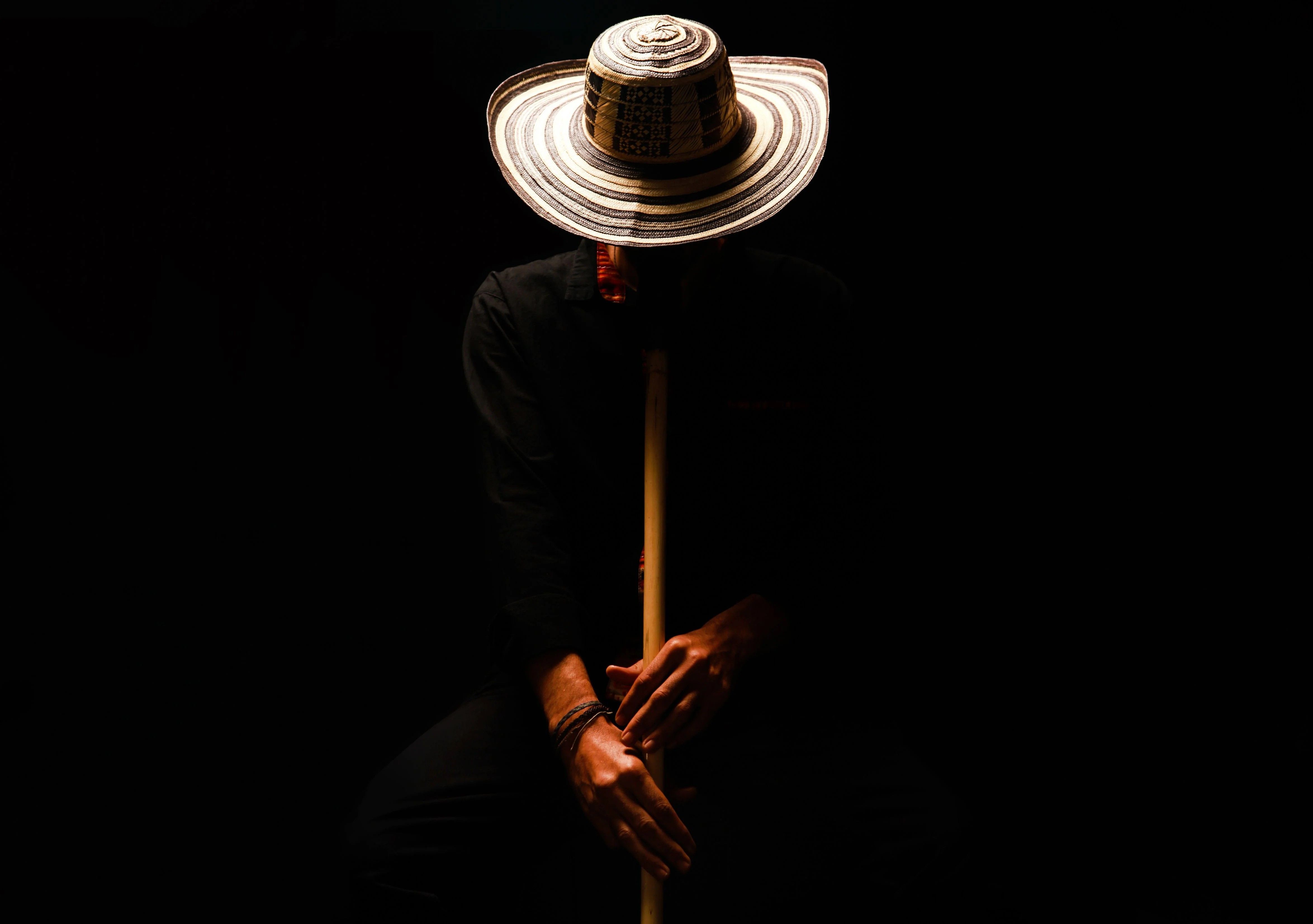
Name: Jorge Emilio Pardo Vásquez aka El Leon Pardo
Occupation: Trumpet player, gaita player, composer, imrpoviser
Nationality: Columbian
Current release: El Leon Pardo's new album Viaje Sideral is out via AYA.
If you enjoyed this El Leon Pardo interview and would like to know more about his music, visit him on Instagram, and Facebook.
When did you first consciously start getting interested in musical improvisation? What was your first improvisation on stage or in the studio and what was the experience like?
The first time I saw someone playing gaita made me want to cry.
I saw a huge purple light emanating from the instrument – it really was a mystical experience. This person taught me to play gaita. In Colombian gaita music, improvisation is very present.
Then I learned to play trumpet. The first time I improvised on a stage during in a meeting of a children's philharmonic orchestra when I was at school at the closing concert of this meeting.
Tell me about your instrument and/or tools, please. What made you seek it out, what makes it “your” instrument, and what are some of the most important aspects of playing it?
My instruments are the Colombian gaita and the trumpet, but of these two, I first encountered the gaita (bagpipes).
The bagpipes are a very special instrument in my country since their origins predate the arrival of the Spaniards. It was used in ritual contexts by cultures of my country in the Caribbean region such as the koguis, kankuamos, zenues, farotos and others. Of these cultures, only very few survive to this day. So the gaita is a witness of the culture and practices of our ancestors. Over time, it grew from its exclusively ritualistic context and became one of the roots and the origins of cumbia.
The trumpet is obviously already well known all over the world. What I really like about it is that it is a versatile instrument. When I play it, it feels like the sound is coming from inside of me.
How would you describe your own relationship with your instrument – is it an extension of your self/body, a partner and companion, a creative catalyst, a challenge to be overcome, something else entirely?
My relationship with my instruments covers many planes. I was lucky enough to get know them when I was still a child. As a result, the technical part is something I have always been familiar with and not something tedious.
When playing, I always try to express myself instead of the instruments, as if it were my own voice. But I never cease to understand that they are only a means for expressing different types of information that ultimately come from something as great as the universe and go beyond all rules and conditions.
Derek Bailey defined improvising as the search for material which is endlessly transformable. What kind of materials have turned to be particularly transformable and stimulating for you?
I could not define these materials because improvisation is a creative process and for every creative process you have at your disposal everything that exists, that is pure thought and even that which does not exist.
I have had many experiences that have defined my way of improvising and creating music since my childhood. These include the influence of my parents and my culture.
Then, there's the influence of different types of music, from gaita from the Colombian Caribbean coast to Satie, Miles was also a great influence, the ritual music from all over the world, the beginnings of electronic music, the psychedelic music of the North coast of my country.
In the end I believe that everything I have lived and learned since I was born until this moment in my life has had an influence.
Do you feel as though there are at least elements of composition and improvisation which are entirely unique to each? Based on your own work or maybe performances or recordings by other artists, do you feel that there are results which could only have happened through one of them?
As we are each unique beings and we have different experiences over time, I think that any composition, improvisation, musical expression, and any creative process is unique and unrepeatable.
When you're improvising, does it actually feel like you're inventing something on the spot – or are you inventively re-arranging patterns from preparations, practise or previous performances? What balance is there between forgetting and remembering in your work?
That's a complex question for me. I don't know how this sounds but I feel that when I'm performing or creating music I'm like a kind of lens or instrument that is used to pass information from the far end of the cosmos to our world here.
There are times when it seems that it will elevate me to another world - then I analyse what I played and it does not seem as though it simply came from me.
Artists from all corner of the musical spectrum, not just “free jazz” have emphasised the importance of freedom in their creativity. What defines freedom for your improvisations?
The moment defines freedom. Not everyone believes or experiences the same. So when you meet with more people you have to reach a balance of perceptions.
Sometimes, however, everything feels, telepathic as you were a single being with everyone around you, and you feel absolute freedom when playing music.
In your best improvisations, do you feel a strong sense of personal presence or do you (or your ego) “disappear”?
I disappear.
What are some of your favourite collaborators and how do they enrich your improvisations?
There are many people with whom I have shared the stage or the studio and it has been magical.
But I had to single out artist, there is a friend from Cartagena, Colombia called Omar Rodríguez with whom the feeling when playing has always been something from the other world – it's all about feeling the music.
As a listener, do you also have a preference for improvised music? If so, what is it about this music that you appreciate as part of the audience?
I like music in general, so I don't have a preference for a single type. I feel that there is a lot of beauty and information in all of them.
In a way, we improvise all the time. In which way is your creative work feeding back and possibly supporting other areas of your life?
I feel that as living beings we are interacting with a changing environment throughout our lives.
There is no manual for it - improvising is present in all aspects of life.