Published
Name: Elaha Soroor
Nationality: Afghan, London-based
Occupation: Singer, songwriter
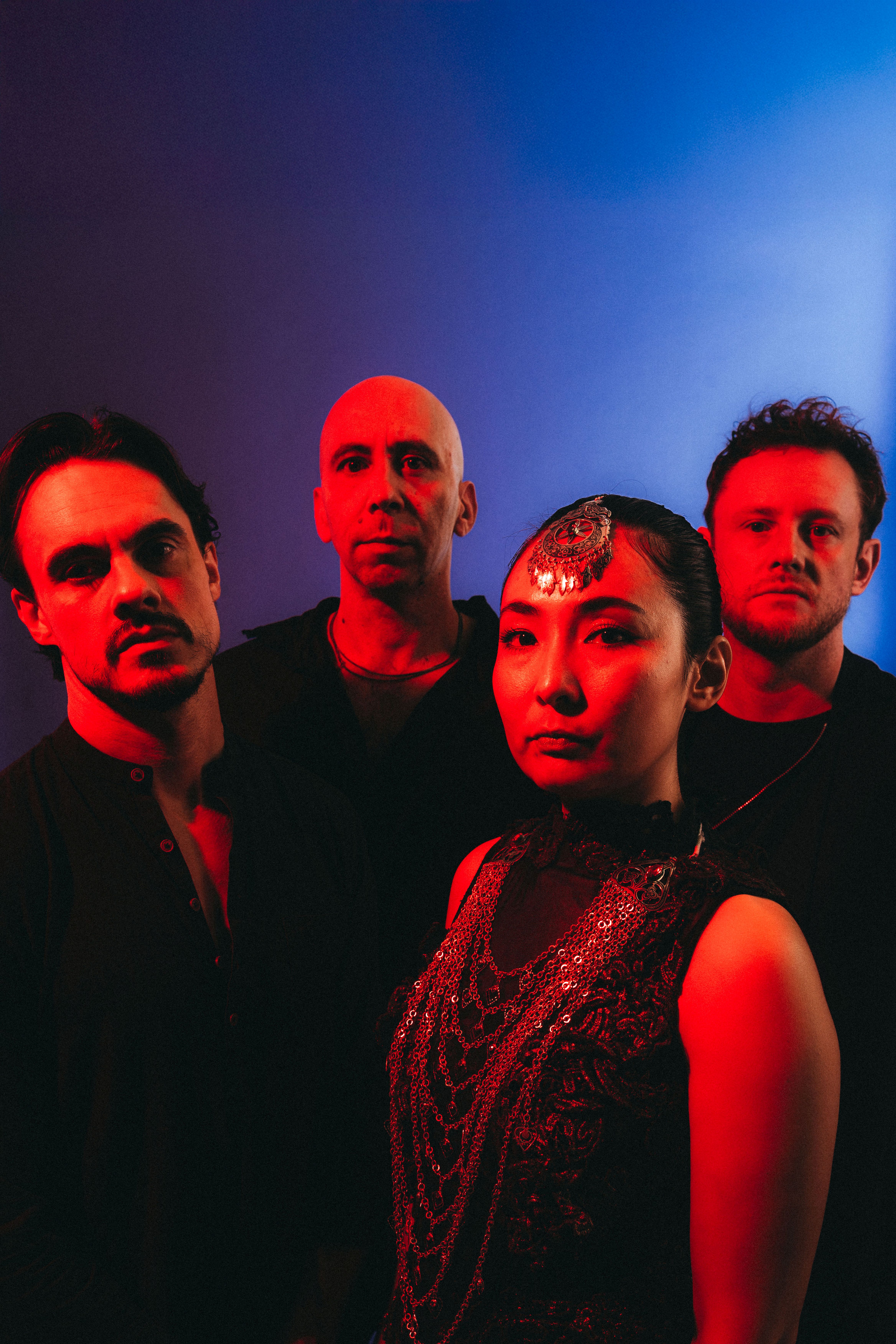
Current Release: Elaha Soroor teams up with production/performer trio Kefaya for “Our Freedoms Must Be Won,” out via Radio International.
If you enjoyed this Elaha Soroor interview and would like to know more about his music and upcoming live dates, visit her on Instagram, and Facebook.
When did you first consciously start getting interested in singing? What was your first performance like?
I grew up in Iran but started my music training in Afghanistan when we moved back with my family in my teens. I started singing very young, like many people in Afghanistan, had some western music training but at first it wasn’t something I thought of as a profession or a choice. It was just part of life, part of culture.
My first real awareness of singing as something public came later, when I began performing traditional music more formally. I remember being both excited and afraid at the same time, especially because singing as a woman in my context was not always accepted. But there was also a strong sense of freedom in it.
Which musical traditions do you draw from?
I draw mainly from folk traditions from Afghanistan, especially Hazara music and the songs I grew up hearing on tapes in my family. I also listen to Iranian music, classical forms, and contemporary influences.
With Kefaya, I also discovered new ways of thinking rhythmically and harmonically, through Indian classical music, jazz, and other traditions. I don’t see these as separate worlds anymore, they all live in my voice in different ways.
What were the main challenges in your development as a singer?
The biggest challenge was not technical, it was political and social.
As a woman coming from Afghanistan, there were always restrictions, expectations, and limitations placed on what I could or couldn’t do with my voice, and what that represents in society. Later, when I left, there was also the challenge of finding space to continue singing at all.
The most helpful thing has always been collaboration, and meeting musicians who respect the voice as something that carries history and identity, not just sound.
What do you hear in other singers’ voices? What moves you?
I am always moved by honesty in a voice. It doesn’t matter if it is technically perfect. What matters is if it feels real, if it carries something lived. I also listen to the emotional texture, the breath, the cracks, the way someone uses silence.
Sometimes the most powerful voices are the ones that feel like they are telling a truth that is difficult to say.
How does singing feel physically?
It feels very physical, like something moving through the body rather than just coming out of it. Sometimes it feels like pressure in the chest or stomach, sometimes like release.
There are moments in performance where I feel completely inside the sound, not observing it from outside. In those moments, it’s less about control and more about surrender, and losing yourself in the song.
Speaking voice and singing voice: same or different?
They are connected, but not identical.
My speaking voice is more grounded in daily life, but when I sing, something shifts. It becomes more exposed, more emotional, sometimes more direct than speaking.
I don’t think they are separate identities, but they activate different parts of expression.
What is the relationship between rhythm, melody and harmony in your singing?
Rhythm is very important for me. Even when I sing freely, there is always an internal pulse that comes from my tradition.
Working with Kefaya and other projects in the UK has made me more aware of how rhythm and groove can work in different ways through arrangement and song form, which opened up another way of thinking for me.
What are the limits and possibilities of your voice?
My voice is shaped by my history, my language, and my experiences. I don’t try to push it into something it is not. I am more interested in what it can communicate emotionally than in technical expansion for its own sake.
Control is important, but so is letting go. Some of the strongest moments happen when I stop thinking about control entirely.
What does singing allow you to express with an audience?
Singing gives me a direct connection with people. It allows me to say things that would be difficult in normal speech, especially emotionally. There is a sense of sharing something vulnerable, but also powerful.
I don’t see the audience as separate from the performance. There is a dialogue happening, even without words.
What qualities did you want to bring forward in the new recordings?
I wanted the voice to feel very present and unfiltered. Not overly polished, but direct and raw at the same time, to match the music and the message.
There are moments of intensity, but also fragility. I was interested in how the voice can sit inside complex rhythmic structures and still remain emotional and human.
The Farsi lyrics also carry a lot of weight, so the delivery needed to stay close to the meaning.
How do you relate voice and lyrics?
For me, the sound of the words is very important. Some words feel natural to sing, others don’t. There needs to be a connection between meaning and sound, otherwise it feels disconnected.
Singing someone else’s lyrics can also be very powerful, especially when I feel emotionally connected to them. More recently, writing my own lyrics has also become a way of bringing my voice even closer to the songs.
How do you take care of your voice?
Rest is important. So is not forcing it. Touring can be demanding, so I try to stay aware of when my voice needs space. Warm-ups and regular practice are important, but sometimes silence is just as important.
My emotional state also matters a lot. If I am not well emotionally, it is immediately reflected in my voice.
Has technology affected your singing?
I am open to using processing and effects, but my main experience is still with the natural voice.
Some subtle effects can be interesting in a live or studio context, but the core of my work is still very acoustic and direct. I want the listener to feel the human presence first.
How do you think about recorded voice versus live voice?
They are very different. In recording, there is more control and precision required, and sometimes it can feel unnatural.
In live performance, there is more risk and unpredictability, but that’s also what makes it exciting. You feed off the audience’s energy.
I like both, but I think live singing often reveals more truth.
What is the role of the voice in your life more generally?
The voice is deeply connected to identity and survival for me. It is how I process emotions, how I connect with others, and how I understand my own history.
Singing is not separate from life. It is part of how I exist in the world, and that’s why my relationship with it can sometimes be complex, and even conflictual.