Published
Name: Ema Jolly aka Emika
Nationality: British-Czech
Occupation: Producer, composer, songwriter, sound designer and sound artist
Current Release: Emika's Haze is out now. Order the album via her personal bandcamp store.
Recommendations: Schlindwein - Ein Elektroniches Requiem; Katta - Vox Organi
[Read our Schlindwein interview]
If you enjoyed this Emika interview and would like to stay up to date with her music, visit her on Instagram, Facebook, and Soundcloud. Support her on Patreon.
Where does the impulse to create something come from for you? What role do often-quoted sources of inspiration like dreams, other forms of art, personal relationships, politics etc play?
My impulse to create something comes from imagining a framework, conceptual architecture, and then the need I feel to fill this. To complete an empty space, to make a tragedy beautiful, to dance in a blindspot.
If I don’t fully believe in the imaginary framework - I don’t create anything. I just tidy up my studio and label sounds and read manuals for my synths.
For you to get started, do there need to be concrete ideas – or what some have called a 'visualisation' of the finished work? What does the balance between planning and chance look like for you?
The execution of an idea is everything. The right planning - even if the plan is to improvise - still requires perfect execution.
There are endless ways to improvise around an arpeggio in D minor on the piano, but only one of those played moments will be executed perfectly. If you are lucky, it will be the perfect mix of soul, time and decoration.
Is there a preparation phase for your process? Do you require your tools to be laid out in a particular way, for example, do you need to do 'research' or create 'early versions'?
All of my mastered and sold music is the ‘early version’.
Do you have certain rituals to get you into the right mindset for creating? What role do certain foods or stimulants like coffee, lighting, scents, exercise or reading poetry play?
Being in my music studio, I am near Schwarzwald, it’s achingly beautiful and light here. The forest, the vast endless sky. My studio sits in a valley, the river is gushing by my building, and all around me are small self-owned businesses and many ‘handwerker’ [craftsmen]. When I look outside I look at the trees going upwards to the top of the hills.
I like it very much to be away from Berlin. I was in what felt like the heart of Berlin for 15 years. But I am so incredibly grateful to have made the step away from big city life.
What do you start with? And, to quote a question by the great Bruce Duffie: When you come up with a musical idea, have you created the idea or have you discovered the idea?
I guess I start with a computer or piano. And force that new idea to come out, because I have limited time and children to look after.
My good ideas are shrouded in self-doubt. But I am getting better at playing them and not questioning them.
New ideas don’t like to be judged, they like to be experienced.
Many writers have claimed that as soon as they enter into the process, certain aspects of the narrative are out of their hands. Do you like to keep strict control or is there a sense of following things where they lead you?
I always keep control of the quality. If something isn’t sounding good or feeling right, I stop immediately. It’s not good to go in a circle hoping it’s going to maybe get better by adding a sound or new layer. The core essence of whatever it may be, that has to resonate right in the beginning.
My cover of “Wicked Game” by Chris Isaak came together in a matter of minutes and first takes. That really surprised me, as I had been up until that moment, refusing to cover anyone else's songs and wanted to purly do my own new-sounding music.
Often, while writing, new ideas and alternative roads will open themselves up, pulling and pushing the creator in a different direction. Does this happen to you, too, and how do you deal with it? What do you do with these ideas?
Good question. Interestingly, with sound, especially mixing/engineering or synthesis, you can often have something in mind and then you lose it as soon as you start to try to record and realize the idea.
I tried for 7 years to make the sound of wings as a beat.
There are many descriptions of the creative state. How would you describe it for you personally? Is there an element of spirituality to what you do?
‘Spirituality’, the pursuit of this through music, came with a heavy price; my sanity. I don’t pursue anything spiritual anymore. I am happy that ‘just’ the music is right for me and I no longer feel the need to search beyond my soul enjoying a good song.
My new album Haze is like a jigsaw puzzle of beautiful melodies and textures and Future Garage rhythms. It’s all of my favorite things I like .. Of course loads of deep sub bass which I am sort of known for loving by now …
I went back to all of my favorite sounds and my voice, most of which I recorded on my phone as my life was packed up in boxes after leaving Berlin at the time. I had no studio at that time. And my mind was in pieces. 
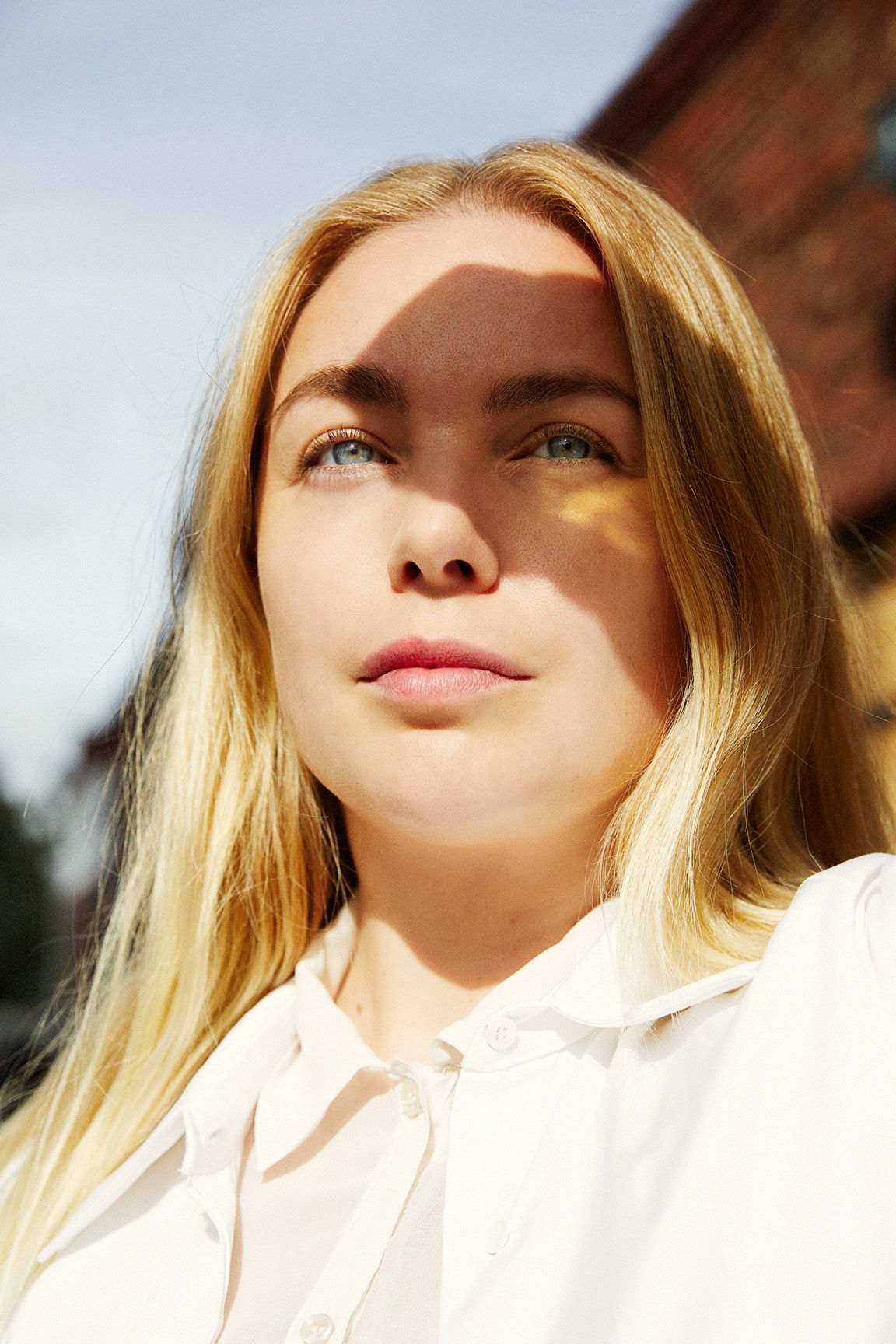
Emika Interview Image by Tim Petersen
Haze is about finding color again. The way we all suffered through the pandemic. Together yet alone. Individual loss, forced sacrifice, the same yet so different to each of us personally. It’s hard to explain, other than Haze is my record of how I sewed myself back together again through my love of making-music.
I had nothing else at that time. Berlin had changed forever. The world changed forever. I could either make music or I don’t know what. I was faced with darkness and despair, or creating music. Luckily I made Haze, I finished mixing it while heavily pregnant too. It became such a beautiful transformative record in the end. All of my loss and mistakes, put into color.
Once a piece is finished, how important is it for you to let it lie and evaluate it later on? How much improvement and refinement do you personally allow until you're satisfied with a piece? What does this process look like in practise?
I usually live with new music for about a year. I try to make upgrades, but often just go with the ‘early version’ like I mentioned previously. I then plan the release for about a year. And the actual release often lasts about a year.
So all-in-all, about 3 years of lived time from finishing recording in my studio, through to mixing, producing, marketing and releasing an album.
When you're in the studio to record a piece, how important is the actual performance and the moment of performing the song still in an age where so much can be “done and fixed in post?
Microphones and preamps are everything.
Even recording a solo song is usually a collaborative process. Tell me about the importance of trust between the participants, personal relationships between musicians and engineers and the freedom to perform and try things – rather than gear, technique or “chops” - for creating a great song.
I have always had a studio set-up in some way. Since I was 14. I am a solo artist in the true sense of the term.
I am really skeptical about songs constructed by teams.
What's your take on the role and importance of production, including mixing and mastering for you personally? In terms of what they contribute to a song, what is the balance between the composition and the arrangement (performance)?
The music production of a song tends to put you into the direction of a genre box.
The instruments, the arrangements, they all become calculatable on the end of the listener, as a way of understanding who you are and what the music is they are listening to. The way a song is recorded and produced, determines the genre and path of the artist on the other side. 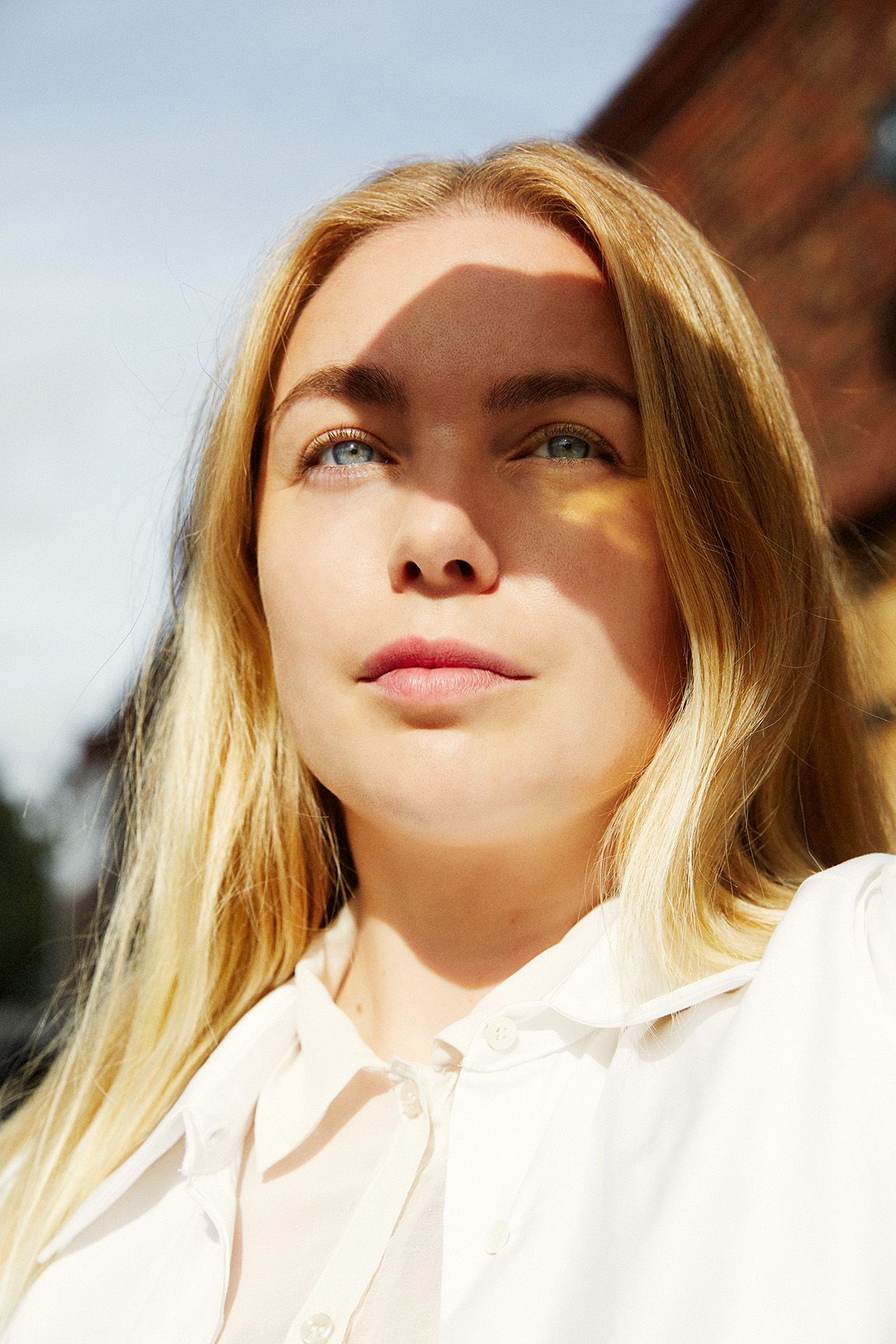
Emika Interview Image by Tim Petersen
After finishing a piece or album and releasing something into the world, there can be a sense of emptiness. Can you relate to this – and how do you return to the state of creativity after experiencing it?
I love releasing music, because it means I can finally let go and start to think about something else. Constructing new things. Or performing live.
Music is a language, but like any language, it can lead to misunderstandings. In which way has your own work – or perhaps the work of artists you like or admire - been misunderstood? How do you deal with this?
My song “Professional Loving” has been used often in the context of strip clubs, a soundtrack to beautiful women pole dancing online.
It was inspired by my early encounters with the hollowness of the music industry and music tech industry. They were not how I expected to find them in the beginning. And I think it’s quite cute that people like to get into more of a sensual mood and pole-dance to my song.
I watch quite a few of these fan vids on IG. It gives me a totally different understanding of the song, more about the power and seductive elements from the beat and bass.
It’s cool. Songs start one way and end up in many other places.