Published
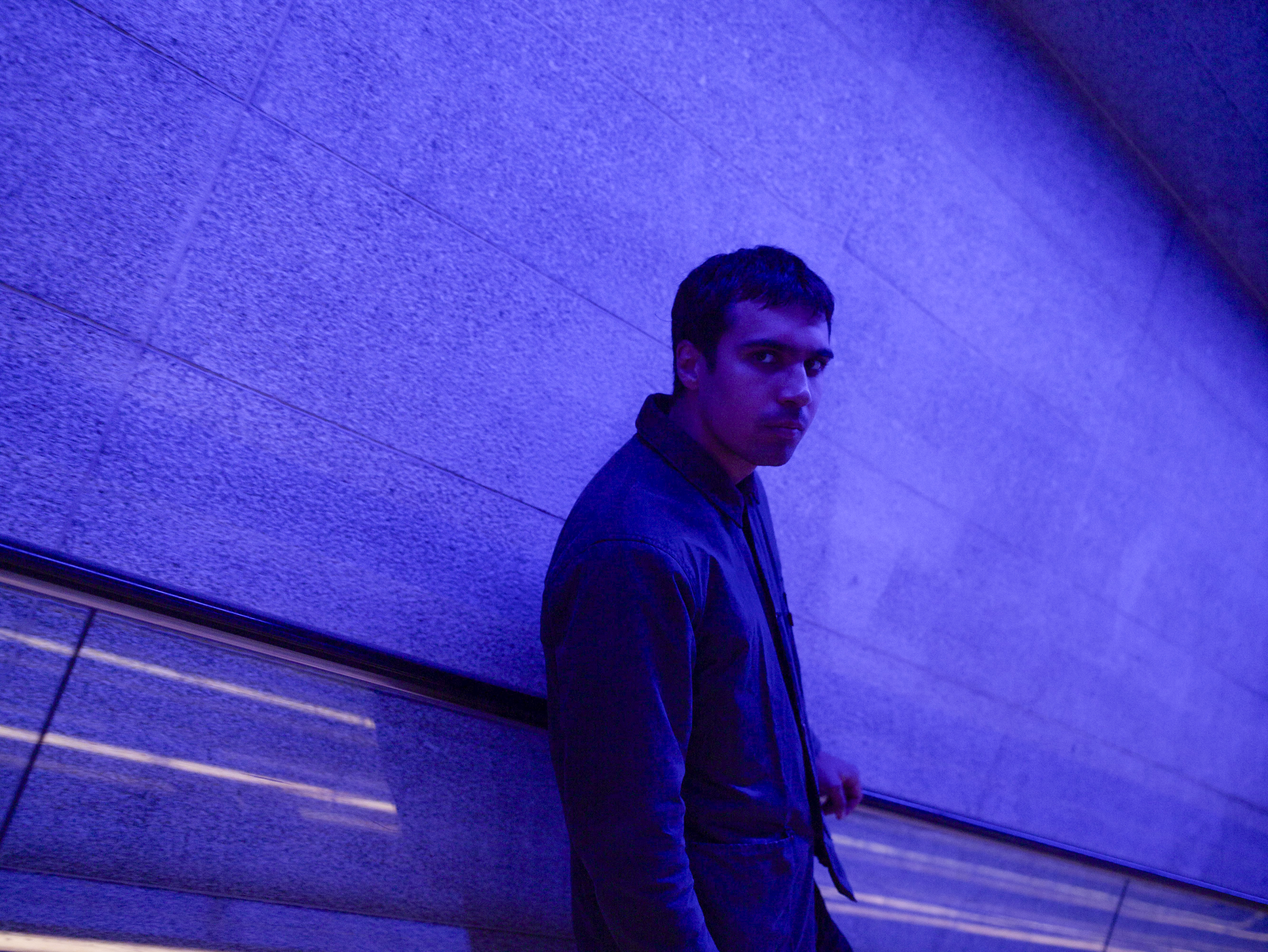
Name: Emil Mark
Nationality: Danish
Occupation: Composer
Current release: Emil Mark's new EP Mellemtid is out March 27th 2026 via Tonal Union.
Recommendation for Copenhagen, Denmark: I would go to Enghave Plads and sit on the red benches and then go to Kebabistan on Istedgade for a Durum and an Ayran.
Topic I am passionate about but rarely get to talk about: Really into cycling as mentioned before. and could also talk for hours about cooking really cheap food.
If you enjoyed this Emil Mark interview and would like to stay up to date with his music, visit him on Instagram.
The borders between producers, sound artists, and even songwriters are becoming increasingly blurry. What does being a composer mean today, would you say?
I think being a composer is a term that is up for one self to define.
For me being a composer means to act on all the ideas that I get, all the time. Whenever I get an idea or feel inspired to explore a new sound or instrument, I commit to actually try it out. This mindset is for me about following my intuition, instead of letting ideas fly by or not believing in them.
I had never played the organ before I started at my old music school, but I was really intrigued by it, and ended up using hours and hours of just learning how to play, and trying to record different ideas and sounds. The program I was studying was Electronic Music and Soundart, and I actually had a bit of a struggle because I was making so much organ music, instead of electronic music.
But in regards to what it means to be a composer, I also feel like it is very important to follow your interests and keep on trying to express what you have in your mind.
Many people perceive classical music and contemporary composition as having high barriers of entrance, both for listeners and musicians. What have your own experiences been in this regard?
I also feel that it sometimes can be quite intimidating to even start listening to some classical composers.
For example listening to Oliver Messiaen or Ligeti or even Bach, where do you even start? I mean, if you have a classical background it may be obvious, but I don't, and I feel like I am slowly discovering “new” classical composers and different styles and sounds that I didn't know existed.
I find that it works well to just start with one piece at a time, not listening to too much at a time, like I would do with non classical music, and just be very selective in my listening. Also I don't feel afraid to just skip around in one piece or go to the next after a short time. Like any other kind of music, I am listening for my own pleasure, so if something doesn't catch my attention or falls into my taste, I quickly move on to something else.
In regards to making music that is in some ways inspired by contemporary music, I go about it as I would with any other inspirations. I steal ideas the best I can and honor the music that I love to listen to and feel inspired by. In that sense I am not treating classical music any differently from other inspirations.
As of today, what kind of materials, ideas, and technologies are particularly stimulating for you?
These days I am really inspired by movies.
Not always in close connection to the score from the movie, or the story of the movie, but just the feeling you get after having watched a movie. That feeling of just having been indulged into a story is really inspiring for me, and it is often after having watched a movie that I want to create something of my own. The feeling of reminiscence and that the movie is still lingering in my mind is what often inspires me to express the feeling that I am left with.
Another big inspiration for me are patterns in different designs and architecture. I am often taking pictures of the patterns of different brick buildings or cobblestones. To me it is very close to how I like to create patterns in the music that intertwines in different polyrhythms or melodies that play off of each other in different patterns.
For example my track “Rejser” is in my head really architectural in the way it's constructed.
As for technologies, I am very much into sampling, creating sample instruments, and that blend of acoustic sound and electronic performance through midi. I am really interested in exploring that space where acoustic timbres blend with electronic composition.
Where do most of your inspirations to create come from – rather from internal impulses or external ones?
I feel like it is mainly something that comes externally. I get inspired by the things I watch and listen to and I always create with a specific feeling or inspiration in mind.
But I guess it is in some way a mix of both: An external element that resonates with what I am feeling or want to express, and then that gives me the incentive to create something for myself.
Tell me a bit about the sounds & creative directions, artists & communities, as well as the colleagues & creative hotspots of your current hometown, please. How do they influence your music?
My music is very influenced by my hometown Copenhagen. I have been a big fan of the music scene here my whole life, and it is also what got me started with making music.
Some of my early local inspirations are people like CTM, Astrid Sonne, Frederik Valentin and Sofie Birch, but I still feel like the sound in Copenhagen is always evolving, and new names come up all the time.
I also have a lot of friends who make music, and they are also a huge inspiration to me.
[Read our Astrid Sonne interview]
Composing has always had an interesting relationship between honouring its roots and exploring the unknown. What does the balance between these two poles look like in your music?
I definitely shift between the two, honouring others and exploring something new.
Sometimes I feel like I am making music that I haven't heard before, but would like to be able to listen to. And other times I am just so fascinated with someone else's sound or idea, that I just have to try and make my own version of it. Those times I try to come as close to my inspiration as possible, just to understand it better.
On Mellemtid, there is definitely a mix of both approaches. Some of the tracks are very inspired by people like Philip Glass and Steve Reich, in their compositions. But then I feel like I am trying something quite new, at least to me, with the production and sampling of the organs.
How much potential for something “new” is there still in composition? What could this “new” look like?
I think there is infinite potential for something new. I don't think the possibilities of composition is a set amount that we can one day fill up or be finished with. I would think of music more as language or a medium we communicate through, and in that sense we would also never be done with communicating with each other.
For my way of working I would say that the “new” stuff in composition looks a lot like the old stuff. It has just been made relevant, relatable and anno now. I don't feel like striving after making something that is so new that it seems detached from all previous music, or alien.
I like that you can hear the lineage of different composers, characteristics through different periods and that all music is tied together in that sense.
What role do electronic tools and instruments play for your creative process? What does your creative space / studio look like and what tools does it contain?
I work in Ableton Live and am still using my trusty old PC, a Lenovo Thinkpad. It is not the most reliable tool or the best at having songs with more than 10 tracks, but it works.
In some ways I think that the limitations of my computer have very much been a part in shaping how I compose and what my music sounds like. I try to simplify my compositions as much as possible, and make the core idea as clear and direct as possible.
At the moment I don't have a studio in Copenhagen, I work at home at my desk, where I have a small studio setup with monitors and a few instruments. I have a small organ in my family's summer house that I can record at, and in my home studio I mainly record double bass, electric bass and guitars.
It is my impression that adding a conceptual, non-musical dimension to one's work is almost a prerequisite for commissions and grants. How do you view this tendency and how “conceptual” is your own approach to writing?
I often find it difficult to put a non musical dimension into my music. My music is rarely about anything, it is more an expression of a more unspoken or abstract feeling I want to express. So I am always searching for names to my music and trying to figure out what would feel fitting to each track.
For my EP Mellemtid the name came from a whole other interest of mine, which is cycling. I love watching cycling and “Mellemtid” is Danish for intermediate time, which is a term often used in time trials in cycling. I just thought it sounded good and was a fun word to take into a music context.
Working with long forms, complex concepts or new vocabulary is potentially more challenging today because they require us to remember things that happened perhaps minutes ago – while most of us are finding it hard to focus even on what's happening right now. Both as a composer and as a listener yourself, how do you deal with this?
I don't think people actually have a hard time remembering stuff that happened minutes ago, we do that all the time, so in music I have trust that the long forms and complex concepts still have a place in music.
For me the difficulty lies in giving yourself the opportunity to actually actively listen to long form music. I often listen to music when I'm going somewhere or doing something else at the same time. But I think that there is some music that needs your full focus, which can sometimes be hard to give.
As a composer I would love to do more long form composition, but I also find it extremely difficult to actually do well.
How, would you say are live performances of your music and your recording projects connected at the moment? How do they mutually influence and feed off each other?
As of right now I don't do much live work. I am still figuring out how I am going to do live shows and what setup would feel interesting and exciting.
But i am very set on doing live shows in the future, and like figuring out how to translate the music to a live setting.
To some, the advent of AI and 'intelligent' composing tools offers potential for machines to contribute to the creative process. What are your hopes, fears, expectations and possible concrete plans in this regard?
I don't really care to much about using AI tools in music, and I am not too worried that there will ever be an “AI takeover” of the music industry.
I make music because I like composing, and being creative, and I am not in any way attracted to any AI tools I have seen yet. I also don't believe that there are many music listeners, myself included, that are actually interested in listening to AI music in the same way that we listen to normal music.
Music is also communication between the composer and the listener, and that connection is only weakened by AI contribution. It takes some creative choices away from the composers.