Published
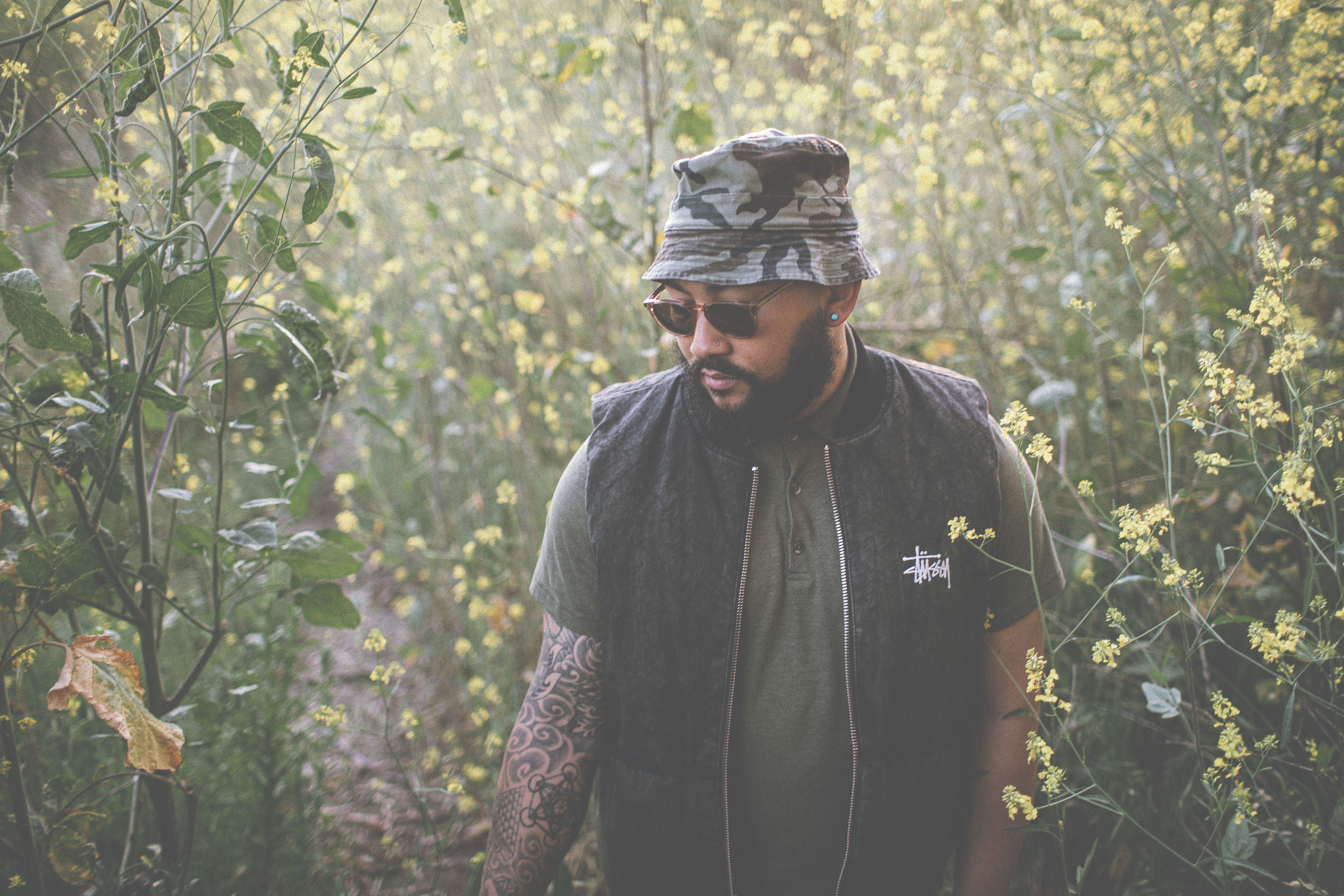
Name: Emile Martinez
Nationality: American
Occupation: Trumpet player, composer, educator, producer, band leader
Current release: Emile Martinez's debut album with Emile & The Education Lamad is out now.
Topics that I am passionate about but rarely get to talk about: As an educator and mentor, arts education is everything to me. I have been so blessed to have studied with some amazing people. Not just amazing musicians but amazing humans that believed in the integrity and nobility this music has to offer the world.
Currently partnering with Aaron and Lawrence Shaw in creating an educational service company that has an updated approach towards music education. Providing kids with the tools, acumen, skills, and professionalism that nurtures entrepreneurship, prepares students for higher learning institutional instruction, creative guidance through skills development needed by those that may not want to embark on the journey of an artist and instead assist artists legally or within the corporate world of the music industry.
We want to be of service to music programs that want to enhance their current programming with a modern and contemporary approach, so that students can truly be brought to the realization of there being many paths you can take within the world of art and music.
If you enjoyed this Emile Martinez interview and would like to stay up to date with his music, visit his official homepage. He is also on Instagram.
What were some of the musical experiences which planted a seed for your interest in jazz?
I was fortunate to grow up in a house full of music, especially vinyl. The real good stuff. My mom had this amazing collection, and in it were some true gems that became the foundation of my love for jazz.
She was a huge fan of Freddie Hubbard - First Light and The Black Angel were two records that never collected dust.
The way Freddie played, with both fire and tenderness, always left an impression on me.
There was also Tom Browne's Love Approach, which had a different kind of energy, groovy, rhythmic, and so alive.
The collection was deep. She had a heavy dose of Marvin Gaye. The classics of course, but also some of the lesser-known material that showcased his depth and genius. And then there was Ramsey Lewis, who brought a beautiful, grounded joy to the music.
I remember sitting on the floor, watching the record spin, and just soaking it in without fully understanding it yet.
One of the records that really cracked something open for me was Donald Byrd and the Blackbyrds’ Places and Spaces, an original pressing, too. It was funky, spiritual, and cinematic. That one stayed with me.
And of course, there were the Miles Davis records: So What, Sketches of Spain, In a Silent Way, each one like a universe of sound.
When I started playing trumpet, my mom’s friend gave me a CD, Miles Davis: Greatest Hits. And that’s when it all started to make sense. Like the puzzle pieces came together. It felt like tasting real, double-barrel smoked BBQ that’s been slow-bathed in scratch-made sauce, rich, layered, and soulful. I could feel the care in it.
And from that moment on, my love for music blasted off into the cosmos. Jazz wasn’t just sound anymore, it was storytelling, spirit, and science all rolled into one.
What does the term jazz mean today, would you say?
Growing up, I was surrounded by well-educated, deeply creative people, from schoolteachers and bankers to musicians, authors, dancers, actors, even a few Motown legends.
And no matter what corner of life they came from, there was a shared understanding in our community that jazz was Black classical music. That’s what we called African American Classical Music. It was understood to be ours, rooted in our history, our struggle, our joy, and our genius.
Jazz came from people who had very little and created something world-changing. That’s the part that always hits me: the personal and collective sacrifices it took to keep this music alive, to pass it down, and to evolve it. So when I think about jazz today, I’m thinking about all of that. Not just the genre, not just the chords or scales, but the lineage. The truth.
Jazz is the foundation for so many contemporary and modern styles like hip-hop, R&B, neo-soul, house, even some experimental and electronic spaces. It’s not just influential, it’s elemental. It taught us what it means to stretch, to swing, to resist, and to reimagine.
So for me, jazz is still African American Classical Music. sacred, ever-changing, rooted in truth.
As of today, what kind of materials, ideas, and technologies are particularly stimulating for you?
Right now, I’m really energized by music production and sound design. especially the engineering side: audio recording, mixing, and mastering. I’ve been getting deep into synths, especially modular ones, because they allow you to build something entirely new from the ground up. There's freedom in that process. It reminds me of improvisation but in electrical form.
Beat making has also been a major focus. building compositions within the context of beat making. Using tools like Maschine, working in Ableton, exploring Kontakt libraries, and experimenting with boutique plug-ins that add warmth, character, and grit to the sound. These tools give me new ways to shape emotion sonically.
But even with all the technology, I’ve been doubling back to the basics too. As a trumpet player, I’m getting back into fundamentals. Tone exercises, etudes, scales. It’s humbling and necessary. I’ve also been spending more time at the piano, just re-familiarizing myself with harmony and composition from that space.
At the same time, I’ve been prioritizing internal reflection. Genuinely asking myself, “What does my sound feel like?” I’ve been spending more time with what’s going on inside of me, not just reacting to what’s happening outside. That self-inquiry is helping me define my voice and sound in a deeper, more intentional way.
The hunger to evolve and expand is real, and I’m letting that curiosity guide me.
Where do most of your inspirations to create come from – rather from internal impulses or external ones? Which current social / political / ecological or other developments make you feel like you need to respond as an artist?
Everything I do is for the kids. As an educator, mentor, and someone who works closely with youth, they’re at the center of my creative motivation.
I’ve been blessed with incredible mentors throughout my life. People who saw something in me and gave me guidance, time, and truth. They taught me to live by a simple but powerful phrase: Each one, teach one. That means if you’ve received something, it’s your duty to pass it on. not just when it’s convenient, but out of respect, love, appreciation, integrity, and nobility for those that came before us.
So my creative impulse is largely internal, rooted in a responsibility to give back. But it’s also shaped by the external world we’re living in. We’re witnessing so much from political turmoil and climate crisis to economic instability and community trauma. So many people are just trying to survive, to find dignity, to feel seen. And I can’t ignore that.
My work is meant to remind people, especially young people, that they’re not alone. That their feelings are valid. That beauty still exists. That we can build something better, together.
Tell me a bit about the sounds & creative directions, artists & communities, as well as the colleagues & creative hotspots of your current hometown, please. How do they influence your music?
I live in Los Angeles, so as you can imagine everything is here. Everyone is here.
There are some really amazing up and coming groups and already established creatives here. Aaron and Lawrence Shaw, Heather Gray, Sam Reid, Jody Giachello, Jonathan Pinson, Jimetta Rose, Nanna B, Gaby Duran, Neil Belen to name a few. This place is the entertainment capital of the world.
Unfortunately with that comes a huge lack of awareness. There are other groups within other industries and the people within them that are too easily forgotten. So many people are struggling to make ends meet. Struggling to find a job. Struggling to process all that's happening within our country and around the world.
So in my heart, I'm always considering those people. The ones that need to know they're not alone. So I tend to spend more time around social circles that involve giving back.
What role do electronic tools and instruments play for your creative process?
Electronic tools and instruments are central to how I create now.
They’re not just accessories, they’re extensions of my thought process. Tools like Maschine, Ableton, Kontakt, and different plug-ins let me shape and manipulate sound in ways that weren’t possible with traditional instruments alone. They give me a playground where I can deconstruct and rebuild. experiment with rhythm, tone, and texture until something resonates.
Synths, especially modular ones have really changed how I think about sound. They force you to build from scratch, to think about signal flow, modulation, interaction. It’s like building an ecosystem where everything feeds off everything else. That same approach shows up in how I compose. building layers that speak to each other, leaving room for accident and discovery.
But at the same time, I never lose sight of the human side. The trumpet, piano, voice, rhythm. All of those are still the heartbeat. I use technology to support the emotion, not replace it. Whether I’m making a beat, scoring a short film, or tracking a live band,
I’m always looking for the point where the electronic and the organic meet. where machines support the soul.
Thanks to technological advances, collaboration has become a lot easier. What have been some of the most fruitful collaborations for you recently and what approaches to and modes of collaboration currently seem best to you?
One of the best things about the way technology has developed is how much easier it's become to collaborate across distance and time. Whether it's sharing sessions, sending stems, or jumping on a remote call to build a track together, the process feels a lot more open now, and I’m grateful for that.
Some of my most fulfilling collaborations recently have been with people who are not only talented but also grounded. People who bring a clear sense of purpose to the creative process. I gravitate toward collaborators who are rooted in something deeper, who have a real respect for the craft and aren’t chasing hype. The best work always comes from that place.
I’ve recently discovered the most fruitful and fun sessions have been with either the members of my band or close friends whose work I believe in. I think the most powerful collaborations happen when both people come to the table with openness, clarity, and patience. Whether we’re in the same room or on opposite coasts, what matters most is intention and integrity. That’s what makes the music feel alive.
Jazz has always had an interesting relationship between honouring its roots and exploring the unknown. What does the balance between these two poles look like in your music? How much potential for something “new” is there still in jazz? What could this “new” look like?
There’s endless potential. Jazz, at its core, is about freedom. so as long as people continue to grow, feel, struggle, and imagine, there’s going to be something new to say.
The “new” could come from how we use technology, from different global influences, or from the ways we blur the lines between genres. It could come from who gets centered in the music, and whose stories get told. Maybe it’s not about being more “complex,” but being more honest, more personal, more raw.
I think the “new” in jazz will look and sound different for every artist, and that’s what makes it exciting. It’s not about reinventing the wheel. It’s about being real with where you are, what you feel, and letting that guide the music.
Honoring the roots of jazz is everything to me. not just through studying the musical language, but by understanding the depth of that language through a cultural and historical lens. It’s not enough to transcribe solos or memorize licks. Those are just surface-level tools if they’re disconnected from the lives and experiences behind them.
The way transcription was taught to me, it wasn’t just about copying notes. It was about connecting with the spirit of the artist. A solo isn’t just a technical exercise. It's a personal statement. It’s a reflection of what that artist was seeing, feeling, and navigating in that moment in time. And to really grasp it, you have to go deeper: What was going on in their life? What were they responding to socially, politically, spiritually?
That level of understanding transforms the study of jazz from imitation into something much more intentional and human. If we really want to explore how vast this music can be, we have to ground ourselves in where it comes from and what it carries. That’s the only way to truly honor the legacy while pushing forward into new territory.
For many artists, life-changing musical experiences take place live. How do you see that yourself?
Absolutely. Live music is a different kind of experience. it’s spiritual. When it’s real, it taps into something bigger than the music itself. You feel it in your chest, in your bones. It moves you.
Some of my most transformative moments have happened in live settings. either on stage or in the audience. There’s a certain kind of electricity when everyone’s fully present, when you’re not just playing but communicating. It becomes less about performance and more about connection.
The live experience reminds me why I do this. It’s where everything comes together. The work, the practice, the trust. It’s a space where anything can happen.
How, would you say are your live performances and your recording projects connected at the moment? How do they mutually influence and feed off each other?
Right now, they’re feeding off each other in a really natural way.
The studio gives me space to experiment, to slow down, and to really sculpt sound. But those ideas often get refined or reimagined when I take them to the stage. When I perform live, I pay attention to how the music feels, how the audience responds, how the energy shifts. That feedback loops back into the studio. It helps me rethink arrangements, dynamics, and flow.
Sometimes a beat I made in isolation becomes something entirely different when played with a band. And sometimes a live improvisation becomes the blueprint for a track I build later in the studio. They’re in conversation with each other, like two sides of the same creative coin.