

Name: Emilie Cecilia LeBel
Nationality: Canadian
Occupation: Composer
Current event: Emilie Cecilia LeBel's Landscapes of Memory is out via Redshift. It comprises two long, extended pieces: "ghost geography" (2022), performed on solo piano with e-bow drone by Wesley Shen and "pale forms in uncommon light" (2023) also for solo piano with e-bow drone, performed by Luciane Cardassi.
If you enjoyed this Emilie Cecilia LeBel interview and would like to know more about her music, visit her official homepage. She is also on Soundcloud.
What were some of the musical experiences which planted a seed for your interest in composition?
I didn’t see composition as even a possibility until my mid-twenties - my early musical experiences did not plant seeds for an interest in composition. My early musical experiences were invested in performance, community music-making, and the enjoyment of music as an audience member.
My musical life as a trumpet player ended quite abruptly in my early twenties, after an accident with injuries that included broken jaw. While not being able to play trumpet was devastating at the time, it did take me on a new path that lead to composition.
In my mid-twenties, I went back to school to do a general music degree. It was at York University that composition became an interest for me. Three professors in this program encouraged my inner-weird, and showed me the possibilities of a life in the arts. The experience of being encouraged, welcomed, and challenged in my composition and contemporary improvisation classes planted the seeds that lead to a career in composition.
The borders between producers, sound artists, and even songwriters are becoming increasingly blurry. What does being a composer mean today, would you say?
The most exciting and interesting things happen in the cracks and in the shades of grey – so, I am excited to see these boundaries becoming increasingly blurry. We are all sonic storytellers.
Composition was about a lot more than just music for many decades. For you personally, is music still a way of life or a way of seeing life – and if so, in which way?
A life in composition is quite all-consuming, and it is certainly a way of existing that doesn’t extend to many other vocations.
Composers often work strange and long hours, and are fully consumed by projects. Composers must also be deeply comfortable with their own company. It’s a life of extended stretches of solitude - we spend great swaths of time alone in the studio, and with our own thoughts. Having a rich interior world, and sharing our observations with the world through sonic encounters certainly is a way of life.
However, many interesting composers also have rich lives outside of music. An interesting and multidimensional life outside of music informs my creative practice, and supports ideas that create interesting and relevant projects.
So, while it is a way of life, it isn’t the only way.
Many people perceive classical music and contemporary composition as having high barriers of entrance, both for listeners and musicians. What have your own experiences been in this regard?
I am very fortunate to be the product of a well-funded public-school arts program, and I also had regular access to public radio broadcasting. As a child, both supported access to the arts, and provided opportunities to engage with all genres of music. Without these in my life, opportunities to engage with music would have been greatly diminished.
Later, I was fortunate to balance scholarships and part-time work to fund my post-secondary education. It was not easy, and I appreciate why so many folks don’t continue with their education and careers in music. It seems financially impossible so much of the time, unless you have significant support.
From my own experience, I know that financial privilege plays a large role in who has access to experiences and education in the arts, and who moves on to have a career in the arts. It’s still not talked openly about, and it continues to be a significant barrier for many. It leads me to often wonder - whose music aren’t we hearing? Financial privilege is only one aspect of high barriers of entrance in classical music and contemporary composition.
The Oxford Dictionary defines music as “vocal or instrumental sounds (or both) combined in such a way as to produce beauty of form, harmony, and expression of emotion.” As of 2024, what kind of sounds and which kinds of results are particularly stimulating for you?
My recent work has been engaged in long-form about structure, and as a listener, I tend to be drawn to long and interesting musical architecture.
What, would you say, are the key ideas behind your approach to composition?
I am invested in experimenting and taking risks to seek out new and unknown colour possibilities in my artistic work. This is driven by a deep respect and connection to literature, visual art and the natural world, and a desire to share these experiences sonically with others; it is also borne of admiration for composers who have sought the unusual in their work, and inspired me to pursue my own unusual.
My work draws from the tradition of western classical music while pushing its boundaries to inhabit sonic worlds primarily concerned with textural landscapes, resonance, pulsation, nuanced variances in pattern and repetition, harmonic stasis, and subtle gradations in colour.
My current artistic work centres on sonic encounters with the tactile in landscape and photography, intersecting with nostalgia and place. My most recent release landscapes of memory (2024), and my debut release of chamber music field studies (2023) both engage in these ideas.
What role do electronic tools and instruments play for your creative process?
I compose on paper with a pencil and coloured pencils - either using my head/imagination, my voice, my piano, or some combination of the three.
Initially, it’s mostly an analogue / acoustic process. I find that I work best away from the computer and technology when starting a piece. This allows me to form clear intentions - conception of structure, colour, pacing, etc. I do often have electronic components in my instrumental music – I see this as a means to expand my colour palette and broaden the sound-world. This work usually takes place after I have conceptualized the sounds that I am after in a piece.
I then experiment with my electronics set-up to find the sounds that I am after. My set-up is quite minimal – a laptop with some simple processing tools, paired with some tactile transducers. My work “and the higher leaves of the trees seemed to shimmer in the last of the sunlight’s lingering touch of them” (2022) uses this set-up – I process a chamber ensemble through tactile transducers that are placed on drumheads.
I sometimes instead use a small tool to achieve desired sounds. For instance, on my most recent album landscapes of memory (2024), I use an EBow inside the piano to create a drone.
I am committed to exploring all the sounds that can come out of a few well-understood electronic tools, rather than using lots of tools.
What are currently direction in contemporary composition or adjacent communities which you personally find interesting?
Across artistic disciplines, the projects that interest me the most are collaborative efforts where the personnel have long histories with each other’s work – their work is deeply personal.
In composition, these projects often have a life beyond a single premiere performance, and allow for the project and music to evolve over time.
Working with long forms, complex concepts or new vocabulary is potentially more challenging today because they require us to remember things that happened perhaps minutes ago – while most of us are finding it hard to focus even on what's happening right now. Both as a composer and as a listener yourself, how do you deal with this?
It seems that music has moved away from the risks and challenges of developing and presenting longer forms. Long-form works present many exciting challenges for all involved - composer, performer, and listener.
For the composer – the challenge lies in conceptualizing a lucid shape over an extended time, and building a convincingly strong architecture to support the full length of the work. For the performer, the challenge lies in interpreting the expanse of the piece, maintaining pacing, shape and direction, while also pacing one’s energy to last through the entirety of the performance.
As a composer, I am interested in creating a structure that holds open a contemplative space that pushes against the pressures of familiarity and distraction, to create music in an attention holding architecture. I am interested in exploring notions of pacing, patience and artistic endurance through large-scale form and structure; and how we might handle attention in a more intentional way. I seek fulfilling musical environments where I can embrace ambiguity and slowness.
In a world that often demands speed and certainty, I wish to be in a sonic space that I want to linger in for a while.
For many artists, life-changing musical experiences take place live. How do you see that yourself?
For a long time, I lived in Toronto (ON Canada), and live music was central to my life. Toronto is a vibrant city, and is also close to many other cities. The sheer amount of access to shows was amazing, and live music was a foundational experience in my sonic exploration and community building.
I left Toronto in 2015 for Missoula (Montana USA), and then in 2018, I moved back over the Canadian border to Edmonton (Alberta). Both regions have much smaller populations, and are geographically more isolated. In Edmonton, the arts community is much smaller, and because of our geography, less tours come through town.
So, my relationship to live events has shifted over the past few years. I relish the opportunities to hear great live music when I travel, and I seek out inspiration with live shows here in town, when I can. I am also growing to rely more on recorded music to explore new sounds.
How, would you say are live performances of your music and your recording projects connected at the moment? How do they mutually influence and feed off each other?
I mentioned the geography of isolation in the question above – this has impacted me. The past few years have seen a shift towards more recording projects, and sharing albums of my work. This has been important tool in community building across large divides, and these recording projects have made me feel less isolated in my current geography. I also enjoy the creative aspect of album production, which brings out different possibilities in my music – one can really focus on the fine colour details.
Live performances of my work are still important to me, and I cherish these opportunities. I head to Toronto next week to work with the Toronto Symphony Orchestra on their next recording for the Harmonia Mundi label. The project features two works by Bartok, and my work “the sediments” (2021). This is a dream project – an album recording of live performances.
To some, the advent of AI and 'intelligent' composing tools offers potential for machines to contribute to the creative process. What are your hopes, fears, expectations and possible concrete plans in this regard?
At the moment, any of my hopes are eclipsed by my fears around AI. The energy demands that these tools have, and this impact on the environment is frightening.
There are various models to support composers, from financial help to mentorships/masterclasses. Which of these feel like the best way forward to you?
Most recently, financial support to have time and space to do my work has been the most impactful. I have a few artist-colleagues-friends who always have an ear open – composer and musician friendships are so integral to my support network.
Earlier on, supportive mentors and peers moved me forward as much as financial support did.
Are there approaches, artists, festivals, labels, spaces or anyone/-thing else out there who you feel deserve a shout out for taking composition into the future?
I don’t know what the future holds, but over the years Another Timbre’s recordings have consistently made me happy.
I am also grateful to the Canadian League of Composers for all the community-building that they do in this country.

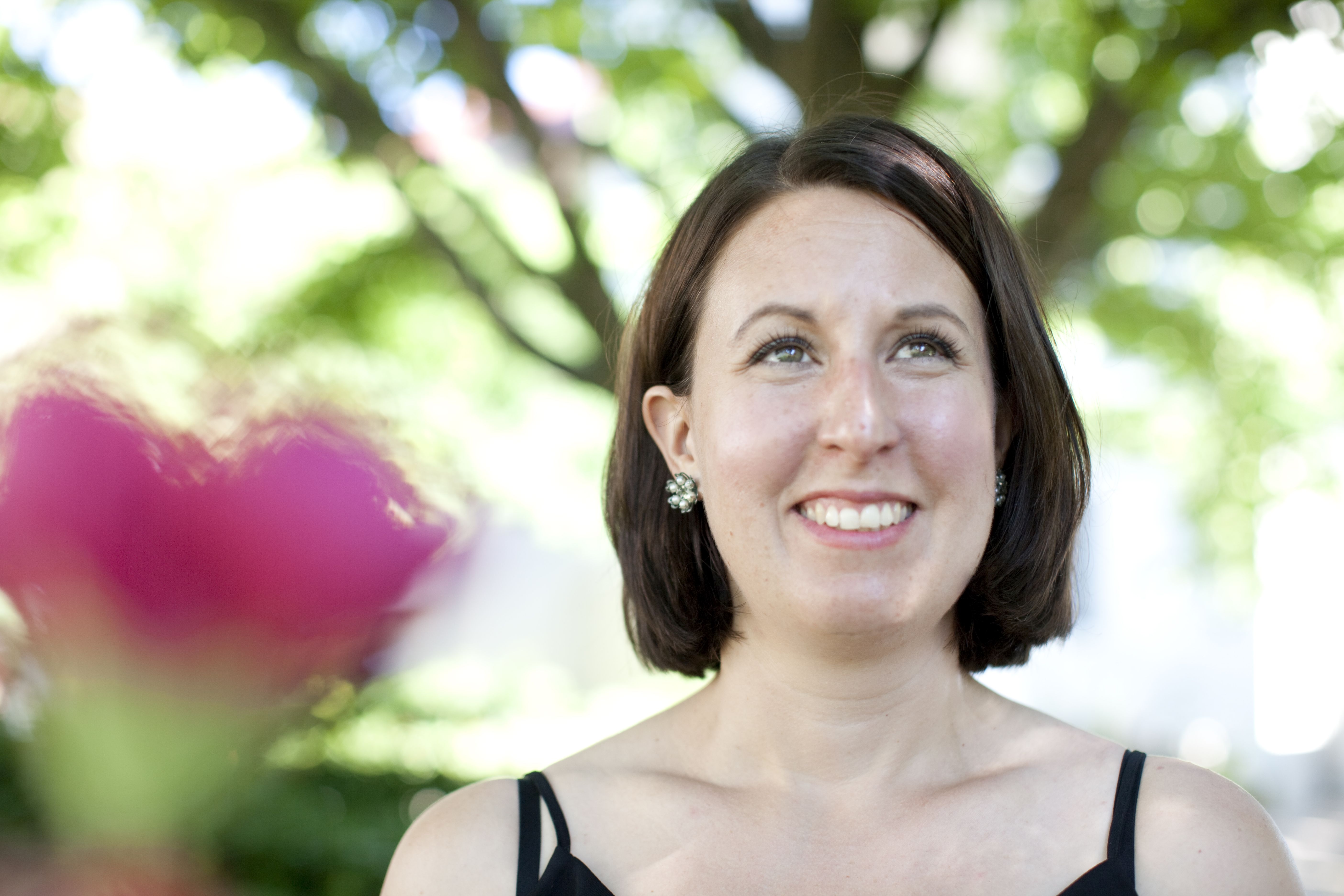 Emilie Cecilia LeBel Interview Image by Phillipa C Photography
“In a world that often demands speed and certainty, I wish to be in a sonic space that I want to linger in for a while.“
Video
